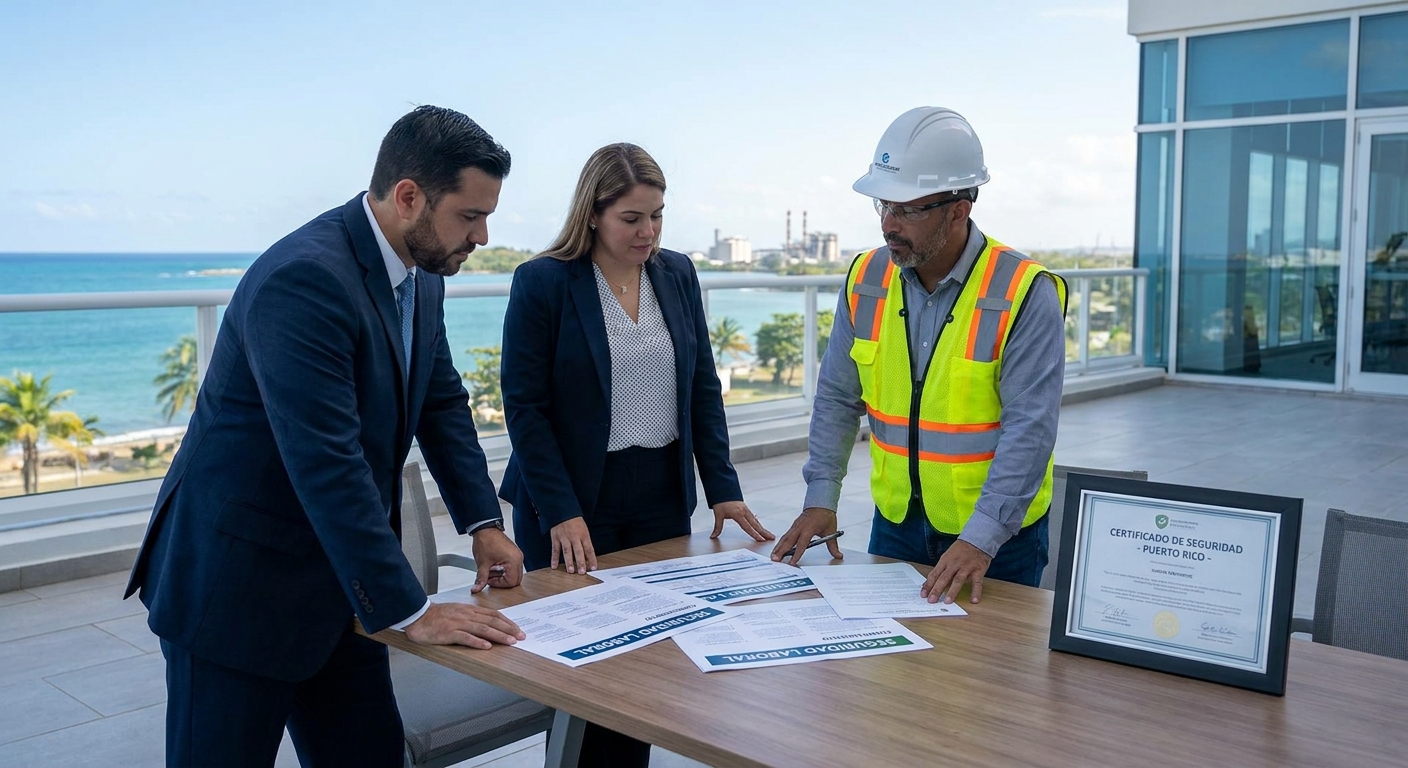

Why Workplace Safety Compliance Matters to Your Puerto Rico Business
Workplace safety compliance is not optional in Puerto Rico. Employers who fail to meet safety standards face significant financial penalties, operational shutdowns, and personal liability. Beyond the legal consequences, safety violations damage your business reputation, increase insurance costs, and create a hostile work environment that drives away talented employees.
Puerto Rico's workplace safety framework combines federal OSHA standards with local regulations enforced by the Puerto Rico Occupational Safety and Health Administration (PRSOSH). Understanding these requirements is essential whether you operate a manufacturing facility, construction site, office, or service business. This guide covers the core compliance obligations that apply to most employers in Puerto Rico and explains how to build a safety program that protects your workers and your business.
The Regulatory Framework for Workplace Safety in Puerto Rico
Puerto Rico operates under a state plan approved by the federal Occupational Safety and Health Administration (OSHA). This means PRSOSH enforces workplace safety standards that are generally equivalent to federal OSHA requirements, with some local modifications. Employers in Puerto Rico must comply with both the general duty clause and specific safety standards that apply to their industry.
The general duty clause requires every employer to provide a workplace free from recognized hazards that are likely to cause death or serious physical harm. This broad obligation applies regardless of whether a specific OSHA standard addresses the hazard. PRSOSH inspectors use this clause to cite violations when employers fail to address obvious dangers.
In addition to the general duty clause, PRSOSH enforces specific standards for construction, manufacturing, healthcare, agriculture, and other industries. These standards set minimum requirements for equipment, training, protective gear, and work procedures. The standards are detailed and technical, covering everything from fall protection and electrical safety to hazardous chemical handling and machine guarding.
Puerto Rico also has its own regulations that supplement federal standards. These local rules may impose stricter requirements or address hazards specific to the Puerto Rico business environment. Employers must stay informed about both federal and local requirements to maintain full compliance.
Core Compliance Obligations for All Employers
Regardless of your industry, certain compliance obligations apply to virtually all employers in Puerto Rico. These foundational requirements form the basis of any effective safety program.
Hazard Assessment and Control
You must identify hazards in your workplace and implement controls to eliminate or reduce the risk. This process begins with a thorough hazard assessment. Walk through your facility and identify anything that could cause injury or illness. Common hazards include slips and falls, electrical hazards, chemical exposure, noise, repetitive strain, and ergonomic problems.
Once you identify hazards, implement controls using the hierarchy of controls. Elimination is the most effective approach, followed by substitution, engineering controls, administrative controls, and personal protective equipment (PPE). For example, if workers are exposed to a toxic chemical, the best solution is to eliminate the chemical entirely. If that is not possible, substitute a less toxic alternative. If substitution is not feasible, use engineering controls like ventilation systems. Administrative controls such as work rotation and training come next. PPE is the last resort and should never be the only control measure.
Safety Training and Communication
All employees must receive training on the hazards present in their work area and the controls in place to protect them. Training must be provided in a language the employee understands. Initial training should occur before the employee begins work, and refresher training should be provided when new hazards are introduced or when changes are made to work procedures.
Documentation of training is critical. Maintain records showing the date of training, the topics covered, the trainer's name, and the names of employees who attended. These records demonstrate compliance if PRSOSH conducts an inspection and provide evidence that you took safety seriously.
Safety communication extends beyond formal training. Post safety notices in visible locations, maintain safety data sheets (SDS) for all hazardous chemicals, and ensure that safety information is accessible to employees. Use multiple communication methods to reach employees with different learning styles and language preferences.
Incident Reporting and Investigation
You must report serious injuries and fatalities to PRSOSH within specific timeframes. A serious injury is one that requires hospitalization for more than 24 hours or results in loss of consciousness, loss of a body part, or permanent disfigurement. Fatalities must be reported within 8 hours. Failure to report serious incidents can result in substantial penalties.
Beyond reporting requirements, you must investigate all incidents, including near misses. An investigation identifies the root cause of the incident and the corrective actions needed to prevent recurrence. Document the investigation thoroughly and share findings with your safety team and affected employees. Use incident data to identify trends and prioritize hazard control efforts.
Record Keeping and Documentation
Maintain detailed records of all safety-related activities. This includes hazard assessments, training records, incident reports, inspection logs, maintenance records, and corrective action documentation. PRSOSH has the right to inspect these records during an investigation. Well-organized records demonstrate that you have a functioning safety program and can significantly reduce penalties if violations are found.
Industry-Specific Safety Requirements
Different industries face different hazards and therefore different regulatory requirements. Understanding the specific standards that apply to your business is essential for compliance.
Construction Safety
Construction is one of the most hazardous industries in Puerto Rico. PRSOSH enforces detailed standards for fall protection, scaffolding, excavation, electrical work, and heavy equipment operation. Fall protection is particularly important, as falls are the leading cause of construction fatalities. All workers exposed to falls of 6 feet or more must be protected by guardrails, safety nets, or personal fall arrest systems.
Construction employers must also ensure that all equipment is properly maintained and that operators are trained and competent. Excavation work requires specific precautions to prevent cave-ins. Electrical work must be performed by qualified electricians who understand the hazards of working with electricity.
Manufacturing and Industrial Operations
Manufacturing facilities must comply with standards for machine guarding, lockout/tagout (LOTO), hazardous chemical handling, and noise control. Machine guarding prevents workers from contacting moving parts that could cause amputation or crushing injuries. LOTO procedures ensure that machinery is de-energized before maintenance or repair work begins.
Hazardous chemical handling requires proper storage, labeling, and employee training. All chemicals must have current safety data sheets available to employees. Noise control measures are required when noise levels exceed 85 decibels, as prolonged exposure to high noise levels causes permanent hearing loss.
Healthcare and Service Industries
Healthcare facilities must comply with standards for bloodborne pathogen exposure, ergonomics, and violence prevention. Employees who may be exposed to blood or other potentially infectious materials must receive training and be offered hepatitis B vaccination. Proper handling and disposal of sharps and contaminated materials is required.
Service industries such as retail, hospitality, and offices must address hazards specific to their operations. These may include ergonomic hazards from prolonged sitting or standing, slip and fall hazards, and workplace violence prevention.
Building an Effective Safety Program
Compliance with individual safety standards is necessary but not sufficient. You must develop a comprehensive safety program that integrates all safety activities and creates a culture of safety throughout your organization.
Management Commitment and Leadership
An effective safety program begins with visible commitment from top management. Safety must be a core business value, not an afterthought. Management should allocate adequate resources to safety, participate in safety meetings, and hold themselves accountable for safety performance. When employees see that management takes safety seriously, they are more likely to follow safety procedures and report hazards.
Safety Policies and Procedures
Document your safety policies and procedures in a safety manual that is accessible to all employees. The manual should cover hazard identification and reporting, incident investigation, training requirements, PPE use, emergency procedures, and disciplinary measures for safety violations. Clear procedures ensure that all employees understand what is expected and how to work safely.
Regular Inspections and Audits
Conduct regular workplace inspections to identify hazards before they cause injuries. Inspections should be systematic and thorough, covering all work areas and equipment. Assign responsibility for inspections to specific individuals and maintain records of findings and corrective actions. Annual safety audits provide a comprehensive review of your safety program and identify areas for improvement.
Employee Involvement and Feedback
Employees are your best source of information about workplace hazards. Establish a system for employees to report hazards and near misses without fear of retaliation. Hold regular safety meetings where employees can discuss safety concerns and contribute ideas for improvement. When employees feel heard and see that their suggestions are implemented, they become active participants in the safety program rather than passive recipients of safety rules.
Continuous Improvement
Safety is not a destination but an ongoing process. Review your safety program regularly and make improvements based on incident data, inspection findings, and employee feedback. Stay informed about changes to PRSOSH regulations and update your program accordingly. As your business grows or changes, your safety program must evolve to address new hazards and challenges.
Common Compliance Mistakes and How to Avoid Them
Many Puerto Rico employers make preventable mistakes that result in PRSOSH citations and penalties. Understanding these common errors helps you avoid them.
Inadequate Hazard Assessment
Employers often fail to conduct thorough hazard assessments or rely on outdated assessments that do not reflect current conditions. Hazard assessment is not a one-time event. As your workplace changes, new hazards emerge. Review your assessment regularly and update it when equipment is added, processes change, or new materials are introduced.
Insufficient Training Documentation
Training is required, but documentation is equally important. Many employers conduct training but fail to maintain records. Without documentation, you cannot prove that training occurred if PRSOSH questions your compliance. Maintain detailed training records for every employee.
Failure to Report Serious Incidents
Some employers delay reporting serious incidents or fail to report them at all, hoping to avoid regulatory attention. This approach backfires. PRSOSH will discover the incident through other means, and the failure to report results in additional penalties. Report serious incidents promptly and accurately.
Inadequate Corrective Actions
When hazards are identified, corrective actions must be implemented promptly. Employers sometimes document corrective actions but fail to actually implement them. This creates a false sense of compliance. Verify that corrective actions are completed and effective.
Relying Solely on PPE
Personal protective equipment is important, but it should be the last line of defense, not the first. Employers sometimes provide PPE without implementing engineering or administrative controls. This approach leaves workers vulnerable if PPE is lost, damaged, or not worn correctly. Use the hierarchy of controls to address hazards comprehensively.
PRSOSH Inspections and Enforcement
Understanding how PRSOSH conducts inspections and enforces safety standards helps you prepare your workplace and respond appropriately if an inspection occurs.
PRSOSH conducts inspections in response to complaints, serious incidents, or as part of a targeted inspection program. During an inspection, the PRSOSH compliance officer will review your safety records, interview employees, and observe work conditions. The officer will identify violations and issue citations with proposed penalties.
If you receive a citation, you have the right to contest it. You can request an informal conference with the PRSOSH area director to discuss the citation and proposed penalty. If you disagree with the citation, you can request a formal hearing before an administrative law judge. Many citations can be resolved through negotiation, and penalties can be reduced if you demonstrate good faith efforts to comply.
Penalties for safety violations vary depending on the severity of the violation and your history of compliance. Willful violations, which are committed with intentional disregard for safety requirements, carry the highest penalties. Serious violations, which create a substantial probability of death or serious physical harm, carry moderate penalties. Other-than-serious violations carry lower penalties. Failure to abate a violation within the required timeframe results in additional penalties.
Integrating Safety with Your Business Operations
Workplace safety should not be viewed as a separate compliance function. Instead, integrate safety into all business operations and decision-making processes.
When purchasing equipment or materials, consider safety implications. When hiring new employees, include safety in the onboarding process. When planning work schedules, account for fatigue and its impact on safety. When evaluating contractors and vendors, assess their safety performance. When making capital investments, prioritize projects that improve safety.
Safety performance should be part of employee evaluations and compensation decisions. Supervisors should be held accountable for safety in their areas. Safety metrics should be tracked and reported to management regularly. When safety is integrated into business operations, it becomes part of your organizational culture rather than an external requirement.
Resources and Support for Compliance
PRSOSH provides resources to help employers understand and comply with safety standards. The PRSOSH website contains information about specific standards, guidance documents, and training materials. PRSOSH also offers free consultation services to help employers identify hazards and develop compliance strategies.
Industry associations and trade groups often provide safety training and resources specific to your industry. Professional safety organizations offer certifications and continuing education for safety professionals. Consulting with experienced safety professionals can help you develop a comprehensive safety program tailored to your specific operations.
Legal counsel familiar with Puerto Rico workplace safety law can help you understand your obligations, develop policies and procedures, and respond to PRSOSH enforcement actions. If you face a citation or investigation, having experienced legal representation can significantly impact the outcome.
Next Steps
Workplace safety compliance is an ongoing responsibility that requires attention, resources, and commitment. If you are uncertain about your current compliance status or need help developing a safety program, a free initial evaluation can help you understand your obligations and identify areas for improvement.
Christian M. Frank Fas, Esq. has over 20 years of experience in Puerto Rico business law, including workplace safety compliance. During a free initial evaluation, we will review your current safety practices, identify potential compliance gaps, and discuss strategies to protect your business and your employees.
Schedule your free initial evaluation today to discuss your workplace safety compliance needs.