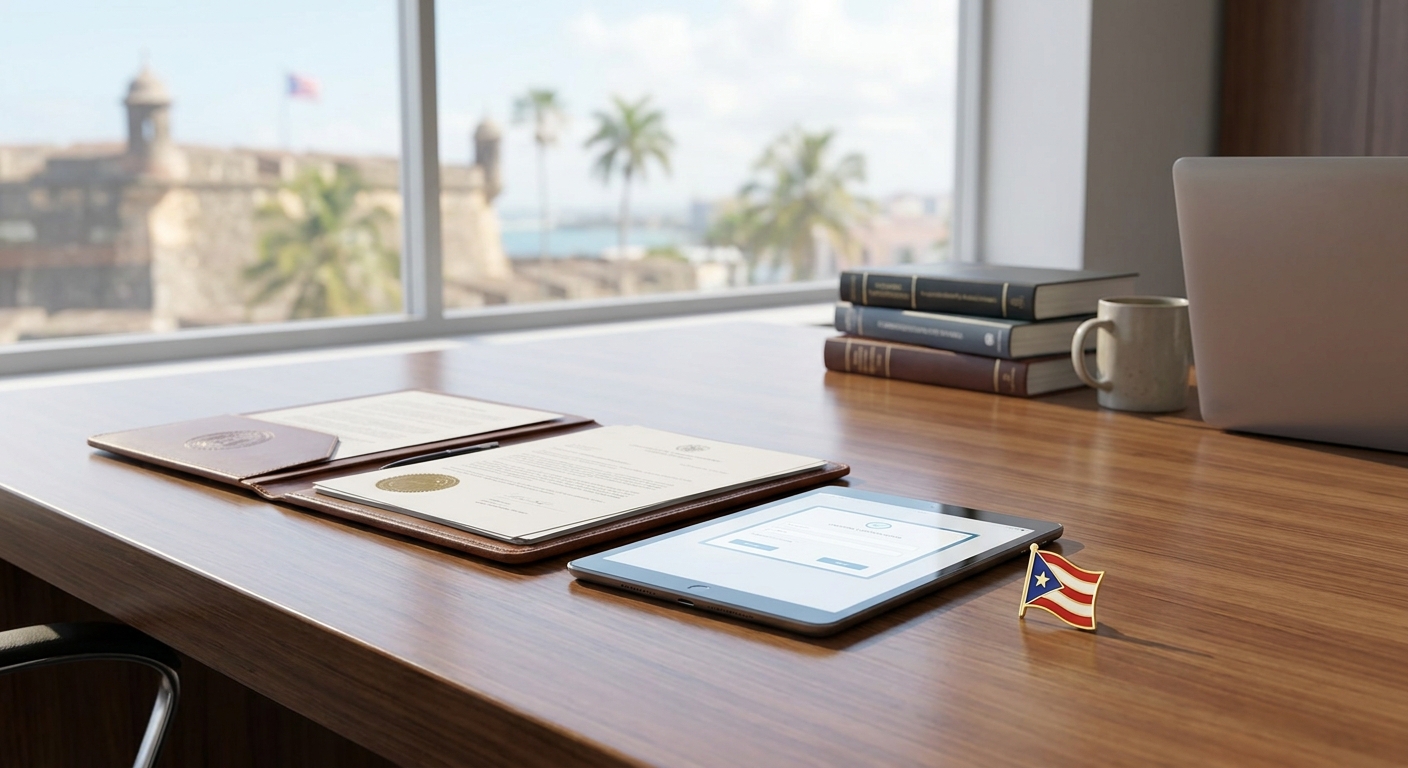

Professional licensing in Puerto Rico operates under a distinct regulatory framework that differs significantly from mainland United States requirements.
If you are a professional seeking to practice in Puerto Rico, or a business that employs licensed professionals, understanding the licensing requirements is not optional. Puerto Rico maintains its own licensing boards, examination standards, and continuing education requirements across dozens of professions. Failure to comply with these requirements can result in fines, license suspension, criminal charges, and business closure. This article explains how Puerto Rico professional licensing works and what you need to do to remain compliant.
How Puerto Rico Professional Licensing Differs from the Mainland
Puerto Rico is not subject to mainland United States licensing standards. The island operates under its own regulatory system established by Puerto Rico law and administered by individual licensing boards. This means that a license to practice law, medicine, engineering, accounting, or any other regulated profession in Florida, New York, or California does not automatically permit you to practice in Puerto Rico.
Each profession regulated in Puerto Rico has its own licensing board, examination requirements, and renewal procedures. Some professions require reciprocity agreements or additional examinations before a mainland-licensed professional can obtain a Puerto Rico license. Others require completion of specific coursework or apprenticeships under Puerto Rico law. The timeline for obtaining a license varies by profession, ranging from several weeks to several months depending on application volume and examination scheduling.
Puerto Rico also maintains different standards for continuing professional education. A professional licensed in Puerto Rico must complete the required continuing education hours specified by their licensing board to maintain active status. These requirements are separate from any mainland continuing education obligations and cannot be substituted for one another.
Regulated Professions in Puerto Rico
Puerto Rico regulates a broad range of professions through dedicated licensing boards. The following professions require active licenses to practice legally in Puerto Rico:
- Attorneys and law firms
- Physicians, surgeons, and medical specialists
- Dentists and dental hygienists
- Nurses and nursing specialists
- Pharmacists
- Psychologists and mental health counselors
- Engineers and architects
- Accountants and certified public accountants
- Real estate brokers and agents
- Insurance agents and brokers
- Contractors and construction professionals
- Electricians and plumbers
- Veterinarians
- Notaries public
This list is not exhaustive. Puerto Rico also licenses professionals in specialized fields including securities brokers, investment advisors, mortgage lenders, and various trade occupations. If your profession involves providing services to the public or handling regulated activities, you should verify whether Puerto Rico requires a license before conducting business.
The Application and Examination Process
The process for obtaining a professional license in Puerto Rico typically involves several steps. First, you must submit an application to the relevant licensing board. The application requires documentation of your education, work experience, and background. Most boards require official transcripts from educational institutions, verification of work experience from previous employers, and a criminal background check.
After your application is reviewed and approved, you must pass the licensing examination administered by the board. Some professions use standardized examinations developed by national organizations, while others use examinations created specifically by the Puerto Rico licensing board. Examination dates are typically scheduled several times per year, though some professions may have limited testing windows.
Once you pass the examination, you receive your license. The license is valid for a specified period, usually two to three years, after which you must renew it. Renewal typically requires payment of a renewal fee and completion of continuing education requirements. Some boards also require renewal applicants to certify that they have not been subject to disciplinary action or criminal charges during the license period.
The entire process from application submission to license issuance can take three to six months or longer, depending on the profession and the current workload of the licensing board. Planning ahead and submitting applications early is essential if you have a specific date by which you need to be licensed.
Continuing Education and License Renewal
Puerto Rico requires most licensed professionals to complete continuing education as a condition of license renewal. The number of required hours varies by profession. Attorneys, for example, must complete 20 hours of continuing legal education per year. Accountants must complete 40 hours per two-year renewal period. Medical professionals typically must complete 40 to 60 hours per renewal period.
Continuing education courses must be approved by the relevant licensing board or by accredited providers recognized by the board. Not all courses qualify. A course taken through an online platform or at a mainland institution may not be accepted unless it has been specifically approved for Puerto Rico professionals. You should verify that any continuing education course you plan to take will be accepted before enrolling.
Failure to complete required continuing education hours before the renewal deadline can result in license suspension or cancellation. If your license is suspended, you cannot legally practice your profession in Puerto Rico until you complete the required hours and submit proof to the licensing board. This can disrupt your business operations and damage your professional reputation.
Compliance Obligations for Businesses
If you operate a business that employs licensed professionals, you have compliance obligations as well. You must verify that all professionals you employ hold active, valid licenses in Puerto Rico. You cannot legally allow an unlicensed person to perform work that requires a license, even if that person is licensed in another jurisdiction.
You should maintain documentation of your employees' licenses and renewal dates. Many businesses establish a system to track license expiration dates and send reminders to employees when renewal is due. This prevents the situation where an employee's license expires without notice, forcing the business to suspend that employee's work until the license is renewed.
If you hire a professional who misrepresents their licensing status, you may face liability. Puerto Rico law holds employers responsible for verifying the credentials of professionals they employ. If you hire someone who claims to be licensed but is not, and that person causes harm to a client or customer, you may be held liable for negligent hiring or supervision.
Certain professions also require that businesses themselves be licensed. Law firms, accounting firms, architectural firms, and engineering firms must be registered with their respective licensing boards. Individual professionals within these firms must also hold personal licenses. The firm registration process involves submitting information about the firm's ownership, location, and the licensed professionals who work there.
Disciplinary Actions and License Suspension
Puerto Rico licensing boards have authority to discipline licensed professionals for violations of professional standards. Disciplinary actions can include warnings, fines, mandatory continuing education, license suspension, or permanent license revocation. Common grounds for discipline include incompetence, negligence, fraud, dishonesty, criminal conduct, substance abuse, and violations of professional ethics rules.
If a licensing board initiates a disciplinary investigation, you have the right to respond to the allegations and present evidence in your defense. The board will typically hold a hearing where you can present witnesses and documents. If the board finds that you violated professional standards, it will issue a disciplinary order specifying the penalty.
Disciplinary actions are public record in Puerto Rico. If your license is suspended or revoked, this information is available to the public and to potential clients or employers. A disciplinary action can have serious consequences for your professional reputation and career prospects.
If you are facing a disciplinary investigation or have received a notice of violation from a licensing board, you should seek legal representation immediately. An experienced attorney can help you understand the charges, gather evidence in your defense, and present your case effectively at a disciplinary hearing.
Reciprocity and License Transfers
Some professions in Puerto Rico recognize licenses obtained in other jurisdictions through reciprocity agreements. However, reciprocity is not automatic and varies significantly by profession. An attorney licensed in New York may be able to obtain a Puerto Rico license through reciprocity if they meet certain requirements, such as having practiced for a minimum number of years. A physician licensed in Florida may need to pass additional examinations or complete additional training before obtaining a Puerto Rico license.
You should contact the relevant licensing board directly to determine whether your mainland license qualifies for reciprocity in Puerto Rico. Do not assume that reciprocity is available. Some professions have no reciprocity agreements at all, meaning you must pass the Puerto Rico examination regardless of where you are currently licensed.
If reciprocity is available, the process typically involves submitting an application, providing proof of your current license and work experience, and paying a reciprocity fee. Some boards may require you to pass a focused examination on Puerto Rico-specific laws or regulations. The timeline for reciprocity applications is often shorter than for new applicants, but it still typically takes several weeks to several months.
Tax Incentives and Professional Licensing
If you are relocating to Puerto Rico as a licensed professional, you may be eligible for significant tax incentives under Act 60. Act 60 provides substantial tax benefits to individuals who establish residency in Puerto Rico and engage in business or professional practice on the island. These benefits can include a flat 4% corporate tax rate and preferential treatment of capital gains and investment income.
However, obtaining a professional license in Puerto Rico is a separate requirement from qualifying for Act 60 benefits. You must obtain your Puerto Rico professional license before you can legally practice your profession on the island, regardless of whether you qualify for tax incentives. For more information about how Act 60 benefits apply to licensed professionals, see our Act 60 tax incentives page.
Common Mistakes in Professional Licensing Compliance
Many professionals and businesses make preventable mistakes when dealing with Puerto Rico licensing requirements. One common error is assuming that a mainland license is sufficient to practice in Puerto Rico. This assumption can lead to serious legal consequences, including criminal charges for practicing without a license.
Another common mistake is failing to renew a license on time. Professionals sometimes overlook renewal deadlines or assume that renewal is automatic. When a license expires, you cannot legally practice your profession until you renew it, even if you have been in continuous practice.
Businesses sometimes fail to verify that their employees hold valid licenses. This creates liability for the business if an unlicensed person performs licensed work and causes harm. Establishing a system to track license expiration dates and verify renewal is essential.
Some professionals fail to complete required continuing education hours before renewal deadlines. This can result in license suspension or cancellation. You should plan ahead and complete continuing education well before the renewal deadline to avoid last-minute problems.
Finally, some professionals do not understand that Puerto Rico licensing requirements are separate from mainland requirements. If you are licensed in multiple jurisdictions, you must maintain compliance with the requirements of each jurisdiction. Failing to renew your Puerto Rico license because you renewed your mainland license is a common and costly mistake.
Working with a Puerto Rico Business Law Attorney
Professional licensing issues can be complex, particularly if you are relocating to Puerto Rico or establishing a business that employs licensed professionals. An experienced Puerto Rico business law attorney can help you understand your obligations, obtain necessary licenses, maintain compliance, and respond to disciplinary actions or licensing disputes.
Christian M. Frank Fas, Esq. has over 20 years of experience in Puerto Rico commercial and business law. He can advise you on professional licensing requirements for your specific profession or business, help you navigate the application and examination process, and represent you in disciplinary proceedings if necessary.
Next Steps
If you are a licensed professional relocating to Puerto Rico, or if you operate a business that employs licensed professionals, you should understand your licensing obligations before you begin operations. Contact our office for a free initial evaluation to discuss your specific situation and learn what steps you need to take to ensure compliance with Puerto Rico professional licensing requirements. Visit our free evaluation page to schedule your consultation.