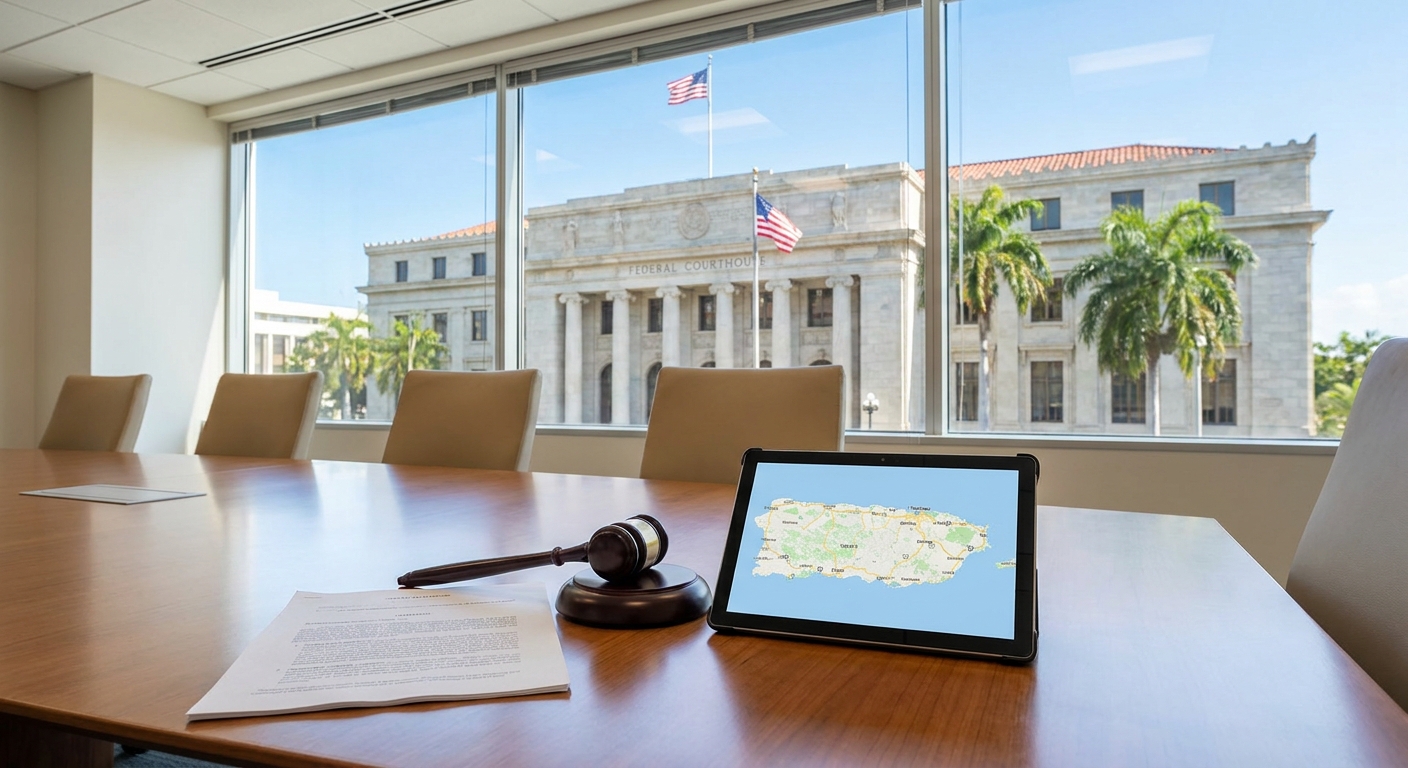

Why Federal Court Jurisdiction Matters in Puerto Rico
If you operate a business in Puerto Rico or conduct transactions involving Puerto Rico entities, understanding federal court jurisdiction is not optional. Federal courts in Puerto Rico handle disputes that can determine whether your company survives a major conflict or faces years of costly litigation in the wrong forum. The distinction between state and federal jurisdiction affects where your case is heard, which judges preside, what procedural rules apply, and ultimately, the outcome of your dispute.
Puerto Rico's federal court system operates under the same constitutional framework as the mainland United States, but with specific rules and procedures tailored to the island's unique legal environment. Business owners who fail to understand these jurisdictional boundaries often find themselves fighting in inappropriate forums, wasting resources on procedural battles instead of resolving the underlying dispute.
The Structure of Puerto Rico's Federal Court System
The United States District Court for the District of Puerto Rico is the primary federal court serving the island. This court has jurisdiction over cases involving federal questions, diversity of citizenship, and other matters specified in federal law. The court operates with the same authority as any federal district court on the mainland, applying federal law and federal rules of civil procedure.
Below the district court, the Puerto Rico Court of Appeals handles appeals from the district court. The United States Court of Appeals for the First Circuit, based in Boston, serves as the appellate court for Puerto Rico federal cases. Understanding this hierarchy matters because it affects where your case can be appealed and what standards of review apply.
Puerto Rico also maintains its own state court system, which operates independently of federal courts. The Puerto Rico Court of First Instance and the Puerto Rico Court of Appeals handle cases under Puerto Rico law. Many business disputes can be filed in either system, which is why jurisdictional analysis is critical before filing.
Federal Question Jurisdiction in Puerto Rico
Federal question jurisdiction exists when a case arises under the Constitution, federal statutes, or federal treaties. If your business dispute involves federal law, you have the right to file in federal court. This includes cases involving federal tax matters, bankruptcy, securities law, intellectual property, antitrust claims, and federal employment law.
For example, if a dispute involves Act 60 tax incentives or compliance with federal securities regulations, federal question jurisdiction typically applies. Similarly, if your case involves claims under federal trademark or patent law, the federal court has jurisdiction regardless of the citizenship of the parties.
Federal question jurisdiction is not discretionary. If the case properly arises under federal law, the federal court must accept jurisdiction. This means you cannot avoid federal court by arguing that you prefer state court, and conversely, a defendant cannot remove a federal question case to state court.
Diversity Jurisdiction and Its Application in Puerto Rico
Diversity jurisdiction allows federal courts to hear cases between parties from different states or countries, provided the amount in controversy exceeds $75,000. In Puerto Rico, diversity jurisdiction applies when one party is a Puerto Rico resident or entity and the other party is from outside Puerto Rico.
The citizenship of a business entity depends on where it is incorporated and where its principal place of business is located. A Puerto Rico corporation is a Puerto Rico citizen. A mainland corporation is a citizen of the state where it is incorporated and where its principal place of business is located. If these two locations differ, the corporation is a citizen of both states.
Diversity jurisdiction requires complete diversity, meaning all plaintiffs must be citizens of different states or countries from all defendants. If even one plaintiff shares citizenship with one defendant, diversity jurisdiction fails. This rule has significant implications for multi-party disputes in Puerto Rico, particularly when local and mainland parties are involved.
The amount in controversy requirement is straightforward: the claim must exceed $75,000. This amount is measured by what the plaintiff seeks to recover, not what the defendant claims the case is worth. If a plaintiff claims $100,000 in damages, the amount in controversy is satisfied even if the defendant argues the claim is worth nothing.
Removal and Remand Procedures
A defendant sued in Puerto Rico state court can remove the case to federal court if federal jurisdiction exists. Removal is a procedural mechanism that allows defendants to transfer cases from state court to federal court when the federal court would have had original jurisdiction.
The removal process requires filing a notice of removal within 30 days of receiving the complaint. The notice must establish that federal jurisdiction exists and must be filed in the federal district court for Puerto Rico. Once removal is proper, the state court loses jurisdiction and the case proceeds in federal court.
If a case is removed improperly, the plaintiff can file a motion to remand, asking the federal court to send the case back to state court. The federal court must grant a remand motion if it lacks jurisdiction. Remand decisions are final and cannot be appealed, which means a plaintiff who successfully argues that federal jurisdiction does not exist has secured a return to state court.
Timing is critical in removal. If a defendant fails to remove within 30 days of receiving the complaint, the right to remove is waived. Additionally, if a defendant removes and then files a motion to remand that is granted, the defendant cannot remove again if the plaintiff amends the complaint.
Supplemental Jurisdiction and Pendent Claims
Supplemental jurisdiction allows federal courts to hear state law claims that are closely related to federal claims, even if those state law claims would not independently qualify for federal jurisdiction. This doctrine prevents plaintiffs from having to split related claims between federal and state court.
For example, if you file a federal securities claim in Puerto Rico federal court, you can include related state law claims for breach of contract or fraud without establishing separate federal jurisdiction for those claims. The federal court can exercise supplemental jurisdiction over the state law claims because they arise from the same operative facts as the federal claim.
Supplemental jurisdiction is discretionary. Federal courts can decline to exercise supplemental jurisdiction if the state law claims predominate, if the claims raise novel or complex state law questions, or if judicial economy is not served by keeping the claims together. In practice, Puerto Rico federal courts frequently exercise supplemental jurisdiction over related state law claims, particularly in commercial disputes.
Bankruptcy and Federal Court Jurisdiction
Bankruptcy cases filed by Puerto Rico businesses are handled exclusively by federal bankruptcy court. The United States Bankruptcy Court for the District of Puerto Rico has jurisdiction over all bankruptcy matters, including Chapter 7 liquidations, Chapter 11 reorganizations, and Chapter 13 personal repayment plans.
Bankruptcy jurisdiction is automatic and exclusive. Once a bankruptcy petition is filed, the bankruptcy court has jurisdiction over the debtor's assets and liabilities. Related disputes, such as adversary proceedings and contested claims, are also handled by the bankruptcy court.
For businesses considering restructuring or facing insolvency, understanding bankruptcy jurisdiction is essential. The bankruptcy court applies federal bankruptcy law and has broad equitable powers to manage the debtor's estate and resolve disputes between creditors and the debtor.
Specialized Federal Jurisdiction in Puerto Rico
Certain types of disputes fall within focused federal jurisdiction regardless of diversity or federal question status. These include cases involving federal employees, cases arising under federal employee benefits laws, and cases involving federal agencies.
Additionally, cases involving maritime law, patent law, and certain tax disputes have specialized federal jurisdiction. If your business operates in these areas, federal court jurisdiction is likely to apply even if the case does not involve a federal question in the traditional sense.
For businesses involved in blockchain or cryptocurrency activities in Puerto Rico, federal jurisdiction may apply if the dispute involves federal securities law or federal money transmission regulations. Understanding whether your industry is subject to focused federal jurisdiction is critical before filing or defending a lawsuit.
Procedural Differences Between Federal and State Court in Puerto Rico
Federal courts in Puerto Rico apply the Federal Rules of Civil Procedure, while state courts apply Puerto Rico Rules of Civil Procedure. These rules differ in significant ways, including discovery procedures, motion practice, and trial procedures.
Federal discovery is broader than Puerto Rico state court discovery. Federal courts allow discovery of any matter relevant to the claim or defense, while Puerto Rico state courts apply a narrower relevance standard. This means federal litigation typically involves more extensive document production and depositions.
Federal courts also have different rules for summary judgment, expert witness disclosure, and trial procedures. Attorneys experienced in federal court practice understand these procedural differences and can advise clients on how they affect litigation strategy and costs.
The choice between federal and state court often depends on procedural considerations as much as jurisdictional ones. A business owner should understand not only whether federal jurisdiction exists, but also whether federal court procedures are advantageous or disadvantageous for their particular dispute.
Jurisdictional Challenges and Motions to Dismiss
Defendants can challenge federal jurisdiction by filing a motion to dismiss under Federal Rule of Civil Procedure 12(b)(1). This motion argues that the federal court lacks subject matter jurisdiction and therefore cannot hear the case.
Jurisdictional challenges must be raised before or with other defenses. If a defendant fails to raise a jurisdictional challenge, the right to challenge jurisdiction is not waived, because subject matter jurisdiction cannot be waived by consent or failure to object. However, raising the challenge early is strategically important because a successful jurisdictional challenge can end the case in federal court before expensive discovery begins.
The burden of proving jurisdiction rests with the party asserting it. If a plaintiff files in federal court based on diversity jurisdiction, the plaintiff must establish that complete diversity exists and that the amount in controversy exceeds $75,000. If the defendant challenges these facts, the plaintiff must prove them.
Practical Considerations for Puerto Rico Business Owners
Understanding federal court jurisdiction affects business decisions beyond litigation. When structuring transactions, forming entities, or entering into contracts, business owners should consider whether disputes are likely to arise and which forum would be preferable.
For example, a Puerto Rico business entering into a contract with a mainland company should consider whether diversity jurisdiction would apply and whether federal court procedures would be advantageous. Similarly, a business relying on Act 60 tax incentives should understand that disputes involving those incentives may involve federal tax law and federal court jurisdiction.
Jurisdiction also affects insurance and indemnification provisions. If a contract dispute is likely to be heard in federal court, the parties should understand federal procedural rules when drafting dispute resolution provisions and insurance requirements.
Additionally, businesses involved in commercial litigation should ensure their legal counsel understands both Puerto Rico state court and federal court procedures. The choice of forum can significantly affect litigation costs, timeline, and outcome.
Federal Court Jurisdiction and International Business
Puerto Rico's federal court system also handles cases involving international parties and transactions. If a Puerto Rico business disputes with a foreign company, federal court jurisdiction may apply based on diversity jurisdiction or federal question jurisdiction.
Federal courts have experience with international commercial disputes and are familiar with applying federal law to cross-border transactions. For businesses engaged in international trade or investment, federal court jurisdiction may provide advantages in terms of judicial experience and procedural sophistication.
Additionally, federal courts apply federal law regarding foreign sovereign immunity and international comity, which are important considerations in disputes involving foreign governments or state-owned enterprises.
Next Steps: Understanding Your Jurisdictional Options
Federal court jurisdiction in Puerto Rico is a complex area that requires careful analysis of the specific facts and legal claims involved in your dispute. The choice between federal and state court can significantly affect your litigation strategy, costs, and outcome.
If you are facing a business dispute in Puerto Rico or are considering litigation, understanding jurisdictional options is essential. Christian M. Frank Fas, Esq. provides a free initial evaluation to help business owners understand their legal options and the appropriate forum for their dispute. During this evaluation, you will receive a clear assessment of whether federal or state court jurisdiction applies to your situation and what procedural considerations should guide your litigation strategy.
For disputes involving commercial litigation, banking matters, or compliance with federal regulations, federal court jurisdiction often plays a critical role. To discuss your specific situation and receive guidance on jurisdictional issues, schedule your free initial evaluation with the firm. You can also learn more about commercial litigation services to understand how federal court procedures apply to your dispute.