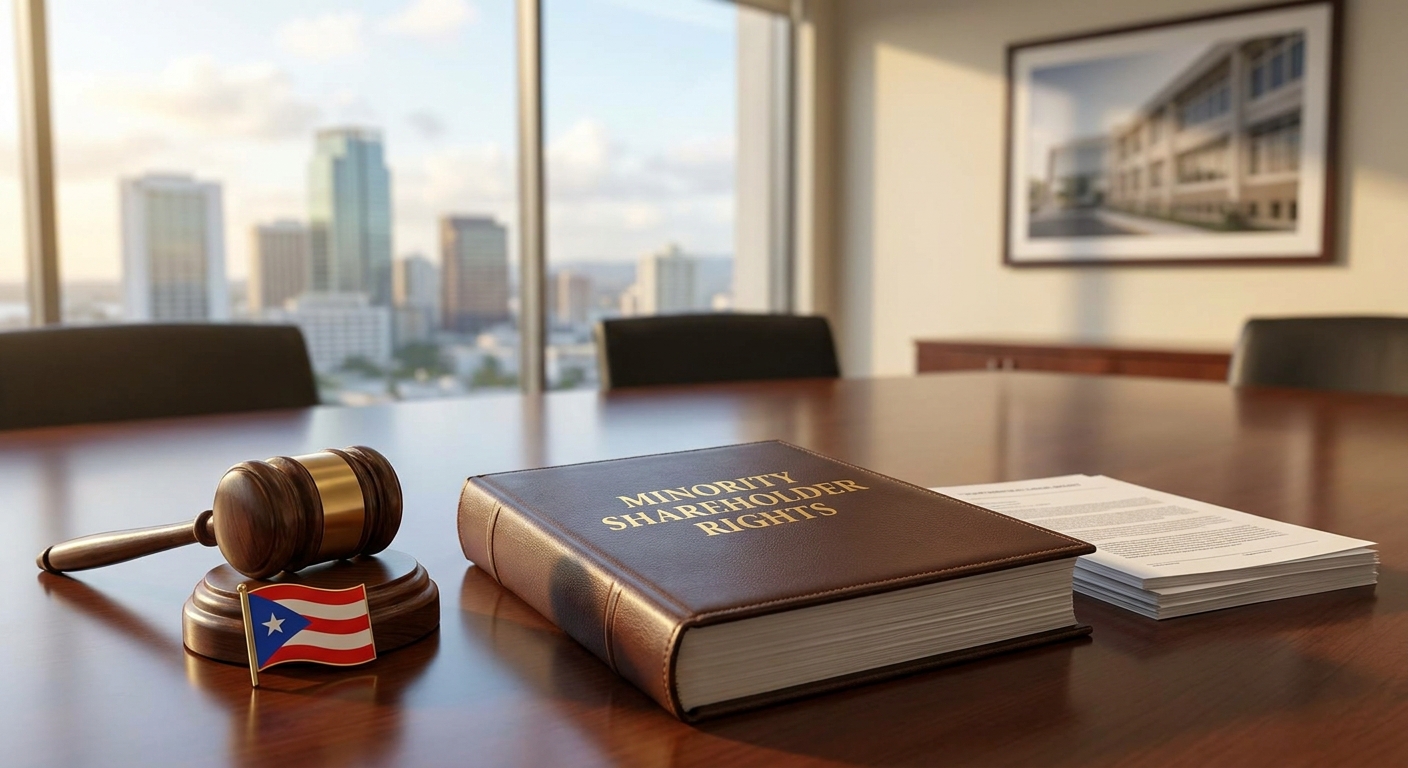

Minority shareholders in Puerto Rico corporations face real risks. Without proper legal protections, a controlling shareholder can dilute your ownership, redirect corporate assets, or exclude you from decision-making entirely. Understanding your rights under Puerto Rico law is the first step to protecting your investment.
Puerto Rico's corporate law framework provides specific protections for minority shareholders, but these protections only work if you know they exist and how to enforce them. This article explains the legal mechanisms available to minority shareholders, the circumstances under which you can take action, and what remedies the courts will consider.
What Constitutes Minority Shareholder Status in Puerto Rico
A minority shareholder is any shareholder who does not hold a controlling interest in the corporation. In Puerto Rico, controlling interest typically means ownership of more than 50 percent of voting shares, though the specific threshold can vary depending on the corporation's bylaws and the structure of share classes.
Minority status creates vulnerability because majority shareholders control the board of directors, set executive compensation, declare dividends, and make strategic business decisions. A minority shareholder with even 49 percent ownership has no guaranteed voice in these matters unless the corporation's bylaws or shareholder agreements provide specific protections.
Puerto Rico recognizes different categories of minority shareholders based on ownership percentage and involvement in the business. A shareholder with 5 percent ownership has different rights than a shareholder with 40 percent ownership. Similarly, a passive investor has different protections than a shareholder who also serves as an officer or director. Understanding your specific status determines which legal remedies are available to you.
Fiduciary Duties Owed to Minority Shareholders
Puerto Rico corporate law imposes fiduciary duties on majority shareholders and directors. These duties form the foundation of minority shareholder protections. The controlling shareholder and board members must act in good faith and cannot use their control to benefit themselves at the expense of minority shareholders.
The duty of loyalty requires that those in control cannot engage in self-dealing transactions without full disclosure and approval. If a majority shareholder causes the corporation to enter into a contract with a company they own, that transaction must be fair to the corporation and disclosed to all shareholders. A breach of this duty gives minority shareholders grounds for legal action.
The duty of care requires that directors and controlling shareholders make informed decisions and act reasonably. Reckless business decisions, failure to monitor corporate performance, or gross negligence in managing assets can breach this duty. Minority shareholders can challenge decisions that violate this standard.
The duty of good faith is broader and more flexible. It prevents controlling shareholders from using their power in ways that are oppressive, unfair, or contrary to the reasonable expectations of minority shareholders. This duty has become increasingly important in Puerto Rico litigation involving family businesses and closely held corporations where minority shareholders have legitimate expectations about their role and returns.
Oppression and Freeze-Out Tactics
Shareholder oppression occurs when those in control use their power to harm minority shareholders in ways that violate their reasonable expectations. Common oppression tactics include denying minority shareholders access to corporate information, refusing to declare dividends while paying excessive salaries to majority-controlled officers, excluding minority shareholders from employment or board positions, or diluting minority ownership through unauthorized share issuances.
A freeze-out is a specific form of oppression where the majority shareholder attempts to force the minority shareholder out of the corporation by making their position untenable. This might involve reducing the minority shareholder's salary, eliminating their job, blocking their access to corporate records, or creating a hostile environment that makes continued ownership impractical.
Puerto Rico courts recognize oppression claims and will intervene when the conduct is sufficiently egregious. The court examines whether the minority shareholder had reasonable expectations about their role in the corporation, whether those expectations were violated, and whether the majority shareholder's conduct was unfair. The remedy typically involves either forcing the majority shareholder to buy out the minority shareholder at fair value or ordering the corporation to take corrective action.
Proving oppression requires detailed documentation. You need evidence of the unfair conduct, proof of how it harmed you, and demonstration that you had reasonable expectations that were violated. This is why maintaining records of shareholder agreements, board minutes, communications with other shareholders, and your own business contributions is essential.
Statutory Protections Under Puerto Rico Law
Puerto Rico's Corporation Code provides specific statutory protections for minority shareholders. These protections apply automatically to all corporations formed under Puerto Rico law, regardless of whether the bylaws or shareholder agreements address them.
Minority shareholders have the right to inspect corporate books and records. This right is not absolute, but it is substantial. You can examine financial statements, shareholder lists, board minutes, and contracts. The corporation cannot deny this right simply because you are a minority shareholder or because the majority shareholder objects. The only valid reasons for denial are if the inspection would serve an improper purpose or if you are seeking information for a competing business.
Minority shareholders also have appraisal rights in certain circumstances. If the corporation undergoes a merger, consolidation, or sale of substantially all assets, minority shareholders who object to the transaction can demand that the corporation buy their shares at fair value. This right protects you from being forced into a transaction you did not approve.
Puerto Rico law also provides that shareholders holding a specified percentage of shares can call a special shareholder meeting. This allows minority shareholders to bring matters to a vote without waiting for the annual meeting. The specific percentage threshold is typically 25 percent, though this can vary based on the corporation's bylaws.
Additionally, minority shareholders can bring derivative suits on behalf of the corporation. If the corporation has been harmed by wrongful conduct of officers, directors, or majority shareholders, a minority shareholder can sue to recover damages for the corporation. This remedy is available when the corporation itself refuses to pursue the claim.
Shareholder Agreements and Buy-Sell Provisions
The most effective protection for minority shareholders is a well-drafted shareholder agreement. This agreement can specify voting rights, dividend policies, restrictions on share transfers, buyout procedures, and dispute resolution mechanisms. A shareholder agreement overrides default statutory rules and creates binding obligations on all parties.
Buy-sell agreements are particularly important. These agreements specify what happens if a shareholder wants to sell their shares, dies, becomes disabled, or is terminated from employment. A properly structured buy-sell agreement can include a right of first refusal, allowing remaining shareholders to purchase departing shareholder's shares before they are sold to outsiders. It can also include a cross-purchase agreement where shareholders buy from each other, or a redemption agreement where the corporation buys the shares.
Tag-along and drag-along rights are common provisions in shareholder agreements. A tag-along right allows minority shareholders to sell their shares on the same terms if a majority shareholder sells to an outsider. A drag-along right allows the majority shareholder to force minority shareholders to sell their shares in a transaction approved by the majority. These provisions protect minority shareholders from being left behind in a sale or from being forced out unfairly.
Voting agreements can also protect minority shareholders. These agreements can require that certain decisions, such as changes to the business purpose, sale of major assets, or issuance of new shares, require approval of minority shareholders holding a specified percentage. This gives minority shareholders veto power over major decisions.
If your corporation does not have a shareholder agreement, or if the existing agreement is outdated or inadequate, you should consider negotiating one. If the majority shareholder refuses to negotiate, this itself may be evidence of oppression or bad faith conduct.
Remedies Available to Minority Shareholders
When minority shareholder rights are violated, Puerto Rico courts have several remedies available. The remedy chosen depends on the nature of the violation and the circumstances of the case.
Buyout orders are common. The court can order the majority shareholder or the corporation to purchase the minority shareholder's shares at fair value. Fair value is typically determined by an independent valuation expert and reflects the corporation's value as of the date of the wrongful conduct, not the date of the court order. This remedy removes the minority shareholder from the oppressive situation while providing compensation.
Injunctive relief prevents the majority shareholder from taking specific actions. The court can order that no further share issuances occur without minority shareholder approval, that dividends be declared, that the minority shareholder be restored to their position, or that specific unfair transactions be unwound. Injunctions are powerful tools because they force affirmative action or prevent harmful conduct before it occurs.
Damages awards compensate the minority shareholder for losses suffered. These can include lost dividends, diminution in share value, lost salary or employment benefits, or other quantifiable harms. Damages are calculated from the date the wrongful conduct began through the date of judgment.
Dissolution is an extreme remedy available when the corporation is deadlocked or when the majority shareholder's conduct is so egregious that continued operation is impossible. The court can order the corporation dissolved and its assets liquidated, with proceeds distributed to shareholders according to their ownership percentage. This remedy is used only when other remedies are inadequate.
Attorney's fees and costs can be awarded to the prevailing party in shareholder disputes. This means that if you successfully prove oppression or breach of fiduciary duty, the court can order the corporation or the majority shareholder to pay your legal fees. This provision makes it more economically feasible to pursue claims.
Procedural Requirements for Bringing Claims
Minority shareholders must follow specific procedures to bring claims in Puerto Rico courts. Understanding these procedures is essential because failure to comply can result in dismissal of your case.
For derivative suits, you must make a demand on the corporation to pursue the claim itself. The corporation then has a specified period to respond. If the corporation refuses or fails to respond, you can proceed with the derivative suit. Some corporations will appoint a special committee to investigate the claim, which can delay the process but may also lead to settlement.
For direct claims of oppression or breach of fiduciary duty, you must file a complaint in the appropriate Puerto Rico court. The complaint must allege specific facts showing how your rights were violated and what harm you suffered. Conclusory statements are insufficient. You need detailed factual allegations supported by evidence.
Discovery is the process of obtaining evidence from the other party. In shareholder disputes, discovery typically includes requests for documents, interrogatories asking written questions, and depositions where witnesses testify under oath. The corporation and majority shareholder must produce financial records, board minutes, communications, and other relevant documents. This discovery process often reveals the extent of wrongdoing and strengthens settlement negotiations.
Many shareholder disputes are resolved through mediation or arbitration rather than trial. These alternative dispute resolution processes are faster and more confidential than court litigation. If your shareholder agreement includes an arbitration clause, you may be required to arbitrate rather than litigate.
Act 60 Considerations for Minority Shareholders
If your corporation has elected to operate under Puerto Rico's Act 60 tax incentive program, additional considerations apply. Act 60 provides significant tax benefits to eligible businesses, but it also imposes compliance requirements and restrictions on ownership changes. Minority shareholders in Act 60 corporations should understand how their protections interact with Act 60 obligations.
Act 60 corporations must maintain their Puerto Rico business purpose and cannot be used primarily for tax avoidance. If a majority shareholder attempts to change the corporation's business purpose or violate Act 60 requirements, minority shareholders may have grounds to challenge the conduct. Additionally, Act 60 corporations are subject to specific reporting requirements, and minority shareholders have the right to ensure compliance.
For more information on Act 60 requirements and how they affect corporate governance, see our Act 60 tax incentives page.
Litigation Strategy for Minority Shareholders
Successful minority shareholder litigation requires careful planning and strategic decision-making. The first step is to gather all relevant documents and communications. This includes shareholder agreements, bylaws, board minutes, financial statements, emails, and any other evidence of wrongdoing.
Next, you should have the corporation's value appraised by an independent valuation expert. This appraisal will be critical if the case proceeds to trial or if a buyout is ordered. The appraisal should reflect the corporation's value as of the date the wrongful conduct began.
You should also document your damages carefully. If you were denied dividends, calculate the amount you would have received. If you were terminated from employment, document your lost salary and benefits. If your shares have declined in value, obtain evidence of the decline. Specific, quantified damages are more persuasive than general allegations of harm.
Consider whether settlement is preferable to litigation. Shareholder disputes are often resolved through negotiated buyouts where the majority shareholder or corporation purchases your shares at a price determined through negotiation or appraisal. Settlement avoids the time, expense, and uncertainty of trial while providing a definite outcome.
If litigation is necessary, be prepared for a lengthy process. Shareholder disputes in Puerto Rico typically take 18 months to three years from filing to final judgment. During this time, you will be involved in discovery, depositions, and potentially mediation. The emotional and financial toll can be substantial, which is why settlement should always be considered.
Preventing Minority Shareholder Disputes
The best approach to minority shareholder protection is prevention. Clear agreements, transparent governance, and regular communication prevent most disputes from arising.
Before investing in a corporation, ensure that you have a comprehensive shareholder agreement that addresses voting rights, dividend policies, transfer restrictions, and dispute resolution. Do not rely on verbal agreements or informal understandings. Written agreements are enforceable and provide clarity when disputes arise.
Establish clear governance procedures. Hold regular board meetings, maintain detailed minutes, and ensure that all shareholders receive financial statements and information about major decisions. Transparency builds trust and prevents the perception of unfair dealing.
If you are a minority shareholder in a family business or closely held corporation, consider having a family meeting or shareholder meeting to discuss expectations. What do you expect to receive as a return on your investment? What role do you expect to play in the business? What happens if you want to exit? These conversations, while sometimes uncomfortable, prevent misunderstandings later.
Review your shareholder agreement periodically. As the business grows and circumstances change, the agreement may need updating. What made sense when the corporation was founded may not be appropriate five or ten years later.
Next Steps: Protecting Your Minority Shareholder Rights
If you are a minority shareholder in a Puerto Rico corporation and believe your rights have been violated, or if you want to ensure your protections are adequate, you should consult with an experienced Puerto Rico business law attorney. The issues are complex, the stakes are high, and the procedural requirements are strict.
Christian M. Frank Fas, Esq. has over 20 years of experience in Puerto Rico commercial and business law, including minority shareholder disputes and corporate governance matters. We can review your situation, explain your rights and remedies, and develop a strategy to protect your interests.
Contact us for a free initial evaluation. We will discuss your specific circumstances, answer your questions, and explain your options. Schedule your free evaluation today.