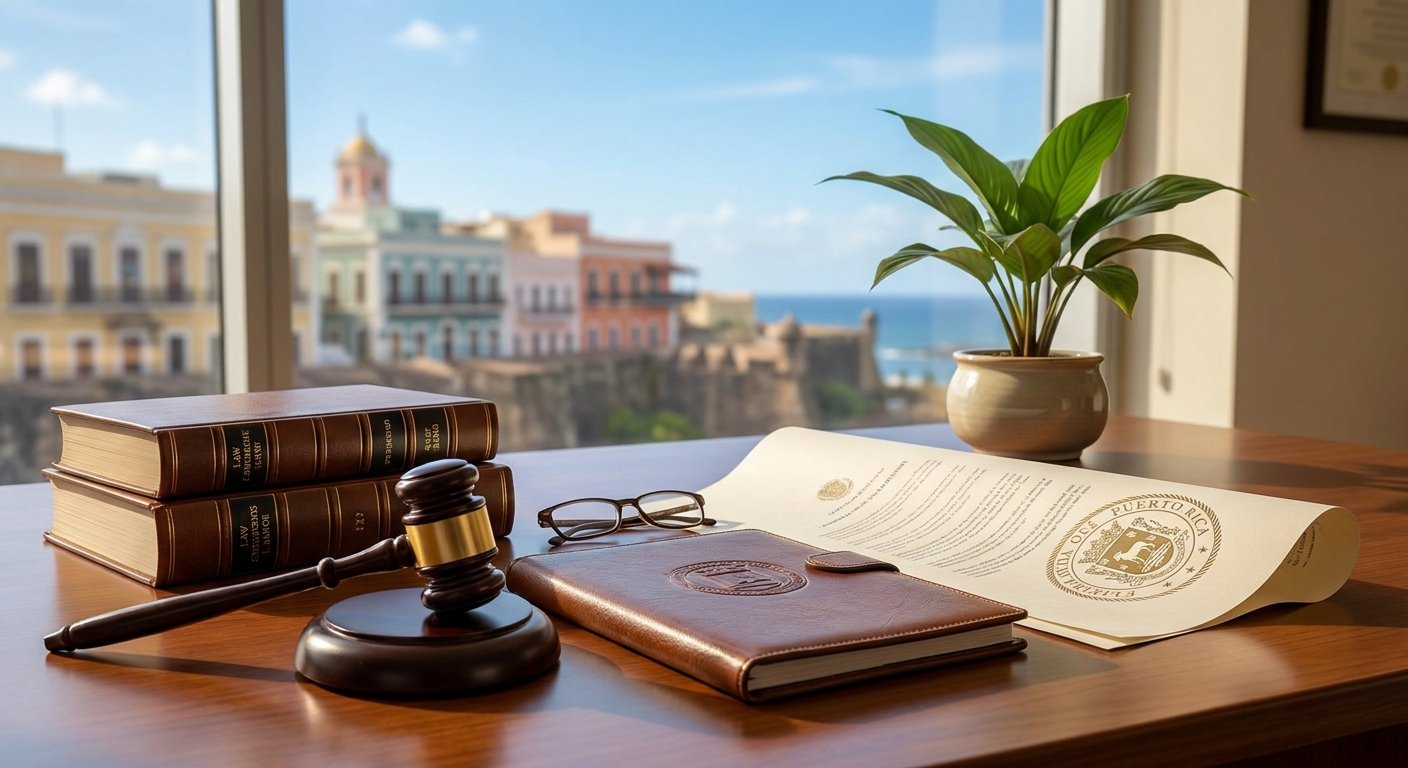

Why Understanding Puerto Rico Criminal Law Matters to You
Puerto Rico operates under a civil law system rooted in Spanish legal tradition, not the common law system used in the United States mainland. This fundamental difference shapes how crimes are defined, investigated, prosecuted, and adjudicated. If you live, work, or conduct business in Puerto Rico, you need to understand the basic structure of the criminal justice system and how it differs from what you may know from mainland U.S. law. Ignorance of these differences can lead to serious consequences, from misunderstanding your rights during an investigation to making statements that harm your defense.
Business owners face particular exposure. A commercial dispute can escalate into criminal allegations. An employee's actions can create liability for the company. Tax compliance issues, regulatory violations, or contractual disagreements may trigger criminal investigation. Understanding the fundamentals of Puerto Rico criminal law helps you recognize when a situation requires immediate legal counsel and what to expect if you or your business becomes involved in a criminal matter.
The Civil Law Foundation of Puerto Rico's Criminal System
Puerto Rico's criminal code is based on civil law principles, which differ significantly from the common law tradition of the mainland United States. In civil law systems, the criminal code is comprehensive and codified. Judges do not create law through precedent in the same way common law judges do. Instead, the written code is the primary source of criminal law, and judicial decisions interpret and apply that code.
This means that Puerto Rico criminal law is more rigid and code-dependent than mainland U.S. criminal law. A crime must be clearly defined in the Puerto Rico Penal Code. Prosecutors cannot rely on broad interpretations or common law principles to charge conduct that falls outside the specific language of the code. This can work in a defendant's favor when the code language is narrow, but it also means that the specific wording of the statute matters enormously.
The civil law system also affects how investigations proceed and how evidence is gathered. Puerto Rico law enforcement follows procedures outlined in the Code of Criminal Procedure, which reflects civil law traditions. Understanding these procedures is critical because they determine what evidence is admissible, how witnesses are questioned, and what rights you have during investigation and interrogation.
The Structure of Puerto Rico's Criminal Courts
Puerto Rico has a unified court system organized by jurisdiction and subject matter. Criminal cases are handled by the Court of First Instance, which has multiple divisions. Felony cases are tried in the Criminal Division, while misdemeanor cases may be handled in specialized courts depending on the nature of the offense.
The Court of First Instance operates with judges who preside over trials. Puerto Rico does not use jury trials in the traditional mainland sense. Instead, criminal trials are decided by a judge or, in some cases, a panel of judges. This is a critical difference from mainland U.S. practice. There is no jury of your peers in the American sense. The judge or judges determine both the facts and the law, which means the quality of legal representation and the strength of your evidence presentation directly influence the outcome.
Appeals from the Court of First Instance go to the Court of Appeals, and further appeals can reach the Puerto Rico Supreme Court. The appellate process in Puerto Rico follows civil law procedures, which means appellate courts review the record and may examine both legal and factual findings, though they give deference to trial court determinations on factual matters.
Classification of Crimes in Puerto Rico
Puerto Rico classifies crimes into two main categories: felonies and misdemeanors. Felonies are more serious offenses, typically punishable by imprisonment of more than one year. Misdemeanors are less serious offenses, generally punishable by imprisonment of up to one year or fines.
The Penal Code further subdivides crimes by type and severity. Common categories include crimes against persons, crimes against property, crimes against public order, crimes against public administration, and crimes against the family. Each category has specific elements that the prosecution must prove beyond a reasonable doubt.
The distinction between felony and misdemeanor is important because it determines the procedures that apply, the rights available to the defendant, and the potential penalties. Felony charges trigger more extensive discovery obligations, more formal procedures, and greater constitutional protections. Misdemeanor charges may be handled more summarily, though defendants still have fundamental rights to counsel and to confront witnesses.
The Role of the Prosecutor and Investigation Process
In Puerto Rico, the prosecutor is called the Fiscal, and the office is the Ministerio Público. The Fiscal has broad authority to investigate crimes and bring charges. Unlike some mainland jurisdictions, the Fiscal does not require a grand jury indictment to proceed with felony prosecution. Instead, the Fiscal files a complaint and the case proceeds to preliminary examination or directly to trial depending on the circumstances.
The investigation process in Puerto Rico is controlled by the Fiscal's office and law enforcement agencies. Police conduct investigations under the direction of the Fiscal. When you are questioned by police, you have the right to remain silent and the right to counsel, but these rights must be clearly invoked. Remaining silent without explicitly requesting counsel may be interpreted as consent to questioning.
If you are arrested or questioned in connection with a criminal matter, you should immediately request counsel. Do not answer questions without an attorney present. Statements made to police can be used against you, and anything you say can be introduced as evidence. The right to counsel is fundamental, and exercising that right is not an admission of guilt. It is a protection of your legal interests.
Arrest, Detention, and Bail Procedures
When a person is arrested in Puerto Rico, they must be brought before a judge within 72 hours. This is the initial appearance, where the judge informs the defendant of the charges, advises them of their rights, and determines whether bail or other conditions of release are appropriate.
Puerto Rico law provides for bail, but the judge has discretion to set bail conditions, require a bond, or deny bail entirely in certain cases. The judge considers factors such as the severity of the charge, the defendant's ties to the community, employment status, family connections, and criminal history. A defendant with strong community ties and no prior criminal record is more likely to be released on their own recognizance or with minimal bail conditions.
If bail is set at an amount the defendant cannot afford, the defendant can request a bail hearing to challenge the amount or seek modification. The defendant has the right to counsel at this hearing. If the defendant cannot afford counsel, the court will appoint a public defender.
Detention without bail is possible in serious cases, particularly when the defendant is charged with a violent crime or when there is a substantial risk of flight. The prosecution must present evidence to support detention, and the defendant has the right to contest the detention.
The Right to Counsel and Public Defense
Every person charged with a crime in Puerto Rico has the right to counsel. If you cannot afford to hire a private attorney, the court will appoint a public defender. The public defender's office in Puerto Rico is the Office of the Public Defender, which provides representation to indigent defendants.
The quality of representation is critical in criminal cases. Your attorney will advise you on your rights, review the evidence against you, negotiate with the prosecution, and represent you at trial if necessary. An experienced criminal defense attorney in Puerto Rico understands the civil law system, knows the judges and prosecutors, and can effectively advocate for your interests.
If you are arrested or questioned, you have the right to speak with an attorney before answering any questions. Exercise this right. Do not rely on the assumption that you can explain your way out of a situation. Anything you say can be used against you, and statements made without counsel present are admissible in evidence.
Evidence and Discovery in Criminal Cases
In Puerto Rico criminal cases, the prosecution has an obligation to disclose evidence to the defense. This is called discovery. The Fiscal must provide the defendant with copies of police reports, witness statements, physical evidence, and other materials that will be used at trial.
The defendant also has the right to inspect evidence and to conduct independent testing or examination. If the prosecution intends to use expert testimony, the defendant is entitled to notice and the opportunity to retain a competing expert or to cross-examine the prosecution's expert.
Evidence obtained in violation of constitutional rights may be excluded from trial. If police conduct an illegal search or seizure, obtain a confession without proper warnings, or violate other constitutional protections, the evidence may be suppressed. Suppression motions are an important tool in criminal defense, and an experienced attorney will identify violations and file appropriate motions to exclude unlawful evidence.
Plea Agreements and Negotiation
Most criminal cases in Puerto Rico are resolved through plea agreements rather than trial. A plea agreement is a negotiated settlement where the defendant agrees to plead guilty to certain charges in exchange for the prosecution agreeing to dismiss other charges or to recommend a specific sentence.
Plea agreements can be beneficial if they result in reduced charges, lower sentences, or certainty about the outcome. However, pleading guilty means giving up the right to trial and the right to confront witnesses. Before accepting any plea agreement, you should fully understand the terms, the consequences, and the alternatives. Your attorney should explain the strengths and weaknesses of the prosecution's case and advise you on whether a plea agreement is in your best interest.
Negotiation with the prosecution is a normal part of the criminal process. The Fiscal may be willing to reduce charges or recommend leniency if the defendant cooperates, provides information about other crimes, or demonstrates remorse. Your attorney will assess these opportunities and advise you on the best course of action.
Trial Procedures and Burden of Proof
If a case proceeds to trial, the prosecution bears the burden of proving guilt beyond a reasonable doubt. This is a high standard, and the defendant does not have to prove innocence. The defendant can remain silent and require the prosecution to prove every element of the crime.
At trial, the prosecution presents evidence through witness testimony and physical evidence. The defendant has the right to cross-examine prosecution witnesses and to present a defense. The defendant can testify or remain silent. If the defendant testifies, the prosecution can cross-examine and challenge the testimony.
In Puerto Rico, trials are conducted before a judge or panel of judges, not a jury. The judge or judges determine the facts and apply the law. This means that the presentation of evidence and the credibility of witnesses are evaluated by the judge, not by lay jurors. An experienced attorney understands how judges in Puerto Rico evaluate evidence and can present a case effectively to the court.
Sentencing and Penalties
If a defendant is convicted, the judge imposes a sentence. Puerto Rico law provides sentencing guidelines and ranges for different crimes. The judge has discretion within those ranges and can consider factors such as the defendant's criminal history, the circumstances of the crime, and the defendant's personal background.
Sentences can include imprisonment, fines, probation, community service, or a combination of these. For serious crimes, sentences can be substantial. For less serious offenses, sentences may be suspended or probation may be imposed without imprisonment.
Sentencing is a critical phase of the criminal process. Your attorney should present evidence and arguments in mitigation to encourage the judge to impose the lowest possible sentence. This may include evidence of your character, employment history, family ties, and any other factors that support leniency.
Appeals and Post-Conviction Relief
After conviction, a defendant has the right to appeal to the Court of Appeals. The appeal is based on the written record of the trial and legal arguments about whether the trial was conducted fairly and whether the law was correctly applied.
Grounds for appeal include legal errors at trial, insufficient evidence to support conviction, ineffective assistance of counsel, and constitutional violations. The appellate court reviews the record and may reverse the conviction, order a new trial, or affirm the conviction.
Post-conviction relief is also available in certain circumstances. If new evidence is discovered, if counsel was ineffective, or if there are other grounds for relief, a defendant can file a motion for post-conviction relief. These motions must be filed within specific time periods and must meet strict requirements.
Special Considerations for Business Owners and Professionals
Business owners and professionals face particular risks in Puerto Rico. Commercial disputes can escalate into criminal allegations of fraud, embezzlement, or breach of contract. Tax compliance issues can trigger criminal investigation. Regulatory violations in banking, securities, or other focused areas can result in criminal charges.
If your business is involved in blockchain or cryptocurrency activities, you should be aware of Puerto Rico's regulatory framework and compliance requirements. Violations can result in criminal liability. Similarly, if your business involves tax incentives under Act 60, you must comply with all requirements to avoid criminal exposure.
If you receive notice of a criminal investigation or if you are questioned about business activities, you should immediately consult with an experienced criminal defense attorney. Do not assume that cooperation or explanation will resolve the matter. Criminal investigations are serious, and your response must be carefully considered with legal counsel.
Next Steps: Protect Your Rights
If you are facing criminal charges, under investigation, or concerned about potential criminal liability, you need experienced legal counsel immediately. The difference between a good outcome and a bad outcome often depends on the quality of representation and the speed with which you respond.
Christian M. Frank Fas, Esq. has over 20 years of experience in Puerto Rico business and commercial law, including criminal matters affecting businesses and individuals. A free initial evaluation will allow you to discuss your situation, understand your rights, and determine the best course of action.
Contact the firm for a free initial evaluation today. Do not delay. Criminal matters require immediate attention.