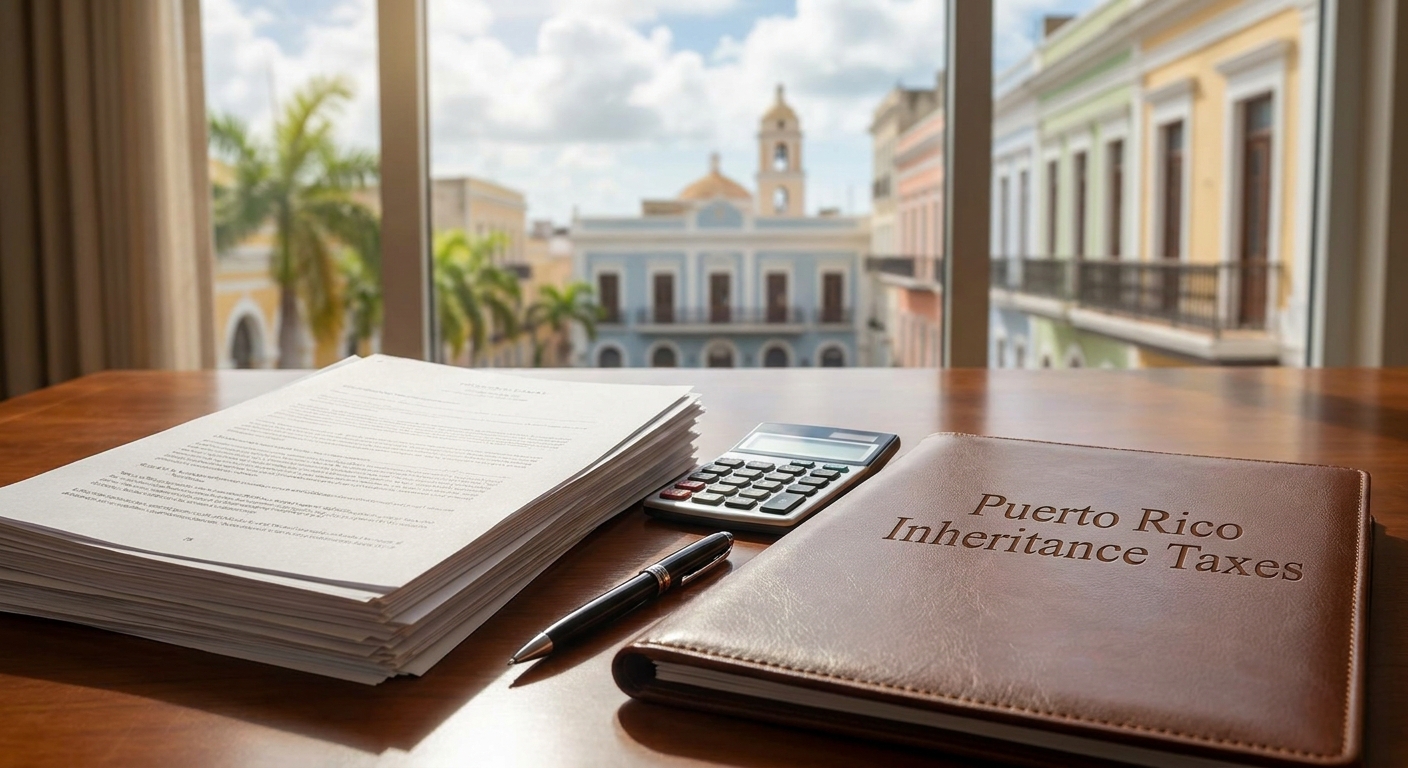

Puerto Rico Inheritance Taxes Matter to Your Family's Financial Future
Inheritance and estate planning in Puerto Rico operates under a distinct legal framework that differs significantly from U.S. federal tax law. If you own property in Puerto Rico, maintain business interests on the island, or plan to leave assets to heirs, understanding Puerto Rico inheritance taxes is not optional. The tax consequences of failing to plan properly can reduce your estate by substantial amounts, and the rules governing what your heirs will owe are specific to Puerto Rico law.
Puerto Rico does not impose a traditional inheritance tax or estate tax at the territorial level. This absence of inheritance tax is one of the most significant advantages of Puerto Rico's tax structure. However, this does not mean your heirs face no tax obligations. The tax treatment of inherited property depends on the nature of the assets, the residency status of the deceased, and whether the property is located in Puerto Rico or elsewhere.
How Puerto Rico Treats Inherited Property
When a Puerto Rico resident passes away, their heirs do not pay a Puerto Rico inheritance tax on the transfer of assets. This is a fundamental distinction from many U.S. states and from federal estate tax rules. The absence of a territorial inheritance tax means that property passing to heirs through a will or by operation of law does not trigger a separate Puerto Rico tax liability based on the inheritance itself.
However, inherited assets may still generate tax obligations in other ways. If inherited property produces income, that income becomes taxable. For example, if an heir inherits rental property in Puerto Rico, the rental income is subject to Puerto Rico income tax. If an heir inherits a business, the business income is taxable. The inheritance itself is not taxed, but the ongoing income from inherited assets is.
The treatment of inherited property also depends on whether the deceased was a Puerto Rico bona fide resident at the time of death. A bona fide resident of Puerto Rico who owns property on the island may receive more favorable treatment under Puerto Rico law than a non-resident who owns island property. This distinction affects not only the heirs' tax obligations but also the administration of the estate itself.
Federal Estate Tax and Puerto Rico Residents
While Puerto Rico does not impose its own inheritance or estate tax, federal estate tax rules still apply to Puerto Rico residents in certain circumstances. A U.S. citizen who is a bona fide Puerto Rico resident may qualify for significant federal estate tax benefits under Act 60, Puerto Rico's tax incentive law. These benefits can substantially reduce or eliminate federal estate tax liability for qualifying individuals.
A Puerto Rico bona fide resident who has been on the island for at least 183 days per year for the relevant tax years may exclude Puerto Rico-source income from federal taxation. This income exclusion can extend to certain types of investment income and capital gains. When combined with proper estate planning, this can result in substantial federal estate tax savings for heirs.
Non-residents of Puerto Rico who own property on the island face different rules. Federal estate tax applies to the worldwide estate of U.S. citizens, regardless of where they live. If a non-resident U.S. citizen dies owning Puerto Rico property, that property is included in their federal taxable estate. The federal estate tax rate can reach 40 percent on estates exceeding the applicable exemption amount, which means heirs could lose a significant portion of inherited Puerto Rico assets to federal taxes.
Understanding your residency status and how it affects your estate tax liability is essential for proper planning. The distinction between bona fide residency and non-residency has profound implications for your heirs' inheritance.
Puerto Rico Income Tax on Inherited Assets
Inherited assets themselves do not trigger Puerto Rico income tax. The transfer of property from a deceased person to their heirs is not a taxable event under Puerto Rico law. However, once the heirs take possession of the assets, any income generated by those assets becomes subject to Puerto Rico income tax if the heir is a Puerto Rico resident.
This distinction is critical. If you inherit a rental property in Puerto Rico and you are a Puerto Rico resident, you must pay Puerto Rico income tax on the rental income. If you inherit stock in a Puerto Rico corporation, you must pay Puerto Rico income tax on dividends. If you inherit a business, the business income is taxable. The inheritance transfer itself creates no tax bill, but the income stream does.
Non-residents who inherit Puerto Rico property face a different situation. If a non-resident heir inherits Puerto Rico real estate or a Puerto Rico business, income from that property or business is still subject to Puerto Rico income tax. The heir's residency status does not eliminate the tax obligation on Puerto Rico-source income. A non-resident heir who rents out inherited Puerto Rico property must file Puerto Rico tax returns and pay tax on the rental income.
Capital gains from the sale of inherited property also receive specific treatment. If an heir sells inherited Puerto Rico real estate, the capital gain may be subject to Puerto Rico income tax depending on the heir's residency status and the nature of the property. Planning for these tax consequences before the inheritance occurs allows families to structure their affairs more efficiently.
Bona Fide Residency and Estate Planning Benefits
Puerto Rico's tax incentive law, known as Act 60, provides substantial benefits for individuals who establish bona fide residency on the island. These benefits extend to estate planning and can significantly reduce the tax burden on heirs. A bona fide Puerto Rico resident can structure their estate to take advantage of Puerto Rico's favorable tax treatment while minimizing federal estate tax exposure.
To qualify as a bona fide resident, an individual must spend at least 183 days in Puerto Rico during the relevant tax year and meet other requirements related to permanent home and economic ties to the island. Once established, bona fide residency status can provide substantial income tax benefits that extend to investment income, capital gains, and certain types of business income.
For estate planning purposes, bona fide residency can mean that a significant portion of an estate's value is not subject to federal estate tax. This allows more wealth to pass to heirs without taxation. A non-resident who moves to Puerto Rico and establishes bona fide residency can restructure their estate plan to take advantage of these benefits before their death.
However, establishing bona fide residency requires genuine commitment to Puerto Rico residency. The tax authorities scrutinize residency claims, and individuals who claim bona fide residency status without meeting the requirements face serious penalties. Proper documentation and consistent presence on the island are essential to support a bona fide residency claim.
Probate and Estate Administration in Puerto Rico
The process of administering an estate in Puerto Rico follows Puerto Rico law, which is based on civil law rather than common law. This means the probate process differs from what many people familiar with U.S. states expect. Understanding these differences is important for heirs and executors managing an estate.
Puerto Rico law provides for both testate succession, where a will exists, and intestate succession, where no will exists. The rules governing who inherits and in what order are set by Puerto Rico law. If a Puerto Rico resident dies with a will, the will must be probated in Puerto Rico courts. If they die without a will, Puerto Rico intestacy laws determine how the estate is distributed.
The probate process in Puerto Rico can be more streamlined than in some U.S. states, particularly for smaller estates. However, the process still requires court involvement, filing of documents, and compliance with Puerto Rico procedural rules. An executor or administrator must account for all estate assets, pay debts and taxes, and distribute remaining property according to the will or Puerto Rico law.
During the probate process, the executor or administrator must determine what taxes are owed. If the deceased was a Puerto Rico resident, Puerto Rico income tax returns may be required for the year of death. If the estate generates income during administration, that income may be subject to Puerto Rico taxation. Federal estate tax returns may also be required if the estate exceeds the federal exemption threshold.
Planning to Minimize Tax on Inherited Assets
Effective estate planning can substantially reduce the tax burden on heirs. The key is to plan before death, not after. Several strategies can help minimize taxes on inherited property in Puerto Rico.
First, establishing bona fide Puerto Rico residency before death can provide significant federal estate tax benefits. If you are considering moving to Puerto Rico or establishing residency there, doing so years before your death allows you to take full advantage of Act 60 benefits and structure your estate accordingly.
Second, proper titling of assets can affect tax treatment. Property held in certain forms may receive more favorable treatment than property held in other forms. For example, property held in a Puerto Rico corporation may be treated differently than property held individually. Understanding how to title property requires analysis of your specific situation and goals.
Third, lifetime gifts can reduce the size of your taxable estate. Gifts to heirs during your lifetime reduce the amount of property subject to federal estate tax at your death. Puerto Rico law permits gifts, and proper gifting strategies can be part of an overall estate plan.
Fourth, trusts can be used to manage property and control how it passes to heirs. A trust can specify how inherited property is used, when heirs receive distributions, and how income is handled. Trusts can also provide privacy, as trust documents are not filed in public court records like wills are.
Fifth, if you own property in multiple jurisdictions, coordinating the treatment of all your property is essential. Property in Puerto Rico may be treated differently than property in the United States or other countries. A comprehensive estate plan addresses all your property and coordinates the tax treatment across jurisdictions.
Non-Resident Heirs and Puerto Rico Property
If you are a non-resident heir who inherits Puerto Rico property, you face specific tax obligations. Puerto Rico-source income from inherited property is subject to Puerto Rico income tax regardless of your residency status. If you inherit a business, rental property, or other income-producing asset in Puerto Rico, you must understand your tax obligations.
Non-resident heirs who inherit Puerto Rico real estate must file Puerto Rico tax returns if the property generates income. Rental income, business income, and capital gains from the sale of Puerto Rico property are all subject to Puerto Rico taxation. Failing to file required returns or pay taxes owed can result in penalties and interest.
Non-resident heirs should consider whether to keep inherited Puerto Rico property or sell it. If you do not plan to use the property and do not want to manage it, selling may be the better option. However, the sale itself may trigger capital gains tax. Understanding the tax consequences of selling inherited property helps you make an informed decision.
If you inherit a Puerto Rico business as a non-resident, you face the choice of operating the business, selling it, or closing it. Operating a Puerto Rico business as a non-resident requires compliance with Puerto Rico tax law and business regulations. Many non-resident heirs find that selling the business is the most practical option, though the sale may trigger tax consequences.
Documentation and Record-Keeping for Inherited Property
Proper documentation of inherited property is essential for tax purposes. When you inherit property, you should obtain a stepped-up basis in the property equal to its fair market value on the date of the deceased's death. This stepped-up basis is important because it determines your gain or loss if you later sell the property.
For example, if your parent purchased Puerto Rico real estate for $100,000 and it is worth $500,000 when they die, your basis in the property is $500,000, not $100,000. If you later sell the property for $550,000, your capital gain is only $50,000, not $450,000. This stepped-up basis can result in substantial tax savings.
To claim a stepped-up basis, you need documentation showing the fair market value of the property on the date of death. This may require an appraisal or other valuation. Keeping these documents with your estate records is important for future reference.
You should also maintain records of any improvements you make to inherited property and any income generated by the property. These records support your tax filings and help substantiate deductions if you are operating a business or renting property.
Next Steps: Get Your Estate Plan Reviewed
Puerto Rico inheritance taxes are less burdensome than in many jurisdictions, but understanding the rules and planning accordingly is essential. Whether you are a Puerto Rico resident, a non-resident with Puerto Rico property, or an heir managing an inherited estate, the tax consequences of your situation require careful analysis.
Christian M. Frank Fas, Esq. has over 20 years of experience in Puerto Rico business and commercial law, including estate planning and tax matters. A free initial evaluation can help you understand your specific situation and identify planning opportunities.
To discuss your inheritance tax situation or estate planning needs, request a free initial evaluation. You can also learn more about Puerto Rico's tax incentive programs by visiting our Act 60 page.