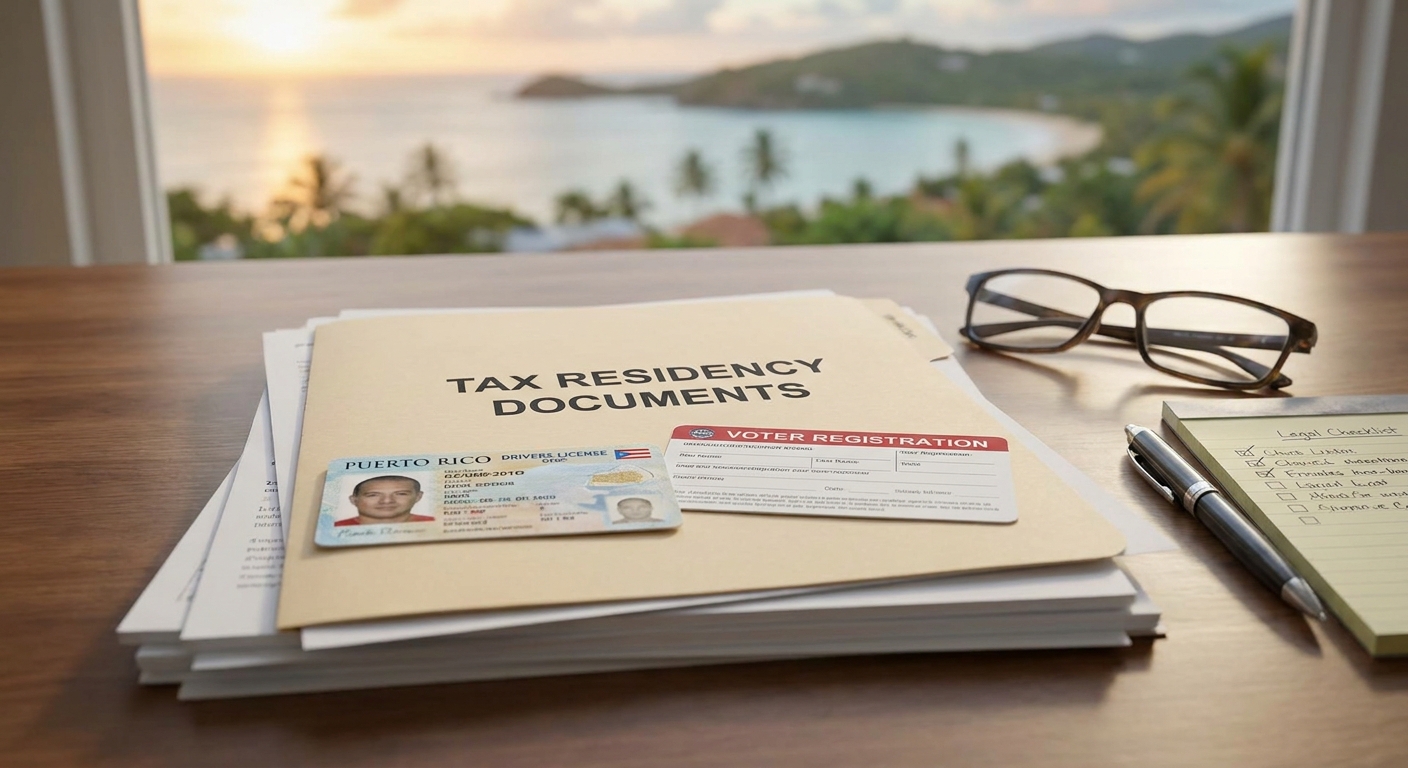

Why Driver License and Voter Registration Matter in Puerto Rico Tax Residency Determinations
The closer connection test stands as one of the most significant tools Puerto Rico tax authorities use to determine whether an individual qualifies as a bona fide resident for Act 60 tax incentive purposes. Two documents carry particular weight in this analysis: your driver license and voter registration. These items are not mere administrative conveniences. They serve as concrete evidence of your physical presence, intent to remain, and ties to Puerto Rico. Understanding how these documents factor into the closer connection test can mean the difference between qualifying for substantial tax benefits and facing denial of your residency claim.
The Puerto Rico Department of Treasury and the Internal Revenue Service both examine driver licenses and voter registration records as primary indicators of domicile. When you apply for Act 60 residency benefits, tax authorities will scrutinize whether your documentation demonstrates a genuine commitment to Puerto Rico life. A Puerto Rico driver license combined with voter registration creates a powerful narrative of permanent relocation. Conversely, maintaining a mainland driver license while claiming Puerto Rico residency raises immediate red flags that can trigger audits and benefit denials.
Understanding the Closer Connection Test Framework
The closer connection test evaluates whether your personal and economic ties bind you more closely to Puerto Rico than to any other jurisdiction. This test applies primarily to individuals seeking residency status under Act 60 and those claiming Puerto Rico domicile for tax purposes. The test does not rely on a single factor. Instead, tax authorities weigh multiple elements together to form a comprehensive picture of your actual residence.
Puerto Rico tax law requires that you establish Puerto Rico as your primary place of abode. This means more than owning property or spending occasional time on the island. You must demonstrate that Puerto Rico is where you spend the majority of your time and where you maintain your principal home. The closer connection test forces you to prove this through objective evidence rather than mere declarations.
The test examines factors including the location of your home, the location of your family members, the location of your employment or business operations, the location of your financial accounts and investments, your social and cultural ties, and your participation in community activities. Within this framework, driver license and voter registration serve as foundational documents that either support or undermine your overall residency claim.
The Role of Your Puerto Rico Driver License
A Puerto Rico driver license represents one of the most straightforward pieces of evidence that you have established Puerto Rico as your place of residence. When you obtain a Puerto Rico driver license, you are making an official declaration to a government agency that Puerto Rico is your address of record. Tax authorities view this document as a strong indicator of intent to reside in Puerto Rico.
The process of obtaining a Puerto Rico driver license requires you to provide proof of residency. You must present documents showing your Puerto Rico address. This creates a paper trail that demonstrates you took affirmative steps to establish yourself as a Puerto Rico resident. The fact that you went through this process, rather than simply claiming residency without documentation, strengthens your position in the closer connection test.
Timing matters significantly. If you obtained your Puerto Rico driver license shortly after arriving on the island and claiming residency, this supports your credibility. If you obtained it years after claiming residency, tax authorities may question why you delayed this basic step. Conversely, if you maintain a mainland driver license while claiming Puerto Rico residency, you create a contradiction that requires explanation. Tax authorities will ask why you did not obtain a Puerto Rico license if you truly intended to reside here permanently.
The closer connection test also considers whether you have allowed your mainland driver license to expire or whether you maintain it concurrently with a Puerto Rico license. Maintaining both licenses suggests you are keeping options open and have not fully committed to Puerto Rico residency. Some individuals argue they maintain a mainland license for convenience when traveling, but tax authorities view this as evidence of divided loyalties and ongoing ties to the mainland.
Voter Registration as Evidence of Domicile
Voter registration carries significant weight in domicile determinations because it represents a formal declaration of your legal residence. When you register to vote in Puerto Rico, you are stating under penalty of perjury that Puerto Rico is your domicile. This legal commitment makes voter registration a powerful piece of evidence in the closer connection test.
Puerto Rico voter registration requires that you establish Puerto Rico residency. You cannot register to vote in Puerto Rico while maintaining voter registration in another jurisdiction. This creates a clear choice that tax authorities view as meaningful. If you have taken the step to register to vote in Puerto Rico, you have made a public commitment to Puerto Rico residency that goes beyond mere tax planning.
The timing of your voter registration also matters. If you registered to vote in Puerto Rico immediately upon arrival, this demonstrates prompt action to establish your legal status. If you delayed voter registration for months or years after claiming residency, tax authorities may question your commitment. They will ask why you did not take this basic step if you truly intended to make Puerto Rico your permanent home.
Conversely, if you maintain voter registration in a mainland state while claiming Puerto Rico residency, you create a serious problem for your residency claim. Dual voter registration is illegal, and maintaining mainland voter registration while claiming Puerto Rico residency suggests you have not abandoned your mainland domicile. Tax authorities will view this as direct evidence that your closer connection remains to the mainland rather than to Puerto Rico.
How Tax Authorities Verify Driver License and Voter Registration Status
Puerto Rico tax authorities do not simply accept your word regarding your driver license and voter registration status. They conduct independent verification through government databases. When you file for Act 60 residency benefits, the Department of Treasury cross-references your application against Puerto Rico driver license records and voter registration databases.
The IRS also has access to these records. If you claim Puerto Rico residency for federal tax purposes, the IRS will verify your Puerto Rico driver license and voter registration status as part of their examination process. They maintain databases that track driver licenses and voter registrations across all states and territories. Discrepancies between your tax filings and these official records trigger audits and benefit denials.
Tax authorities also examine whether you have taken steps to terminate your mainland driver license and voter registration. Some individuals claim they forgot to cancel their mainland registrations or did not realize they needed to do so. Tax authorities view this explanation with skepticism. They expect individuals who are genuinely relocating to Puerto Rico to take affirmative steps to sever their ties to their former jurisdiction.
The verification process extends beyond simply checking whether you hold a Puerto Rico driver license and voter registration. Tax authorities examine the dates on these documents, the address listed, and any changes or updates you have made. They look for patterns that suggest you obtained these documents for tax planning purposes rather than as a result of genuine relocation.
Common Mistakes That Undermine Your Closer Connection Test Claim
Many individuals seeking Puerto Rico residency make preventable mistakes regarding their driver license and voter registration. These mistakes create problems that could have been avoided with proper planning and understanding of the closer connection test requirements.
One common mistake is obtaining a Puerto Rico driver license but failing to cancel your mainland driver license. This creates the appearance that you are maintaining ties to your former jurisdiction. Tax authorities interpret this as evidence that you have not fully committed to Puerto Rico residency. You should cancel your mainland driver license promptly after obtaining your Puerto Rico license.
Another mistake is registering to vote in Puerto Rico but maintaining voter registration in a mainland state. This is not simply a minor administrative oversight. Dual voter registration is illegal, and tax authorities view it as evidence of fraudulent intent. If you claim Puerto Rico residency while maintaining mainland voter registration, you are making contradictory statements to government agencies.
Some individuals delay obtaining a Puerto Rico driver license and voter registration, believing they can claim residency without these documents. This approach fails the closer connection test. Tax authorities expect individuals who are genuinely relocating to take these basic steps promptly. Delays suggest you were not certain about your commitment to Puerto Rico residency.
Another mistake is obtaining a Puerto Rico driver license and voter registration but then spending most of your time outside Puerto Rico. The closer connection test examines your actual conduct, not just your documentation. If you claim Puerto Rico residency but spend most of your time on the mainland, your driver license and voter registration will not save your claim. You must actually reside in Puerto Rico for the majority of the year.
Some individuals make the mistake of listing a commercial address or a temporary rental as their Puerto Rico address on their driver license and voter registration. Tax authorities expect your Puerto Rico address to be your actual residence, not a mail drop or temporary accommodation. If you list an address that is not your genuine home, you undermine your credibility in the closer connection test.
Proper Documentation Strategy for the Closer Connection Test
Successfully establishing Puerto Rico residency under the closer connection test requires a comprehensive documentation strategy that includes your driver license and voter registration as foundational elements. These documents should be part of a larger body of evidence that demonstrates your genuine commitment to Puerto Rico residency.
Your first step should be to obtain a Puerto Rico driver license as soon as possible after arriving on the island. Do not delay this process. The sooner you obtain your Puerto Rico driver license, the stronger your residency claim becomes. Ensure that the address listed on your driver license is your actual Puerto Rico residence, not a temporary accommodation or commercial address.
Simultaneously, you should register to vote in Puerto Rico. This step should occur shortly after obtaining your driver license. Voter registration creates an additional layer of evidence that you have established Puerto Rico as your domicile. The combination of a Puerto Rico driver license and voter registration creates a powerful narrative of genuine relocation.
You must also take affirmative steps to cancel your mainland driver license and voter registration. Do not simply allow these to expire. Contact the appropriate mainland agencies and formally request cancellation. Keep documentation of your cancellation requests. This evidence demonstrates that you have severed your ties to your former jurisdiction.
Beyond driver license and voter registration, you should gather additional documentation that supports your closer connection to Puerto Rico. This includes proof of Puerto Rico residence such as utility bills, lease agreements, or property deeds. It includes evidence of employment or business operations in Puerto Rico. It includes documentation of your family members' residence in Puerto Rico. It includes evidence of your participation in Puerto Rico community activities and organizations.
You should also maintain records of your physical presence in Puerto Rico. This includes travel records, credit card statements showing Puerto Rico purchases, and any other documentation that demonstrates you spend the majority of your time on the island. The closer connection test requires that you actually reside in Puerto Rico, and your documentation should reflect this reality.
Act 60 Residency and the Closer Connection Test
Act 60 provides substantial tax incentives for individuals who establish Puerto Rico residency. However, these benefits are only available to individuals who satisfy the closer connection test and meet all other residency requirements. Your driver license and voter registration serve as critical evidence in this determination.
Under Act 60, you must establish that Puerto Rico is your bona fide residence. This means more than simply owning property or spending time on the island. You must demonstrate that you have relocated to Puerto Rico with the intent to remain indefinitely. Your driver license and voter registration provide objective evidence of this intent.
The Act 60 application process requires you to submit documentation supporting your residency claim. Your Puerto Rico driver license and voter registration should be included in this documentation package. These documents should be accompanied by additional evidence that demonstrates your genuine commitment to Puerto Rico residency. For more information about Act 60 requirements and the residency determination process, visit the Act 60 page.
The Consequences of Failing the Closer Connection Test
Failing the closer connection test has serious consequences for your tax situation. If tax authorities determine that you do not satisfy the closer connection test, they will deny your Act 60 residency benefits. This means you will not receive the substantial tax incentives that Act 60 provides.
Beyond the loss of Act 60 benefits, failing the closer connection test can result in tax audits and assessments. If you claimed Puerto Rico residency for tax purposes but did not satisfy the closer connection test, the IRS may assess back taxes, penalties, and interest. These assessments can be substantial and can create significant financial liability.
Failing the closer connection test can also result in criminal charges if tax authorities determine that you made false statements regarding your residency status. If you knowingly claimed Puerto Rico residency while maintaining ties to the mainland and failing to obtain a Puerto Rico driver license and voter registration, you may face fraud charges.
The consequences of failing the closer connection test extend beyond your personal tax situation. If you are operating a business in Puerto Rico and claiming Act 60 business incentives, failing the closer connection test can result in denial of business tax benefits as well. This can create significant liability for your business operations.
Working With Experienced Legal Counsel on Residency Matters
The closer connection test involves complex legal and factual determinations that require careful analysis and strategic planning. Your driver license and voter registration are important pieces of this puzzle, but they are only part of a larger residency determination. Working with experienced legal counsel who understands Puerto Rico tax law and the closer connection test is essential to protecting your residency claim.
An experienced Puerto Rico business law attorney can review your specific situation and advise you on the steps you need to take to satisfy the closer connection test. This includes guidance on obtaining your Puerto Rico driver license and voter registration, canceling your mainland registrations, and gathering additional documentation that supports your residency claim.
Your attorney can also represent you in communications with Puerto Rico tax authorities and the IRS regarding your residency status. If tax authorities question your residency claim, your attorney can present evidence and arguments that support your position. If you are facing an audit or assessment based on residency issues, your attorney can defend your interests and work toward a favorable resolution.
Next Steps
Your driver license and voter registration are foundational elements of your Puerto Rico residency claim under the closer connection test. These documents must be part of a comprehensive strategy that demonstrates your genuine commitment to Puerto Rico residency. If you are planning to relocate to Puerto Rico or if you are currently facing questions about your residency status, you should take action now to ensure your documentation is in order.
Christian M. Frank Fas, Esq. has over 20 years of experience in Puerto Rico business law and tax matters. The firm can provide a free initial evaluation of your residency situation and advise you on the steps you need to take to satisfy the closer connection test. Contact the firm today to schedule your free initial evaluation at lawyerinpr.com/start.