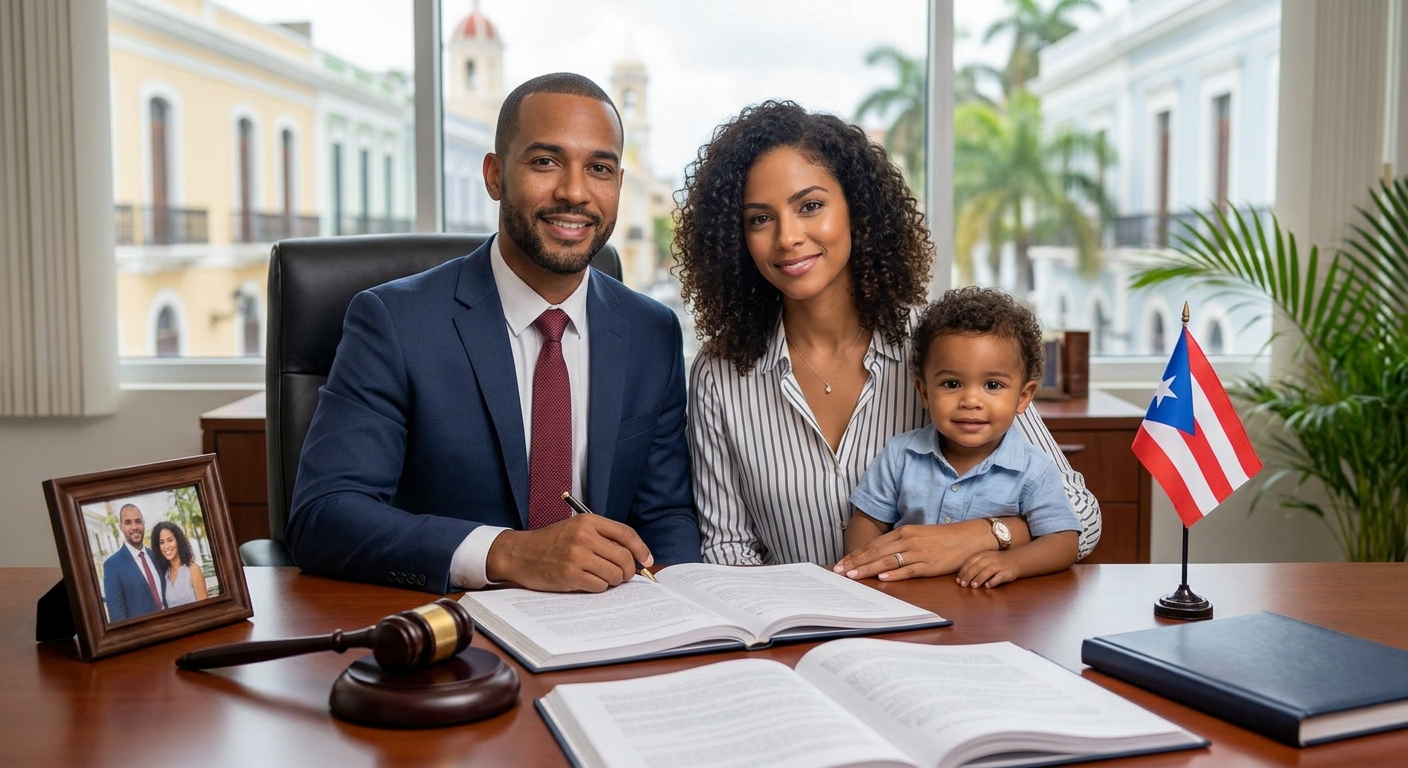

Puerto Rico Adoption Laws Matter to Your Family's Future
Adoption in Puerto Rico follows a distinct legal framework shaped by the island's civil law tradition and specific statutory requirements. Whether you are a Puerto Rico resident seeking to adopt, a prospective parent relocating to the island, or a family member considering adoption of a relative, understanding the applicable laws is essential to completing the process correctly and protecting your family's interests. Puerto Rico's adoption statutes govern everything from eligibility requirements to court procedures, parental rights termination, and post-adoption obligations. This guide provides the information you need to understand how Puerto Rico adoption laws work and what to expect throughout the process.
The Legal Framework for Adoption in Puerto Rico
Puerto Rico's adoption laws are codified primarily in the Puerto Rico Civil Code and supplemented by specific statutes and court rules. The island operates under a civil law system rather than common law, which means adoption procedures and requirements differ from those in the United States mainland. The Puerto Rico Family Court has exclusive jurisdiction over adoption matters, and all adoption proceedings must follow the procedures established by Puerto Rico law.
The fundamental principle underlying Puerto Rico adoption law is that adoption creates a permanent legal relationship between the adoptive parent or parents and the child. Once an adoption is finalized, the child has the same legal status, rights, and obligations as a biological child of the adoptive parents. This includes inheritance rights, succession rights, and the right to use the adoptive parents' surname. The adoptive parents assume full parental rights and responsibilities, including custody, control, and the duty to provide support.
Puerto Rico law recognizes several types of adoption. Domestic adoption involves the adoption of a child born in Puerto Rico. International adoption involves the adoption of a child from another country. Stepparent adoption occurs when a stepparent seeks to adopt the biological child of their spouse. Relative adoption, sometimes called kinship adoption, occurs when a family member such as a grandparent, aunt, uncle, or older sibling adopts a child. Each type of adoption follows the same basic legal procedures but may have different requirements or considerations depending on the circumstances.
Eligibility Requirements for Adoptive Parents
Puerto Rico law establishes specific eligibility criteria that prospective adoptive parents must meet. These requirements exist to ensure that adoptions serve the best interests of the child and that adoptive parents have the capacity to provide a stable, supportive home.
Prospective adoptive parents must be at least 25 years old. There is no upper age limit, though the court will consider the age and health of the prospective parents as part of its evaluation of whether adoption serves the child's best interests. A single person may adopt, and married couples may adopt jointly. Same-sex couples have the same adoption rights as opposite-sex couples under Puerto Rico law.
Prospective adoptive parents must demonstrate financial stability and the ability to support the child. The court will review income, employment, assets, and liabilities to determine whether the prospective parents can provide adequate financial support. This does not mean prospective parents must be wealthy, but they must show they have sufficient resources to meet the child's needs for food, shelter, clothing, education, and healthcare.
Prospective adoptive parents must undergo a home study. The home study is a comprehensive evaluation conducted by a licensed social worker or adoption agency. The home study examines the prospective parents' home environment, family relationships, parenting capacity, motivation for adoption, and ability to meet the child's physical and emotional needs. The home study report is submitted to the court and becomes part of the adoption record.
Prospective adoptive parents must pass criminal background checks and child abuse and neglect clearances. Puerto Rico law prohibits adoption by individuals convicted of certain crimes, including crimes involving violence, sexual abuse, drug trafficking, or crimes against children. The court will not approve an adoption if the prospective parents have substantiated findings of child abuse or neglect.
Prospective adoptive parents must complete adoption education and training. Puerto Rico requires prospective adoptive parents to participate in approved adoption education programs that cover topics such as child development, attachment and bonding, trauma-informed parenting, and post-adoption support resources. The specific requirements may vary depending on the child's age and background.
Parental Rights Termination and Consent Requirements
Before an adoption can be finalized, the parental rights of the child's biological or legal parents must be terminated. Puerto Rico law provides two primary pathways for termination of parental rights: voluntary termination through parental consent and involuntary termination through court order.
Voluntary termination occurs when the biological or legal parents consent to the adoption. In Puerto Rico, parental consent must be given in writing and must be executed before a judge or notary public. The parent must understand the nature and consequences of the consent, including that consent results in permanent termination of parental rights and the parent will have no further legal relationship with the child. Parental consent cannot be given before the child is born, and in most cases, consent cannot be revoked after it has been executed and approved by the court.
The biological or legal parents have the right to be represented by an attorney during the consent process. If a parent cannot afford an attorney, the court may appoint one. The court must ensure that the parent's consent is voluntary and informed before approving it. If the court finds that consent was obtained through fraud, duress, or lack of understanding, the court may refuse to approve the consent and may set aside a previously approved consent.
Involuntary termination of parental rights occurs when the court terminates parental rights without the parents' consent. Puerto Rico law permits involuntary termination when the parent has abandoned the child, when the parent is unfit to parent due to abuse, neglect, substance abuse, mental illness, or other factors, or when termination serves the best interests of the child and the parent has failed to maintain a relationship with the child or provide support. The parent has the right to be notified of the termination proceeding, to be represented by an attorney, and to present evidence and testimony. The court must find clear and convincing evidence that grounds for involuntary termination exist before terminating parental rights without consent.
The Adoption Process and Court Procedures
The adoption process in Puerto Rico involves several distinct stages, each with specific requirements and timelines. Understanding the process helps prospective parents prepare for what to expect and ensures compliance with all legal requirements.
The process begins with the filing of an adoption petition in the Puerto Rico Family Court. The petition must include information about the prospective adoptive parents, the child, the biological or legal parents, and the grounds for adoption. If parental rights have not yet been terminated, the petition must include information about efforts to locate the parents and obtain their consent or a request for involuntary termination.
Once the petition is filed, the court must notify all parties with legal standing, including the biological or legal parents, the child if the child is old enough to understand, and any other individuals with parental or custodial rights. The notification must include information about the adoption proceeding, the right to be represented by an attorney, and the consequences of adoption. If a parent cannot be located despite diligent efforts, the court may proceed with the adoption if it finds that notice was properly attempted.
The home study must be completed and submitted to the court before the adoption can be finalized. The home study report becomes part of the court record and is considered by the judge in determining whether adoption serves the best interests of the child. The prospective adoptive parents and the social worker who conducted the home study may be required to testify about the home study findings.
If parental consent is required, the parents must execute a written consent before a judge or notary public. The court must approve the consent before it becomes effective. If parental rights are to be terminated involuntarily, a hearing must be held at which evidence is presented regarding the grounds for termination. The parent has the right to present evidence and testimony and to cross-examine witnesses.
Once parental rights have been terminated or consent has been obtained, the court will hold a final adoption hearing. The prospective adoptive parents must appear before the judge, and the judge will review the petition, the home study, and any other relevant evidence. The judge will determine whether adoption serves the best interests of the child and whether all legal requirements have been met. If the judge approves the adoption, the court will issue a final adoption decree.
The final adoption decree is the legal document that establishes the adoption and creates the legal relationship between the adoptive parents and the child. The decree includes the names of the adoptive parents and the child, the date of adoption, and any changes to the child's name. The decree is recorded with the Puerto Rico vital statistics office, and a new birth certificate is issued showing the adoptive parents as the parents of the child.
Special Considerations for International Adoption
International adoption involves additional legal requirements beyond those applicable to domestic adoption. Prospective parents seeking to adopt a child from another country must comply with both Puerto Rico law and the laws of the child's country of origin. The Hague Convention on Intercountry Adoption, which Puerto Rico has ratified, establishes procedures designed to protect children and prevent trafficking and exploitation.
International adoption requires the involvement of a licensed adoption agency accredited to conduct international adoptions. The agency assists with locating a child, obtaining necessary documentation from the child's country of origin, and coordinating with authorities in both countries. The prospective parents must work with the agency throughout the process and must comply with all requirements established by the agency and by both countries' laws.
International adoption requires immigration processing. Once the adoption is finalized in Puerto Rico, the child must obtain an immigrant visa to enter or remain in Puerto Rico if the child is not already a Puerto Rico resident or United States citizen. The prospective parents must file immigration petitions and comply with United States immigration law requirements.
International adoption typically takes longer than domestic adoption because of the need to obtain documentation from another country, comply with that country's laws, and complete immigration processing. The timeline can range from one to three years or longer depending on the country of origin and the specific circumstances.
Post-Adoption Rights and Obligations
Once an adoption is finalized, the adoptive parents have all the rights and responsibilities of biological parents. The child has all the rights and status of a biological child, including inheritance rights, succession rights, and the right to use the adoptive parents' surname. The adoptive parents are responsible for the child's support, education, healthcare, and welfare until the child reaches the age of majority.
Puerto Rico law provides for post-adoption support services to help adoptive families adjust to adoption and address any challenges that arise. These services may include counseling, support groups, educational resources, and referrals to other services. Some adoptions may include adoption subsidies, which are ongoing payments from the government to help offset the costs of raising an adopted child, particularly when the child has special needs or is older.
Adoptive parents have the right to obtain non-identifying information about the child's background, medical history, and family history. In some cases, adoptive parents and biological relatives may have the right to access identifying information or to establish contact through adoption registries or mutual consent registries. Puerto Rico law permits adoptees who have reached the age of majority to petition the court for access to their original birth certificate and adoption records under certain circumstances.
Working with an Experienced Puerto Rico Adoption Attorney
Puerto Rico adoption law is complex, and the process involves multiple stages, numerous legal requirements, and significant consequences for all parties involved. Working with an experienced Puerto Rico adoption attorney ensures that your adoption is handled correctly, that all legal requirements are met, and that your family's interests are protected throughout the process.
An experienced adoption attorney can advise you on whether you meet the eligibility requirements for adoption, help you understand the different types of adoption available, and guide you through each stage of the adoption process. Your attorney can represent you in court, ensure that all necessary documentation is prepared and filed correctly, and advocate for your interests and the best interests of the child. Your attorney can also advise you on post-adoption matters, including name changes, inheritance planning, and access to adoption records.
If you are considering adoption in Puerto Rico, the first step is to obtain a free initial evaluation from an experienced Puerto Rico adoption attorney. During the evaluation, you can discuss your situation, ask questions about the adoption process, and learn about your options. The attorney can provide guidance specific to your circumstances and help you understand what to expect as you move forward with adoption.
Next Steps
If you are considering adoption in Puerto Rico or have questions about Puerto Rico adoption laws, contact the Puerto Rico Business Law Firm for a free initial evaluation. Christian M. Frank Fas, Esq., has over 20 years of experience in commercial and business law and can provide guidance on adoption matters and family law issues. Schedule your free initial evaluation today to discuss your situation and learn about your options.