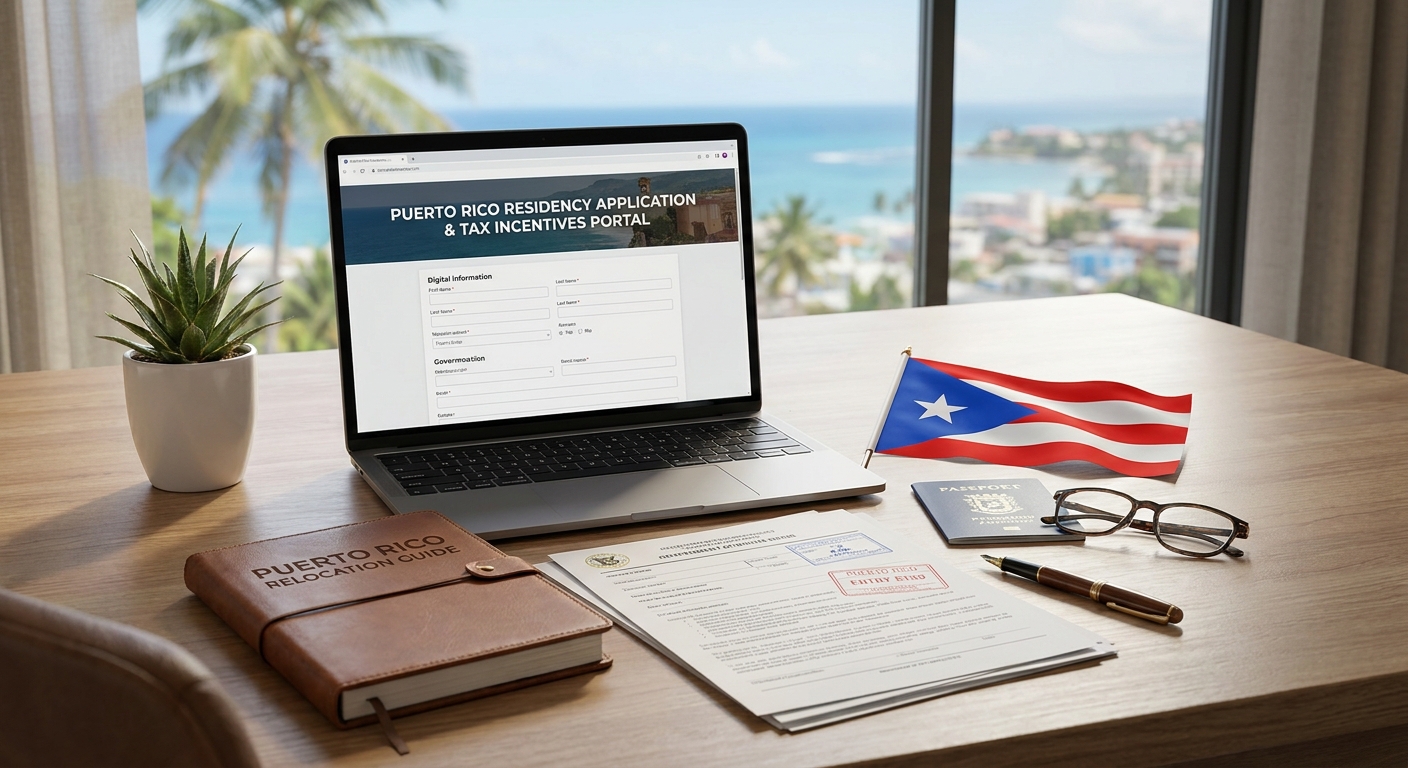

Why Legal Relocation to Puerto Rico Matters
Relocating to Puerto Rico is not simply a matter of buying a plane ticket and finding a place to live. The island operates under a distinct legal framework that differs significantly from the mainland United States, and your residency status carries direct consequences for your tax obligations, business operations, and legal rights. Understanding the legal requirements before you move is the difference between establishing yourself as a legitimate resident with full access to Puerto Rico's benefits and finding yourself in violation of residency rules that can result in penalties, loss of tax incentives, or forced departure from the island.
Puerto Rico's legal system, tax code, and regulatory environment create both opportunities and obligations for relocating individuals and businesses. Whether you are moving for personal reasons, to establish a business, or to take advantage of tax incentives, the process requires careful attention to residency requirements, documentation, and ongoing compliance. This guide provides the information you need to relocate to Puerto Rico legally and maintain that status.
Understanding Puerto Rico Residency Requirements
Puerto Rico residency is defined by specific legal criteria established under Puerto Rico law. You cannot simply declare yourself a resident or assume that living on the island for a few months qualifies you. The government has clear standards, and failure to meet them can result in loss of residency status and associated benefits.
To establish residency in Puerto Rico, you must meet the following requirements:
- Physical presence on the island for at least 183 days during the tax year
- Establishment of a permanent home on the island
- Absence of a permanent home in the United States or elsewhere
- No significant economic or social ties outside Puerto Rico
The 183-day requirement is the most commonly cited threshold, but it is not the only factor. Puerto Rico tax authorities examine the totality of your circumstances. If you maintain a home in the United States, spend significant time there, or keep substantial business interests on the mainland, you may fail the residency test even if you spend more than 183 days on the island.
Documentation of your physical presence is essential. Keep records of your arrival and departure dates, including passport stamps, airline tickets, and hotel records. Puerto Rico does not require you to check in or out, so you must maintain your own records to prove compliance with the 183-day rule.
The Act 60 Tax Incentive Framework
Act 60 represents Puerto Rico's primary tax incentive program for individuals and businesses relocating to the island. The law provides significant tax benefits for qualifying residents, but these benefits are conditional on meeting specific requirements and maintaining compliance with Puerto Rico law.
Act 60 offers different benefits depending on your status and business activities. Individual investors and business owners may qualify for reduced tax rates on certain types of income. The program is designed to attract high-net-worth individuals, entrepreneurs, and investors to Puerto Rico, but the benefits are not automatic. You must apply for Act 60 status, meet the residency requirements, and maintain compliance with all applicable rules.
One critical point: Act 60 benefits do not apply retroactively. You must establish residency and apply for Act 60 status before you begin earning income on the island. If you move to Puerto Rico and start a business without first securing Act 60 status, you may be subject to standard Puerto Rico tax rates, which can be substantially higher. This timing issue alone makes it essential to plan your relocation carefully and consult with a focused tax and business law professional before you move.
For detailed information on Act 60 requirements, eligibility criteria, and the application process, see our Act 60 tax incentives page.
Establishing Your Permanent Home in Puerto Rico
Residency requires that you establish a permanent home on the island. This does not mean you must own property, but you must have a fixed residence that you occupy. Renting an apartment or house is sufficient, provided it is your primary residence and you maintain it as such.
The key word is permanent. A vacation rental, a hotel room, or a temporary lease will not satisfy this requirement. You need a residential address where you receive mail, maintain utilities in your name, and can demonstrate that you actually live there. Many relocating individuals rent for the first year or two while they decide whether to purchase property, and this is a perfectly acceptable approach.
When you establish your permanent home, register it with Puerto Rico's tax authority. Provide your residential address on all official documents, including your Act 60 application, business registrations, and tax filings. Inconsistencies between your stated residence and your actual location can trigger audits and questions about your residency status.
If you own property in the United States, you must be prepared to explain why you are not maintaining it as your primary residence. Selling the property is the cleanest approach, but if you retain it, document that it is not your permanent home. This might include renting it out, leaving it vacant, or maintaining it only for occasional visits. The burden is on you to prove that your Puerto Rico residence is your primary home.
Severing Ties with the United States
Establishing Puerto Rico residency requires more than just moving to the island. You must also sever or substantially reduce your ties to the United States and any other jurisdiction where you previously lived. This is a factual determination that Puerto Rico tax authorities examine closely.
Severing ties includes the following steps:
- Selling or renting out your U.S. home, or clearly documenting that it is not your primary residence
- Transferring your driver's license to Puerto Rico
- Registering your vehicles in Puerto Rico
- Updating your voter registration to Puerto Rico
- Changing your mailing address with banks, insurance companies, and other financial institutions
- Closing or transferring U.S. business interests, or restructuring them so they are no longer your primary economic activity
- Establishing banking and financial accounts in Puerto Rico
- Enrolling your children in Puerto Rico schools if applicable
These steps serve two purposes. First, they demonstrate to Puerto Rico authorities that you have genuinely relocated and intend to remain on the island. Second, they help establish your residency status for U.S. federal tax purposes, which is important because Puerto Rico residents are generally not subject to U.S. federal income tax on Puerto Rico-source income.
Do not underestimate the importance of these administrative changes. A Puerto Rico tax audit will examine your driver's license, vehicle registration, voter registration, and banking records. If these documents show that you maintained significant ties to the United States, the tax authority may challenge your residency claim, regardless of how many days you spent on the island.
Business Registration and Compliance
If you are relocating to Puerto Rico to establish or operate a business, you must register that business with Puerto Rico's Department of State and comply with all applicable regulations. The process varies depending on your business structure, but all businesses must be registered before they begin operations.
Puerto Rico recognizes corporations, limited liability companies, partnerships, and sole proprietorships. Each structure has different registration requirements, tax implications, and compliance obligations. A corporation or LLC must file articles of incorporation or organization with the Department of State. A sole proprietorship may require a business license depending on the type of business. A partnership must file a partnership agreement.
Once your business is registered, you must obtain an employer identification number (EIN) from Puerto Rico's tax authority, even if you have no employees. You must also register for Puerto Rico sales tax if your business involves the sale of goods or services subject to tax. Failure to register for sales tax can result in penalties and back taxes.
If your business involves regulated activities such as banking, securities, blockchain, or financial services, you must comply with additional requirements specific to your industry. For example, if you are establishing a blockchain or cryptocurrency business, you must understand Puerto Rico's regulatory framework for digital assets and obtain any required licenses or approvals before you begin operations. See our blockchain compliance page for more information on this topic.
Tax Filing Obligations and Reporting Requirements
Puerto Rico residents must file annual tax returns with Puerto Rico's tax authority, regardless of whether they have Act 60 status. The filing deadline is typically April 15 of the following year, though extensions are available. Failure to file on time can result in penalties and interest charges.
Your tax filing obligations depend on your income sources and business activities. If you are an individual with only Puerto Rico-source income and Act 60 status, your tax liability may be significantly reduced. If you have income from sources outside Puerto Rico, you may owe tax on that income depending on your residency status and the source of the income. If you operate a business, you must file a business tax return in addition to your personal return.
Puerto Rico also requires residents to report foreign financial accounts and assets in certain circumstances. If you have bank accounts, investments, or other assets outside Puerto Rico, you may be required to report them to Puerto Rico tax authorities. Failure to report foreign assets can result in substantial penalties.
Additionally, if you are a U.S. citizen, you must file a U.S. federal tax return even if you are a Puerto Rico resident, though you may be able to exclude Puerto Rico-source income from your U.S. taxable income. The interaction between Puerto Rico and U.S. tax law is complex, and you should consult with a focused tax professional to ensure you are in compliance with both jurisdictions.
Immigration and Visa Considerations
If you are not a U.S. citizen, your ability to relocate to Puerto Rico depends on your immigration status and visa category. U.S. citizens and permanent residents can move to Puerto Rico without restriction. Citizens of other countries must have valid immigration status to reside on the island.
Puerto Rico does not have a separate immigration system. Immigration matters are handled by U.S. Citizenship and Immigration Services (USCIS) under federal law. If you are a foreign national, you must have a valid visa or immigration status that permits you to reside in Puerto Rico. This might include an employment visa, an investor visa, a student visa, or other categories recognized by U.S. immigration law.
If you are considering relocating to Puerto Rico and you are not a U.S. citizen or permanent resident, consult with an immigration attorney before you move. You must ensure that your immigration status permits you to establish residency on the island and that you understand any restrictions on your ability to work or conduct business.
Real Estate and Property Ownership
Purchasing property in Puerto Rico is generally straightforward for U.S. citizens and permanent residents, but the process involves Puerto Rico-specific legal requirements and considerations. Property is registered with Puerto Rico's Property Registry, and all transactions must be documented in a deed prepared by a Puerto Rico licensed attorney.
Puerto Rico property law differs from U.S. state law in several respects. Property rights, landlord-tenant law, and real estate transactions are governed by Puerto Rico's Civil Code, which is based on civil law rather than common law. If you are purchasing property, you should work with a Puerto Rico real estate attorney who understands the local legal framework.
Property ownership can support your residency claim. Owning a home in Puerto Rico demonstrates a long-term commitment to the island and provides strong evidence that you have established a permanent residence. However, property ownership is not required for residency. Many individuals establish residency by renting, and this is a perfectly valid approach.
If you own property in the United States, you should consider the tax implications of retaining that property while establishing Puerto Rico residency. Property taxes, mortgage interest, and other expenses related to U.S. property may affect your Puerto Rico tax liability. Consult with a focused tax professional to understand the implications for your specific situation.
Banking and Financial Account Setup
Establishing banking and financial accounts in Puerto Rico is an important step in the relocation process. Puerto Rico banks can provide checking and savings accounts, credit cards, loans, and investment services. Opening accounts in Puerto Rico demonstrates that you have established financial ties to the island and supports your residency claim.
Most major Puerto Rico banks accept new residents and can open accounts relatively quickly. You will need to provide identification, proof of residency, and other standard documentation. Some banks may require a minimum deposit or balance to open an account.
If you are relocating with significant assets, you may want to consult with a Puerto Rico financial advisor or wealth manager who can help you structure your accounts and investments in a way that complies with Puerto Rico tax law and maximizes the benefits of your residency status. Puerto Rico has a developed financial services sector, and many experienced professionals can assist with this process.
Ongoing Compliance and Maintaining Residency Status
Establishing residency is not a one-time event. You must maintain your residency status by continuing to meet the legal requirements. This means spending at least 183 days per year in Puerto Rico, maintaining your permanent home on the island, and avoiding actions that would suggest you have abandoned your Puerto Rico residence.
Maintaining residency requires ongoing attention to several factors. First, track your days in and out of Puerto Rico carefully. If you travel frequently, keep detailed records of your travel dates. Second, maintain your Puerto Rico residence as your primary home. Do not allow it to fall into disrepair or become abandoned. Third, continue to update your official documents and registrations as needed. If you change addresses, update your driver's license and vehicle registration promptly. Fourth, file your Puerto Rico tax returns on time every year, even if you have no tax liability.
If you fail to maintain residency status, you may lose Act 60 benefits, become subject to standard Puerto Rico tax rates, or face penalties and back taxes. In extreme cases, you may be required to leave the island. The cost of losing residency status far exceeds the cost of maintaining compliance, so treat this obligation seriously.
Common Mistakes to Avoid
Many individuals relocating to Puerto Rico make preventable mistakes that jeopardize their residency status or tax benefits. Understanding these common errors can help you avoid them.
The first mistake is failing to plan before moving. Many people move to Puerto Rico and then try to figure out the legal requirements afterward. By that time, they may have already violated residency rules or missed deadlines for Act 60 applications. Plan your relocation carefully, consult with a focused business law professional before you move, and ensure that you understand all applicable requirements.
The second mistake is maintaining significant ties to the United States. Keeping a home in the U.S., spending substantial time there, or maintaining a business there can undermine your Puerto Rico residency claim. If you are serious about relocating, you must be willing to sever or substantially reduce your U.S. ties.
The third mistake is failing to document your physical presence. If you cannot prove that you spent at least 183 days in Puerto Rico, you cannot claim residency status. Keep detailed records of your travel, including passport stamps, airline tickets, and hotel receipts.
The fourth mistake is delaying your Act 60 application. Act 60 benefits do not apply retroactively. If you move to Puerto Rico and start earning income before you apply for Act 60 status, you may owe standard Puerto Rico taxes on that income. Apply for Act 60 status before you begin earning income on the island.
The fifth mistake is failing to register your business properly. If you operate a business in Puerto Rico without registering it with the Department of State, you may face penalties and be unable to enforce contracts or protect your business interests. Register your business before you begin operations.
Next Steps: Getting Professional Guidance
Relocating to Puerto Rico legally requires careful planning and attention to multiple legal, tax, and regulatory requirements. The process is manageable, but it is not something you should attempt without professional guidance. The cost of making mistakes far exceeds the cost of getting it right from the beginning.
Christian M. Frank Fas, Esq. is a Puerto Rico licensed attorney with over 20 years of experience in commercial and business law. The firm provides focused guidance on Puerto Rico relocation, residency requirements, Act 60 applications, business registration, and ongoing compliance. A free initial evaluation will help you understand your specific situation and develop a plan for your relocation.
Contact the firm today to schedule your free initial evaluation. Visit lawyerinpr.com/start to begin the process. The sooner you get professional guidance, the sooner you can relocate to Puerto Rico with confidence that you are in full compliance with all applicable legal requirements.