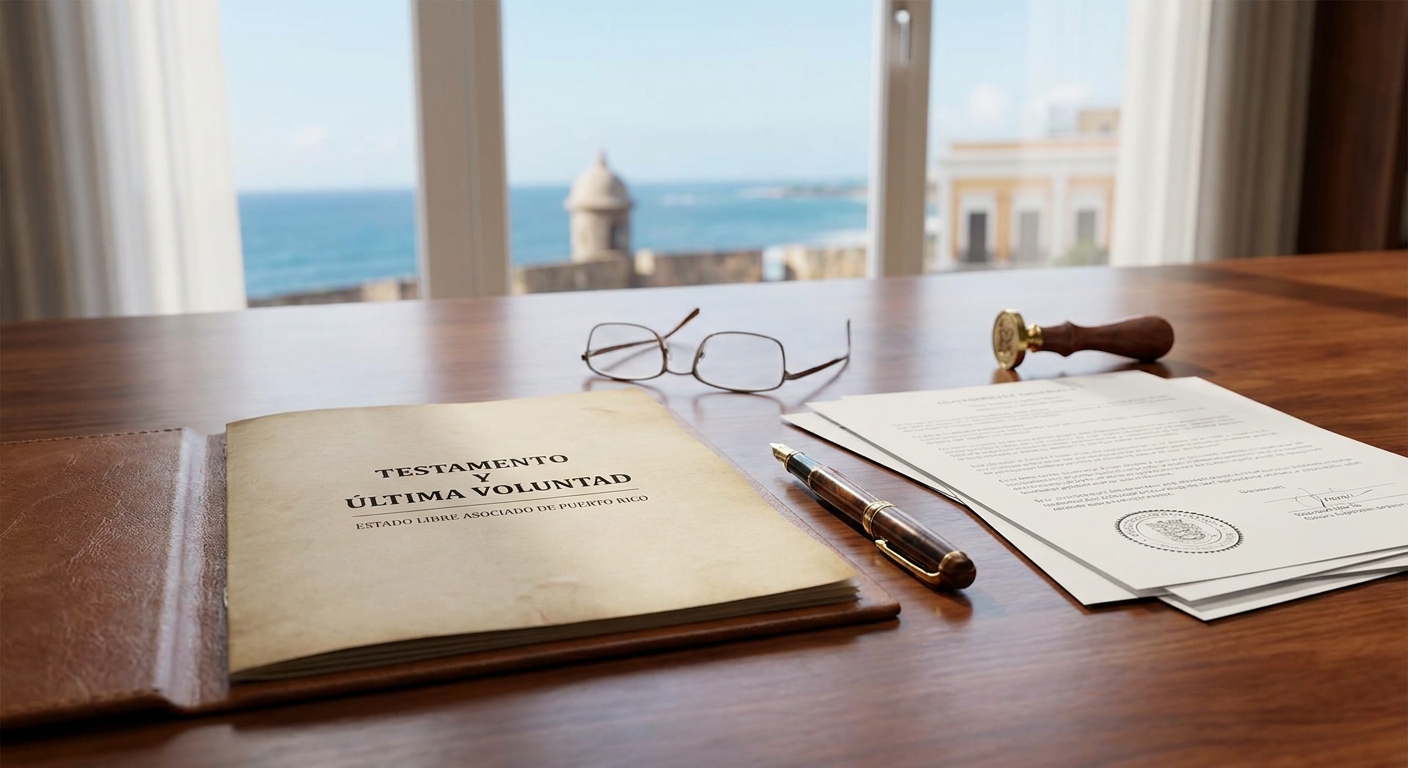

Why Your Will Matters in Puerto Rico
A will is the foundation of your estate plan. Without one, Puerto Rico law determines who receives your property, who raises your minor children, and who manages your assets after you die. That outcome may not match your wishes. Creating a valid will in Puerto Rico requires understanding local law, which differs significantly from mainland U.S. states. The rules governing wills, inheritance, and estate administration in Puerto Rico are based on civil law principles, not common law. This distinction affects how you draft your will, what language you use, and how your estate is settled.
If you own property in Puerto Rico, operate a business here, or have relocated to the island under Act 60 tax incentives, a Puerto Rico will is essential. Even if you already have a mainland will, it may not be sufficient to cover Puerto Rico assets or comply with local requirements. The cost of failing to plan is high: your family faces probate delays, potential disputes, and unnecessary taxes.
The Legal Framework for Puerto Rico Wills
Puerto Rico's civil law system means that wills are governed by the Puerto Rico Civil Code, not by the Uniform Probate Code used in most U.S. states. This creates important differences in how wills are executed, interpreted, and enforced.
The Puerto Rico Civil Code requires that a will be executed with specific formalities. A standard will must be signed by the testator (the person making the will) in the presence of at least three witnesses. All parties must sign the document in each other's presence. The testator must declare that the document is his or her will. These requirements are strict. A will that fails to meet them may be invalid, leaving your estate to be distributed according to intestacy laws rather than your intentions.
Puerto Rico also recognizes holographic wills, which are handwritten and signed by the testator alone, without witnesses. However, holographic wills are subject to strict requirements and are often challenged. They are generally not recommended unless circumstances make a formal will impossible.
Another option is a notarial will, which is executed before a notary public and witnesses. This form provides additional legal protection and is often preferred for larger estates or complex family situations.
Key Differences Between Puerto Rico and Mainland Wills
If you have lived on the mainland and are now in Puerto Rico, your existing will may not be valid here. Several critical differences exist:
- Witness requirements: Puerto Rico requires three witnesses; most mainland states require two.
- Forced heirship: Puerto Rico recognizes the concept of forced heirs, meaning certain family members have a legal right to inherit a portion of your estate regardless of what your will says. This does not exist in most mainland states.
- Community property: Puerto Rico does not recognize community property. Property acquired during marriage is generally separate property unless the spouses agree otherwise.
- Probate procedures: Puerto Rico probate follows civil law procedures, which differ from common law probate in the mainland.
- Language: While English wills may be accepted, Puerto Rico courts prefer wills drafted in Spanish or with Spanish translations.
These differences mean that a mainland will may create confusion, fail to address Puerto Rico assets properly, or violate local law. If you own property in both jurisdictions, you may need separate wills or a coordinated estate plan that addresses both locations.
Forced Heirship and Your Estate Plan
One of the most significant differences in Puerto Rico law is the concept of forced heirship. Under the Puerto Rico Civil Code, certain family members have a legal right to inherit a portion of your estate. You cannot completely disinherit them, even if you want to.
Forced heirs typically include your children and, in some cases, your spouse. The amount they are entitled to receive is called the legitime. The legitime is calculated as a percentage of your net estate and varies depending on how many forced heirs you have. If you have one child, that child is entitled to one-third of your estate. If you have two children, each is entitled to one-third, meaning two-thirds of your estate goes to forced heirs. If you have three or more children, each is entitled to one-fourth of your estate.
You can dispose of the remaining portion of your estate (called the free portion) as you wish. You can leave it to your spouse, other family members, friends, or charitable organizations. However, you cannot reduce the forced heirs' share below their legal minimum.
Understanding forced heirship is critical when planning your estate. If you attempt to leave all your property to one child and exclude others, the excluded children can challenge your will and claim their forced share. This can lead to litigation and family conflict. An experienced Puerto Rico attorney can help you structure your will to respect forced heirship rules while still accomplishing your goals.
Intestacy: What Happens Without a Will
If you die without a valid will in Puerto Rico, your estate is distributed according to intestacy laws. The Puerto Rico Civil Code sets out a specific order of succession. Your spouse, children, parents, and other relatives inherit in a predetermined order, regardless of your wishes.
Intestacy creates several problems. First, the distribution may not match what you would have chosen. Second, the court must appoint an administrator to manage your estate, which costs time and money. Third, if you have minor children, the court must appoint a guardian, and you have no say in who that person is. Fourth, your estate may be subject to unnecessary taxes and fees.
Intestacy is particularly problematic if you have a blended family, own a business, or have significant assets. Without a will, your business may be forced to liquidate to pay estate taxes or satisfy creditors. Your spouse may receive less than you intended. Your children from a previous relationship may be excluded entirely.
Creating a will gives you control over these outcomes. You decide who inherits, who manages your estate, and who cares for your children. A will also allows you to name an executor (called an administrator in Puerto Rico) whom you trust to carry out your wishes.
Executing a Valid Puerto Rico Will
To execute a valid will in Puerto Rico, you must follow specific steps. Failure to follow these steps can result in an invalid will, which defeats the purpose of creating one.
First, you must be of sound mind and legal age (18 or older). You must understand the nature and extent of your property and the natural objects of your bounty (your family members). You must be free from delusions or mental illness that affects your judgment.
Second, you must declare to your witnesses that the document is your will. This declaration can be made orally or in writing. The witnesses must understand that they are witnessing a will.
Third, you must sign the will in the presence of all three witnesses. The witnesses must sign in your presence and in the presence of each other. All signatures must appear on the same page or on pages that are clearly connected.
Fourth, the will should be dated. While not strictly required, dating the will helps establish when it was executed and can prevent disputes if you create multiple wills.
Fifth, consider having the will notarized. A notarial will provides additional legal protection and is less likely to be challenged. The notary can certify that you were of sound mind, that you understood the document, and that the execution formalities were followed.
After execution, store your will in a safe place. Many people keep their wills in a safe deposit box, with their attorney, or with the Puerto Rico court system. Inform your family and your executor where the will is located so it can be found after your death.
Common Mistakes in Will Planning
Many people make preventable mistakes when creating a will. Understanding these mistakes can help you avoid them.
One common mistake is failing to update your will after major life events. If you marry, divorce, have children, or acquire significant property, you should review and update your will. An outdated will may not reflect your current wishes or family situation.
Another mistake is naming an executor who is unwilling or unable to serve. Your executor must be trustworthy, organized, and willing to take on the responsibility. If you name someone without asking them first, they may refuse to serve, and the court will appoint someone else.
A third mistake is failing to coordinate your will with other estate planning documents. If you have a revocable living trust, life insurance policies, or retirement accounts, these assets pass outside of probate and are not controlled by your will. You should coordinate these assets with your will to ensure your overall estate plan is consistent.
A fourth mistake is using ambiguous language or failing to explain your wishes. If your will is unclear, your family may dispute its meaning, leading to litigation. Use clear, specific language and consider including a letter of intent that explains your reasoning.
A fifth mistake is failing to account for taxes. Depending on the size of your estate, you may be subject to Puerto Rico inheritance taxes or federal estate taxes. Proper planning can minimize these taxes and preserve more of your estate for your heirs.
Probate and Estate Administration in Puerto Rico
After you die, your will must be probated in Puerto Rico. Probate is the legal process of proving that your will is valid, identifying your assets, paying your debts and taxes, and distributing your remaining property to your heirs.
In Puerto Rico, probate is handled by the Court of First Instance. The process begins when your executor files your will with the court and petitions for probate. The court must determine that the will is valid and that the executor is qualified to serve.
Once the will is admitted to probate, the executor must identify all of your assets, notify your creditors, and pay any debts and taxes owed by your estate. This process can take several months to several years, depending on the complexity of your estate and whether anyone challenges the will.
The executor must also file an inventory of your assets with the court and provide an accounting to your heirs. The executor is required to act in the best interests of your estate and your heirs and must follow Puerto Rico law regarding the management and distribution of estate assets.
Probate can be expensive and time-consuming. Court fees, attorney fees, and executor fees can reduce the amount available for your heirs. For this reason, many people use revocable living trusts or other probate avoidance strategies to pass their assets to their heirs more efficiently.
Special Considerations for Act 60 Residents
If you have relocated to Puerto Rico under Act 60 tax incentives, your will planning should account for your new tax status. Act 60 provides significant tax benefits to eligible individuals, including a 0% capital gains tax rate and reduced income tax rates. However, these benefits apply only to Puerto Rico-source income and gains.
Your will should be structured to preserve these tax benefits for your heirs. If you have mainland assets, your will should address how these assets are treated under Puerto Rico law. You may also want to consider whether a revocable living trust or other planning strategies would be more beneficial than a simple will.
Additionally, if you have business interests in Puerto Rico, your will should address the succession of your business. You may want to create a buy-sell agreement or other succession plan to ensure your business continues after your death.
Wills and Business Succession
If you own a business in Puerto Rico, your will should include provisions for the succession of your business. Without a succession plan, your business may be forced to liquidate after your death, resulting in loss of value and loss of jobs for your employees.
A business succession plan should address several questions: Who will manage the business after your death? Will your heirs continue to operate the business, or will it be sold? If it is sold, who will be responsible for finding a buyer? How will the sale price be determined? How will the proceeds be distributed among your heirs?
Common succession strategies include naming a trusted family member or employee to manage the business, creating a buy-sell agreement with your business partners, or establishing a revocable living trust to hold your business interests. Each strategy has advantages and disadvantages depending on your situation.
An experienced Puerto Rico attorney can help you develop a succession plan that protects your business and provides for your family.
Updating and Modifying Your Will
Your will is not permanent. You can modify or revoke it at any time as long as you are of sound mind. There are two ways to modify a will: by creating a codicil or by creating a new will.
A codicil is a document that amends your existing will. It must be executed with the same formalities as a will (three witnesses, signature, etc.). Codicils are useful for making minor changes, such as updating the name of your executor or changing a specific bequest.
If you want to make substantial changes, it is often better to create a new will. A new will should include a clause revoking all previous wills and codicils. This prevents confusion and ensures that only your most recent will is valid.
You should review your will every three to five years or whenever your circumstances change. Major life events such as marriage, divorce, the birth of children, significant changes in your financial situation, or the death of a family member should trigger a review of your will.
Next Steps: Protect Your Family and Assets
Creating a valid will in Puerto Rico is one of the most important steps you can take to protect your family and ensure your wishes are carried out. The process requires understanding Puerto Rico law and following specific legal formalities. Mistakes can result in an invalid will or an estate plan that does not accomplish your goals.
If you own property in Puerto Rico, operate a business here, or have relocated to the island, you need a will that complies with Puerto Rico law. An experienced Puerto Rico attorney can help you draft a will that is valid, clear, and tailored to your specific situation.
Contact the Puerto Rico Business Law Firm for a free initial evaluation. Christian M. Frank Fas, Esq. has over 20 years of experience in commercial and business law in Puerto Rico and can help you develop an estate plan that protects your family and preserves your legacy. Schedule your free initial evaluation today.