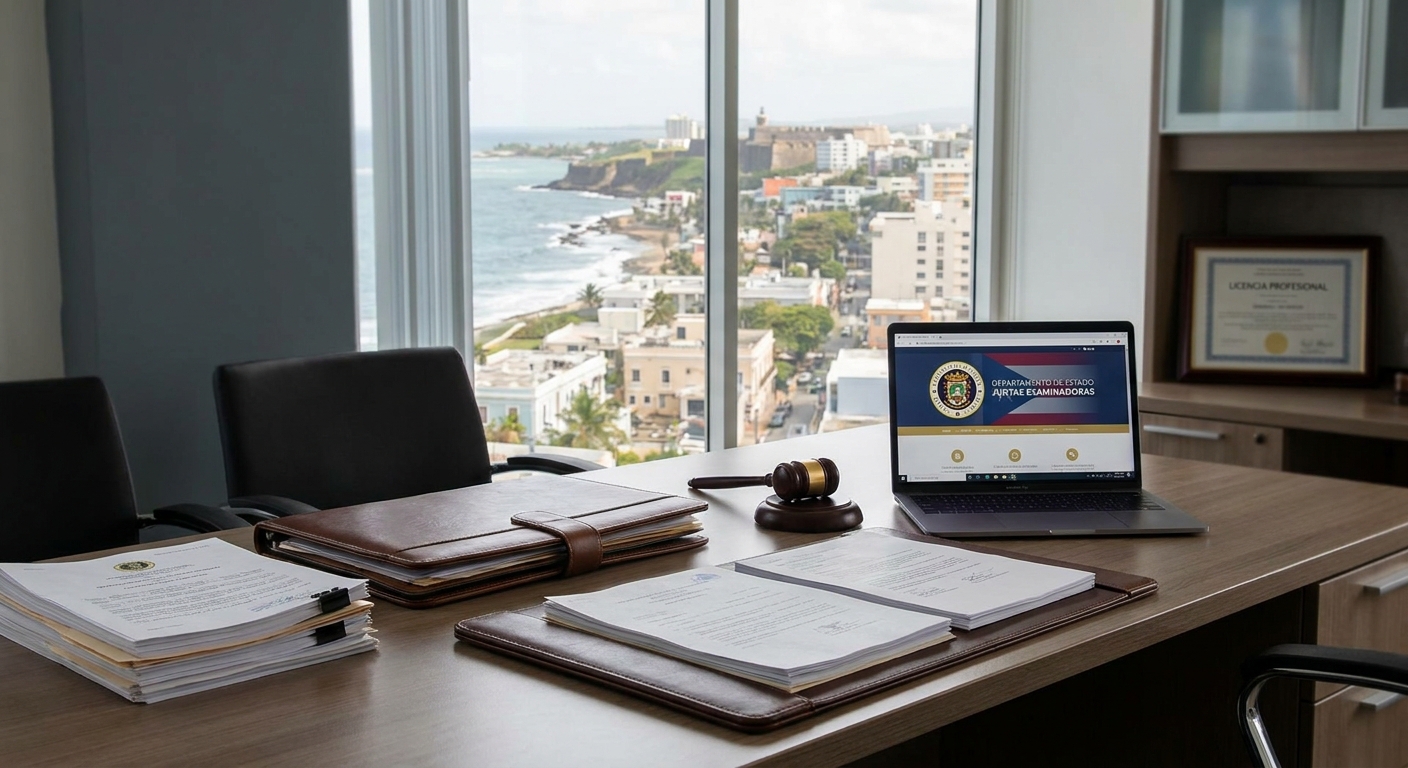

Professional licensing in Puerto Rico operates under a distinct regulatory framework that differs significantly from mainland United States requirements.
If you are a professional seeking to practice in Puerto Rico, or a business that employs licensed professionals, understanding the licensing requirements is not optional. Puerto Rico maintains its own licensing boards, examination standards, and continuing education requirements across dozens of professions. Failure to comply with these requirements can result in fines, license suspension, criminal charges, and business closure. This article explains how Puerto Rico professional licensing works and what you need to do to remain compliant.
How Puerto Rico Professional Licensing Differs from the Mainland
Puerto Rico is not subject to mainland United States licensing standards. The island operates under its own regulatory system established by Puerto Rico law and administered by the Puerto Rico Department of State and various professional boards. This means that a license to practice law, medicine, engineering, accounting, or any other regulated profession in Florida, New York, or California does not automatically permit you to practice in Puerto Rico.
Each profession has its own licensing board, examination requirements, and renewal procedures. Some professions require Puerto Rico-specific examinations. Others accept mainland credentials with additional documentation or reciprocity agreements. The requirements vary widely depending on the profession and the specific board that oversees it.
For businesses operating in Puerto Rico, this distinction matters because you cannot simply transfer your mainland workforce to the island without ensuring each professional holds a valid Puerto Rico license. A business that employs unlicensed professionals faces liability, regulatory penalties, and potential criminal exposure for the business owner.
Which Professions Require Licensing in Puerto Rico
Puerto Rico requires licensing for a broad range of professions. The following list includes the most common regulated professions, though it is not exhaustive:
- Attorneys and law practitioners
- Physicians and surgeons
- Dentists and dental hygienists
- Nurses and nursing specialists
- Pharmacists
- Psychologists
- Engineers and architects
- Accountants and certified public accountants
- Real estate brokers and agents
- Insurance agents and brokers
- Contractors and construction professionals
- Electricians and plumbers
- Barbers and cosmetologists
- Security professionals
- Notaries public
If your profession involves providing services to the public or handling regulated activities, you should verify whether Puerto Rico requires a license. The Puerto Rico Department of State maintains a list of regulated professions and their corresponding licensing boards. Assuming your profession does not require a license without verification can expose you to serious legal and financial consequences.
The Puerto Rico Licensing Application Process
The application process for professional licensing in Puerto Rico varies by profession and licensing board. However, most applications follow a general structure that includes the following steps:
Step 1: Verify Eligibility
Before applying, you must confirm that you meet the basic eligibility requirements for your profession. These typically include educational qualifications, work experience, and residency or domicile requirements. Some professions require that you establish residency in Puerto Rico before applying for a license. Others allow non-residents to hold licenses if they maintain a business address on the island.
Step 2: Gather Required Documentation
You will need to submit official transcripts, diplomas, certificates of good standing from other jurisdictions, proof of work experience, and identification documents. If you obtained your education or previous licenses outside Puerto Rico, you may need to have documents translated into Spanish and certified by an official translator. The licensing board may also require background checks and verification of your professional history.
Step 3: Pass the Licensing Examination
Most professions require you to pass a Puerto Rico licensing examination. Some boards accept mainland examinations with additional Puerto Rico-specific components. Others require a full examination administered in Spanish or English, depending on the profession. Examination schedules vary, and some professions only offer examinations once or twice per year.
Step 4: Pay Application and Licensing Fees
Application fees, examination fees, and initial licensing fees vary by profession. These fees are non-refundable in most cases, even if you do not pass the examination. Budget for these costs when planning your licensing timeline.
Step 5: Receive Your License
Once you have met all requirements, the licensing board will issue your license. You will receive a license number and may be required to display your license in your place of business. Some professions require you to register with additional government agencies or maintain professional liability insurance.
Reciprocity and License Transfers from Other Jurisdictions
Puerto Rico has reciprocity agreements with some mainland jurisdictions for certain professions. Reciprocity means that if you hold a valid license in another state or territory, you may be able to obtain a Puerto Rico license without taking the full examination or meeting all standard requirements.
Reciprocity agreements exist for some professions but not others. Attorneys, for example, may be able to obtain a Puerto Rico license through reciprocity if they hold a license in good standing in another jurisdiction and meet additional requirements such as Puerto Rico residency or domicile. Engineers, architects, and some healthcare professionals may also have reciprocity pathways.
However, reciprocity is not automatic. You must apply through the specific licensing board and demonstrate that you meet the reciprocity requirements. The process typically takes longer than a standard application because the board must verify your credentials with the other jurisdiction.
If reciprocity is not available for your profession, you will need to apply as a new applicant and meet all standard requirements, including examination. In some cases, the licensing board may grant partial credit for mainland education or experience, but this is not guaranteed.
Continuing Education and License Renewal
Obtaining a Puerto Rico professional license is not the end of your compliance obligations. Most professions require continuing education to maintain an active license. Continuing education requirements vary by profession and may include classroom hours, online courses, seminars, or a combination of these formats.
Licenses must be renewed on a schedule set by each licensing board. Renewal periods typically range from one to three years. You must submit a renewal application, pay renewal fees, and provide proof that you have completed the required continuing education hours. Failure to renew your license before the expiration date will result in license suspension or cancellation.
Some professions allow you to renew your license online through the Puerto Rico Department of State website. Others require you to submit renewal applications in person or by mail. Keep track of your license expiration date and begin the renewal process well in advance to avoid gaps in your licensure.
Compliance Obligations for Businesses Employing Licensed Professionals
If your business employs licensed professionals, you have a responsibility to ensure that all employees hold valid, current licenses. This obligation extends beyond simply hiring licensed individuals. You must verify licenses before employment, maintain records of license verification, and monitor license expiration dates to ensure that employees renew their licenses on time.
Many businesses fail to implement proper license verification procedures and discover too late that an employee's license has expired or was never valid. This creates liability for the business owner, who may face fines, civil lawsuits from clients, and criminal charges for operating an unlicensed business or allowing unlicensed practice.
Establish a system to track license expiration dates for all licensed employees. Require employees to provide proof of license renewal before their current license expires. Maintain copies of all licenses in a secure location. If you discover that an employee's license has expired, immediately remove that employee from performing licensed work until the license is renewed.
Penalties for Operating Without a License or Allowing Unlicensed Practice
Puerto Rico law imposes serious penalties for operating a profession without a license or allowing unlicensed individuals to practice. These penalties include civil fines, criminal charges, and business closure.
Civil penalties for unlicensed practice can range from hundreds to thousands of dollars per violation. Criminal penalties may include fines and imprisonment. Additionally, clients or customers who were harmed by unlicensed practice may file civil lawsuits against the business owner for damages.
The licensing board may also issue cease and desist orders requiring you to stop the unlicensed activity immediately. Violating a cease and desist order can result in additional penalties and criminal charges.
For businesses, the consequences extend beyond financial penalties. Operating with unlicensed professionals can damage your reputation, result in loss of business, and create personal liability for the business owner. Insurance policies may not cover claims arising from unlicensed practice, leaving you personally responsible for damages.
Special Considerations for Act 60 Businesses and Foreign Professionals
If your business qualifies for Act 60 tax incentives, you still must comply with all professional licensing requirements. Act 60 provides tax benefits, but it does not exempt you from licensing obligations. All professionals working in your business must hold valid Puerto Rico licenses.
Foreign professionals seeking to work in Puerto Rico face additional requirements. You may need to obtain work authorization, establish residency or domicile, and have your foreign credentials evaluated and recognized by the Puerto Rico licensing board. Some professions require that you demonstrate proficiency in Spanish. The process for foreign professionals is typically longer and more complex than for mainland professionals.
Licensing Issues in Regulated Industries
Certain industries face heightened licensing scrutiny. If you operate in banking, securities, insurance, or other regulated industries, you must ensure that all relevant professionals hold appropriate licenses. Regulatory agencies conduct audits and inspections to verify compliance. Failure to maintain proper licensing in these industries can result in regulatory action against your business license itself, not just individual professional licenses.
For businesses in banking and securities, licensing compliance is non-negotiable. Regulatory agencies have broad authority to impose penalties, revoke business licenses, and pursue criminal charges for licensing violations.
Working with an Experienced Puerto Rico Business Attorney
Professional licensing requirements in Puerto Rico are complex and vary significantly by profession. Mistakes in the licensing process can delay your ability to practice or operate your business, and violations can result in serious legal and financial consequences.
An experienced Puerto Rico business attorney can help you understand the specific licensing requirements for your profession, guide you through the application process, ensure that your business maintains compliance with all licensing obligations, and represent you if you face licensing disputes or regulatory action.
Christian M. Frank Fas, Esq. has over 20 years of experience in Puerto Rico commercial and business law. The firm assists professionals and businesses with licensing compliance, regulatory matters, and business formation in Puerto Rico.
Next Steps
If you are a professional seeking to obtain a Puerto Rico license or a business owner who needs to ensure compliance with professional licensing requirements, contact the firm for a free initial evaluation. During the evaluation, you can discuss your specific situation, learn about the licensing requirements that apply to you, and understand what steps you need to take to achieve or maintain compliance.
Visit lawyerinpr.com/start to request your free initial evaluation today.