
Table of Contents
Understanding Power of Attorney in Puerto Rico
When doing business or managing investments in Puerto Rico, having the ability to act on someone else's behalf can be essential. This is where a power of attorney (POA) comes into play. A POA is a legal document that grants one person the authority to make decisions or perform actions for another. But how does this work within Puerto Rico’s legal framework?
Legal Framework for Power of Attorney in Puerto Rico
Puerto Rico follows a legal system rooted in Spanish civil law, which influences how powers of attorney are created and used. The rules are designed to ensure clarity and protect the interests of all parties involved. The law recognizes two main types of POA: general and special. A general POA grants broad authority, while a special POA limits the authority to specific tasks or transactions.
Creating a Power of Attorney in Puerto Rico
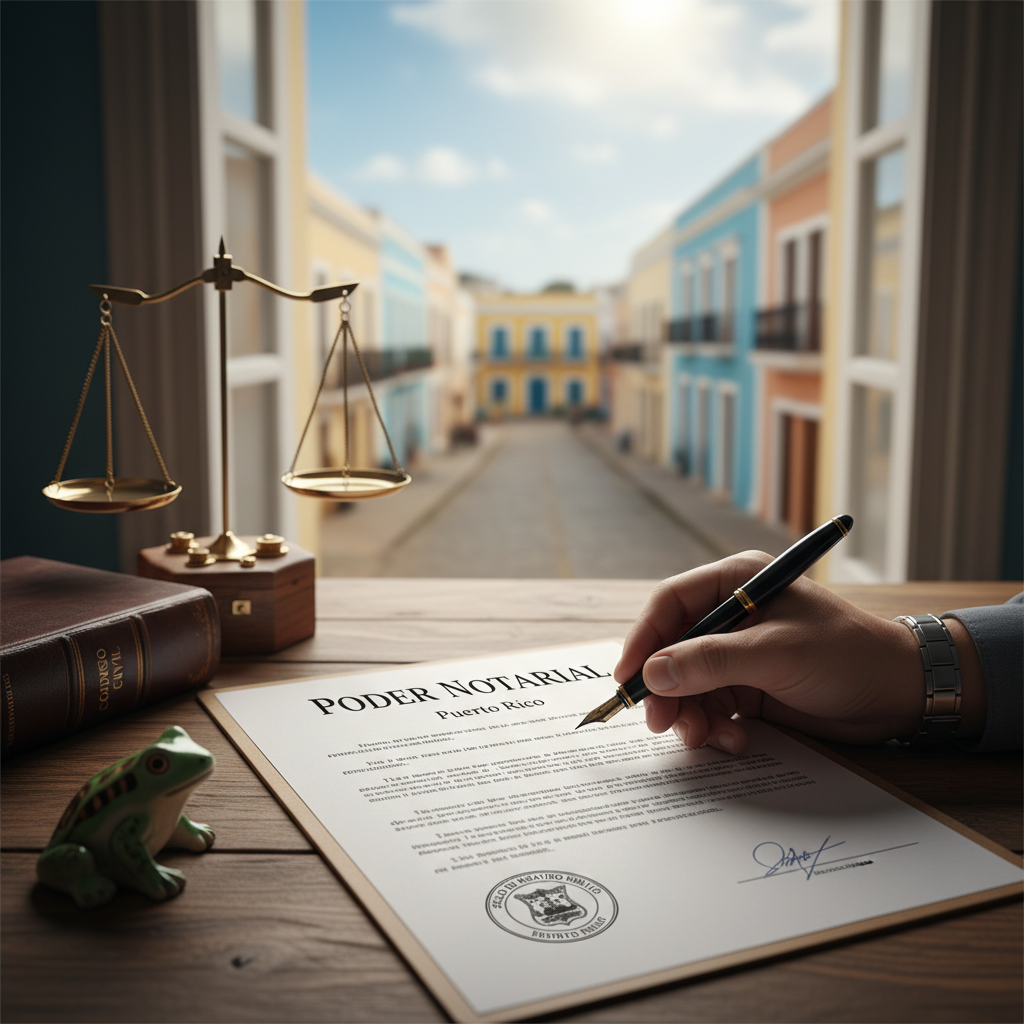
To establish a valid POA, the document must be in writing and signed by the person granting the authority, known as the principal. The signature must be acknowledged before a notary public, who verifies the identity of the principal and witnesses the signing. This process ensures the document’s authenticity and enforceability.
Key Requirements and Considerations
- Capacity: The principal must have the mental capacity to understand the nature and consequences of granting authority.
- Specificity: Clearly define the powers granted. Vague language can lead to disputes or invalidation.
- Duration: The POA can specify a time frame or be durable, meaning it remains in effect even if the principal becomes incapacitated.
- Notarization: The document must be notarized to be valid. Some transactions may require additional formalities.
Durable Power of Attorney in Puerto Rico
A durable POA remains effective even if the principal becomes mentally incapacitated. This type of POA is particularly useful for business owners or investors who want to ensure ongoing management of their affairs without interruption. To create a durable POA, the document must explicitly state that it remains in effect despite incapacity.
Limitations and Restrictions
While a POA grants significant authority, certain actions are typically off-limits, such as will-making or transferring property outside the scope of the granted powers. Additionally, some transactions, like real estate transfers, may require specific formalities or additional documentation under Puerto Rican law.
Revoking or Changing a Power of Attorney
The principal can revoke or modify a POA at any time, provided they are mentally competent. Revocation should be in writing and communicated to the agent and relevant institutions. Proper documentation ensures that the POA is no longer valid and prevents unauthorized actions.
Practical Tips for Doing Business with a Power of Attorney in Puerto Rico
- Always use clear, specific language when drafting a POA to avoid misunderstandings.
- Ensure the document is properly notarized and, if necessary, recorded with relevant authorities.
- Keep copies of the POA in accessible locations and inform key parties of its existence.
- Review and update the POA regularly, especially if circumstances change.
Conclusion
Understanding the rules surrounding power of attorney in Puerto Rico helps ensure that your business and investment activities are conducted smoothly. Properly drafted and executed POAs provide flexibility and security, allowing trusted individuals to act on your behalf when needed. Consulting with focused legal professionals can help tailor a POA that aligns with your specific needs and complies with local laws.