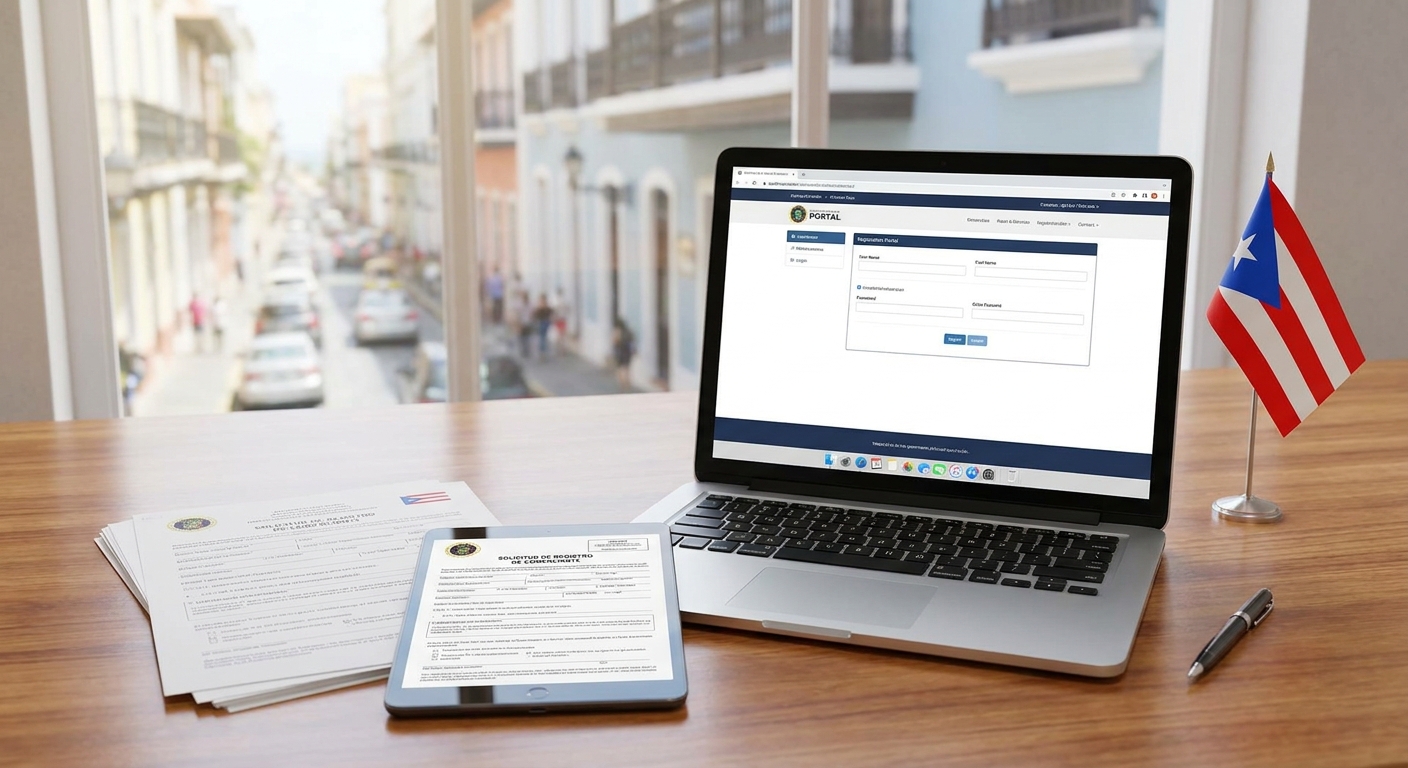

Why Puerto Rico Merchant Registration Matters to Your Business
If you operate a business in Puerto Rico or plan to establish one, merchant registration is not optional. It is a legal requirement that affects your ability to conduct commerce, obtain licenses, file taxes, and maintain compliance with Puerto Rico law. Without proper merchant registration, you expose your business to penalties, operational shutdowns, and personal liability. Understanding the registration process and requirements protects your business from the start.
Merchant registration in Puerto Rico serves as the foundation for all other business activities. It establishes your business as a legal entity within the Puerto Rico commercial system, creates a public record of your business operations, and enables you to obtain the permits and licenses necessary to operate legally. Whether you are a sole proprietor, partnership, or corporation, the registration requirements differ, and the process must be completed correctly.
What Is Merchant Registration in Puerto Rico?
Merchant registration is the formal process of registering your business with the Puerto Rico Department of State. This registration creates an official record that your business exists and operates within Puerto Rico's jurisdiction. The registration includes your business name, ownership structure, business address, and the nature of your commercial activities.
The registration process differs depending on your business structure. A sole proprietor registers as an individual merchant. A partnership registers under a partnership agreement. A corporation registers as a separate legal entity. Each structure has distinct registration requirements and ongoing compliance obligations. The type of business structure you choose affects not only registration but also taxation, liability protection, and operational flexibility.
Merchant registration is distinct from other business registrations you may need. It is separate from tax identification numbers, professional licenses, municipal permits, and industry-specific certifications. However, merchant registration is typically the first step you must complete before obtaining these other registrations and licenses.
Who Must Register as a Merchant in Puerto Rico?
Puerto Rico law requires merchant registration for anyone engaged in commercial activities. This includes retailers, wholesalers, service providers, manufacturers, and professionals offering services for compensation. The requirement applies regardless of whether your business operates full-time or part-time, online or in a physical location.
Sole proprietors must register if they conduct business under a name other than their legal name. If you operate under your own name without any additional business designation, registration requirements may differ, but you should verify this with the Department of State. Partnerships must register regardless of the business name used. Corporations must register before they can legally conduct any business activity in Puerto Rico.
Certain professions have additional registration requirements beyond standard merchant registration. Attorneys, accountants, engineers, and other licensed professionals must maintain professional licenses in addition to merchant registration. If your business involves regulated activities such as banking, securities, or blockchain operations, you will need focused compliance registrations beyond merchant registration. Consult with an experienced business attorney to determine all applicable registration requirements for your specific business type.
The Puerto Rico Merchant Registration Process
The merchant registration process begins with the Department of State. You must submit an application that includes your business information, ownership details, and the nature of your commercial activities. The application must be completed accurately and submitted with all required supporting documents.
For sole proprietors, you will need to provide your legal name, the business name you intend to use, your residential address, and a description of the business activities. You must also declare whether you will employ workers and provide information about your business location.
For partnerships, you must submit a partnership agreement that outlines the terms of the partnership, the names and addresses of all partners, and each partner's ownership percentage. The agreement must be notarized and comply with Puerto Rico commercial law requirements.
For corporations, you must file articles of incorporation with the Department of State. The articles must include the corporation's name, the purpose of the corporation, the number of authorized shares, the names and addresses of the initial directors, and the registered agent information. The articles must be notarized and submitted with the appropriate filing fees.
After submission, the Department of State reviews your application for completeness and compliance with legal requirements. If the application is incomplete or contains errors, the department will request corrections. Once approved, you receive a merchant registration certificate. This certificate serves as proof that your business is registered and authorized to conduct commercial activities in Puerto Rico.
Required Documentation for Merchant Registration
The specific documents required depend on your business structure, but certain documents are universally required. You must provide proof of identity for all owners or principals. This typically means a copy of your passport or Puerto Rico identification card. You must also provide proof of your business address, which can be a lease agreement, property deed, or utility bill showing your business location.
For sole proprietors, documentation is relatively straightforward. You need your identification, proof of address, and a completed application form. If you are registering under a business name different from your legal name, you may need to file a fictitious name registration or DBA (doing business as) statement, depending on current Puerto Rico requirements.
For partnerships, you must provide the partnership agreement, identification for all partners, and proof of the business address. The partnership agreement must clearly state the partnership's name, the partners' names and ownership percentages, the partnership's purpose, and the effective date of the partnership.
For corporations, you must provide the articles of incorporation, identification for all directors and shareholders, proof of the registered office address, and information about the registered agent. If the corporation has bylaws, those should also be prepared and maintained, though they may not be filed with the Department of State.
All documents must be notarized if required by law. Notarization requirements vary depending on the document type and your business structure. An experienced business attorney can advise you on which documents require notarization and ensure all documents meet legal requirements.
Fees and Processing Timeline
Merchant registration involves filing fees that vary based on your business structure. Sole proprietor registrations typically cost less than partnership or corporation registrations. The Department of State sets these fees, and they are subject to change. Current fee information is available on the Department of State website.
Processing times vary depending on the completeness of your application and current department workload. Standard processing typically takes between two to four weeks. If your application is incomplete or contains errors, processing time extends while you correct and resubmit the application. Expedited processing may be available for an additional fee.
You should budget for merchant registration fees plus any additional costs associated with document preparation, notarization, and professional assistance. If you work with an attorney to prepare your registration documents, that cost should be factored into your business startup budget.
Renewal and Ongoing Compliance
Merchant registration is not a one-time process. You must renew your registration periodically to maintain compliance. Renewal requirements and timelines depend on your business structure and any changes to Puerto Rico law. Failure to renew your registration can result in penalties and loss of your legal right to conduct business.
You must also update your merchant registration if you make significant changes to your business. Changes in ownership, business location, business name, or the nature of your business activities must be reported to the Department of State. These updates ensure that the public record accurately reflects your business information and that you remain in compliance with registration requirements.
If your business structure changes, such as converting from a sole proprietorship to a corporation, you must complete new registration for the new structure. This may involve dissolving the previous registration and establishing a new one. The process can be complex, and professional guidance is advisable to ensure proper compliance.
Merchant Registration and Tax Obligations
Merchant registration is separate from tax registration, but the two are closely related. Once you register as a merchant, you must obtain a tax identification number from the Puerto Rico Department of Treasury. This number is required for filing taxes and conducting business transactions.
Your tax obligations depend on your business structure and the nature of your business activities. Sole proprietors report business income on their personal tax returns. Partnerships file partnership tax returns and distribute income to partners. Corporations file corporate tax returns and may be subject to corporate income tax.
If your business qualifies for Puerto Rico tax incentives under Act 60, you may be eligible for significant tax benefits. These incentives apply to businesses that meet specific criteria and maintain compliance with registration and operational requirements. An experienced business attorney can evaluate whether your business qualifies for these incentives and guide you through the application process. For more information, see our Puerto Rico tax incentives page.
Common Mistakes in Merchant Registration
Many business owners make preventable mistakes during merchant registration that create compliance problems later. One common error is providing incomplete or inaccurate information on the registration application. This can delay processing and create discrepancies in the public record that are difficult to correct later.
Another frequent mistake is failing to register under the correct business structure. Choosing the wrong structure affects your liability protection, tax treatment, and operational requirements. This decision should be made carefully with professional guidance before you submit your registration application.
Some business owners fail to renew their merchant registration on time or neglect to update their registration when business circumstances change. This creates compliance violations that can result in penalties and operational restrictions. Maintaining a system to track renewal deadlines and required updates prevents these problems.
Failing to obtain all required licenses and permits beyond merchant registration is another common oversight. Merchant registration alone does not authorize you to conduct all types of business activities. Depending on your industry, you may need municipal permits, professional licenses, health department approvals, or other focused registrations. An experienced business attorney can identify all registrations and licenses your business requires.
Special Considerations for Specific Business Types
Certain business types have additional registration and compliance requirements beyond standard merchant registration. If you operate a business involving blockchain technology or digital assets, you must comply with focused regulatory requirements. For more information, see our blockchain compliance page.
If your business involves banking, securities, or financial services, you must register with the appropriate regulatory agencies and maintain ongoing compliance with banking and securities regulations. These registrations are separate from merchant registration but are equally important for legal operation.
Professional service providers such as attorneys, accountants, and engineers must maintain professional licenses in addition to merchant registration. These licenses are issued by professional regulatory boards and have separate application processes and renewal requirements.
If you plan to employ workers, you must register with the Puerto Rico Department of Labor and obtain an employer identification number. You must also comply with employment law requirements regarding wages, working conditions, and worker benefits. These obligations are separate from merchant registration but are essential for legal employment practices.
Working With an Experienced Business Attorney
Merchant registration involves legal requirements that vary based on your business structure and industry. An experienced business attorney can guide you through the registration process, ensure all documents are prepared correctly, and identify all applicable registration and compliance requirements for your specific business.
An attorney can also advise you on the optimal business structure for your situation, considering factors such as liability protection, tax treatment, operational flexibility, and compliance requirements. This guidance at the formation stage prevents costly mistakes and compliance problems later.
If you are establishing a business in Puerto Rico or need to update an existing merchant registration, professional guidance ensures the process is completed correctly and efficiently. Christian M. Frank Fas, Esq. has over 20 years of experience in Puerto Rico commercial and business law and can provide the guidance you need.
Next Steps
If you are ready to register your business in Puerto Rico or need to update an existing registration, the first step is to understand your specific requirements. Schedule a free initial evaluation with our firm to discuss your business structure, registration needs, and compliance obligations. During this evaluation, we will identify all registrations and licenses your business requires and outline the steps to complete them correctly.
Contact us through our free evaluation page to begin the process. We will work with you to ensure your merchant registration is completed properly and that your business maintains full compliance with Puerto Rico law.