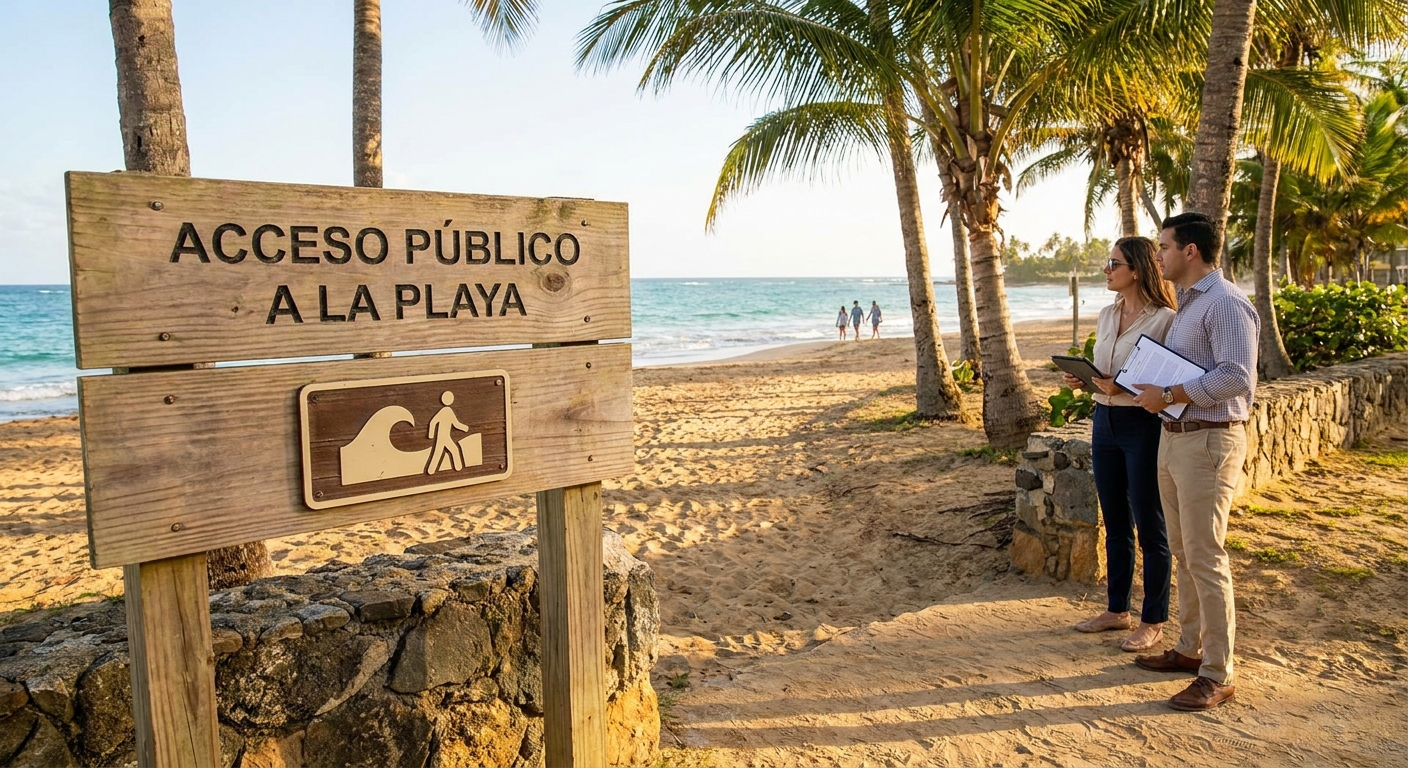

Beach access in Puerto Rico is not a simple matter of private property rights
If you own beachfront property in Puerto Rico or are considering purchasing it, you need to understand the legal framework that governs public access to beaches. Puerto Rico's beach access laws create obligations and restrictions that differ significantly from mainland U.S. property law. These rules affect your ability to exclude the public, your liability exposure, and the actual value and use of your property. Misunderstanding or ignoring these laws can result in costly disputes, regulatory fines, and loss of control over your own land.
The Constitutional and Statutory Basis for Public Beach Access
Puerto Rico's Constitution establishes that beaches are public property held in trust for the people. Article II, Section 20 of the Puerto Rico Constitution declares that the beaches of Puerto Rico belong to the public domain. This is not a suggestion or a guideline. It is a constitutional mandate that supersedes private ownership claims.
The Puerto Rico Civil Code reinforces this principle. Under Article 624 of the Civil Code, the seashore, including the beach, is considered public property. The law defines the seashore as the land between the high tide line and the low tide line. Any land below the high tide mark is presumed to be public property regardless of who holds the deed to the property above it.
This constitutional and statutory framework means that even if you own beachfront land, your ownership rights are limited. You cannot prevent the public from accessing the beach itself. You cannot build structures that block access. You cannot charge fees for beach use. These restrictions apply to all beachfront property owners in Puerto Rico, whether they are individuals, corporations, or government entities.
The High Tide Line: The Critical Boundary
The high tide line is the legal boundary between private property and public beach. Understanding where this line is located on your property is essential. The high tide line is determined by the highest point that water reaches during normal tidal cycles, not during storms or unusual weather events.
In practice, identifying the exact high tide line can be difficult. The line may shift over time due to erosion, accretion, or coastal changes. If you own beachfront property, you should have a professional survey conducted to establish the precise location of the high tide line on your property. This survey becomes important documentation if disputes arise with neighbors, the government, or members of the public.
Property below the high tide line is public property. You have no ownership rights to it, and you cannot restrict access to it. Property above the high tide line is your private property, but even your private property is subject to public access rights in certain circumstances. The law recognizes what is called the right of transit, which allows the public to cross private property to reach the beach if no other reasonable access exists.
Public Access Rights and the Right of Transit
Puerto Rico law recognizes a public right of transit across private beachfront property. This means that even if you own land above the high tide line, the public may have the right to cross your property to reach the beach. This right exists when there is no other reasonable way for the public to access the beach.
The right of transit is not unlimited. Courts have held that the public must use the most direct and least intrusive route across private property. The public cannot use your property for purposes other than reaching the beach. They cannot camp on your property, conduct commercial activities, or remain on your land for extended periods. The right is specifically a right to pass through, not a right to occupy or use the property for other purposes.
However, the practical application of this right creates real challenges for property owners. Determining whether a particular use constitutes legitimate transit or improper occupation can lead to disputes. If you attempt to restrict access and the public believes they have a right of transit, you may face legal action. Conversely, if you allow unrestricted access, you may lose the ability to enforce boundaries later.
Restrictions on Beachfront Development and Structures
Puerto Rico law imposes strict limitations on what you can build on beachfront property. You cannot construct permanent structures that block or impede public access to the beach. This includes walls, fences, gates, and buildings positioned to prevent the public from reaching the shoreline.
The law does permit certain structures that do not block access. You may build a house on beachfront property, provided it is positioned to allow public passage to the beach. You may construct decks, patios, and other improvements on your private property above the high tide line, again provided they do not block access routes.
Any structure you build on beachfront property must comply with Puerto Rico's coastal zone management regulations. These regulations are administered by the Puerto Rico Department of Natural and Environmental Resources. Before constructing anything on beachfront property, you must obtain the necessary permits and approvals. Building without permits can result in fines, orders to remove the structure, and civil liability.
The regulations also address setback requirements. Structures must be set back a certain distance from the high tide line. The specific setback distance depends on the location and the type of structure. These setback requirements exist to protect the beach environment and to ensure that public access is not compromised.
Liability and Insurance Considerations for Beachfront Property Owners
Owning beachfront property in Puerto Rico carries liability exposure that many owners do not anticipate. Because the public has a right to access the beach, members of the public will be on or near your property. If someone is injured on your property, you may face a personal injury lawsuit.
Puerto Rico law does provide some protection to property owners through premises liability principles. You are not automatically liable for injuries that occur on your property. Your liability depends on factors such as whether you knew or should have known of a dangerous condition, whether you took reasonable steps to warn of the danger, and whether the injured person was a trespasser or had a right to be on your property.
However, because the public has a right of transit across your beachfront property, members of the public are not trespassers. They have a legal right to be there. This means your liability exposure is greater than it would be if the property were not beachfront property. You should carry adequate liability insurance. Standard homeowners insurance may not provide sufficient coverage for beachfront property with public access. You should discuss your specific situation with an insurance professional and ensure your policy covers liability arising from public access to your property.
Environmental and Coastal Zone Regulations
Beachfront property in Puerto Rico is subject to coastal zone management regulations that go beyond basic beach access laws. The Puerto Rico Department of Natural and Environmental Resources administers these regulations. The coastal zone includes the area from the high tide line inland for a specified distance, typically several hundred feet depending on the location.
Within the coastal zone, you must obtain permits before undertaking certain activities. These activities include construction, dredging, filling, vegetation removal, and other modifications to the land or water. The purpose of these regulations is to protect coastal ecosystems, prevent erosion, and maintain public access and use of coastal areas.
If you own beachfront property and want to make improvements or modifications, you must first determine whether your proposed activity requires a coastal zone permit. Undertaking regulated activities without a permit can result in fines and orders to restore the property to its original condition. The restoration process can be expensive and time-consuming.
Disputes Over Beach Access and Property Boundaries
Disputes over beach access and the location of property boundaries are common in Puerto Rico. These disputes often arise between property owners and the government, between neighboring property owners, or between property owners and members of the public claiming access rights.
Boundary disputes typically require professional surveys and may require litigation to resolve. If you are involved in a boundary dispute, you should obtain a current survey of your property that clearly identifies the high tide line and the boundaries of your property. You should also gather historical documentation, including prior surveys, deeds, and any previous boundary agreements with neighbors.
Access disputes may involve questions about whether the public has a right of transit across your property, whether a particular use constitutes legitimate transit, or whether you have properly restricted access in accordance with the law. These disputes can be resolved through negotiation, mediation, or litigation. The outcome depends on the specific facts and the applicable law.
If you are facing a dispute over beach access or property boundaries, you should seek legal counsel experienced in Puerto Rico property law. The issues involved are complex, and the stakes are often high.
Practical Steps for Beachfront Property Owners
If you own beachfront property in Puerto Rico, you should take several practical steps to protect your interests and ensure compliance with the law.
First, obtain a current professional survey of your property. The survey should clearly identify the high tide line, the boundaries of your property, and any easements or access rights that affect your property. Keep this survey in a safe place and refer to it when making decisions about your property.
Second, review your property deed and any documents related to the purchase of your property. Look for any language that addresses beach access, public rights, or restrictions on your use of the property. If you do not understand the language, have an attorney review it for you.
Third, ensure that your property is properly insured. Discuss your beachfront property with your insurance agent and confirm that your policy provides adequate coverage for liability arising from public access to your property.
Fourth, before making any improvements or modifications to your property, determine whether you need permits. Contact the Puerto Rico Department of Natural and Environmental Resources or consult with an attorney to determine what permits are required for your specific project.
Fifth, if you want to restrict access to your property, do so in a manner that complies with the law. You may post signs indicating that the property is private and that trespassing is prohibited. However, you cannot use force or threats to prevent the public from exercising their legal right of transit to the beach. If you believe someone is improperly using your property, document the activity and consult with an attorney about your options.
Beachfront Property Investment Considerations
If you are considering purchasing beachfront property in Puerto Rico as an investment, you must factor beach access laws into your analysis. The public's right to access the beach and to transit across your property affects the value and income potential of the property.
Beachfront property in Puerto Rico is valuable, but it is not as valuable as comparable beachfront property in jurisdictions where owners have exclusive access rights. The public access rights reduce the exclusivity of the property and limit your ability to control who uses the beach in front of your property.
If you are considering purchasing beachfront property for rental purposes, understand that tenants will not have exclusive use of the beach. Members of the public will have access to the beach and may cross the property to reach it. This affects the rental value of the property and the experience you can offer to tenants.
Before purchasing beachfront property, have an attorney review the deed and conduct a title search to identify any easements, restrictions, or other encumbrances that affect the property. Understand the coastal zone regulations that apply to the property and the permits that may be required for improvements. Factor these considerations into your purchase decision and your valuation of the property.
Next Steps
Beach access laws in Puerto Rico are complex and have significant implications for property owners and investors. If you own beachfront property or are considering purchasing it, you should understand how these laws affect your rights and obligations. If you are facing a dispute over beach access or property boundaries, or if you need guidance on permits and compliance, contact the Puerto Rico Business Law Firm for a free initial evaluation. Christian M. Frank Fas, Esq. has over 20 years of experience in commercial and business law in Puerto Rico and can help you understand your rights and options. Visit https://lawyerinpr.com/start to schedule your free initial evaluation today.