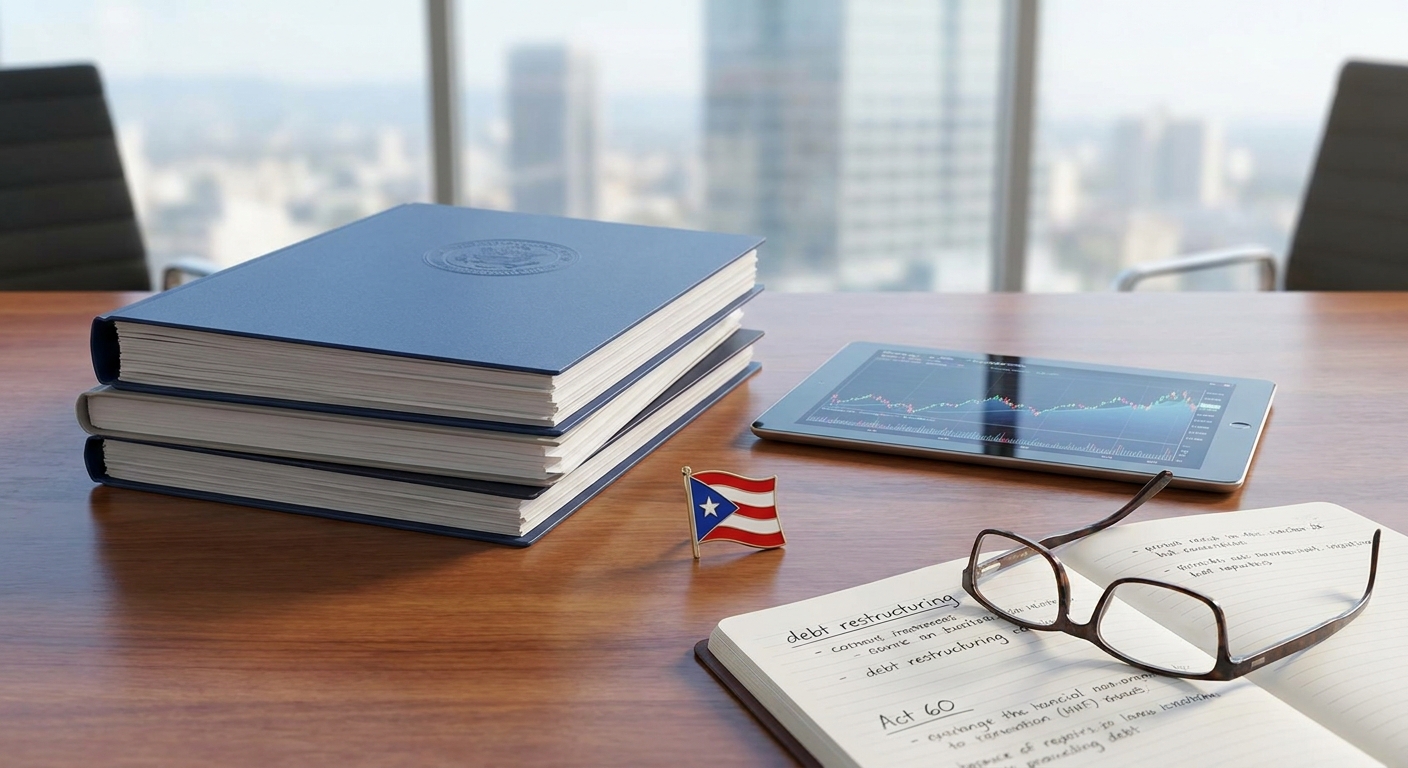

Puerto Rico Bankruptcy Filings Matter to Your Business Survival
Bankruptcy is not a failure. It is a legal process designed to help individuals and businesses reorganize debt, liquidate assets fairly, or obtain a fresh start. In Puerto Rico, bankruptcy filings follow federal law while operating within the island's unique economic and regulatory environment. Understanding how bankruptcy works in Puerto Rico is essential if your business faces serious financial distress, creditor pressure, or cash flow problems that threaten operations.
The decision to file for bankruptcy is significant. It affects your credit, your business structure, your personal assets, and your ability to operate going forward. This guide explains the bankruptcy process in Puerto Rico, the types of filings available, and what you should consider before taking action.
Federal Bankruptcy Law Applies in Puerto Rico
Puerto Rico is subject to the U.S. Bankruptcy Code. This means that when you file for bankruptcy in Puerto Rico, you file in the U.S. District Court for the District of Puerto Rico, which has bankruptcy jurisdiction. The same chapters of the bankruptcy code that apply in the mainland United States apply here.
However, Puerto Rico's local laws, tax incentives, and economic conditions create a distinct context for bankruptcy proceedings. For example, businesses operating under Act 60 tax incentive programs may have specific considerations when filing for bankruptcy. The interaction between federal bankruptcy law and Puerto Rico's local legal framework requires careful analysis.
The bankruptcy court in Puerto Rico handles thousands of cases annually. The court operates with the same procedural rules and timelines as other federal bankruptcy courts. Filings are public record, and the process involves creditor meetings, asset disclosure, and court oversight.
Chapter 7 Bankruptcy: Liquidation for Individuals and Businesses
Chapter 7 bankruptcy is a liquidation process. When you file Chapter 7, a trustee is appointed to collect your non-exempt assets, sell them, and distribute the proceeds to creditors according to priority rules established by law. After the process concludes, most remaining unsecured debts are discharged, meaning you are no longer legally obligated to pay them.
For individuals, Chapter 7 provides a way to eliminate credit card debt, medical bills, personal loans, and other unsecured obligations. However, certain debts cannot be discharged, including student loans (with limited exceptions), child support, alimony, and recent tax debts.
For businesses, Chapter 7 results in the closure of the company. The business ceases operations, assets are liquidated, and the business entity is dissolved. This option makes sense when the business has no viable path to profitability and creditors are pursuing collection actions.
The Chapter 7 process typically takes three to six months from filing to discharge. During this time, you must provide financial documentation, attend a creditor meeting, and answer questions about your assets and debts. The trustee investigates whether there are assets to recover and whether the debtor has engaged in fraud or misconduct.
Chapter 11 Bankruptcy: Reorganization for Businesses
Chapter 11 bankruptcy allows a business to continue operating while reorganizing its debts. Unlike Chapter 7, the business does not liquidate. Instead, the business proposes a plan to restructure obligations, reduce debt, and return to profitability. Chapter 11 is commonly used by larger businesses, though smaller companies can file as well.
In Chapter 11, the business typically remains in control of its operations. This is called operating as a debtor-in-possession. The business can continue to pay employees, purchase inventory, and serve customers while the reorganization plan is developed. The court must approve the plan, and creditors vote on whether to accept it.
Chapter 11 plans can include debt reduction, extended payment terms, asset sales, or changes to the business structure. The plan must show that creditors will receive at least as much as they would in a Chapter 7 liquidation. Once the plan is confirmed by the court, the business emerges from bankruptcy with reduced debt and a path forward.
Chapter 11 is more complex and expensive than Chapter 7. It requires detailed financial projections, disclosure statements, and ongoing court involvement. However, for a business with valuable operations and a realistic chance of recovery, Chapter 11 can preserve jobs, maintain customer relationships, and allow the business to continue.
Chapter 13 Bankruptcy: Wage Earner Plans
Chapter 13 bankruptcy is available only to individuals with regular income. It allows you to propose a repayment plan lasting three to five years. During this period, you make monthly payments to a trustee, who distributes funds to creditors according to the plan. After you complete the plan, remaining eligible debts are discharged.
Chapter 13 is useful when you have a steady income but cannot pay all debts immediately. It stops foreclosure, halts wage garnishment, and prevents creditor lawsuits. You keep your assets, including your home and vehicle, as long as you make plan payments.
Chapter 13 requires that your debts fall within statutory limits. These limits change annually. Additionally, you must have sufficient income to fund a plan that pays creditors a meaningful amount. The court will not confirm a plan that is not feasible.
Chapter 13 is less common in Puerto Rico than Chapter 7 or Chapter 11, but it remains an option for individuals facing financial hardship who want to keep their assets and repay debts over time.
The Bankruptcy Filing Process in Puerto Rico
Filing for bankruptcy begins with completing detailed financial forms and schedules. These documents list all assets, liabilities, income, expenses, and financial transactions from the past several years. Accuracy is critical. Providing false information is fraud and can result in criminal charges.
You must also complete credit counseling from an approved agency before filing. This counseling covers budgeting, debt management, and alternatives to bankruptcy. After filing, you must complete a financial management course before debts can be discharged.
Once you file, an automatic stay goes into effect immediately. This stay stops creditors from collecting, suing, garnishing wages, or foreclosing. The stay applies to most creditors, though there are exceptions for certain tax debts and family support obligations.
Within days of filing, the court appoints a trustee. In Chapter 7, the trustee investigates your assets and conducts a creditor meeting. In Chapter 11, the trustee monitors the case and ensures the debtor complies with bankruptcy law. In Chapter 13, the trustee collects and distributes plan payments.
The creditor meeting, also called the 341 meeting, is a required hearing where you answer questions about your finances under oath. Creditors may attend, though most do not. The trustee verifies that your financial disclosures are accurate and complete.
Exempt Assets and What You Can Keep
Bankruptcy law allows you to keep certain assets. These exempt assets are protected from creditors and the trustee. The amount and type of exemptions depend on whether you are filing under federal exemptions or Puerto Rico exemptions.
Federal exemptions include a homestead exemption, personal property exemptions, and tools of the trade. The homestead exemption protects a certain amount of equity in your primary residence. Personal property exemptions protect household goods, clothing, and other necessities up to specified dollar amounts.
Puerto Rico has its own exemption laws that may provide different protections. In some cases, Puerto Rico exemptions are more generous than federal exemptions. You can choose which set of exemptions applies to your case, subject to certain restrictions.
Non-exempt assets are subject to liquidation in Chapter 7 or may be included in a Chapter 11 or Chapter 13 plan. Understanding which assets are exempt is crucial to predicting the outcome of your bankruptcy case.
Debt Discharge and What Debts Cannot Be Eliminated
The primary benefit of bankruptcy is discharge. Discharge means the court orders that you are no longer personally liable for certain debts. Creditors cannot pursue collection after discharge.
However, not all debts are dischargeable. Student loans are generally not discharged unless you can prove undue hardship. Child support and alimony obligations cannot be discharged. Recent income taxes and payroll taxes are not discharged. Criminal fines and restitution cannot be discharged. Debts incurred through fraud may not be discharged if the creditor objects.
Secured debts, such as mortgages and car loans, are treated differently. In Chapter 7, you must either surrender the collateral or reaffirm the debt, meaning you agree to remain liable. In Chapter 11 and Chapter 13, secured debts are typically included in the reorganization or repayment plan.
Understanding which debts will be discharged and which will remain is essential to evaluating whether bankruptcy makes sense for your situation.
Bankruptcy and Business Structure Considerations
The type of business entity you operate affects how bankruptcy works. If you are a sole proprietor, your personal bankruptcy filing affects your business. Your business assets are part of your bankruptcy estate, and your business debts are your personal debts.
If you operate as a corporation or limited liability company, the business can file separately from you personally. A business bankruptcy does not automatically discharge your personal guarantees on business debts. If you personally guaranteed a business loan, you remain liable even if the business files for bankruptcy.
In some cases, creditors pursue both the business and the owner personally. Understanding the structure of your business and your personal liability is important before filing.
Act 60 Tax Incentives and Bankruptcy Implications
Businesses operating under Act 60 tax incentive programs should understand how bankruptcy affects their tax status. Filing for bankruptcy does not automatically terminate Act 60 benefits, but it may trigger reporting requirements or affect your ability to maintain compliance with program conditions.
If you are considering bankruptcy and currently benefit from Act 60 incentives, you should discuss the interaction between bankruptcy and your tax status with an experienced attorney before filing.
Credit Impact and Rebuilding After Bankruptcy
Bankruptcy significantly impacts your credit score. A Chapter 7 bankruptcy remains on your credit report for ten years. A Chapter 13 bankruptcy remains for seven years. During this period, obtaining credit is more difficult and more expensive.
However, credit recovery is possible. Many people rebuild their credit within two to three years after discharge by obtaining a secured credit card, making on-time payments, and keeping credit utilization low. After several years of responsible credit behavior, your score can improve substantially.
Bankruptcy also affects your ability to obtain certain professional licenses, security clearances, or employment in regulated industries. Some employers conduct background checks that reveal bankruptcy filings. However, federal law prohibits discrimination based solely on bankruptcy status in many contexts.
When Bankruptcy Is the Right Choice
Bankruptcy makes sense when you face overwhelming debt that you cannot pay, creditors are pursuing collection actions or lawsuits, you are at risk of foreclosure or repossession, or you need a legal mechanism to reorganize or eliminate obligations.
Bankruptcy is not appropriate if you have sufficient income and assets to pay your debts, if your debts are primarily non-dischargeable, or if you are attempting to defraud creditors. Filing for bankruptcy when you do not qualify or when you have misrepresented your finances can result in case dismissal and criminal charges.
The decision to file requires careful analysis of your financial situation, your assets and debts, your income and expenses, and your long-term goals. An experienced attorney can help you evaluate whether bankruptcy is appropriate and which chapter best fits your circumstances.
Alternatives to Bankruptcy
Bankruptcy is not always necessary. In some cases, creditors will negotiate a settlement, payment plan, or debt reduction outside of bankruptcy. Debt consolidation, refinancing, or selling assets may resolve financial problems without filing.
For businesses, operational changes, cost reduction, or strategic restructuring may improve cash flow and profitability without bankruptcy. However, these alternatives require time and creditor cooperation. If creditors are actively pursuing collection, bankruptcy may be the only way to stop collection actions and obtain a fresh start.
Next Steps: Get a Free Initial Evaluation
If you are considering bankruptcy or facing creditor pressure, you need experienced legal guidance. Christian M. Frank Fas, Esq. has over 20 years of commercial and business law experience in Puerto Rico. The firm provides a free initial evaluation to discuss your financial situation, explain your options, and help you make an informed decision.
During your free evaluation, you will discuss your assets, debts, income, and goals. You will learn which bankruptcy chapter, if any, applies to your situation. You will understand the timeline, costs, and likely outcomes of filing. You will also explore whether alternatives to bankruptcy might work for you.
Do not wait until creditors obtain a judgment or begin garnishing your wages. Contact the firm today for your free initial evaluation. Schedule your free evaluation now.