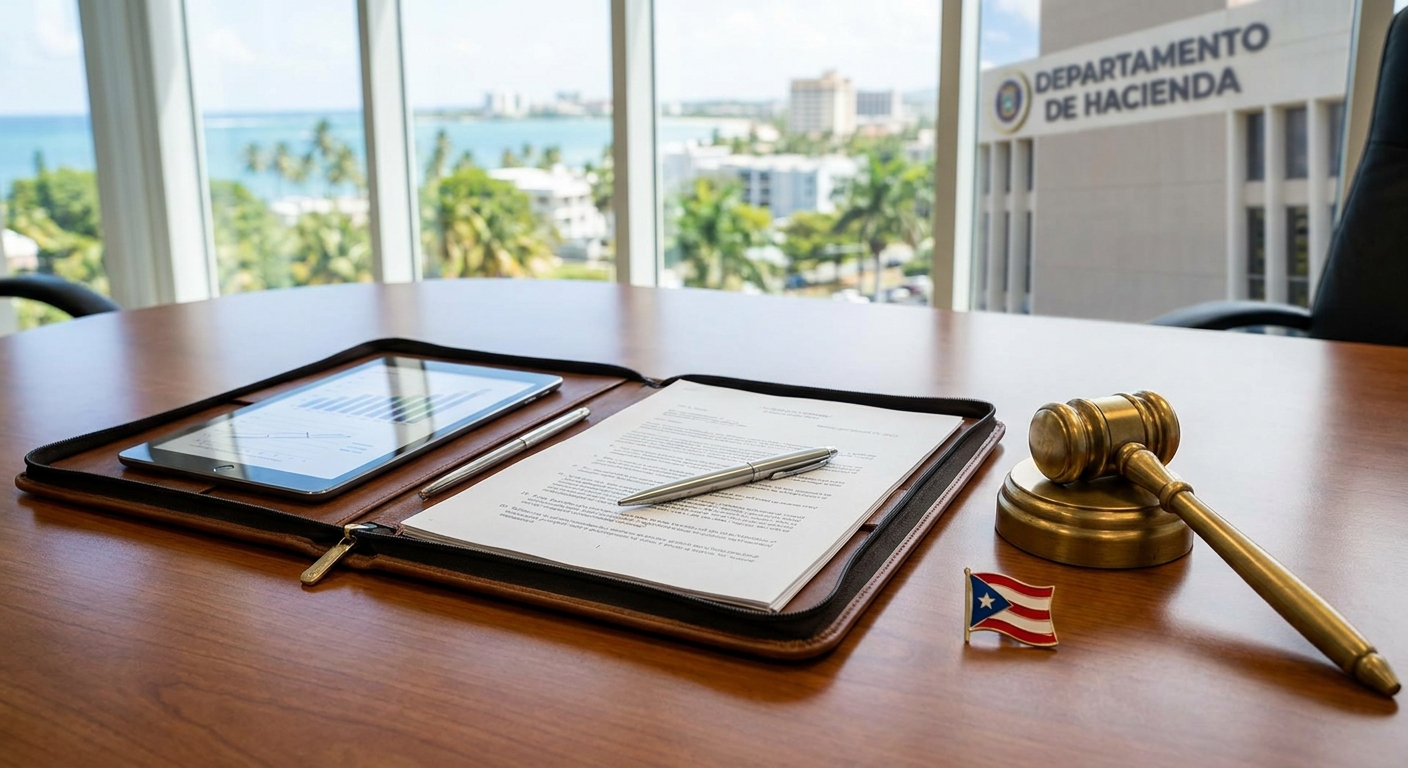

Why Asset Purchases in Puerto Rico Demand Careful Legal Planning
Buying assets in Puerto Rico involves more than signing a purchase agreement. The transaction sits at the intersection of Puerto Rico law, federal tax code, and local regulatory requirements that can significantly affect your financial outcome and legal standing. Whether you are acquiring real property, a business operation, equipment, or intellectual property, the structure of your purchase determines your tax liability, your exposure to seller liabilities, and your ability to operate the acquired assets without disruption.
Many buyers approach Puerto Rico asset purchases with the same framework they use in the continental United States. This approach creates costly mistakes. Puerto Rico's legal system, tax incentives, and regulatory environment operate differently. Understanding these differences before you commit capital is not optional. It is the foundation of a sound transaction.
Asset Purchase vs. Stock Purchase: The Structural Choice
The first decision in any acquisition is whether to purchase assets or stock. This choice affects your tax treatment, your assumption of liabilities, and your operational control.
In an asset purchase, you acquire specific property, contracts, licenses, and goodwill from the seller. You do not acquire the legal entity itself. This structure gives you control over which liabilities you assume. You can leave behind environmental claims, pending litigation, tax disputes, or contractual obligations that do not serve your business. The seller retains responsibility for these items unless you explicitly agree otherwise.
Asset purchases also allow you to step up the basis of acquired property to fair market value. This creates depreciation deductions and amortization deductions that reduce your taxable income in future years. For buyers, this is a significant advantage.
Stock purchases transfer the entire legal entity to you, including all assets and all liabilities, known and unknown. You inherit the seller's tax history, pending claims, and contractual obligations. Stock purchases are simpler to execute and faster to close, but they expose you to hidden liabilities that may not surface until months or years after closing.
In Puerto Rico, the choice between these structures also affects your eligibility for tax incentives under Act 60. Certain business structures and acquisition methods qualify for preferential tax treatment. A stock purchase of a Puerto Rico corporation may qualify differently than an asset purchase of the same business. Your legal structure must align with your tax planning objectives.
Due Diligence Requirements Specific to Puerto Rico
Due diligence in Puerto Rico asset purchases requires investigation beyond standard business records. Puerto Rico's regulatory environment, property law, and tax administration create specific risks that mainland buyers often overlook.
Real property due diligence must include verification of title through the Puerto Rico Property Registry. Property disputes, boundary questions, and title defects are common in Puerto Rico. The registry system operates differently than mainland recording systems. You must confirm that the seller holds clear title and that no liens, mortgages, or claims encumber the property. Environmental assessments are essential, particularly for industrial property or land with prior commercial use. Puerto Rico's environmental regulations are enforced by the Puerto Rico Environmental Quality Board, and contamination liability can transfer to the new owner.
Business asset due diligence must include verification of all licenses and permits required to operate the business. Puerto Rico requires specific licenses for retail operations, food service, professional services, and regulated industries. Some licenses are not transferable. Others require approval from the relevant agency before the new owner can operate. Failure to obtain required licenses before closing can halt operations immediately after purchase.
Tax compliance verification is critical. You must confirm that the seller has filed all required tax returns with the Puerto Rico Department of Treasury and that no tax liens exist against the business or its assets. The Puerto Rico tax system operates independently from the federal system. A business may be compliant with federal tax law but delinquent with Puerto Rico tax obligations. Tax liens in Puerto Rico attach to assets and can survive the sale unless properly discharged.
Contract review must identify all material agreements that support the business. Customer contracts, supplier agreements, employment agreements, and lease agreements must be examined for change-of-control provisions. Many contracts terminate automatically if ownership changes. Others require consent from the other party before the new owner can assume the agreement. Identifying these restrictions before closing prevents operational disruption.
Liability Assumption and Indemnification
Asset purchases allow you to select which liabilities you assume. This does not mean you can ignore liabilities that remain with the seller. Certain liabilities follow the assets regardless of the purchase agreement.
Environmental liabilities are the most significant example. Under Puerto Rico environmental law, the current owner of contaminated property can be held responsible for cleanup costs even if the contamination occurred under a prior owner. Purchasing contaminated property does not transfer the contamination liability to the seller. It transfers to you. Environmental due diligence and Phase I environmental assessments are essential before closing.
Employee liabilities also follow assets in certain circumstances. If you acquire a business and retain the employees, Puerto Rico labor law treats the transaction as a continuation of employment. The employees retain their seniority, accrued benefits, and legal protections. You assume liability for unpaid wages, accrued vacation, and severance obligations that the prior owner incurred. These liabilities do not disappear because you purchased assets instead of stock.
The purchase agreement must include clear indemnification provisions that allocate risk between buyer and seller. Indemnification clauses specify which party bears the cost if unknown liabilities surface after closing. These clauses must address tax liabilities, environmental claims, employment disputes, and contract breaches. Without clear indemnification language, you may discover that you assumed liabilities you intended to leave with the seller.
Escrow arrangements are common in Puerto Rico asset purchases. A portion of the purchase price is held in escrow for a defined period, typically 12 to 24 months. If indemnification claims arise during the escrow period, the escrow funds are used to satisfy the claims. This protects the buyer from unexpected liabilities while giving the seller assurance that the purchase price will be paid in full if no claims emerge.
Tax Treatment of Asset Purchases Under Puerto Rico Law
Puerto Rico taxes asset purchases differently than the continental United States. The Puerto Rico Internal Revenue Code applies to transactions that occur in Puerto Rico or involve Puerto Rico property.
The purchase price must be allocated among the assets acquired. This allocation determines the basis of each asset for depreciation and amortization purposes. Tangible property such as equipment, vehicles, and real property is depreciated over its useful life. Intangible assets such as customer lists, trade names, and goodwill are amortized over 15 years under Puerto Rico tax law. The allocation must be reasonable and supported by valuation analysis. The Puerto Rico Department of Treasury can challenge allocations that appear inflated or unsupported.
If you are a Puerto Rico resident or a Puerto Rico business, you may qualify for Act 60 tax incentives. Act 60 provides preferential tax rates for certain business activities and investment income. The structure of your asset purchase can affect your eligibility for these incentives. Some acquisition methods qualify for Act 60 benefits while others do not. Planning your transaction structure with Act 60 in mind can reduce your long-term tax liability significantly. More information about Act 60 benefits is available at Puerto Rico Tax Incentives.
Transfer taxes apply to asset purchases in Puerto Rico. Real property transfers are subject to transfer tax based on the purchase price. The rate varies depending on the property type and the buyer's status. Businesses and individuals may qualify for exemptions or reduced rates under certain circumstances. The transfer tax must be calculated and paid at closing, and the deed must be recorded with the Puerto Rico Property Registry.
Financing and Security Interests
If you are financing the asset purchase, the lender will require security interests in the acquired assets. In Puerto Rico, security interests are created through mortgages for real property and security agreements for personal property and business assets.
Mortgages must be recorded in the Puerto Rico Property Registry to be enforceable against third parties. The recording process in Puerto Rico differs from mainland recording systems. Proper recording is essential to protect the lender's interest and to ensure that the lender's claim has priority over other creditors.
Security agreements for personal property and business assets must be filed with the Puerto Rico Commercial Registry. The filing creates a public record of the lender's security interest. Without proper filing, the lender's interest may be subordinate to other creditors or may be unenforceable in bankruptcy.
Lenders in Puerto Rico typically require representations and warranties from the seller regarding the condition of the assets, the absence of liens, and the seller's authority to sell. These representations protect the lender's collateral. If the representations prove false, the lender may have recourse against the seller or the buyer, depending on the loan documents.
Regulatory Approvals and Licensing
Many asset purchases require regulatory approval before closing. The specific approvals depend on the type of assets being purchased and the industry involved.
Purchases of banking or financial services businesses require approval from the Puerto Rico Office of the Commissioner of Financial Institutions. Purchases of insurance businesses require approval from the Puerto Rico Office of the Commissioner of Insurance. Purchases of telecommunications assets may require approval from the Puerto Rico Telecommunications Regulatory Board. Failure to obtain required approvals can result in fines, operational restrictions, or forced divestiture.
Professional licenses in regulated fields such as law, medicine, accounting, and engineering are not transferable. If you are acquiring a professional practice, you must obtain your own license before you can operate the practice. The seller's license cannot be transferred to you. This creates a gap between closing and the date you can legally operate the business. Planning for this gap is essential to maintain client relationships and revenue continuity.
Gaming and hospitality businesses are subject to additional regulatory requirements. Purchases of gaming licenses, casino operations, or hospitality businesses require approval from the Puerto Rico Gaming Commission or other regulatory bodies. These approvals can take months and require extensive background investigations and financial documentation.
Closing Documents and Post-Closing Obligations
Puerto Rico asset purchase agreements must include specific provisions required by Puerto Rico law. The agreement must identify the assets being purchased with sufficient specificity. General descriptions such as "all business assets" are insufficient. The agreement must list equipment, inventory, contracts, licenses, and intellectual property separately.
The agreement must specify the purchase price and the allocation of the purchase price among asset categories. It must identify which liabilities the buyer assumes and which liabilities remain with the seller. It must include representations and warranties from the seller regarding the condition of the assets, the absence of liens, and the seller's authority to sell.
The agreement must include indemnification provisions that specify the buyer's remedies if the seller's representations prove false. It must identify any escrow arrangements and the conditions for release of escrow funds. It must specify the closing date, the location of closing, and the documents to be delivered at closing.
Post-closing obligations include recording deeds and mortgages with the Puerto Rico Property Registry, filing security agreements with the Puerto Rico Commercial Registry, obtaining new licenses and permits in the buyer's name, and notifying customers, suppliers, and other business partners of the change in ownership. These obligations must be completed promptly to ensure that the buyer's ownership is properly documented and that the business can operate without interruption.
Common Pitfalls in Puerto Rico Asset Purchases
Buyers frequently make mistakes that create legal and financial problems after closing. Understanding these pitfalls helps you avoid them.
Inadequate due diligence is the most common mistake. Buyers rush through the investigation phase to close quickly. They fail to verify licenses, confirm tax compliance, or investigate environmental conditions. These oversights create problems that surface months after closing, when remediation is more expensive and the seller is harder to locate.
Failure to understand Puerto Rico's legal system is another common problem. Buyers assume that Puerto Rico law mirrors mainland law. It does not. Puerto Rico's civil law system, its tax code, and its regulatory environment are distinct. Transactions structured for mainland tax purposes may not achieve the intended result in Puerto Rico.
Inadequate indemnification provisions leave buyers exposed to unknown liabilities. Sellers resist broad indemnification language because it creates ongoing liability after closing. Buyers must negotiate clear indemnification provisions that protect them from material risks. Escrow arrangements help bridge this gap by providing a source of funds to satisfy indemnification claims.
Failure to plan for Act 60 benefits is a missed opportunity. If you are acquiring a business that qualifies for Act 60 tax incentives, the structure of your purchase can affect your eligibility. Planning the transaction with Act 60 in mind can reduce your tax liability significantly over time.
Next Steps: Getting Legal Guidance for Your Asset Purchase
Puerto Rico asset purchases involve complex legal, tax, and regulatory issues that require experienced legal guidance. The decisions you make during the planning and negotiation phases affect your financial outcome and your legal exposure for years after closing.
Christian M. Frank Fas, Esq. has over 20 years of experience in Puerto Rico commercial and business law. The firm provides focused guidance on asset purchase transactions, from initial planning through closing and post-closing compliance.
The first step is a free initial evaluation of your transaction. During this evaluation, you will discuss your acquisition objectives, the assets you are purchasing, and the key risks and opportunities in your transaction. The evaluation will identify the legal and tax issues that require attention and outline a strategy for addressing them.
To schedule your free initial evaluation, visit the evaluation request page. Provide information about your transaction, and the firm will contact you to schedule a time to discuss your asset purchase in detail.