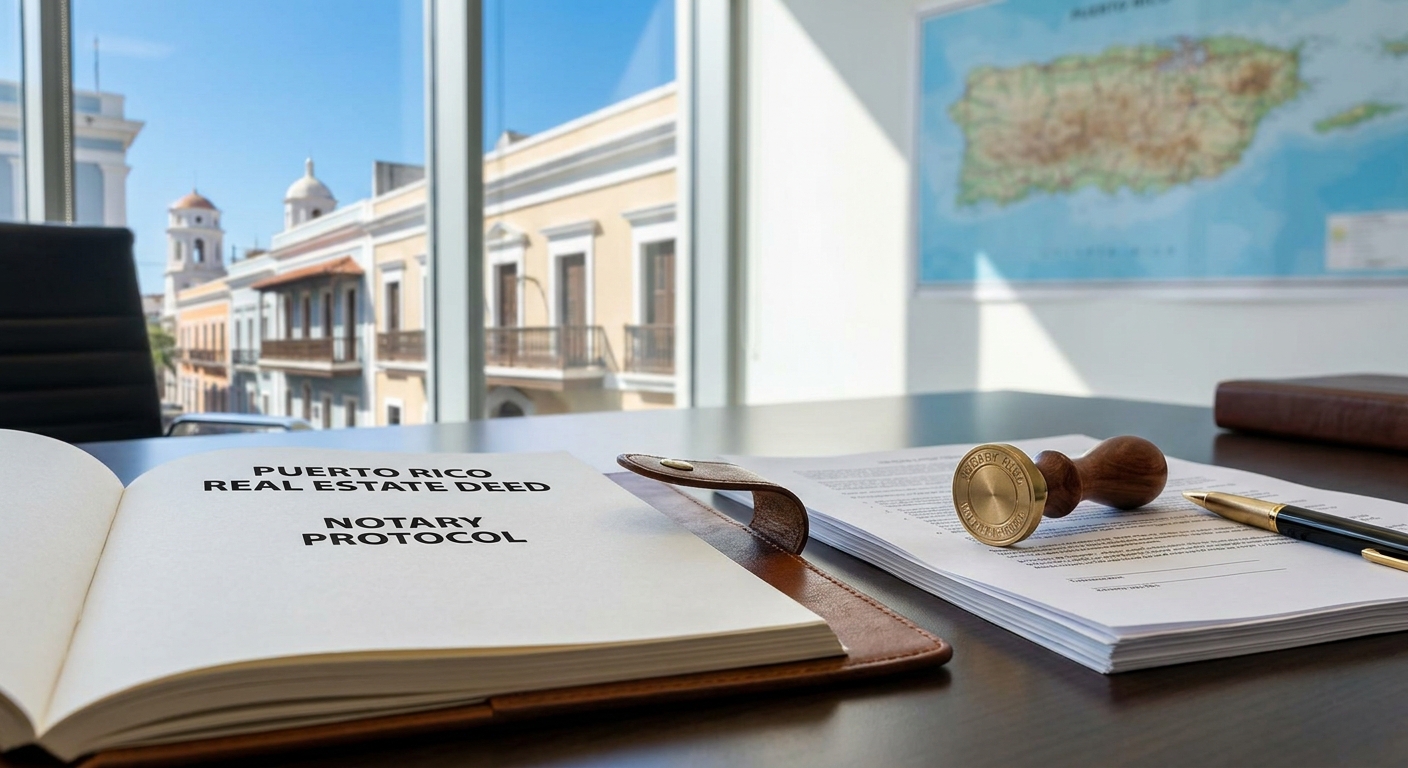

Why Notary Duties Matter in Puerto Rico Real Estate Transactions
In Puerto Rico real estate closings, the notary public occupies a position of significant legal responsibility that extends far beyond simply witnessing signatures. The notary's role carries specific statutory duties that directly affect the validity, enforceability, and legal standing of property transactions. Understanding these duties is essential for buyers, sellers, lenders, and anyone involved in real estate transactions on the island.
Puerto Rico's notarial system operates under a civil law framework inherited from Spanish legal tradition, which means notaries function as officers of the court with quasi-judicial authority. This is fundamentally different from the notary role in many U.S. states, where notaries perform limited ministerial functions. In Puerto Rico, notaries bear affirmative obligations to verify identity, confirm capacity, ensure voluntary consent, and certify the authenticity of documents. Failure to discharge these duties properly can render a deed or mortgage unenforceable, create title defects, or expose parties to litigation.
The Legal Framework Governing Puerto Rico Notaries
Puerto Rico notaries derive their authority and duties from the Puerto Rico Notary Law, which establishes a comprehensive regulatory structure. The law defines notaries as public officials responsible for authenticating documents and certifying facts within their knowledge or properly established before them. This statutory framework imposes affirmative duties that notaries cannot delegate or avoid.
The notary's primary function in real estate closings is to authenticate the signatures of the parties to the deed or mortgage. However, authentication is not a passive act. The notary must personally verify the identity of each party, confirm that the person signing is the actual party to the transaction, and ensure that the signature is genuine. The notary must also confirm that the party understands the nature and consequences of the document being signed.
Additionally, Puerto Rico law requires notaries to maintain detailed records of all notarizations, including the date, time, parties involved, document description, and identification information. These records must be preserved in the notary's protocol, which serves as an official record of the notarization. The protocol is a public record and can be consulted by interested parties to verify the authenticity of a notarized document.
Identity Verification and Personal Appearance Requirements
One of the most critical duties of a notary in Puerto Rico real estate closings is the verification of the identity of the parties to the transaction. The notary must require that each party appear personally before the notary at the time of execution. Remote notarization or notarization based on documents alone is not permitted in traditional real estate closings under Puerto Rico law, though limited exceptions exist for certain circumstances.
The notary must examine government-issued identification documents to confirm the identity of each party. Acceptable forms of identification include a Puerto Rico driver's license, passport, national identification card, or other official government document bearing a photograph and signature. The notary must verify that the photograph on the identification document matches the person appearing before the notary and that the signature on the identification matches the signature being affixed to the document.
This verification process serves multiple purposes. It prevents fraud by ensuring that the person signing the deed is actually the owner of the property or the authorized representative of the owner. It protects the buyer by confirming that the seller has the legal capacity to convey the property. It protects the lender by ensuring that the mortgagor is the actual owner of the property being pledged as security. The notary's certification of identity becomes part of the chain of title and provides evidence of authenticity that can be relied upon by subsequent purchasers, title insurers, and courts.
Capacity and Voluntary Consent
Beyond identity verification, the notary must satisfy themselves that each party to the transaction possesses the legal capacity to execute the document. Capacity refers to the legal and mental ability to understand the nature of the transaction and its consequences. A person lacking capacity, such as someone who is mentally incapacitated or under a legal disability, cannot validly execute a deed or mortgage.
The notary must observe the party's demeanor, speech, and apparent understanding during the closing. If the notary has reasonable grounds to believe that a party lacks capacity, the notary must refuse to notarize the document. This is not a suggestion or best practice; it is a mandatory duty. A notary who notarizes a document executed by a person lacking capacity may face disciplinary action and potential liability for damages.
The notary must also confirm that each party is executing the document voluntarily and without duress, undue influence, or fraud. The party must not be acting under threat, coercion, or improper pressure from another person. The notary should ask each party whether they understand the document, whether they have had an opportunity to review it, and whether they are signing it of their own free will. While the notary is not required to provide legal advice or explain the legal consequences of the transaction, the notary must be satisfied that the party understands what they are signing.
In real estate closings involving vulnerable parties, such as elderly persons or those with limited Spanish language proficiency, the notary's duty to confirm voluntary consent becomes even more important. The notary may require the presence of an interpreter or may refuse to proceed if communication barriers prevent adequate confirmation of understanding and consent.
Document Examination and Completeness
The notary must examine the document to be notarized and confirm that it is complete and properly executed. The notary should review the deed or mortgage to ensure that all required information is present, including the names of the parties, the legal description of the property, the consideration, and the signature lines. If the document contains blanks or appears incomplete, the notary should not proceed with notarization.
The notary must also confirm that the document has been signed by the party in the notary's presence. The notary cannot notarize a document that was signed before the party appeared before the notary, even if the party acknowledges the signature. This requirement ensures that the notary can observe the act of signing and confirm that the signature is genuine.
In some cases, the notary may be presented with a document that contains terms or provisions that appear unusual or potentially harmful to the party signing. While the notary is not required to provide legal advice, the notary may ask clarifying questions to ensure that the party understands what they are signing. If the notary has reasonable grounds to believe that the party is being defrauded or that the transaction is improper, the notary may refuse to notarize the document.
The Notary's Certification and Its Legal Effect
When a notary notarizes a deed or mortgage in Puerto Rico, the notary's certification carries significant legal weight. The notary's signature and seal on the document constitute a certification that the notary has performed all required duties and that the document is authentic. This certification is presumed to be accurate and reliable unless challenged with clear and convincing evidence.
The notary's certification serves as evidence in legal proceedings. If a deed is challenged on grounds of fraud or forgery, the notary's certification creates a presumption that the signature is genuine and that the party had capacity and consented to the transaction. The burden then shifts to the party challenging the deed to present evidence that the notary's certification is false or that the notary failed to perform required duties.
This presumption of authenticity is one reason why the notary's duties are so important. A notary who fails to properly verify identity, confirm capacity, or ensure voluntary consent undermines the integrity of the entire real estate transaction system. If a notary's negligence or misconduct results in a fraudulent deed being recorded, the consequences can be severe for innocent parties who relied on the notary's certification.
Common Pitfalls and Liability Exposure
Notaries in Puerto Rico face significant liability exposure if they fail to discharge their duties properly. Common mistakes include notarizing documents without requiring personal appearance of the parties, failing to verify identity adequately, notarizing documents that are incomplete or contain blanks, and failing to maintain proper records in the protocol.
A notary who notarizes a fraudulent deed may be held liable for damages to parties harmed by the fraud. If a notary notarizes a deed executed by someone who lacked capacity, the notary may be liable to the incapacitated person or their heirs. If a notary fails to maintain proper records, the notary may face disciplinary action from the Puerto Rico Secretary of State, including suspension or revocation of the notary commission.
Notaries must also be aware of their duty to refuse notarization in certain circumstances. If a notary has a personal interest in the transaction, such as being a party to the deed or having a financial interest in the outcome, the notary should not notarize the document. If the notary has reasonable grounds to believe that the transaction is improper or that a party lacks capacity or is acting under duress, the notary must refuse to proceed.
The Notary's Role in Title Insurance and Lender Requirements
Title insurance companies and lenders in Puerto Rico rely heavily on the notary's certification when issuing title insurance policies or funding mortgages. A title insurance company will not issue a policy if the deed is not properly notarized, because the notary's certification is essential evidence of the deed's authenticity and the grantor's authority to convey the property.
Lenders require that mortgages be notarized by a qualified notary before the lender will fund the loan. The lender's title insurance company will examine the notary's certification and the notary's protocol to confirm that the notary properly performed all required duties. If the notary's certification is defective or if the notary failed to maintain proper records, the title insurance company may refuse to issue a policy or may issue a policy with exceptions that reduce the lender's security.
For this reason, notaries in Puerto Rico real estate closings must maintain the highest standards of professionalism and accuracy. A notary's reputation for reliability and competence directly affects the notary's ability to conduct closings and maintain a successful practice. Notaries who develop a reputation for carelessness or misconduct will find that title insurance companies and lenders refuse to accept their notarizations.
Notary Qualifications and Training in Puerto Rico
Puerto Rico requires that notaries meet specific qualifications and complete training before receiving a notary commission. Notaries must be at least 21 years old, be a resident of Puerto Rico, and be able to read and write Spanish and English. Notaries must also pass an examination administered by the Puerto Rico Secretary of State that tests their knowledge of notarial law and procedures.
The examination covers the notary's duties, the requirements for proper notarization, the maintenance of the protocol, and the ethical obligations of notaries. Notaries must demonstrate competence in verifying identity, confirming capacity and consent, and maintaining proper records. The examination is designed to ensure that only qualified individuals receive notary commissions.
After receiving a notary commission, notaries are required to maintain their knowledge and skills through continuing education. The Puerto Rico Secretary of State may require notaries to complete training courses on new developments in notarial law or changes to notarial procedures. Notaries who fail to maintain their qualifications or who violate their duties may face disciplinary action.
Practical Considerations for Real Estate Parties
For buyers, sellers, and lenders involved in Puerto Rico real estate closings, understanding the notary's duties provides important protection. When attending a closing, parties should expect the notary to require personal appearance, verify identity, and confirm understanding and consent. If a notary attempts to notarize a document without performing these duties, the party should object and request that the notary comply with legal requirements.
Parties should also ensure that the notary maintains proper records and that the notary's certification is complete and accurate. The notary should note in the protocol the date and time of the notarization, the names and identification information of the parties, a description of the document, and confirmation that all required duties were performed. If the notary's certification is incomplete or contains errors, the party should request that the notary correct the record before leaving the closing.
For sellers, the notary's proper performance of duties protects against future claims that the deed was fraudulent or that the seller lacked capacity. For buyers, the notary's certification provides assurance that the seller is the actual owner of the property and that the deed is authentic. For lenders, the notary's certification is essential evidence that the mortgage is valid and enforceable.
When to Seek Legal Guidance on Notarial Issues
Real estate transactions in Puerto Rico involve complex legal requirements, and notarial issues can arise that require professional guidance. If a party has concerns about whether a notary is properly performing duties, or if a party is involved in a transaction where notarial issues may affect the validity of the deed or mortgage, consulting with an experienced Puerto Rico business law attorney is advisable.
An attorney can review the notary's certification and protocol to confirm that all required duties were performed. An attorney can also advise on remedies if a notary failed to perform required duties or if a deed or mortgage is challenged on grounds of improper notarization. In cases involving fraud, forgery, or disputes over the validity of a deed, an attorney's guidance is essential to protect the client's interests.
For businesses and investors involved in multiple real estate transactions in Puerto Rico, developing a relationship with an experienced Puerto Rico business law attorney can help ensure that all transactions are properly documented and that notarial requirements are met. An attorney can also advise on strategies to minimize risk and protect against future disputes.
Next Steps
If you are involved in a Puerto Rico real estate transaction and have questions about notarial duties or the validity of a deed or mortgage, the Puerto Rico Business Law Firm can help. Christian M. Frank Fas, Esq. has over 20 years of experience in commercial and business law in Puerto Rico and can provide guidance on notarial issues and real estate transactions.
Contact the firm for a free initial evaluation to discuss your situation and learn how the firm can assist you. Visit https://lawyerinpr.com/start to schedule your evaluation today.