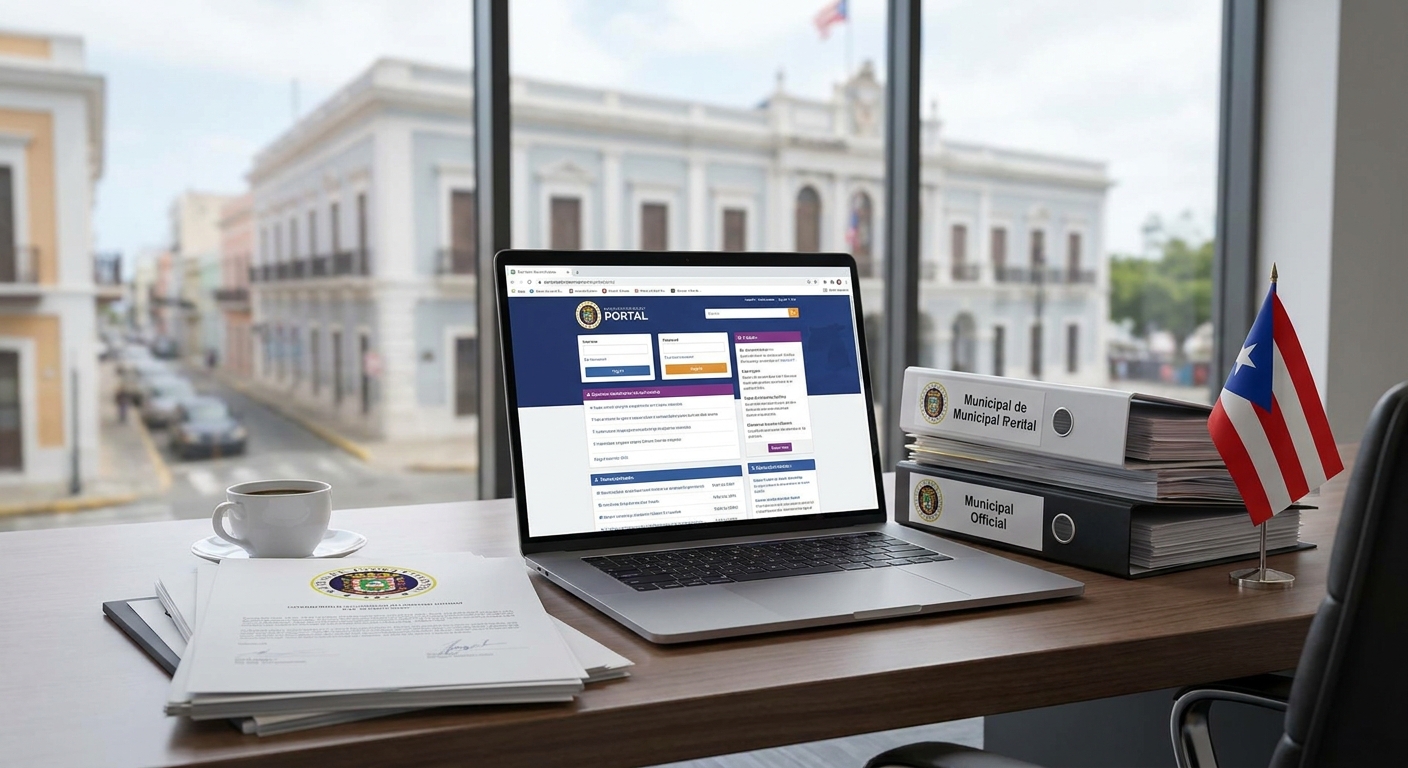

Why Municipal Licenses Matter to Your Puerto Rico Business
Operating a business in Puerto Rico without the proper municipal license is not optional. The requirement applies to virtually every commercial enterprise, regardless of size or industry. Failure to obtain and maintain a valid municipal license exposes your business to fines, operational shutdowns, and legal liability. Understanding what your municipality requires, when you need to apply, and how to maintain compliance is foundational to lawful business operation on the island.
Each of Puerto Rico's 78 municipalities administers its own licensing system. While the basic framework is consistent across the island, specific requirements, fees, and procedures vary by location. A business operating in San Juan faces different requirements than one in Ponce or Mayaguez. This variation means you cannot rely on generic guidance. You need information specific to your municipality and your industry classification.
What Is a Municipal License in Puerto Rico?
A municipal license is a permit issued by your municipality that authorizes you to conduct business within that jurisdiction. It serves as proof that your business complies with local regulations and has been registered with the municipal government. The license is not a one-time document. It requires annual renewal and payment of fees that vary based on your business classification and gross income.
The municipal license is distinct from other permits and registrations you may need. You might also require a sales tax registration, professional licenses, health permits, building permits, or industry-focused certifications. The municipal license is the foundational authorization that says your business is permitted to operate in that specific municipality.
Puerto Rico's municipal licensing system is governed by the Municipal Code and administered through each municipality's business licensing office, often called the Oficina de Licencias or Departamento de Hacienda. The process involves submitting an application, providing documentation of your business structure, and paying the applicable fee based on your projected or actual gross income.
Who Needs a Municipal License?
The requirement applies broadly. If you operate any commercial activity for profit within a Puerto Rico municipality, you need a municipal license. This includes sole proprietorships, partnerships, corporations, limited liability companies, and any other business structure. The requirement applies whether you operate from a physical storefront, a home office, or a mobile service.
Certain professions and activities may have additional or alternative requirements. Healthcare providers, attorneys, accountants, and other licensed professionals must maintain their professional licenses in addition to municipal licenses. Businesses in regulated industries such as banking, securities, or blockchain operations may face focused compliance requirements beyond municipal licensing. If your business involves financial services or emerging technologies, you should consult with an experienced attorney to understand your full compliance obligations.
Non-profit organizations and government entities are typically exempt from municipal licensing requirements. However, if a non-profit operates a commercial activity to generate revenue, that specific activity may require licensing. Religious organizations generally do not need licenses for their core religious functions, but commercial activities conducted by religious organizations are subject to licensing requirements.
The Municipal License Application Process
The application process begins at your municipality's business licensing office. You will need to complete an application form specific to your municipality. While forms vary slightly, they generally request the following information: your business name, the names and identification numbers of all owners, the business address, a description of the business activity, your projected or actual gross income, and the business structure (sole proprietorship, corporation, LLC, etc.).
You will need to provide supporting documentation. This typically includes a copy of your government-issued identification, proof of address, and documentation of your business structure. If you operate as a corporation or LLC, you will need to provide your articles of incorporation or organization. If you operate as a sole proprietor, you may need to provide a DBA (Doing Business As) registration if you use a name other than your legal name.
The application fee depends on your municipality and your business classification. Municipalities classify businesses into categories based on the type of activity. A retail store, a professional service, a restaurant, and a manufacturing operation fall into different classifications, each with its own fee structure. Fees are often based on projected or actual gross income, with higher-income businesses paying higher fees. Some municipalities charge a flat fee, while others use a sliding scale.
Processing times vary by municipality. Some municipalities issue licenses within days of application. Others may take several weeks. You should contact your municipality's licensing office to understand their current processing timeline. Many municipalities now offer online application systems, which can accelerate the process. Others still require in-person submission.
Business Classification and Fee Structures
Your municipality will classify your business based on the primary activity you conduct. This classification determines your licensing fee. Common classifications include retail trade, wholesale trade, services, manufacturing, food service, professional services, and entertainment. Some municipalities have dozens of specific classifications within these broad categories.
Fee structures typically fall into one of three models. Some municipalities charge a flat annual fee regardless of income. Others charge a fee based on your projected gross income, with higher income projections resulting in higher fees. A third model charges based on actual gross income reported in the previous year, which means your first-year fee may be an estimate, and subsequent years are adjusted based on actual performance.
You should obtain the fee schedule for your specific municipality before submitting your application. Fees can range from under one hundred dollars annually for small service businesses to several thousand dollars for larger retail or commercial operations. If your business income changes significantly, you may need to report the change to your municipality and adjust your license classification and fee accordingly.
Annual Renewal and Compliance
Your municipal license is not permanent. It must be renewed annually. Most municipalities send renewal notices to the address on file, typically 30 to 60 days before the license expires. You are responsible for submitting the renewal application and fee on time, even if you do not receive a notice. Failure to renew results in an expired license, which means your business is operating without authorization.
Renewal applications are generally simpler than initial applications. You will confirm that your business information remains accurate and pay the renewal fee. If your business address, ownership structure, or primary business activity has changed, you must report these changes on the renewal application. Some municipalities require updated documentation if significant changes have occurred.
You should maintain records of your license and renewal confirmations. Keep copies of your application, the issued license, and all renewal receipts. If your municipality conducts a business inspection or audit, you will need to produce your current license as proof of authorization. Maintaining organized records prevents disputes about your compliance status.
Consequences of Operating Without a License
Operating a business without a valid municipal license carries serious consequences. Municipalities can impose fines, which vary by municipality but often range from several hundred to several thousand dollars. The fine may be assessed per day of non-compliance, meaning a business operating unlicensed for an extended period faces substantial penalties.
Beyond fines, a municipality can order your business to cease operations. This means you cannot legally conduct business until you obtain a license. If you continue operating after receiving a cease-and-desist order, you face additional penalties and potential criminal charges. A business closure order can devastate your operations and your reputation.
Operating without a license also creates liability issues. If a customer or third party is injured or suffers damages related to your business, your lack of proper licensing may be used against you in a lawsuit. Insurance companies may deny claims if your business was operating without required licenses. Lenders and investors may view unlicensed operation as a serious compliance failure that affects your business credibility.
Special Considerations for Specific Industries
Certain industries face additional licensing and compliance requirements beyond the municipal license. Food service businesses must obtain health permits from the Puerto Rico Department of Health in addition to municipal licenses. Restaurants, food trucks, and catering operations must comply with food safety regulations and pass health inspections.
Businesses involving alcohol sales require separate permits from the Puerto Rico Alcohol and Tobacco Administration (ACT) in addition to municipal licenses. The process for obtaining alcohol permits is separate from municipal licensing and involves additional background checks and compliance requirements.
Professional service providers such as attorneys, accountants, engineers, and architects must maintain professional licenses issued by their respective licensing boards. These professional licenses are separate from municipal licenses, though both are required to operate legally.
If your business involves emerging technologies such as blockchain or cryptocurrency, you may face focused compliance requirements that go beyond municipal licensing. These businesses operate in a rapidly evolving regulatory environment where federal, territorial, and municipal requirements intersect. You should consult with an experienced attorney who understands both municipal requirements and the specific regulatory framework for your industry.
Municipal License and Tax Registration
Your municipal license is separate from your tax registration. You must register with the Puerto Rico Department of Treasury for sales tax purposes if your business sells taxable goods or services. You must also register for income tax purposes if your business generates income. These registrations are distinct from your municipal license, though they are often processed through related government offices.
Some municipalities coordinate with the Department of Treasury to streamline the registration process. When you apply for a municipal license, you may be able to simultaneously apply for tax registration. However, you should confirm with your municipality whether this coordination exists. If not, you will need to complete separate applications with the Department of Treasury.
Maintaining current tax registrations is as important as maintaining your municipal license. Failure to register for taxes or failure to file required tax returns creates separate legal and financial consequences. If you are relocating to Puerto Rico or establishing a new business, you should address both municipal licensing and tax registration as part of your startup process.
Changes to Your Business and License Updates
If your business undergoes significant changes, you may need to update your municipal license. Changes that typically require notification include a change in business address, a change in ownership structure, a change in the primary business activity, or a substantial change in projected income. Some municipalities require you to apply for a new license if you change your business address to a different municipality.
If you change your business structure, such as converting from a sole proprietorship to an LLC or corporation, you should notify your municipality. The licensing office will advise whether you need to apply for a new license or simply update your existing license. Failure to report structural changes can create compliance issues if your municipality later discovers the discrepancy.
If you expand your business to include a new primary activity, you may need to change your business classification. For example, if you operate a retail store and add a service component that becomes your primary activity, your classification may change, which could affect your licensing fee. You should contact your municipality's licensing office to discuss how changes to your business affect your license.
Finding Your Municipality's Specific Requirements
Because requirements vary by municipality, you need to obtain information specific to your location. The first step is to contact your municipality's business licensing office directly. Most municipalities have a dedicated office that handles business licenses. You can find contact information through your municipality's official website or by calling the municipal government's main office.
When you contact your municipality, ask for the following information: the application form for your business type, the current fee schedule, the required supporting documentation, the current processing timeline, and whether online applications are available. Ask whether your specific business activity requires any additional permits or licenses beyond the municipal license.
Many municipalities now maintain websites with downloadable application forms and fee schedules. Some provide online application systems. If your municipality offers online services, using them typically accelerates the process. If your municipality requires in-person submission, you will need to visit the licensing office during business hours with your completed application and supporting documents.
Working With an Experienced Attorney
For straightforward municipal licensing, you can often handle the application process yourself by contacting your municipality and following their procedures. However, if your business is complex, involves multiple locations, operates in a regulated industry, or involves emerging technologies, working with an experienced attorney can prevent costly mistakes.
An experienced attorney can review your business structure and operations to identify all required licenses and permits. They can ensure your applications are complete and accurate, reducing the risk of rejection or delays. If your business involves focused compliance requirements such as blockchain compliance or Act 60 tax incentives, an attorney can coordinate your municipal licensing with your other compliance obligations.
An attorney can also represent you if disputes arise with your municipality regarding licensing requirements, fee assessments, or license denial. If your municipality threatens to revoke your license or shut down your operations, having legal representation protects your interests and helps resolve the matter efficiently.
Next Steps
Begin by identifying your specific municipality and contacting its business licensing office. Request the application form, fee schedule, and list of required documentation for your business type. Complete your application accurately and submit it with all required supporting documents.
If your business is complex, involves multiple locations, or operates in a regulated industry, schedule a free initial evaluation with Christian M. Frank Fas, Esq. to discuss your specific licensing requirements and ensure you are meeting all compliance obligations. Visit lawyerinpr.com/start to request your evaluation.
Once you obtain your municipal license, establish a system to track your renewal date and maintain copies of your license and all supporting documentation. Renew your license promptly each year to maintain continuous authorization to operate your business.