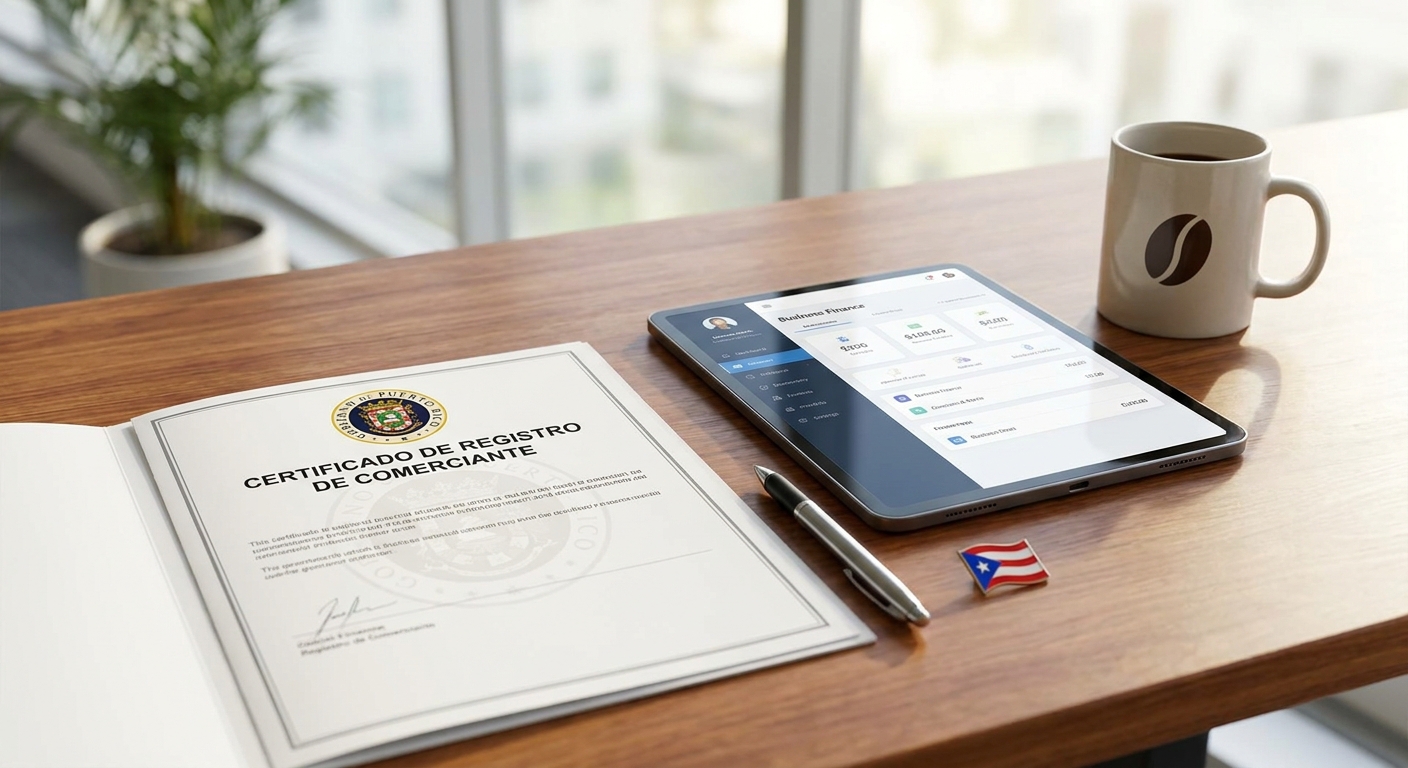

What a Merchant Registration Certificate Is
Every business that sells goods or taxable services in Puerto Rico needs a Merchant Registration Certificate, the Certificado de Registro de Comerciantes. The certificate is issued by the Puerto Rico Department of the Treasury, known as Hacienda, through its online system, SURI. It is tied to the sales and use tax, known as IVU, and it identifies whether the business is a withholding agent responsible for collecting and remitting IVU. Getting it right from the first day of operations avoids penalties and makes later dealings with Hacienda much simpler.
The merchant registration is a tax registration. It is separate from forming a corporation or limited liability company with the Puerto Rico Department of State, and it is separate from the municipal license and the permits a business may also need. Treating these as one filing is the most common source of confusion for new businesses on the island.
Who Needs to Register
Any person or entity that does business as a merchant in Puerto Rico must register with Hacienda before beginning operations. This includes sole proprietors, partnerships, corporations, and limited liability companies, and it includes businesses based outside Puerto Rico that sell into Puerto Rico and are required to collect IVU. Each place of business is registered in SURI, and the certificate must be displayed in a place visible to the public at the business location, as Hacienda explained in Circular Letter RI 16-12 citing Sections 4060.01 and 4060.02 of the Puerto Rico Internal Revenue Code.
The certificate states whether the merchant is a withholding agent. A withholding agent collects IVU from customers and files the monthly IVU return through SURI. The general IVU rate is 11.5 percent, made up of a 10.5 percent state portion and a 1 percent municipal portion, although some goods and services are taxed at different rates or are exempt.
How to Obtain the Certificate
The registration is completed online in SURI. A typical sequence looks like this:
- If the business is a corporation or limited liability company, form the entity first with the Department of State Registry of Corporations and Entities. Entity formation, the resident agent designation, and annual reports to the Department of State all belong to this step.
- Obtain a federal employer identification number for the entity, or use your Social Security number if you operate as an individual.
- Create a SURI account and complete the merchant registration, including the business activity, the location, and the information Hacienda requests about the owners.
- Print the certificate SURI issues electronically and display it at the business location.
Hacienda issues the certificate electronically once the registration is complete. Accurate information matters, because the registration data feeds IVU filings and any later review of the account.
Related Certificates and Registrations
Businesses that buy goods for resale can request a Reseller Certificate, the Certificado de Revendedor, through SURI. It allows qualifying purchases for resale without paying IVU at the time of purchase, it has a term of one year, and Hacienda generally requires that the merchant have no outstanding debts with the department to obtain it.
Other registrations run in parallel and are handled by other agencies. The municipal license tax, known as the patente, is filed with the municipality where the business operates. Personal property used in the business is reported to the Municipal Revenue Collection Center (CRIM). Use permits and other operating permits are handled through the Permits Management Office. A business with employees also registers with the Puerto Rico Department of Labor and Human Resources. None of these replaces the merchant registration with Hacienda.
Keeping the Registration Current
Once registered, the business must keep its information current in SURI. A new location, a change of address, a change in the type of business activity, or a change in ownership should be reflected in the registration. When the business closes a location or stops operating, the registration should be updated or cancelled so that Hacienda does not continue to expect IVU returns.
Because the registration drives the IVU filing obligation, a registered withholding agent must file its monthly IVU returns through SURI even in months with no sales. Missed returns create penalties and can prevent the business from obtaining a Reseller Certificate or other certifications that require a clean account.
Common Mistakes
The first mistake is assuming that forming a corporation or limited liability company with the Department of State completes the registration process. The Department of State handles the entity. Hacienda handles the merchant registration and IVU. The second mistake is opening for business before the registration is complete, which leaves the business collecting IVU without an active account or not collecting it at all. The third mistake is failing to display the certificate at the business location. The fourth mistake is letting the registration go stale after a move, a new location, or a change in ownership.
Businesses relocating from the mainland often bring sales tax habits from their home state. Puerto Rico rules differ in rates, exemptions, and filing frequency, so the IVU process should be reviewed before the first sale. Businesses with an Act 60 decree should also confirm how their decree interacts with IVU, because a tax decree on income does not by itself exempt the business from collecting IVU. Read more about Act 60 tax incentives.
Next Steps
If you are opening or relocating a business in Puerto Rico, sequence the entity formation, the SURI merchant registration, the municipal license, and the permits before your first sale. Our firm offers a free initial evaluation at lawyerinpr.com/start.
Christian M. Frank Fas, Esq. is a Puerto Rico licensed attorney with over 25 years of commercial and business law experience.