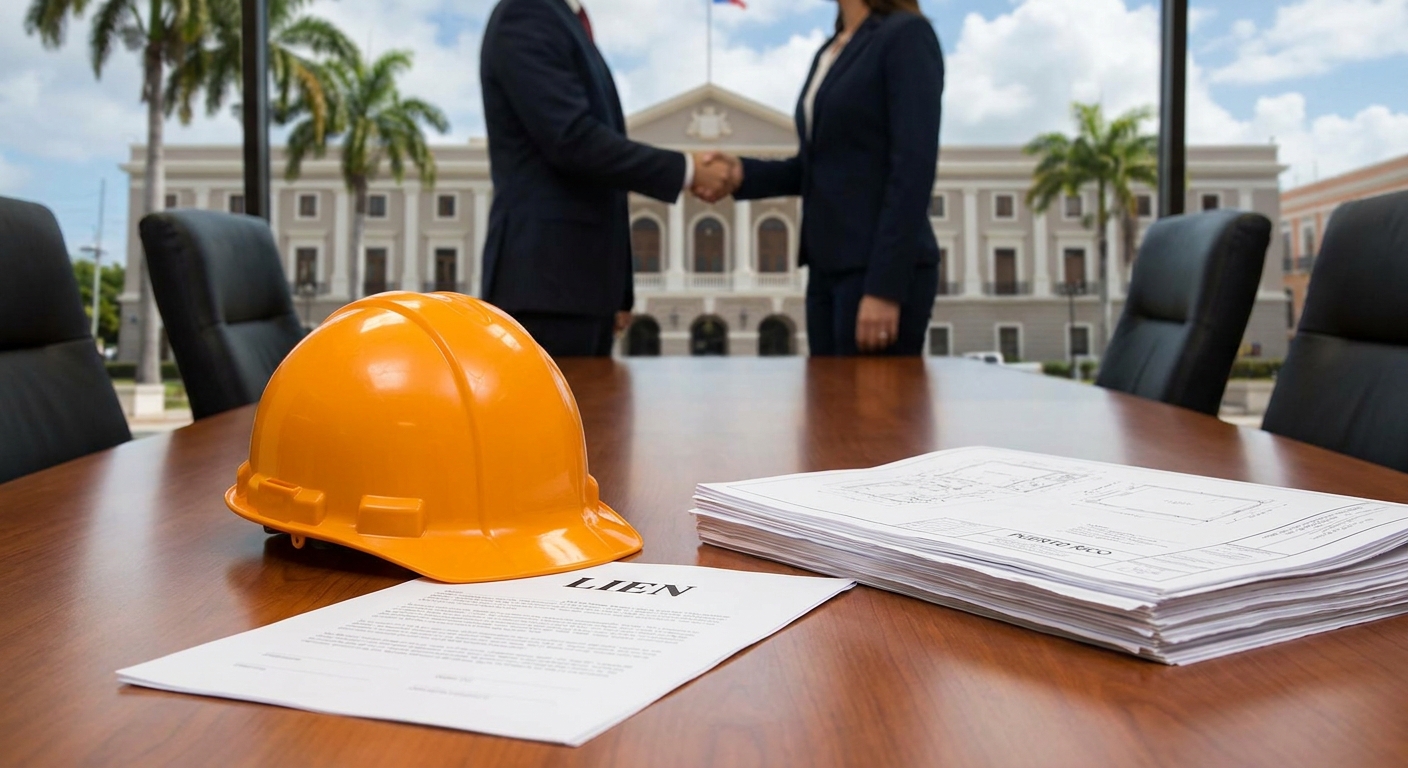

Mechanics liens protect contractors, suppliers, and laborers when payment disputes arise on construction projects
If you work in construction in Puerto Rico, you need to understand mechanics liens. These legal claims secure payment for work performed or materials supplied on a property. Without proper knowledge of how they work, contractors risk unpaid invoices, suppliers lose leverage in payment negotiations, and property owners face unexpected claims against their assets. This guide explains the mechanics lien process under Puerto Rico law, how to file one, how to avoid one, and what to do if you receive notice of a lien claim.
What Is a Mechanics Lien in Puerto Rico?
A mechanics lien is a legal claim against real property that secures payment for labor, materials, or services provided during construction or improvement work. When a contractor, subcontractor, supplier, or laborer is not paid, they can file a lien that attaches to the property itself. This lien creates a cloud on the property title and prevents the owner from selling, refinancing, or transferring the property without resolving the claim.
Puerto Rico recognizes mechanics liens under its civil law system, which differs from the common law mechanics lien statutes found in the United States. The framework is codified in the Puerto Rico Civil Code and related statutes. The lien gives unpaid parties a direct claim against the property, not just against the contractor or property owner personally.
The purpose of mechanics lien law is straightforward: it protects those who improve property from losing their investment when payment fails. Without this protection, contractors and suppliers would have no security beyond the creditworthiness of the parties they contract with. A mechanics lien shifts some of that risk to the property owner, who has the most direct interest in ensuring all parties are paid.
Who Can File a Mechanics Lien in Puerto Rico?
Puerto Rico law permits several categories of parties to file mechanics liens. Understanding who qualifies is essential for both those seeking to file a lien and those trying to avoid one.
General contractors can file liens for work performed under a direct contract with the property owner. Subcontractors can file liens for work performed under a contract with the general contractor, even though they have no direct contract with the owner. Suppliers and materialmen can file liens for materials delivered to the project site. Laborers can file liens for wages earned on the project. Architects and engineers may file liens for design and planning services in some circumstances, though the rules are more restrictive than for construction labor and materials.
The key requirement is that the party filing the lien must have provided something of value that improved the property. The work or materials must be incorporated into the property or directly necessary to the construction project. A supplier who delivers materials that are never used on the project, for example, may not have a valid lien claim.
The Timeline for Filing a Mechanics Lien in Puerto Rico
Timing is critical in mechanics lien claims. Puerto Rico law imposes strict deadlines for filing, and missing these deadlines eliminates the right to file a lien entirely.
The general rule is that a mechanics lien must be filed within a specific period after the last date work was performed or materials were supplied. Under Puerto Rico law, this period is typically 120 days from the date of the last work or delivery. This deadline is absolute. If you miss it, you lose the right to file a lien, though you may still have other remedies such as a breach of contract claim.
For subcontractors and suppliers, there is an additional requirement: they must provide written notice to the property owner within a certain timeframe. This notice requirement exists to alert the owner that a subcontractor or supplier is working on the project and may file a lien if not paid. The specific timing and content of this notice are governed by Puerto Rico law and must be followed precisely.
Property owners should track all notices received and maintain records of all contractors, subcontractors, and suppliers on the project. Contractors should ensure they provide required notices to owners and should document the dates of all work performed and materials delivered, as these dates determine the deadline for filing a lien.
How to File a Mechanics Lien in Puerto Rico
Filing a mechanics lien in Puerto Rico requires compliance with specific procedural and substantive requirements. The process involves preparing a lien document and recording it with the appropriate government office.
The lien document must contain certain information: the name and address of the party filing the lien, the name and address of the property owner, a description of the property against which the lien is claimed, the amount claimed, a description of the work performed or materials supplied, and the dates of the work or delivery. The document must be signed and notarized in many cases, depending on the specific requirements under Puerto Rico law.
The lien is filed by recording it with the Puerto Rico Property Registry (Registro de la Propiedad). The filing must be done in the registry office for the municipality where the property is located. Recording creates a public record of the lien and gives it priority based on the date of recording. Once recorded, the lien attaches to the property and binds any subsequent purchaser or lender.
The cost of filing includes registry fees, which vary based on the amount of the claim and the property value. An attorney experienced in Puerto Rico property law should prepare and file the lien to ensure compliance with all requirements. Errors in the lien document or filing process can result in an invalid lien that provides no protection.
Defending Against a Mechanics Lien Claim
Property owners who receive notice of a mechanics lien claim have several options for response. The appropriate strategy depends on whether the claim is valid, whether the work was actually performed, and whether payment was made.
If the claim is invalid because the deadline has passed, the owner can challenge the lien on that basis. If the work was not performed or materials were not delivered, the owner can dispute the claim. If payment was made, the owner can provide evidence of payment and request removal of the lien. If the amount claimed is incorrect, the owner can challenge the amount.
One common defense is that the party filing the lien failed to provide required notice to the owner. If a subcontractor or supplier failed to give proper notice within the required timeframe, the lien may be invalid or unenforceable against the owner.
Property owners should not ignore a mechanics lien. A lien that remains on the property title creates problems for any future sale, refinancing, or transfer. The owner may need to post a bond to remove the lien from the property record while the dispute is resolved, or may need to file a lawsuit to cancel the lien. An attorney can evaluate the claim and recommend the best course of action.
Preventing Mechanics Liens: Best Practices for Property Owners and Contractors
The best approach to mechanics liens is prevention. Property owners and contractors can take steps to reduce the risk of lien claims.
Property owners should require all contractors to provide proof of payment to subcontractors and suppliers before making final payment. Owners should also require contractors to provide lien waivers from all parties who worked on the project. A lien waiver is a document in which a contractor, subcontractor, or supplier agrees not to file a lien in exchange for payment. Obtaining waivers from all parties before final payment ensures that no one can later file a lien.
Contractors should maintain detailed records of all work performed, materials delivered, and payments received. Contractors should also ensure they provide required notices to property owners and should obtain lien waivers from all subcontractors and suppliers before paying them in full. This protects the contractor from being held responsible for unpaid subcontractors or suppliers.
Both owners and contractors should use written contracts that clearly specify payment terms, the scope of work, and the procedures for handling disputes. Clear contracts reduce misunderstandings and make it easier to resolve payment issues before they escalate to lien claims.
Contractors should also consider requiring subcontractors and suppliers to provide proof of payment to their own subcontractors and suppliers. This creates a chain of payment verification that reduces the risk of unpaid parties filing liens.
Enforcing a Mechanics Lien Through Court Action
Filing a mechanics lien is the first step in securing payment. If the property owner does not pay the lien claim, the party holding the lien must file a lawsuit to enforce it. This process is called a lien foreclosure action.
In a lien foreclosure action, the party holding the lien asks the court to order the sale of the property to satisfy the debt. The court will determine whether the lien is valid, the amount owed, and whether the property should be sold. If the court orders a sale, the property is sold and the proceeds are used to pay the lien claim, with any remaining funds going to the property owner.
Lien foreclosure actions are civil lawsuits that follow the rules of civil procedure in Puerto Rico. They can be complex and time-consuming. The property owner may raise defenses, such as arguing that the work was not performed or that payment was made. The court will hear evidence from both sides and make a determination.
The timeline for a lien foreclosure action varies depending on the complexity of the case and the court's schedule. Cases can take months or even years to resolve. During this time, the lien remains on the property title, preventing the owner from selling or refinancing.
An experienced attorney is essential for both enforcing and defending against a lien foreclosure action. The attorney will prepare the necessary documents, present evidence, and argue the case before the court. For more information on commercial litigation in Puerto Rico, see our commercial litigation page.
Mechanics Liens and Puerto Rico Tax Incentives
Businesses operating in Puerto Rico under Act 60 tax incentive programs should be aware that mechanics liens can affect their operations and financial planning. If a business is constructing facilities or improving property as part of its Puerto Rico operations, it should ensure that all contractors, subcontractors, and suppliers are paid to avoid lien claims that could cloud the title to valuable property.
Similarly, businesses that provide construction services or supply materials to Act 60 businesses should understand their rights to file mechanics liens if payment is not made. For more information on Act 60 and Puerto Rico tax incentives, see our Act 60 page.
Common Mistakes in Mechanics Lien Claims
Several common mistakes can undermine a mechanics lien claim or make it unenforceable.
Missing the filing deadline is the most common and most costly mistake. Once the 120-day period expires, the right to file a lien is gone. Contractors and suppliers must track the dates of their last work or delivery and file within the deadline.
Failing to provide required notice to the property owner is another frequent error. Subcontractors and suppliers must provide written notice within the required timeframe. If notice is not provided, the lien may be invalid or unenforceable against the owner.
Errors in the lien document itself can also invalidate the claim. The document must contain all required information and must be properly signed and notarized. Mistakes in the property description, the amount claimed, or the dates can make the lien defective.
Failing to record the lien in the correct registry office is another mistake. The lien must be recorded in the Property Registry for the municipality where the property is located. Recording in the wrong office means the lien is not properly filed.
Not following up on the lien is also a problem. Filing a lien does not automatically result in payment. If the property owner does not pay, the party holding the lien must file a lawsuit to enforce it. Waiting too long to file the lawsuit can result in the claim becoming stale or uncollectible.
The Role of Attorneys in Mechanics Lien Matters
Mechanics lien law in Puerto Rico is technical and requires knowledge of both substantive law and procedural requirements. An experienced attorney can help contractors, suppliers, and property owners understand their rights and obligations.
For contractors and suppliers seeking to file a lien, an attorney can ensure that all requirements are met, that the lien document is properly prepared, and that it is filed within the deadline. An attorney can also advise on whether a lien is the best remedy or whether other options, such as a breach of contract claim, might be more effective.
For property owners facing a lien claim, an attorney can evaluate the claim, determine whether it is valid, and recommend the best defense strategy. An attorney can also advise on whether to post a bond to remove the lien from the property record or whether to file a lawsuit to cancel the lien.
An attorney can also help parties avoid lien disputes by drafting clear contracts, establishing payment procedures, and ensuring that all required notices are provided and documented.
Next Steps
If you are involved in a construction project in Puerto Rico and have questions about mechanics liens, whether as a contractor, supplier, property owner, or lender, you should seek legal advice. The stakes are high, the deadlines are strict, and the consequences of mistakes can be significant.
Christian M. Frank Fas, Esq. has over 20 years of experience in commercial and business law in Puerto Rico, including construction law and mechanics lien disputes. The firm offers a free initial evaluation to discuss your situation and explain your options. Contact the firm today to schedule your free evaluation at lawyerinpr.com/start.