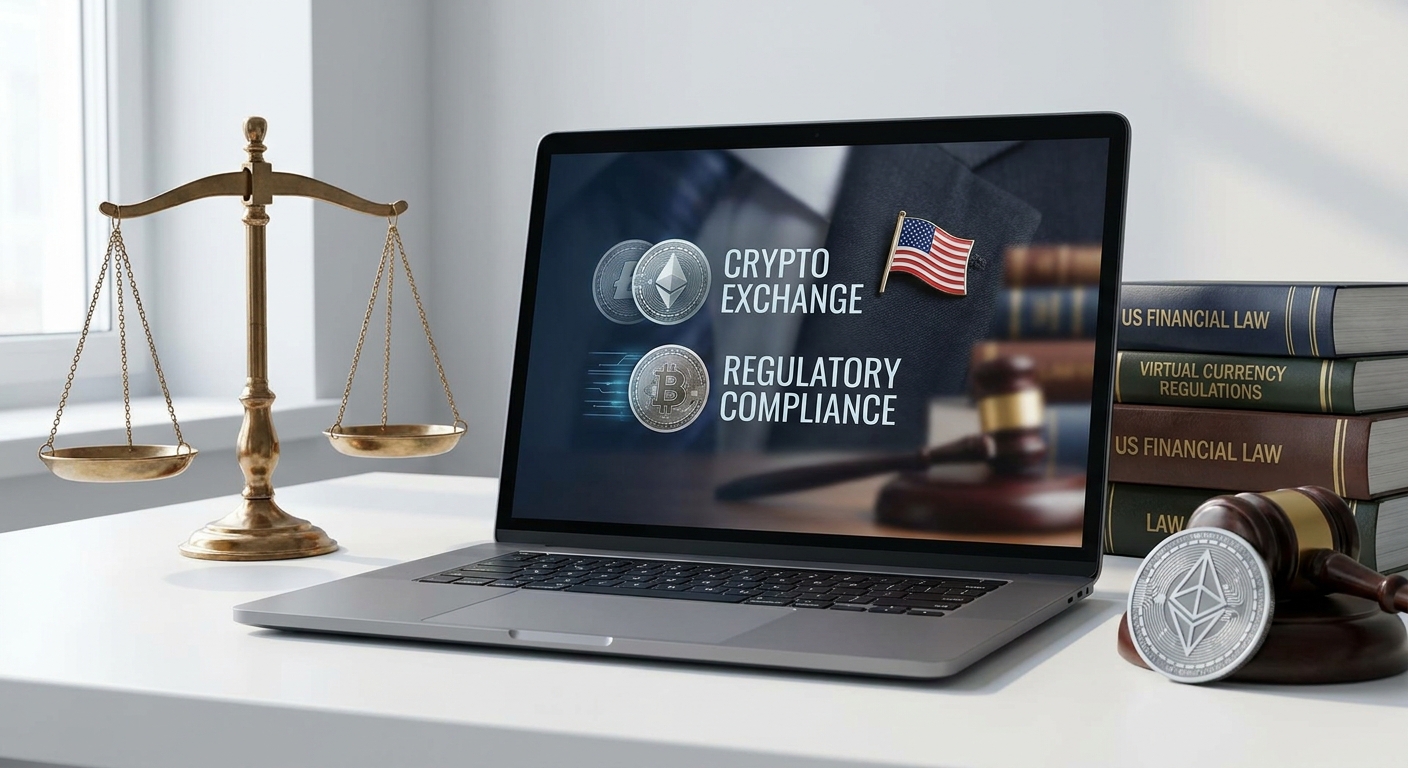

Crypto exchanges operate in a heavily regulated environment that most founders and operators do not fully understand before launch
If you are starting or operating a cryptocurrency exchange in the United States, you are subject to a complex web of federal and state regulations. These requirements span banking law, securities law, anti-money laundering compliance, and state-by-state licensing regimes. Failure to comply with even one requirement can result in civil penalties, criminal prosecution, operational shutdown, and asset seizure. This guide covers the primary legal obligations you must satisfy to operate legally.
Federal Money Transmission Licensing Requirements
The most fundamental requirement for any crypto exchange operating in the US is compliance with the Bank Secrecy Act and its implementing regulations. Under this framework, crypto exchanges are classified as money transmitters or money services businesses. This classification triggers mandatory registration with the Financial Crimes Enforcement Network, commonly known as FinCEN.
FinCEN registration is a federal baseline requirement, but it is not sufficient on its own. You must also obtain money transmitter licenses from individual states where you conduct business or accept customers. This is where the regulatory burden becomes substantial. Each state maintains its own licensing regime with distinct application requirements, fees, bonding requirements, and ongoing compliance obligations.
The licensing process typically requires you to submit detailed information about your business operations, ownership structure, financial condition, and compliance infrastructure. States commonly require applicants to post surety bonds ranging from $100,000 to $500,000 or higher, depending on transaction volume and state requirements. Some states impose net worth requirements or require proof of adequate capitalization. The application review period can extend from several months to over a year in some jurisdictions.
Once licensed, you must maintain compliance with state-specific reporting requirements, record-keeping obligations, and periodic renewal processes. Some states require annual audits or financial statements. Others mandate quarterly or annual reporting of transaction volumes and customer counts. Failure to renew licenses on time or maintain compliance can result in license suspension or revocation.
Anti-Money Laundering and Know Your Customer Compliance
Crypto exchanges must implement comprehensive anti-money laundering programs that meet or exceed the standards required of traditional financial institutions. This includes establishing a written AML policy, designating a compliance officer, conducting customer due diligence, and monitoring transactions for suspicious activity.
Know Your Customer requirements mandate that you collect and verify the identity of all customers before they can trade on your platform. This includes obtaining government-issued identification, verifying the customer's address, and in many cases, conducting beneficial ownership verification for business customers. The verification process must be completed before the customer can access trading functions.
Beyond initial KYC, you must conduct ongoing customer due diligence throughout the customer relationship. This means monitoring customer transactions for patterns that may indicate money laundering, terrorist financing, sanctions violations, or other illicit activity. You must establish transaction monitoring systems that flag suspicious activity based on predetermined thresholds and risk indicators.
When suspicious activity is detected, you are required to file Suspicious Activity Reports with FinCEN. These reports must be filed within 30 days of detecting the suspicious activity and must include detailed information about the customer, the transactions, and the basis for suspicion. You are prohibited from notifying the customer that a SAR has been filed, a requirement known as the SAR filing prohibition.
Your AML program must also include sanctions screening. You must screen all customers and counterparties against the Office of Foreign Assets Control sanctions lists and other government-maintained lists of prohibited parties. Transactions involving sanctioned individuals or entities are prohibited, and you must block such transactions and report them to OFAC.
Securities Law Compliance
Whether your crypto exchange is subject to securities law depends on the nature of the assets traded on your platform. If your platform offers trading in tokens that meet the definition of a security under the Securities Act of 1933 and the Securities Exchange Act of 1934, your exchange may be required to register as a national securities exchange with the Securities and Exchange Commission.
The SEC has taken the position that many tokens, particularly those offered as investments with expectations of profit derived from the efforts of others, constitute securities. If your platform lists such tokens, you may be operating an unregistered securities exchange, which is a federal violation.
Registration as a national securities exchange requires substantial compliance infrastructure. You must establish surveillance systems to detect and prevent market manipulation and insider trading. You must implement rules governing member conduct, trading practices, and dispute resolution. You must maintain detailed records of all trades and make those records available to regulators upon request. You must also establish a self-regulatory organization or enter into an agreement with an existing SRO to perform surveillance and enforcement functions.
Alternatively, if you operate as an alternative trading system or ATS, you may be able to register with the SEC under Regulation ATS, which imposes less stringent requirements than full exchange registration. However, ATS registration still requires compliance with detailed operational, surveillance, and reporting requirements.
If your platform trades only in commodities or commodity derivatives, you may fall under the jurisdiction of the Commodity Futures Trading Commission rather than the SEC. CFTC registration requirements differ from SEC requirements but are equally demanding. You must register as a derivatives exchange or alternative swap execution facility, depending on the nature of the products you offer.
Custody and Operational Security Requirements
Regulators require crypto exchanges to maintain robust custody and operational security practices. You must segregate customer assets from your own operating capital. You must maintain insurance coverage for digital assets held in custody. You must implement multi-signature controls, cold storage protocols, and access restrictions to prevent unauthorized movement of customer funds.
Many states now require exchanges to maintain fidelity bonds or other insurance coverage that protects customers in the event of theft, fraud, or operational failure. The amount of required coverage typically correlates with the value of customer assets held on the platform.
You must also establish business continuity and disaster recovery plans. Regulators expect exchanges to maintain backup systems, redundant infrastructure, and documented procedures for responding to system failures, cyber attacks, or other operational disruptions. You must be able to demonstrate that you can restore operations and provide customers access to their funds within a defined timeframe following a disruption.
Cybersecurity requirements have become increasingly stringent. You must implement encryption, access controls, intrusion detection systems, and regular security testing. You must maintain logs of all system access and changes. You must conduct regular security audits and penetration testing. You must have an incident response plan that addresses data breaches, unauthorized access, and other security events.
State-Specific Licensing and Compliance
Beyond federal requirements, you must obtain money transmitter licenses from each state where you accept customers or conduct business. The number of states requiring licenses has grown substantially as state regulators have focused on crypto regulation. Currently, more than 40 states require money transmitter licensing for crypto exchanges.
State licensing requirements vary significantly. Some states impose minimal requirements beyond FinCEN registration and basic compliance infrastructure. Others require detailed business plans, proof of adequate capitalization, background checks on all owners and officers, and comprehensive compliance programs. Some states require applicants to demonstrate that they have adequate systems to comply with state-specific reporting requirements.
New York's BitLicense regime represents the most stringent state-level requirement. Obtaining a BitLicense requires demonstrating compliance with detailed operational, security, and consumer protection standards. The application process is lengthy and expensive. However, once obtained, a BitLicense permits operation throughout New York, which is a significant market.
Other states have adopted more streamlined approaches. Some states allow exchanges to operate under a money transmitter license without additional crypto-specific requirements. Others have created focused regulatory frameworks that impose specific requirements for crypto businesses while avoiding the full burden of traditional money transmitter regulation.
You must track which states require licensing and maintain compliance with each state's specific requirements. This includes timely license renewal, compliance with state-specific reporting obligations, and adherence to state-imposed operational standards. Failure to obtain required licenses or maintain compliance can result in cease-and-desist orders, civil penalties, and criminal prosecution.
Consumer Protection and Disclosure Requirements
Regulators increasingly require crypto exchanges to implement consumer protection measures. These include clear disclosure of risks associated with crypto trading, fee schedules, and terms of service. You must disclose the risks of market volatility, the possibility of total loss, and the risks associated with digital asset custody.
You must establish clear policies regarding customer funds. You must disclose whether customer assets are held in segregated accounts, whether they are insured, and what happens to customer funds in the event of exchange insolvency or operational failure. You must provide customers with regular account statements and transaction confirmations.
Many states require exchanges to establish dispute resolution procedures. You must provide customers with a mechanism to file complaints and receive responses. Some states require exchanges to participate in third-party dispute resolution or arbitration programs.
You must also comply with state consumer protection laws, which may impose additional requirements regarding advertising, marketing, and customer communications. Some states prohibit misleading statements about potential returns or the safety of customer funds.
Reporting and Record-Keeping Obligations
Crypto exchanges must maintain detailed records of all transactions, customer information, and compliance activities. Federal law requires exchanges to maintain records for at least five years. These records must be available for inspection by regulators upon request.
You must file Currency Transaction Reports with FinCEN for all transactions exceeding $10,000. You must file Suspicious Activity Reports for transactions that you believe may involve money laundering, terrorist financing, or other illicit activity. You must file reports with OFAC regarding blocked transactions involving sanctioned parties.
Many states require additional reporting. Some states require quarterly or annual reports of transaction volumes, customer counts, and compliance metrics. Some states require notification of security breaches or operational incidents. Some states require exchanges to report changes in ownership, management, or operational procedures.
You must establish systems to track and document all compliance activities. This includes records of customer due diligence procedures, transaction monitoring results, compliance training, and internal audit findings. Regulators expect to see evidence that your compliance program is functioning effectively and that management is actively overseeing compliance activities.
International Considerations and Cross-Border Operations
If your exchange accepts customers from outside the United States or conducts cross-border transactions, you must comply with additional requirements. The Bank Secrecy Act imposes enhanced due diligence requirements for customers in high-risk jurisdictions. You must identify the beneficial owners of business customers and verify their identities.
You must also comply with sanctions laws that prohibit transactions with individuals and entities in sanctioned countries or on government-maintained lists. OFAC maintains lists of sanctioned individuals, entities, and countries. You must screen all customers and counterparties against these lists and block any transactions involving sanctioned parties.
If you conduct transactions involving correspondent banking relationships or wire transfers, you must comply with additional requirements regarding the transmission of customer information and the identification of beneficial owners. These requirements apply to both incoming and outgoing transactions.
Regulatory Examination and Enforcement
Crypto exchanges are subject to examination by federal and state regulators. FinCEN conducts examinations to verify compliance with the Bank Secrecy Act. State regulators conduct examinations to verify compliance with state licensing requirements. The SEC and CFTC conduct examinations of exchanges that fall within their jurisdiction.
During an examination, regulators review your compliance program, transaction records, customer files, and operational procedures. They may request detailed information about specific transactions or customers. They may conduct interviews with management and compliance personnel. They may test your systems and procedures to verify that they are functioning as designed.
Regulators have substantial enforcement authority. They can impose civil penalties, issue cease-and-desist orders, revoke licenses, and refer cases for criminal prosecution. Penalties for violations can be substantial, ranging from hundreds of thousands to millions of dollars depending on the nature and severity of the violation.
Recent enforcement actions against crypto exchanges have resulted in penalties exceeding $100 million for violations of AML requirements, sanctions laws, and operational security standards. These actions demonstrate that regulators are actively enforcing compliance requirements and that violations carry serious consequences.
Compliance Infrastructure and Staffing
Operating a compliant crypto exchange requires substantial investment in compliance infrastructure and personnel. You must hire experienced compliance professionals with knowledge of financial services regulation, AML requirements, and crypto-specific compliance issues. You must implement compliance systems that can monitor transactions, screen customers, and generate required reports.
Your compliance program must include written policies and procedures that address all applicable regulatory requirements. These policies must be communicated to all employees and must be enforced consistently. You must conduct regular training for employees on compliance requirements and your internal policies.
You must establish an internal audit function that periodically reviews your compliance program and identifies areas for improvement. You must document audit findings and management's response to identified deficiencies. You must demonstrate to regulators that your compliance program is functioning effectively and that management is actively overseeing compliance activities.
The cost of establishing and maintaining a compliant compliance program can be substantial, particularly for smaller exchanges. However, the cost of non-compliance is far greater. Regulatory penalties, license revocation, and criminal prosecution can result in the complete failure of your business.
Emerging Regulatory Trends
Crypto regulation continues to evolve. Regulators are increasingly focused on stablecoin regulation, decentralized finance compliance, and the regulation of non-custodial trading platforms. Congress has considered legislation that would impose additional requirements on crypto exchanges and clarify regulatory jurisdiction.
Recent regulatory guidance has addressed issues such as the treatment of stablecoins, the regulation of lending and yield products, and the application of securities laws to crypto tokens. Exchanges must monitor regulatory developments and adjust their compliance programs accordingly.
Some states have adopted comprehensive crypto regulatory frameworks that impose specific requirements on exchanges while providing clarity regarding regulatory expectations. Other states continue to apply traditional money transmitter regulation to crypto businesses. The regulatory landscape remains fragmented, and exchanges must comply with requirements that vary significantly across jurisdictions.
Next Steps
Operating a crypto exchange in the United States requires compliance with a complex and evolving regulatory framework. The requirements span federal and state law and cover banking regulation, securities law, anti-money laundering compliance, and operational security standards. Failure to comply with these requirements can result in severe consequences for your business.
If you are starting or operating a crypto exchange, you should obtain focused legal guidance regarding your specific compliance obligations. The requirements applicable to your exchange depend on the assets you trade, the states where you accept customers, and the nature of your business operations. A thorough analysis of your business model and regulatory obligations is essential before you launch or expand your operations.
Christian M. Frank Fas, Esq. has more than 20 years of experience in commercial and business law, including focused work in blockchain compliance and financial services regulation. Our blockchain compliance practice addresses the regulatory requirements applicable to crypto businesses operating in the United States and internationally.
Contact our office for a free initial evaluation of your compliance obligations. We will review your business model, identify applicable regulatory requirements, and provide guidance regarding the steps necessary to achieve compliance. Schedule your free evaluation today.