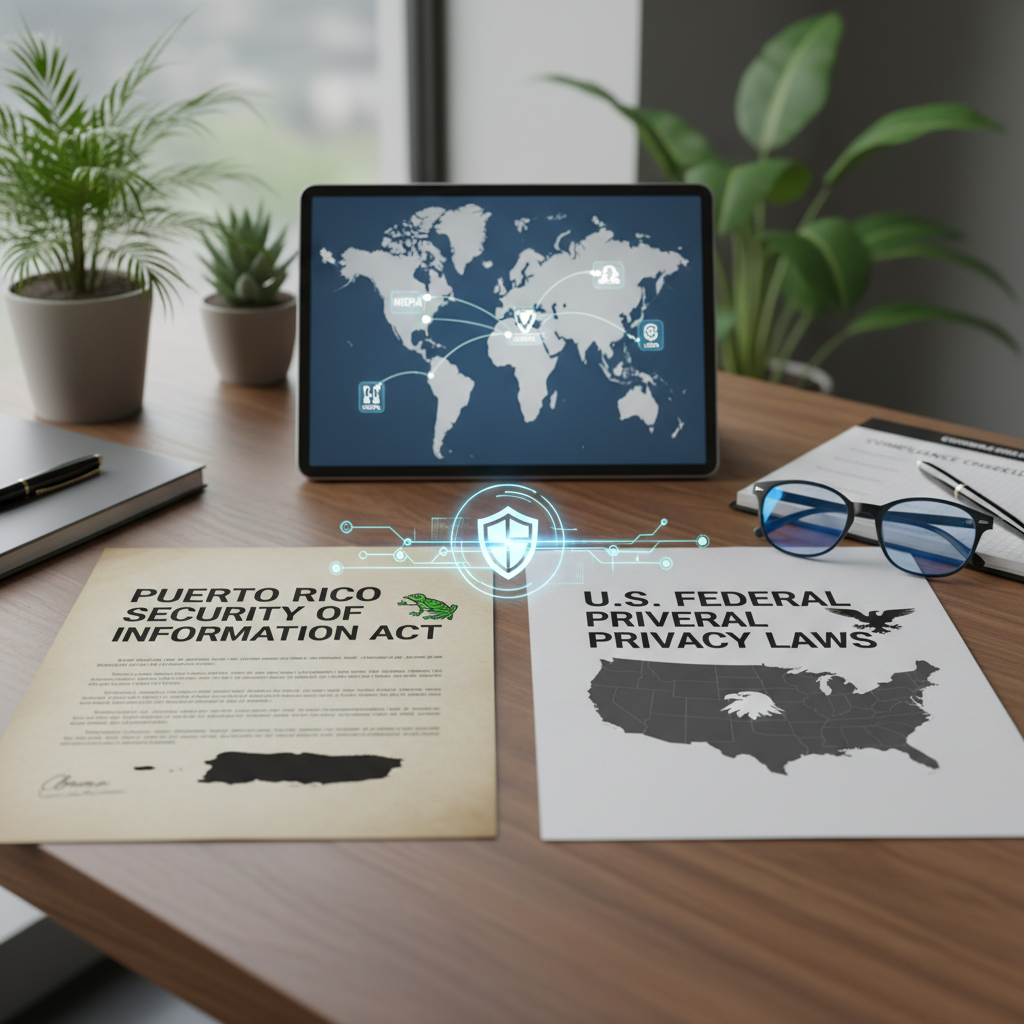

Understanding Privacy Laws in Puerto Rico and the U.S.
When expanding a business or handling data across borders, understanding the privacy landscape becomes essential. While Puerto Rico is a U.S. territory, its privacy regulations can differ from federal laws, creating unique compliance considerations for entrepreneurs and investors.
Puerto Rico’s Privacy Framework
Puerto Rico follows federal U.S. privacy standards but also has local laws that address specific data protection issues. The Puerto Rico Security of Information Act, for example, emphasizes safeguarding personal data stored or processed within the territory. Additionally, Puerto Rico’s legal environment often aligns with U.S. regulations but may include local nuances that impact how data is handled, stored, and shared.
U.S. Federal Privacy Laws
Across the United States, privacy regulation is a patchwork of federal laws designed to protect specific types of data. Notable examples include:
- Health Insurance Portability and Accountability Act (HIPAA): Protects health information.
- Children’s Online Privacy Protection Act (COPPA): Regulates data collection from children under 13.
- Gramm-Leach-Bliley Act (GLBA): Covers financial data.
These laws set standards for data security and privacy but often apply only to specific industries or types of data. The Federal Trade Commission (FTC) enforces many of these regulations, emphasizing transparency and fair practices.
European Union’s General Data Protection Regulation (GDPR) and Its Influence
Although not a U.S. law, the GDPR has impacted privacy standards across the globe, including in Puerto Rico. Businesses handling data from EU citizens must comply with GDPR, which emphasizes user consent, data minimization, and the right to access or delete personal data. This influence encourages U.S. and Puerto Rican companies to adopt more comprehensive privacy practices.
Key Differences in Cross-Jurisdictional Privacy Compliance
While Puerto Rico aligns with U.S. federal standards, differences emerge in areas such as:
- Scope of Regulations: Puerto Rico’s laws may extend protections beyond federal requirements, especially concerning local residents’ data.
- Enforcement and Penalties: Local authorities in Puerto Rico can enforce data protection laws, sometimes with penalties that differ from federal enforcement actions.
- Data Residency and Storage: Puerto Rican laws may specify where data must be stored or processed, especially for sensitive information.
- Consumer Rights and Consent: Variations in how businesses must obtain consent or inform users about data collection can differ between jurisdictions.
Practical Implications for Business Owners
For U.S. entrepreneurs operating in Puerto Rico or managing data across both jurisdictions, understanding these differences is vital. Ensuring compliance involves reviewing local laws, aligning data practices with federal standards, and considering international regulations like GDPR if applicable.
Implementing clear data handling policies, training staff on privacy practices, and maintaining transparent communication with users can help meet the diverse requirements. Consulting with legal professionals focused on Puerto Rican and U.S. privacy laws ensures that your business remains compliant across borders.
Conclusion
While Puerto Rico shares many privacy standards with the U.S., local laws introduce specific nuances that require attention. Recognizing these differences helps businesses avoid legal pitfalls and build trust with customers. Staying informed about evolving regulations in both jurisdictions supports responsible data management and sustainable growth.