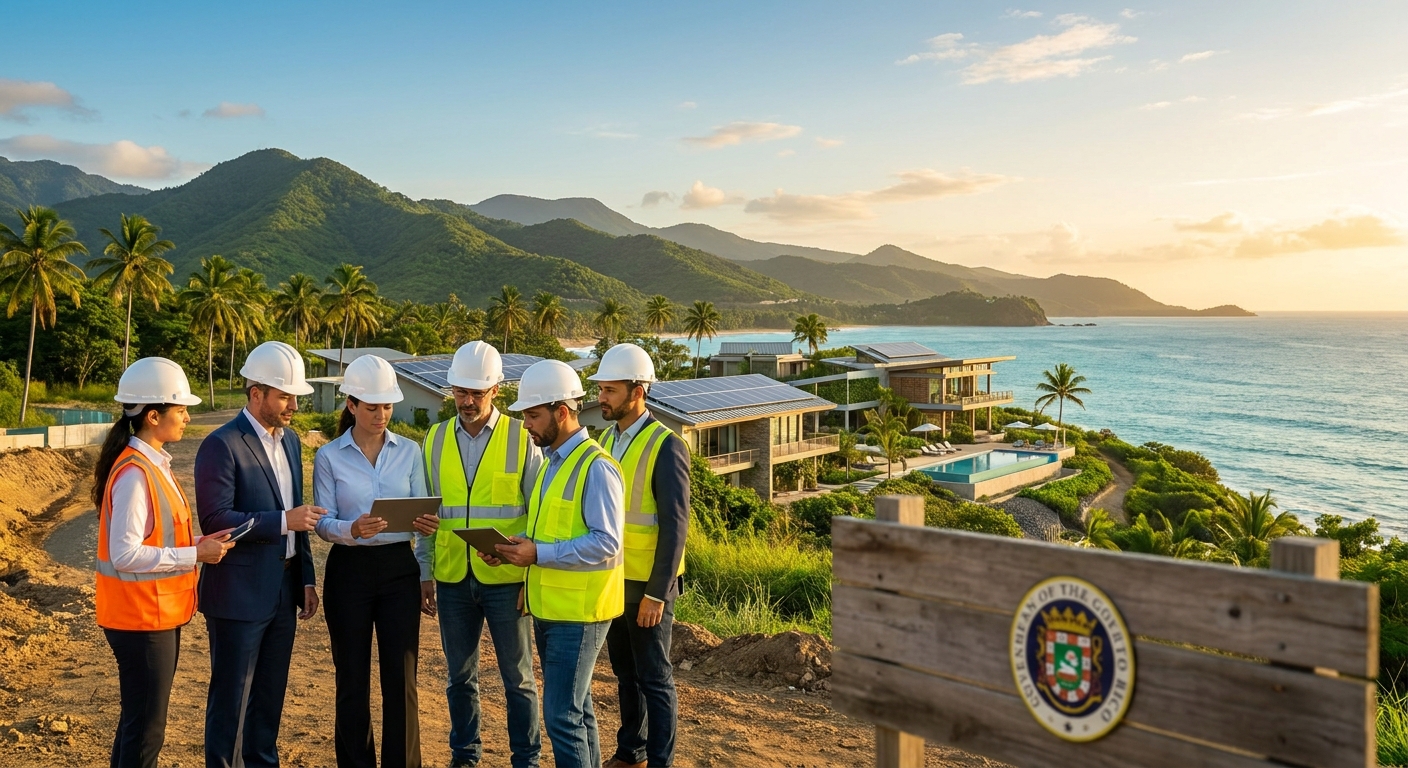

Environmental regulations in Puerto Rico affect nearly every business operation on the island, from real estate development to manufacturing to tourism. Understanding these rules is not optional for companies that want to operate legally and avoid costly penalties, project delays, and reputational damage.
Puerto Rico's environmental framework combines federal requirements under the Clean Air Act, Clean Water Act, and other U.S. environmental statutes with local regulations administered by the Puerto Rico Department of Environmental Quality (DRNA) and the Puerto Rico Environmental Quality Board (JCCA). The rules are complex, overlapping, and subject to frequent updates. Business owners who fail to comply face fines ranging from thousands to millions of dollars, project shutdowns, and personal liability for officers and directors.
This article explains the core environmental impact rules that apply to Puerto Rico businesses, the approval processes you must follow, and the practical steps to ensure compliance.
The Environmental Impact Assessment Requirement
Most projects in Puerto Rico require an Environmental Impact Assessment (EIA) or Environmental Assessment (EA) before construction or operation can begin. The requirement applies to projects that may significantly affect the environment, including residential developments, commercial facilities, industrial operations, energy projects, and infrastructure work.
The JCCA determines whether your project needs a full EIA or a simpler EA. Projects classified as "major" under Puerto Rico law must complete a full Environmental Impact Statement (EIS), which involves extensive data collection, analysis, and public review. Minor projects may qualify for an EA, which is less detailed but still requires environmental review and approval.
The EIA process typically takes six to twelve months, though complex projects can take longer. You must hire a qualified environmental consultant to prepare the assessment, conduct baseline environmental studies, identify potential impacts, and propose mitigation measures. The document must address air quality, water resources, wildlife, cultural resources, noise, traffic, and socioeconomic effects. Once submitted, the JCCA reviews the document, may request additional information, and holds a public hearing where community members can comment on the project.
Failing to obtain required environmental approval before starting work can result in project shutdown orders, substantial fines, and legal action by environmental groups or affected residents. Many business owners underestimate the time and cost of this process, leading to project delays and budget overruns.
Air Quality Permits and Emissions Standards
Any business that emits air pollutants must obtain an air quality permit from the DRNA. This includes manufacturing facilities, power plants, refineries, concrete batch plants, asphalt plants, generators, and even some commercial operations like dry cleaners or restaurants with certain equipment.
Puerto Rico follows federal air quality standards under the Clean Air Act. The island is designated as a nonattainment area for ozone and particulate matter in some regions, which means stricter permitting requirements apply. Facilities in nonattainment areas must demonstrate that their emissions will not worsen air quality and may be required to offset new emissions by reducing emissions elsewhere.
Air permits require you to identify all emission sources, calculate emissions rates, describe pollution control equipment, and commit to monitoring and reporting. The DRNA may impose conditions such as equipment specifications, operational limits, maintenance schedules, and continuous emissions monitoring. Violations can result in fines up to $25,000 per day of noncompliance, plus orders to cease operations.
Businesses must also comply with National Emission Standards for Hazardous Air Pollutants (NESHAP) if they handle regulated substances. These standards are highly technical and require specialized equipment and procedures. Regular compliance audits and emissions testing are essential to avoid violations.
Water Quality and Discharge Permits
Businesses that discharge wastewater, stormwater, or other water into Puerto Rico's waters must obtain a discharge permit. This includes manufacturing facilities, hotels, hospitals, restaurants, construction sites, and agricultural operations. The permit system is designed to protect groundwater, surface water, and coastal waters from contamination.
The DRNA administers the National Pollutant Discharge Elimination System (NPDES) permit program in Puerto Rico. Facilities must characterize their wastewater, identify pollutants, install treatment systems, and monitor discharge quality. Permit conditions specify allowable pollutant concentrations, monitoring frequency, and reporting requirements.
Stormwater permits apply to construction sites, industrial facilities, and municipal separate storm sewer systems. Construction sites must implement erosion and sediment control measures, such as silt fences, sediment basins, and stabilized construction entrances. Industrial facilities must prevent pollutants from entering stormwater through spill prevention, material storage practices, and regular inspections.
Violations of water discharge permits can result in fines, orders to cease operations, and liability for environmental cleanup costs. Contamination of groundwater or coastal waters can trigger expensive remediation requirements and third-party claims for damages.
Wetlands and Coastal Zone Protection
Puerto Rico has extensive wetlands and coastal areas that receive special protection under federal and local law. Any activity that affects wetlands, mangroves, seagrass beds, or coral reefs requires approval from the DRNA and often from federal agencies as well.
Wetlands include marshes, swamps, and other areas that are periodically inundated with water. These ecosystems provide critical habitat for fish and wildlife, filter pollutants, and protect against storm surge. Federal law prohibits filling or draining wetlands without a permit from the U.S. Army Corps of Engineers. Puerto Rico law provides additional protections for mangroves and other coastal wetlands.
Coastal zone activities, including development within 500 meters of the shoreline, must comply with Puerto Rico's Coastal Zone Management Program. This program requires consistency with state coastal policies, which include protecting natural resources, maintaining public access to beaches, and preventing erosion. Projects in the coastal zone must demonstrate that they will not harm marine ecosystems, increase erosion, or interfere with public use of coastal areas.
Violations can include orders to restore wetlands or coastal areas to their original condition, which can cost millions of dollars. Environmental groups frequently challenge coastal development projects in court, leading to litigation costs and project delays.
Hazardous Waste and Contaminated Sites
Businesses that generate, store, transport, or dispose of hazardous waste must comply with Puerto Rico's hazardous waste regulations, which mirror federal Resource Conservation and Recovery Act (RCRA) requirements. Hazardous waste includes spent solvents, batteries, oils, pesticides, and many other materials.
Generators must characterize their waste, determine if it is hazardous, obtain an EPA identification number, and arrange for proper disposal at licensed facilities. Storage must meet strict requirements regarding containers, labeling, and secondary containment. Violations can result in fines and criminal liability for officers and employees.
If your property is contaminated with hazardous substances, you may be required to conduct a Phase I Environmental Site Assessment (ESA) and, if contamination is found, a Phase II ESA involving soil and groundwater testing. Contaminated sites must be remediated to meet Puerto Rico cleanup standards. Responsible parties, including current and former owners and operators, can be held liable for cleanup costs, which often exceed millions of dollars.
Puerto Rico's Environmental Remediation Law provides liability protections for certain parties, such as lenders and innocent purchasers, but only if they comply with specific requirements. Businesses acquiring property should always conduct environmental due diligence before closing.
Environmental Permits and Approvals Timeline
The environmental approval process in Puerto Rico involves multiple agencies and can take considerable time. Understanding the typical timeline helps with project planning and budgeting.
For a major project requiring an EIS, the process generally follows this sequence: initial project scoping with the JCCA (one to two months), preparation of the EIS by your environmental consultant (three to six months), submission and JCCA review (two to four months), public hearing and comment period (one to two months), and final decision (one to two months). Total time is typically nine to fifteen months, though complex projects can take longer.
Air and water permits follow separate timelines. Air permits typically take three to six months from application to issuance. Water discharge permits can take four to eight months. If your project requires both an EIS and air and water permits, these processes may overlap, but you generally cannot obtain final permits until the EIS is approved.
Delays are common due to incomplete applications, requests for additional information, public opposition, and agency workload. Building extra time into your project schedule is prudent.
Common Compliance Mistakes and How to Avoid Them
Many businesses make preventable environmental compliance errors that result in fines, project delays, and legal liability. Understanding these mistakes helps you avoid them.
Starting work before obtaining required permits is the most common mistake. Some business owners assume that permits are formalities that can be obtained after construction begins. This is incorrect. Operating without required permits exposes you to immediate enforcement action, including project shutdown orders and substantial fines. Always obtain all required environmental approvals before breaking ground.
Underestimating the scope of environmental review is another frequent error. Business owners sometimes believe their project is too small to require an EIS or that environmental impacts are minimal. The JCCA makes this determination, not the applicant. If you proceed without obtaining required approval, you risk enforcement action and project shutdown.
Failing to maintain compliance after permits are issued is also common. Permit conditions specify operational requirements, monitoring obligations, and reporting deadlines. Violations of these conditions can result in permit revocation and enforcement action. Designate a responsible person to track permit requirements and ensure ongoing compliance.
Inadequate environmental due diligence during property acquisition can expose you to liability for contamination. Always conduct Phase I ESAs before purchasing property, particularly if the property has industrial history or is located near known contaminated sites.
Environmental Compliance and Business Planning
Environmental compliance should be integrated into your business planning from the earliest stages. Waiting until you are ready to break ground to address environmental requirements can result in costly delays and project redesigns.
During the feasibility stage, conduct preliminary environmental screening to identify potential regulatory requirements. This involves reviewing the property's environmental history, identifying nearby sensitive resources such as wetlands or endangered species habitat, and determining which permits and approvals will be required. This information helps you assess project feasibility and budget for compliance costs.
Engage environmental consultants early in the design process. They can help you design your project to minimize environmental impacts and streamline the permitting process. Projects designed with environmental considerations in mind often obtain approvals faster and face less public opposition than projects that appear to disregard environmental concerns.
Budget adequate time and money for environmental compliance. EIS preparation, permitting, and mitigation measures can add significant cost and schedule to projects. Underestimating these costs leads to budget overruns and schedule delays.
Maintain detailed records of all environmental compliance activities, including permits, monitoring data, maintenance records, and correspondence with agencies. These records demonstrate good faith compliance and are essential if you face an enforcement action or need to defend against third-party claims.
Enforcement and Penalties
Puerto Rico's environmental agencies have broad enforcement authority. The DRNA and JCCA can issue administrative orders, assess civil penalties, and refer cases for criminal prosecution.
Civil penalties for environmental violations can reach $25,000 per day of noncompliance. For serious violations, such as unpermitted discharge of hazardous waste, penalties can be substantially higher. In addition to penalties, agencies can order you to cease operations, remediate environmental damage, and restore affected areas.
Criminal penalties apply to knowing violations of environmental law. Officers and employees can face personal criminal liability, including fines and imprisonment. This means that environmental compliance is not just a corporate responsibility but a personal one for business leaders.
Environmental groups and affected residents can also bring citizen suits against businesses for environmental violations. These lawsuits can result in injunctions stopping your operations, orders to remediate environmental damage, and awards of attorney's fees and costs to the plaintiffs.
Environmental Compliance for Specific Industries
Different industries face different environmental requirements. Understanding the specific rules that apply to your business is essential.
Manufacturing facilities must comply with air and water permits, hazardous waste regulations, and often wetlands and coastal zone rules. Facilities that emit volatile organic compounds or hazardous air pollutants face particularly stringent requirements.
Real estate development projects must obtain EIS approval, air and water permits, and coastal zone consistency certification if located near the coast. Projects affecting wetlands or mangroves require additional permits from the Army Corps of Engineers and DRNA.
Hotels and resorts must comply with water discharge permits, coastal zone rules, and often wetlands protection requirements. Wastewater treatment is a particular focus for hospitality facilities.
Agricultural operations must comply with water quality rules, particularly regarding runoff from fields and animal operations. Pesticide and fertilizer use is regulated to protect groundwater.
Energy projects, including solar and wind facilities, must obtain EIS approval and air permits. Renewable energy projects may face fewer environmental barriers than fossil fuel projects, but still require careful environmental review.
Working with Environmental Consultants and Legal Counsel
Environmental compliance is technical and requires specialized knowledge. Most businesses benefit from working with experienced environmental consultants and legal counsel.
Environmental consultants prepare EIS documents, obtain permits, conduct environmental site assessments, and manage compliance. Choose consultants with experience in Puerto Rico's regulatory system and with your industry. Consultants should have strong relationships with DRNA and JCCA staff, which can facilitate the permitting process.
Legal counsel should review all environmental permits and agreements, advise on compliance obligations, and represent you in disputes with agencies or third parties. Your attorney should understand both Puerto Rico environmental law and federal environmental statutes that apply on the island. If your business involves significant environmental risks, such as hazardous waste handling or coastal development, consider retaining counsel before problems arise.
Environmental compliance is an ongoing obligation, not a one-time event. Regular compliance audits help identify and correct problems before they result in enforcement action. Many businesses conduct annual environmental audits to assess compliance with permits and regulations.
Next Steps
Environmental regulations in Puerto Rico are complex and strictly enforced. Compliance requires careful planning, qualified consultants, and ongoing attention to regulatory requirements. Failure to comply can result in substantial fines, project shutdowns, and personal liability for business leaders.
If your business operates in Puerto Rico or is planning to establish operations on the island, you should understand the environmental rules that apply to your industry and operations. The Puerto Rico Business Law Firm offers a free initial evaluation to discuss your environmental compliance obligations and develop a strategy to ensure your business operates within the law.
Contact the firm to schedule your free initial evaluation. Visit https://lawyerinpr.com/start to get started.