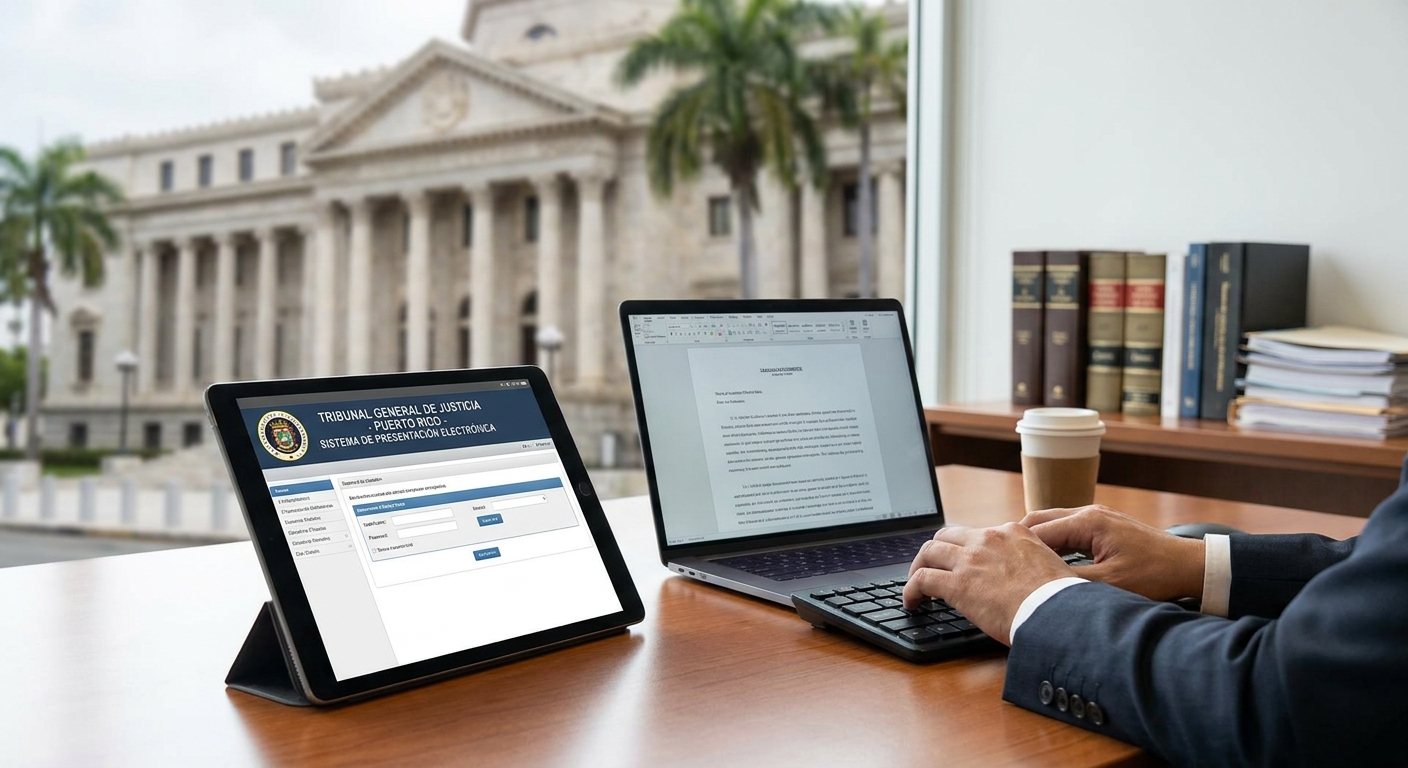

Electronic filings in Puerto Rico courts are no longer optional. They are the standard method for submitting legal documents, and understanding how the system works directly affects your ability to meet deadlines, protect your rights, and manage litigation costs.
Puerto Rico's court system has transitioned to digital filing requirements across most civil, commercial, and administrative proceedings. This shift has created both opportunities and compliance challenges for business owners, in-house counsel, and practicing attorneys. The rules governing electronic submissions differ from mainland U.S. federal courts and vary by court level and case type. Mistakes in formatting, timing, or technical execution can result in rejected filings, missed deadlines, and serious consequences for your legal position.
This guide covers the practical requirements for electronic filings in Puerto Rico courts, the systems you need to use, common pitfalls, and how to ensure your documents reach the court on time and in proper form.
The Puerto Rico Court System's Electronic Filing Infrastructure
Puerto Rico's judicial system operates through the Court of First Instance (Tribunal de Primera Instancia), the Court of Appeals (Tribunal de Apelaciones), and the Supreme Court (Tribunal Supremo). Each level has adopted electronic filing systems, though the specific platforms and requirements vary.
The primary electronic filing system for Puerto Rico courts is the Sistema de Tramitación Electrónica de Casos (STEC), which handles civil and commercial cases in the Court of First Instance. The system was designed to reduce paper use, improve case management, and provide attorneys and parties with real-time access to case documents and court orders.
For appellate proceedings, the Court of Appeals operates its own electronic filing system with separate login credentials and procedural rules. The Supreme Court maintains a distinct system for cases within its jurisdiction. Understanding which system applies to your case is the first step in compliance.
Access to these systems requires registration with the Puerto Rico Bar Association or authorization as a legal representative. Self-represented parties may file electronically in some cases, but the process and requirements differ from attorney filings. Business owners involved in litigation should confirm with their counsel whether they can file documents directly or whether all submissions must come through their attorney.
Registration and Access Requirements
Before you can file any document electronically in Puerto Rico courts, you must register with the appropriate system. For attorneys, this typically involves providing your bar license number, contact information, and creating login credentials through the court's online portal.
The registration process requires verification of your identity and bar status. Once approved, you receive a digital certificate or login credentials that authenticate your filings. This authentication serves as your electronic signature and confirms that the filing came from an authorized representative.
If you are a business owner or corporate representative without a law license, you generally cannot file documents directly in the electronic system. Your attorney must handle all filings on your behalf. Some courts allow limited exceptions for certain administrative filings or small claims, but commercial litigation and complex business disputes require attorney representation for electronic filing purposes.
Maintaining your registration is your responsibility. If your bar status changes, your address changes, or your contact information becomes outdated, you must update your registration promptly. Failure to do so can result in missed notifications about court orders, deadlines, or case updates.
Document Format and Technical Specifications
Puerto Rico courts have strict requirements for document formatting and file types. Documents must be submitted in PDF format, and the file size typically cannot exceed 10 megabytes per document. Scanned documents must be clear and legible, with text that can be searched and copied by the court system.
All documents must include a caption identifying the court, case number, parties, and the type of document being filed. The caption format must follow Puerto Rico court rules precisely. Deviations from the required format can result in rejection or delay.
Page numbering is mandatory. Documents must be numbered consecutively from the first page through the last page. Headers or footers should include the case number and document title for easy identification.
Font size must be at least 12 points for body text, and margins must be at least one inch on all sides. Line spacing should be double-spaced for most documents, though some filings allow single spacing. These specifications ensure that documents are readable both on screen and in printed form.
Signatures on electronically filed documents are handled through digital certificates or electronic signature protocols established by the court system. You cannot simply scan a handwritten signature and include it in a PDF. The court system will reject documents that do not comply with its electronic signature requirements.
Filing Deadlines and Timing Rules
Electronic filings in Puerto Rico courts are deemed filed when they are received and accepted by the court system, not when you submit them. This distinction matters because the court system processes filings in batches, and acceptance may occur hours after submission.
If you file a document before midnight on the deadline date, the court system will typically accept it as timely, provided the system is functioning normally. However, if the system experiences technical problems or is offline, the court may extend the deadline for all filers affected by the outage.
You should never wait until the last moment to file. Technical issues, internet connectivity problems, or system delays can prevent timely submission. Filing at least several hours before the deadline gives you time to address any problems and resubmit if necessary.
The court system generates a confirmation receipt when your filing is accepted. You should retain this receipt as proof of timely filing. If a dispute arises about whether you met a deadline, the receipt serves as your evidence.
Different types of documents have different filing deadlines. Motions, responses, and other pleadings follow the timelines set by court rules and case management orders. Failure to meet these deadlines can result in sanctions, dismissal of claims, or default judgments against you.
Common Document Types and Filing Requirements
Complaints and initial pleadings in commercial cases must include all required elements under Puerto Rico civil procedure rules. These documents establish the court's jurisdiction, identify the parties, and state the legal basis for your claims. Filing errors in initial pleadings can result in dismissal or require you to file amended versions, delaying your case.
Motions require a caption, statement of the relief sought, factual and legal arguments, and a prayer for relief. Supporting documents such as affidavits, contracts, or correspondence must be attached as exhibits. Each exhibit must be clearly labeled and referenced in the motion text.
Responses and answers to complaints must be filed within the time specified by the court or by rule. Failure to respond results in default judgment. Electronic filing does not extend these deadlines, and the court will not accept late filings based on claims that you did not receive notice of the deadline.
Discovery documents, including interrogatories, requests for production of documents, and depositions, follow specific formatting requirements. Some discovery materials may be filed under seal if they contain confidential business information or trade secrets. The court system allows sealed filings, but you must follow the proper procedure to request and obtain seal status.
Briefs and memoranda in support of motions or appeals require careful attention to formatting, citation style, and page limits. Puerto Rico courts enforce page limits strictly, and documents exceeding the limit may be rejected or disregarded by the court.
Electronic Filing Fees and Payment
Puerto Rico courts charge filing fees for most documents submitted through the electronic system. The fee structure varies by document type and case category. Commercial litigation typically involves higher fees than other case types.
Fees are paid through the electronic filing system using credit card or bank transfer. You must complete payment before the filing is considered complete. If payment fails or is declined, the court will not accept your filing, and you will miss your deadline.
Some parties qualify for fee waivers or reductions based on financial hardship. If you believe you qualify, you must file a separate motion requesting waiver or reduction before submitting your documents. The court will rule on your request, and you can proceed with filing only after approval.
Keep records of all filing fees paid. These records are important for accounting purposes and for resolving any disputes about whether a filing was actually submitted and accepted by the court.
Confidentiality and Sealed Filings
Business litigation often involves confidential information, trade secrets, or sensitive financial data. Puerto Rico courts allow parties to file documents under seal to protect this information from public disclosure.
To file a document under seal, you must submit a motion requesting seal status before or contemporaneously with the document itself. The motion must explain why the document contains confidential information and why public disclosure would cause harm. The court will rule on your request, and the document will remain sealed pending approval.
Sealed documents are stored separately in the electronic system and are accessible only to the parties, their attorneys, and the court. The public cannot view sealed filings through the court's online portal.
If you inadvertently file a document containing confidential information without requesting seal status, you should immediately notify the court and request that the document be sealed retroactively. The court may grant this request, but there is no guarantee, and the document may have already been viewed by the public.
Technical Issues and System Failures
The Puerto Rico court electronic filing system occasionally experiences technical problems, including server outages, connectivity issues, and software glitches. When system failures occur, the court typically extends deadlines for all affected filers.
If you experience technical problems while attempting to file, you should document the issue, including the time you attempted to file, error messages received, and any screenshots or records of the problem. Contact the court's technical support team immediately and request an extension of the deadline.
Do not assume that a failed filing attempt means your document was not submitted. Check the court's system after the technical issue is resolved to confirm whether your filing was received. If it was not, resubmit immediately.
Some attorneys maintain backup filing methods for critical deadlines, such as preparing a paper copy to file in person if electronic filing fails. While this approach requires additional effort, it provides insurance against missing important deadlines due to system failures.
Compliance with Court Orders and Case Management Directives
Many judges issue case management orders that impose specific requirements for electronic filings in their cases. These orders may require documents to be filed in a particular format, include specific headers or footers, or follow a particular naming convention for file names.
You must comply with these case-specific requirements in addition to the general court rules. Failure to do so can result in the judge rejecting your filings or imposing sanctions.
Read every case management order carefully and confirm that your filing procedures comply with all requirements. If you are uncertain about any requirement, contact the judge's chambers or the court clerk for clarification before filing.
Electronic Filing in Commercial Litigation and Business Disputes
Commercial litigation in Puerto Rico courts involves complex procedural rules and tight deadlines. Electronic filing is mandatory in most commercial cases, and the court system is designed to handle high-volume document submissions.
If your business is involved in a commercial dispute, contract litigation, or other business-related lawsuit, you should expect to file all documents electronically. Your attorney should be familiar with the specific requirements for your case type and should have systems in place to ensure timely, compliant filings.
For businesses operating under Puerto Rico's tax incentive programs, such as Act 60, commercial litigation may involve additional complexity if the dispute relates to your incentive status or tax obligations. Understanding how electronic filing works in these cases is important for protecting your business interests.
Best Practices for Electronic Filing in Puerto Rico Courts
Develop a filing checklist for each document type. The checklist should include all required elements, formatting specifications, and procedural requirements. Use this checklist before submitting any filing to confirm compliance.
Create a calendar system that tracks all filing deadlines and provides advance notice. Set reminders at least one week before each deadline to allow time for document preparation and review.
Maintain organized records of all filings, including confirmation receipts, copies of submitted documents, and dates of submission. These records are essential for case management and for resolving any disputes about whether documents were timely filed.
Communicate regularly with the court clerk's office if you have questions about filing requirements or procedures. The clerk's office can provide guidance on specific issues and can alert you to any changes in filing rules or procedures.
If you are managing litigation for your business, work closely with your attorney to understand the electronic filing requirements for your case. Ask your attorney to explain the procedures, deadlines, and consequences of non-compliance. Do not assume that filing procedures are the same across all courts or case types.
Avoiding Common Filing Errors
Incorrect case numbers are a frequent cause of filing rejection. Always verify the case number before submitting any document. A single digit error will result in the filing being rejected or directed to the wrong case.
Missing or incomplete captions cause delays and rejections. Ensure that every document includes the full caption with the court name, case number, judge's name (if assigned), and all party names exactly as they appear in the complaint or initial pleading.
File size violations occur when documents exceed the maximum size allowed by the system. If you have a large document, break it into multiple files or compress images and scanned materials to reduce file size.
Signature and authentication errors result in rejection. Ensure that your documents are signed using the court system's approved electronic signature method. Do not attempt to use scanned handwritten signatures or other non-compliant signature methods.
Late filings cannot be corrected after the deadline passes. File early enough to allow time for resubmission if technical problems occur. Do not rely on last-minute filings.
Next Steps: Getting Help with Electronic Filings
Electronic filing requirements in Puerto Rico courts are complex and strictly enforced. A single procedural error can result in rejection, missed deadlines, or sanctions that harm your legal position.
If you are involved in commercial litigation or business disputes in Puerto Rico courts, you need an attorney who understands the electronic filing system and can ensure that all documents are submitted correctly and on time. Christian M. Frank Fas, Esq. has over 20 years of experience with commercial and business law in Puerto Rico and is familiar with the electronic filing requirements across all court levels.
Contact the firm for a free initial evaluation to discuss your case and learn how proper electronic filing procedures can protect your business interests. The firm can also assist with commercial litigation and other business law matters that require court filings in Puerto Rico.