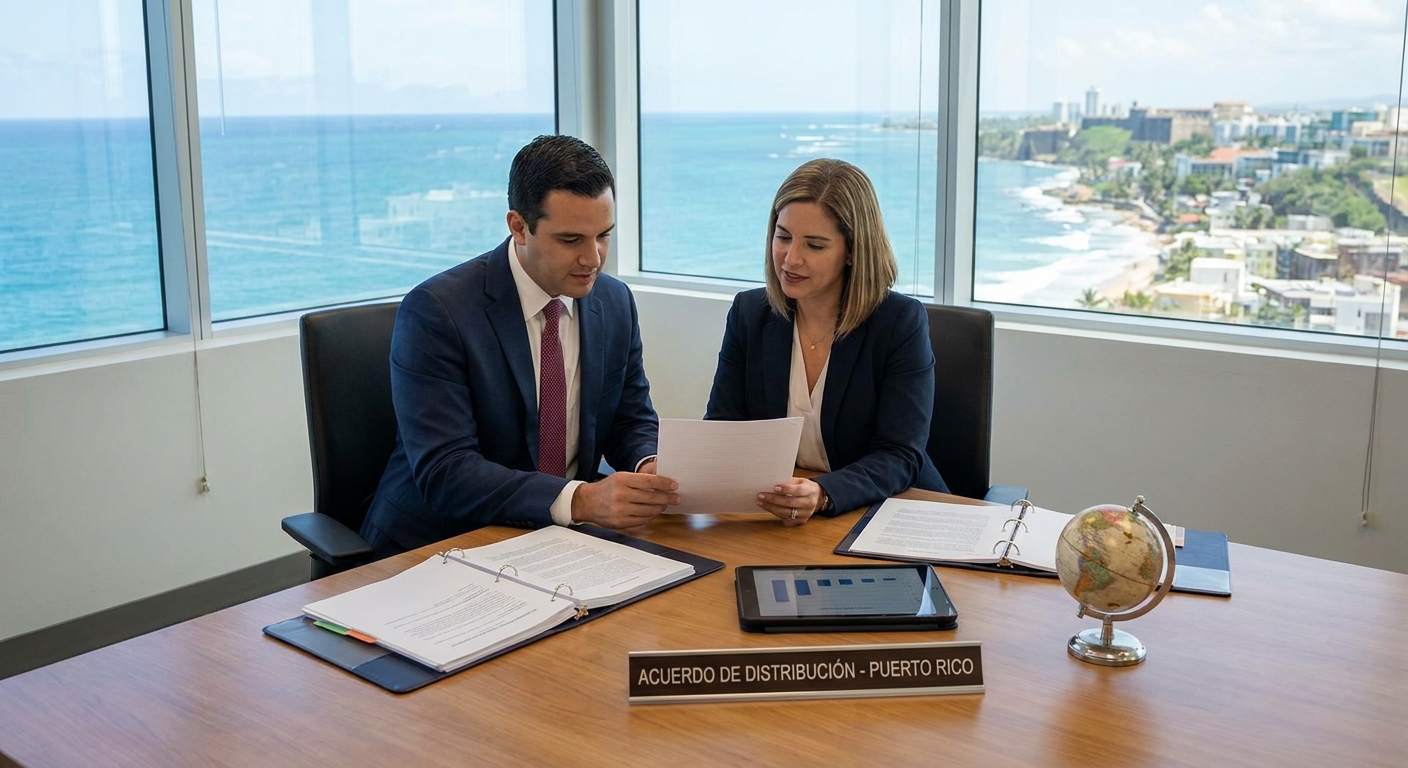

Distribution agreements form the backbone of supply chain relationships in Puerto Rico
A distribution agreement is a binding contract between a supplier and a distributor that defines the terms under which products or services move from manufacturer to end market. In Puerto Rico, these agreements carry specific legal weight and require careful drafting to protect both parties and comply with local law. Whether you are a manufacturer seeking to establish distribution channels on the island, a distributor taking on product lines, or an existing business reviewing your current arrangements, understanding the legal framework is essential to avoiding costly disputes and operational disruptions.
Puerto Rico's commercial law draws from both civil law traditions and practical business customs that have developed over decades. The island's unique position as a U.S. territory with its own legal code means that distribution agreements here operate under rules that differ from mainland U.S. practice. This distinction matters significantly when structuring terms, managing termination rights, and resolving conflicts. A poorly drafted agreement can expose you to unexpected liability, limit your ability to exit the relationship, or create ambiguity about payment obligations and territorial rights.
The Legal Foundation for Distribution Agreements in Puerto Rico
Puerto Rico's Commercial Code provides the statutory framework for distribution relationships. Unlike some jurisdictions that treat distribution agreements as simple sales contracts, Puerto Rico recognizes them as distinct commercial arrangements with their own legal characteristics. The code addresses key elements including the distributor's status as an independent contractor or agent, the scope of territorial rights, exclusivity provisions, and the conditions under which either party may terminate the relationship.
The distinction between exclusive and non-exclusive distribution carries legal consequences in Puerto Rico. An exclusive distribution agreement grants the distributor sole rights to sell products within a defined territory or customer segment. This exclusivity creates enforceable obligations on the supplier not to appoint competing distributors in that territory. Non-exclusive arrangements allow the supplier to work with multiple distributors simultaneously, which provides greater flexibility but requires clear communication to avoid disputes about market overlap and commission calculations.
Puerto Rico law also recognizes the concept of a "distributor" as distinct from an "agent" or "representative." A distributor typically purchases inventory from the supplier and resells it, bearing the risk of unsold goods. An agent, by contrast, sells on behalf of the principal without taking title to goods. This distinction affects tax treatment, liability exposure, and the rights each party holds under the agreement. Mischaracterizing the relationship in your contract can create unintended tax consequences and expose you to claims that the actual relationship differs from what the written agreement states.
Essential Terms That Must Appear in Your Distribution Agreement
A comprehensive distribution agreement in Puerto Rico should address the following core elements with specificity and clarity.
Territory and Exclusivity. Define the geographic territory or customer segment the distributor may serve. Specify whether the distributor has exclusive rights or whether the supplier retains the right to appoint other distributors. If exclusivity is granted, state whether it is absolute or subject to exceptions, such as direct sales to major accounts or sales through the supplier's own channels. Include language addressing what happens if the distributor fails to meet minimum sales targets, as this often triggers the supplier's right to reduce or eliminate exclusivity.
Products and Services Covered. List the specific products or product lines the distributor is authorized to sell. Clarify whether the distributor may add new products introduced by the supplier during the term, or whether new products require a separate amendment. Address whether the distributor may sell competing products and, if not, define what constitutes a competing product with sufficient precision to avoid later disputes.
Pricing and Payment Terms. Establish the wholesale price or pricing formula the distributor pays for products. Specify whether prices are fixed or subject to adjustment, and if adjustable, define the mechanism and notice period for price changes. Address payment terms, including when invoices are due, acceptable payment methods, and consequences of late payment. Include provisions for returns, allowances, and credits, as these directly affect the distributor's cash flow and profitability calculations.
Minimum Purchase Obligations. Many distribution agreements require the distributor to purchase minimum quantities or achieve minimum sales volumes. These provisions must be stated clearly and realistically. Vague minimum requirements create disputes and may be unenforceable. Specify whether minimums are monthly, quarterly, or annual, and whether they apply to all products or specific product lines. Address what happens if the distributor fails to meet minimums, including whether the supplier may reduce exclusivity, increase prices, or terminate the agreement.
Marketing and Support. Define what marketing support, training, and technical assistance the supplier will provide. Specify whether the distributor must maintain certain inventory levels, display products in a particular manner, or meet customer service standards. Address who bears the cost of marketing materials, advertising, and promotional activities. Clarify whether the distributor may use the supplier's trademarks and, if so, under what conditions and subject to what quality controls.
Termination Rights and Notice Periods. Puerto Rico law requires that termination provisions be stated with clarity. Specify the conditions under which either party may terminate the agreement, including termination for cause and termination for convenience. Define what constitutes cause, such as breach of payment obligations, failure to meet sales minimums, or violation of quality standards. Establish the notice period required before termination becomes effective, typically ranging from 30 to 90 days depending on the relationship's length and the distributor's investment in the market.
Dispute Resolution and Governing Law. Include a choice of law provision stating that the agreement is governed by Puerto Rico law. Consider whether to include an arbitration clause requiring disputes to be resolved through arbitration rather than litigation. Arbitration can be faster and more confidential than court proceedings, but it limits your right to appeal and may be more expensive upfront. If you include an arbitration clause, specify the rules that will govern the arbitration process and the location where it will take place.
Exclusivity Provisions and Their Enforceability
Exclusive distribution arrangements are common in Puerto Rico but require careful drafting to be enforceable. When you grant a distributor exclusive rights, you are restricting your own ability to sell through other channels in that territory. Puerto Rico courts will enforce exclusivity provisions, but only if they are stated with sufficient specificity and do not violate public policy.
The scope of exclusivity must be clearly defined. Does it apply to all customers in the territory, or only to certain customer categories? Does it prevent the supplier from selling directly to end customers, or only from appointing competing distributors? Does it restrict the supplier's ability to fulfill orders from customers outside the territory who happen to be located within the distributor's territory? These distinctions matter because they determine what the supplier can and cannot do without breaching the agreement.
Exclusivity provisions often include performance conditions. For example, the supplier may grant exclusivity only if the distributor achieves specified sales targets or maintains minimum inventory levels. If the distributor fails to meet these conditions, the supplier's exclusivity obligation may terminate, allowing the supplier to appoint competing distributors or sell directly. These conditional exclusivity provisions must state the performance metrics clearly and specify the consequences of non-performance with precision.
Puerto Rico law also recognizes that exclusivity provisions may be subject to implied obligations of good faith and fair dealing. This means that even if the agreement does not explicitly require the supplier to support the distributor's sales efforts, the supplier may have an obligation not to actively undermine the distributor's ability to perform. The scope of this implied obligation depends on the specific language of the agreement and the circumstances of the relationship.
Termination, Non-Renewal, and Post-Termination Obligations
Termination of a distribution agreement in Puerto Rico is governed by the terms of the agreement itself, supplemented by statutory protections that apply when the agreement is silent. Understanding these rules is critical because termination disputes are among the most common and costly distribution agreement conflicts.
If your agreement includes a specific termination provision, that provision will generally control. However, Puerto Rico law imposes certain requirements on termination clauses. Termination for convenience, meaning termination without cause, typically requires advance notice. The notice period should be reasonable given the distributor's investment in the market and the time needed to transition to a new distributor or sales channel. A notice period of 30 days may be reasonable for a short-term, non-exclusive arrangement, but 90 days or more may be required for an exclusive distribution relationship that has been in place for several years.
Termination for cause, meaning termination based on the distributor's breach or failure to perform, may be permitted with shorter notice or even immediately, depending on the severity of the breach. Common grounds for termination for cause include failure to pay invoices, failure to meet minimum sales targets, breach of confidentiality obligations, or unauthorized sale of competing products. The agreement should define these grounds with specificity so that both parties understand what conduct will trigger termination rights.
When a distribution agreement terminates, several post-termination obligations typically arise. The distributor must cease using the supplier's trademarks and marketing materials. The distributor must return or destroy confidential information. The supplier must address what happens to inventory the distributor holds at the time of termination. Some agreements require the supplier to repurchase unsold inventory at a specified price or formula, while others allow the distributor to continue selling existing inventory for a limited period. These provisions should be addressed explicitly in the agreement to avoid disputes.
Non-renewal is distinct from termination. If your agreement has a fixed term, such as one year or three years, it will expire at the end of that term unless the parties agree to renew it. Some agreements include automatic renewal provisions, meaning the agreement continues for successive renewal periods unless one party provides notice of non-renewal before a specified deadline. If your agreement includes automatic renewal, ensure that the notice deadline is clearly stated and that you have systems in place to track renewal dates and provide timely notice if you do not wish to renew.
Tax and Regulatory Considerations for Distributors in Puerto Rico
Distributors operating in Puerto Rico may be eligible for significant tax benefits under Act 60, Puerto Rico's tax incentive regime. If your distribution business qualifies, you may be able to reduce your corporate tax rate substantially. However, Act 60 benefits are not automatic and require careful compliance with specific requirements. Your distribution agreement should not conflict with Act 60 requirements, and you should review your agreement with attention to how it affects your tax status.
Distributors must also comply with Puerto Rico's sales tax regime, which applies to the sale of tangible personal property. The distributor typically collects sales tax from customers and remits it to the Puerto Rico Department of Revenue. The distribution agreement should clarify whether prices quoted are inclusive or exclusive of sales tax, and who bears responsibility for collecting and remitting sales tax.
If your distribution agreement involves the import of products into Puerto Rico, you must comply with U.S. customs regulations and Puerto Rico import requirements. Products imported from outside the United States are subject to U.S. tariffs and duties. Products imported from the U.S. mainland may qualify for preferential treatment under certain circumstances. Your distribution agreement should address who bears the cost of tariffs and duties and who is responsible for customs compliance.
Common Disputes and How to Prevent Them
Distribution agreement disputes in Puerto Rico typically fall into several categories. Understanding these common issues allows you to draft agreements that prevent or minimize conflict.
Territory and Customer Disputes. Conflicts often arise when the supplier or another distributor makes sales within the exclusive distributor's territory. These disputes can be prevented by defining territory with geographic precision, specifying which customer categories fall within the distributor's exclusive rights, and establishing a clear process for handling orders from customers in the territory who contact the supplier directly.
Pricing and Margin Disputes. Disagreements about pricing, discounts, and margins are common when the agreement does not specify pricing clearly or when the supplier changes prices without adequate notice. Prevent these disputes by establishing a clear pricing formula, specifying the notice period for price changes, and addressing how price changes affect existing orders or inventory.
Performance and Termination Disputes. When a supplier seeks to terminate a distributor for failure to meet sales targets, the distributor often disputes whether the targets were realistic or whether the supplier provided adequate support. These disputes can be minimized by establishing sales targets that are realistic and achievable, specifying what support the supplier will provide, and documenting the distributor's actual performance against the targets.
Inventory and Return Disputes. Conflicts arise when a distributor holds excess inventory and seeks to return it to the supplier, or when the supplier discontinues a product line and the distributor is left with unsold stock. Address these issues by specifying the distributor's right to return inventory, the condition in which returned inventory must be, the timeframe for returns, and the credit or refund the distributor will receive.
If disputes do arise, Puerto Rico's commercial courts have experience with distribution agreement cases. However, litigation is time-consuming and expensive. Consider including an arbitration clause in your agreement to provide a faster, more confidential alternative to court proceedings. If you face a distribution dispute, contact our office for a free initial evaluation to discuss your options.
Drafting Considerations for Suppliers and Distributors
The perspective of the supplier and the distributor differ significantly when drafting a distribution agreement. Understanding these different interests helps you draft an agreement that is fair to both parties and enforceable.
From the supplier's perspective, the agreement should protect the supplier's brand, ensure that the distributor performs adequately, and preserve the supplier's ability to exit the relationship if the distributor underperforms. The supplier typically wants broad termination rights, the ability to adjust prices, and the right to audit the distributor's sales records and inventory. The supplier also wants to ensure that the distributor does not make unauthorized representations about the products or use the supplier's trademarks in ways that damage the brand.
From the distributor's perspective, the agreement should provide sufficient exclusivity and support to justify the distributor's investment in the market. The distributor wants protection against sudden termination, reasonable notice periods, and the right to sell existing inventory after termination. The distributor also wants pricing stability and the ability to earn a reasonable margin on sales. If the distributor is required to invest in inventory, training, or market development, the distributor wants assurance that this investment will not be undermined by the supplier's actions.
A well-drafted agreement balances these interests. The supplier retains the right to terminate for cause and to adjust prices with reasonable notice, but the distributor receives adequate notice of termination for convenience and protection against arbitrary price increases. The supplier provides marketing support and training, but the distributor is responsible for achieving sales targets and maintaining customer relationships. Both parties benefit from clear, specific language that prevents misunderstandings and reduces the likelihood of disputes.
Next Steps: Getting Your Distribution Agreement Right
Distribution agreements are complex commercial contracts that require careful attention to detail and understanding of Puerto Rico law. Whether you are establishing a new distribution relationship or reviewing an existing agreement, the stakes are high. A poorly drafted agreement can expose you to unexpected liability, limit your ability to manage your business, or create ambiguity that leads to costly disputes.
The Puerto Rico Business Law Firm has over 20 years of experience drafting and negotiating distribution agreements for manufacturers, distributors, and suppliers operating in Puerto Rico. We understand the local legal framework, the practical realities of distribution relationships, and the specific issues that arise in Puerto Rico's business environment.
If you are considering entering into a distribution agreement or if you need to review or modify an existing agreement, we can help. Contact us for a free initial evaluation to discuss your situation and learn how we can assist you. Visit our free evaluation page to get started, or reach out directly to discuss your distribution agreement needs.