
Table of Contents
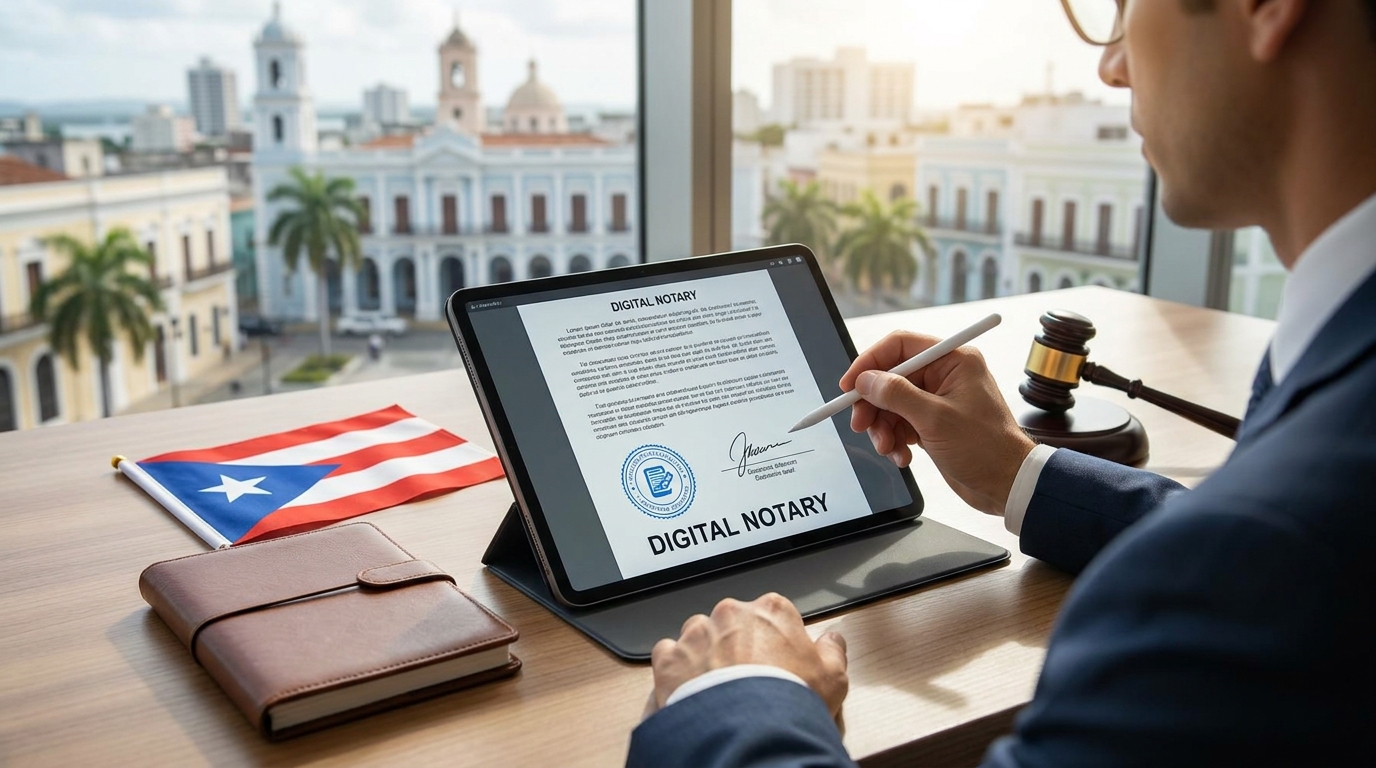
Digital notarization reforms in Puerto Rico are reshaping how businesses execute critical documents, sign contracts, and authenticate transactions across the island and internationally.
For business owners, investors, and entrepreneurs operating in Puerto Rico, the ability to notarize documents quickly and securely has moved from a convenience to a competitive necessity. Recent reforms to Puerto Rico's notarization laws have created new pathways for digital authentication while maintaining the legal rigor that courts and regulatory bodies require. Understanding these changes is essential if you want to operate efficiently without exposing your business to legal risk.
The shift toward digital notarization reflects a broader modernization of Puerto Rico's commercial infrastructure. These reforms address real problems: the time cost of in-person notarization, the geographic challenges of reaching notaries across the island, and the need for seamless document execution in an increasingly remote business environment. But the reforms also introduce new compliance requirements, technical standards, and procedural rules that differ from traditional notarization.
This article explains what has changed, how the reforms affect your business operations, and what steps you should take to ensure your documents remain legally valid under the new framework.
The Legal Foundation of Puerto Rico’s Digital Notarization Reforms
Puerto Rico's notarization system has historically followed civil law traditions inherited from Spanish legal practice. Notaries in Puerto Rico hold a position of significant authority and responsibility. They are not merely witnesses to signatures, as in some U.S. states. Instead, they authenticate the identity of parties, verify their understanding of documents, and certify the authenticity of transactions. This elevated role means that changes to notarization procedures carry real legal weight.
The recent reforms modernize this system by permitting remote notarization under specific conditions. The changes allow notaries to authenticate documents through secure video conferencing, digital signatures, and electronic record-keeping, provided that certain safeguards are in place. These safeguards include identity verification protocols, audit trails, and encryption standards that meet or exceed the security of traditional in-person notarization.
The reforms do not eliminate the notary's core responsibility to verify identity and ensure that signatories understand what they are signing. Instead, they expand the tools available to notaries to fulfill that responsibility. A notary conducting a remote notarization must still confirm the signer's identity through government-issued identification, assess their mental capacity and willingness to sign, and maintain detailed records of the transaction.
For businesses, this means that digitally notarized documents carry the same legal weight as traditionally notarized ones, provided the notary followed the required procedures. Courts in Puerto Rico recognize digital notarizations as valid evidence of authentication. Banks, government agencies, and other institutions accept them without requiring re-notarization or supplementary certification.
How Digital Notarization Works Under the New Framework
The mechanics of digital notarization in Puerto Rico follow a structured process designed to prevent fraud while enabling efficiency. Understanding this process helps you prepare documents correctly and avoid delays.
The process begins with scheduling. You contact a notary licensed in Puerto Rico and request a remote notarization appointment. The notary will ask you to provide the document in advance, either as a PDF or in another electronic format. This allows the notary to review the document and prepare for the session.
On the scheduled date and time, you connect with the notary through a secure video platform. The notary will ask you to present a government-issued photo ID, which you display to the camera. The notary verifies that the ID matches your appearance and confirms your identity. This step is non-negotiable and cannot be skipped or abbreviated.
The notary then reviews the document with you, asking you to confirm that you understand its contents and that you are signing it of your own free will. The notary may ask questions about the document's purpose, your relationship to other parties, or the transaction itself. These questions serve to establish that you are mentally competent and acting without duress.
Once the notary is satisfied, you sign the document electronically. This may involve using a digital signature tool provided by the notary's platform, or it may involve signing a physical copy and then scanning it. The exact method depends on the notary's technology and the document type.
The notary then applies their digital seal and signature to the document, creating an electronic record that includes a timestamp, the notary's credentials, and a unique identifier. This record is stored securely and can be retrieved later if needed for verification purposes.
Throughout this process, the platform records the session and maintains an audit trail. This creates a complete record of the notarization that can be reviewed if questions arise about the document's authenticity.
Which Documents Can Be Digitally Notarized in Puerto Rico
Not all documents are eligible for digital notarization under Puerto Rico law. The reforms permit remote notarization for most commercial and business documents, but certain categories remain restricted to in-person notarization.
Documents that can be digitally notarized include commercial contracts, powers of attorney, affidavits, loan documents, corporate resolutions, partnership agreements, and most business correspondence. These documents represent the bulk of what most businesses need notarized on a regular basis.
Documents that typically require in-person notarization include wills, testamentary documents, and certain real property transactions. The law maintains these restrictions because of the heightened legal consequences of errors in these areas. A mistake in a will or a property deed can create disputes that persist for years and affect multiple parties. The in-person requirement ensures that the notary can conduct a thorough assessment of the signer's mental state and intentions.
Some documents fall into a gray area where the eligibility for digital notarization depends on the specific circumstances. If you are uncertain whether a particular document qualifies, you should consult with a focused business law attorney before attempting remote notarization. Proceeding with an ineligible document can result in a notarization that courts will not recognize, forcing you to re-execute the document and delaying your transaction.
Technical Requirements and Security Standards
Digital notarization in Puerto Rico operates within a framework of technical and security requirements designed to prevent fraud and ensure that documents cannot be altered after notarization.
The video platform used for remote notarization must meet specific standards for encryption, data storage, and session recording. The platform must use end-to-end encryption to protect the video feed and prevent unauthorized access. It must also maintain secure backups of session recordings and audit logs for a minimum period, typically seven years or longer depending on the document type.
Digital signatures used in the notarization process must comply with Puerto Rico's electronic signature laws, which recognize digital signatures as legally equivalent to handwritten signatures when they meet certain technical standards. These standards include the use of cryptographic algorithms that create a unique digital fingerprint for each signature, making it virtually impossible to forge or alter a signature without detection.
The notary's digital seal must be tamper-evident, meaning that any attempt to alter the document after notarization will break the seal and make the tampering visible. This protects both the notary and the parties to the transaction by creating an objective record of whether the document has been modified.
For businesses that execute a high volume of notarized documents, these technical requirements create an opportunity to streamline operations. By working with notaries who use modern platforms and maintaining organized digital filing systems, you can reduce the time spent on document management and improve your ability to retrieve and verify documents when needed.
Compliance Considerations for Businesses
The shift to digital notarization introduces new compliance obligations that businesses must understand and implement. These obligations extend beyond the notarization process itself to encompass document retention, verification, and integration with other business systems.
First, you must ensure that your digital document storage system meets legal requirements for record retention. Puerto Rico law requires that notarized documents be retained for a minimum period, and the storage system must protect documents from loss, corruption, or unauthorized access. This means using secure cloud storage with encryption, regular backups, and access controls that limit who can view or modify documents.
Second, you should establish internal procedures for verifying that documents have been properly notarized before relying on them in transactions. This involves checking that the notary's seal is intact, that the timestamp is accurate, and that the notary was licensed at the time of notarization. Many businesses create a checklist or use software tools to automate this verification process.
Third, if your business operates across multiple jurisdictions, you need to understand how Puerto Rico's digital notarizations are recognized in other locations. Most U.S. states and many countries recognize Puerto Rico notarizations, but the rules vary. Some jurisdictions require additional certification or apostille documentation. A focused business law attorney can advise you on the specific requirements for your transactions.
Fourth, if your business is subject to regulatory oversight by banking, securities, or other regulatory bodies, you should confirm that digital notarization complies with those regulatory requirements. Some regulatory frameworks have specific rules about document authentication that may impose additional requirements beyond Puerto Rico's general notarization laws.
The Impact on Remote Business Operations
Digital notarization reforms have particular significance for businesses that operate remotely or that have parties located outside Puerto Rico. These reforms eliminate the geographic constraint that previously required all parties to be physically present in Puerto Rico to obtain notarization.
For businesses with employees or contractors working remotely, digital notarization enables faster execution of employment agreements, independent contractor agreements, and other employment-related documents. A new hire can complete notarization on their first day without traveling to an office or waiting for a notary to become available.
For businesses that conduct transactions with parties in other countries, digital notarization reduces the complexity of document execution. Instead of arranging for notarization through consulates or foreign notaries, parties can work with a Puerto Rico notary remotely. This is particularly valuable for businesses that operate under Act 60 tax incentives or that have international supply chains or partnerships.
The time savings are substantial. A traditional notarization might require scheduling an appointment days or weeks in advance, traveling to the notary's office, and waiting for the notary to complete the process. Digital notarization can often be completed within hours, sometimes on the same day the request is made.
However, these benefits come with a responsibility to maintain proper records and to ensure that the notarization process is conducted correctly. Rushing through a digital notarization to save time can result in errors that undermine the document's validity. You should allocate sufficient time for the notary to conduct a thorough identity verification and for you to review the document carefully before signing.
Common Pitfalls and How to Avoid Them
Businesses that are new to digital notarization often encounter preventable problems that delay transactions or create legal uncertainty. Understanding these pitfalls helps you avoid them.
One common mistake is submitting a document to the notary without reviewing it carefully first. The notary will ask you to confirm that you understand the document and that it reflects your intentions. If you have not read the document thoroughly, you may discover errors or problematic terms during the notarization session, requiring you to reschedule and re-execute the document. This defeats the purpose of using digital notarization for efficiency.
Another mistake is failing to provide proper identification. The notary must verify your identity using a government-issued photo ID. If your ID is expired, damaged, or does not clearly match your appearance, the notary may refuse to proceed. You should check your ID before scheduling the notarization and have a backup ID available if your primary ID is questionable.
A third mistake is attempting to notarize a document that is not eligible for digital notarization. This results in a notarization that courts will not recognize, forcing you to start over with an in-person notarization. Before scheduling a digital notarization, confirm with the notary that the document type is eligible.
A fourth mistake is failing to maintain proper records of the notarization. You should download and store a copy of the notarized document immediately after the session concludes. You should also retain any confirmation emails or receipts from the notary. These records protect you if questions arise later about whether the document was properly notarized.
A fifth mistake is assuming that digital notarization is appropriate for all parties to a transaction. If one party is located in a jurisdiction that does not recognize Puerto Rico digital notarizations, you may need to obtain a separate notarization in that jurisdiction. This is particularly important for real property transactions or other high-value transactions where the other party's jurisdiction has strict requirements.
Integration with Puerto Rico’s Broader Business Law Framework
Digital notarization reforms do not exist in isolation. They are part of a broader modernization of Puerto Rico's business law framework that includes updates to corporate law, commercial law, and regulatory compliance requirements.
For businesses that operate under Act 60 tax incentives, digital notarization can streamline the documentation required to maintain compliance with tax incentive requirements. Corporate resolutions, shareholder agreements, and other governance documents can be notarized remotely, reducing the administrative burden of maintaining Act 60 status.
For businesses involved in blockchain or cryptocurrency activities, digital notarization provides a bridge between traditional legal documentation and emerging technologies. A digitally notarized document can serve as proof of ownership, authorization, or transaction history in blockchain-based systems. This integration is still evolving, but the technical compatibility between digital notarization and blockchain systems creates opportunities for businesses that operate at the intersection of traditional law and emerging technologies.
For businesses engaged in commercial litigation or dispute resolution, digital notarization creates a clear audit trail that can be valuable evidence in court. The timestamp, video recording, and digital seal associated with a digital notarization provide objective proof of when the document was executed and by whom. This can be decisive in disputes about whether a party actually signed a document or whether a document was altered after execution.
Looking Forward: Anticipated Changes and Developments
Puerto Rico's digital notarization framework continues to evolve. Policymakers and legal professionals are discussing potential expansions to the categories of documents eligible for digital notarization, improvements to the technical standards, and harmonization with international standards for digital authentication.
One area of active discussion is whether wills and testamentary documents should be eligible for digital notarization. Some jurisdictions have expanded digital notarization to include these documents, with additional safeguards such as video recording and witness requirements. Puerto Rico may follow this path, but any change would require legislative action and careful consideration of the risks involved.
Another area of development is the integration of digital notarization with government services. Puerto Rico's government agencies are gradually moving toward accepting digitally notarized documents for licensing, permitting, and regulatory compliance purposes. This trend will accelerate as agencies develop the technical infrastructure to verify digital notarizations and as the legal framework becomes more established.
A third area of development is the potential for international recognition of Puerto Rico digital notarizations. As more countries adopt digital notarization standards, there is an opportunity for Puerto Rico to establish reciprocal recognition agreements that would allow Puerto Rico notarizations to be accepted in other jurisdictions without additional certification. This would be particularly valuable for businesses that operate internationally.
Next Steps: Ensuring Your Business Is Prepared
If your business regularly executes notarized documents, you should take steps now to understand how digital notarization affects your operations and to implement systems that take advantage of the new capabilities while maintaining compliance with legal requirements.
Start by reviewing the types of documents your business notarizes regularly. Identify which documents are eligible for digital notarization and which must continue to be notarized in person. This will help you understand where you can gain efficiency and where you need to maintain traditional processes.
Next, establish relationships with notaries who offer digital notarization services. Interview potential notaries about their technology platforms, security measures, and experience with your industry. A notary who understands your business will be more efficient and more likely to catch potential problems before they become costly mistakes.
Then, develop internal procedures for document management that account for digital notarization. This includes establishing secure storage for digitally notarized documents, creating verification checklists, and training your staff on the digital notarization process.
Finally, if your business operates across multiple jurisdictions or if you have questions about how digital notarization affects your specific transactions, schedule a free initial evaluation with a focused business law attorney. An experienced attorney can review your document execution processes, identify opportunities for improvement, and ensure that your notarization practices comply with all applicable legal requirements.
Contact the Puerto Rico Business Law Firm to discuss how digital notarization reforms can benefit your business. Schedule your free initial evaluation today.