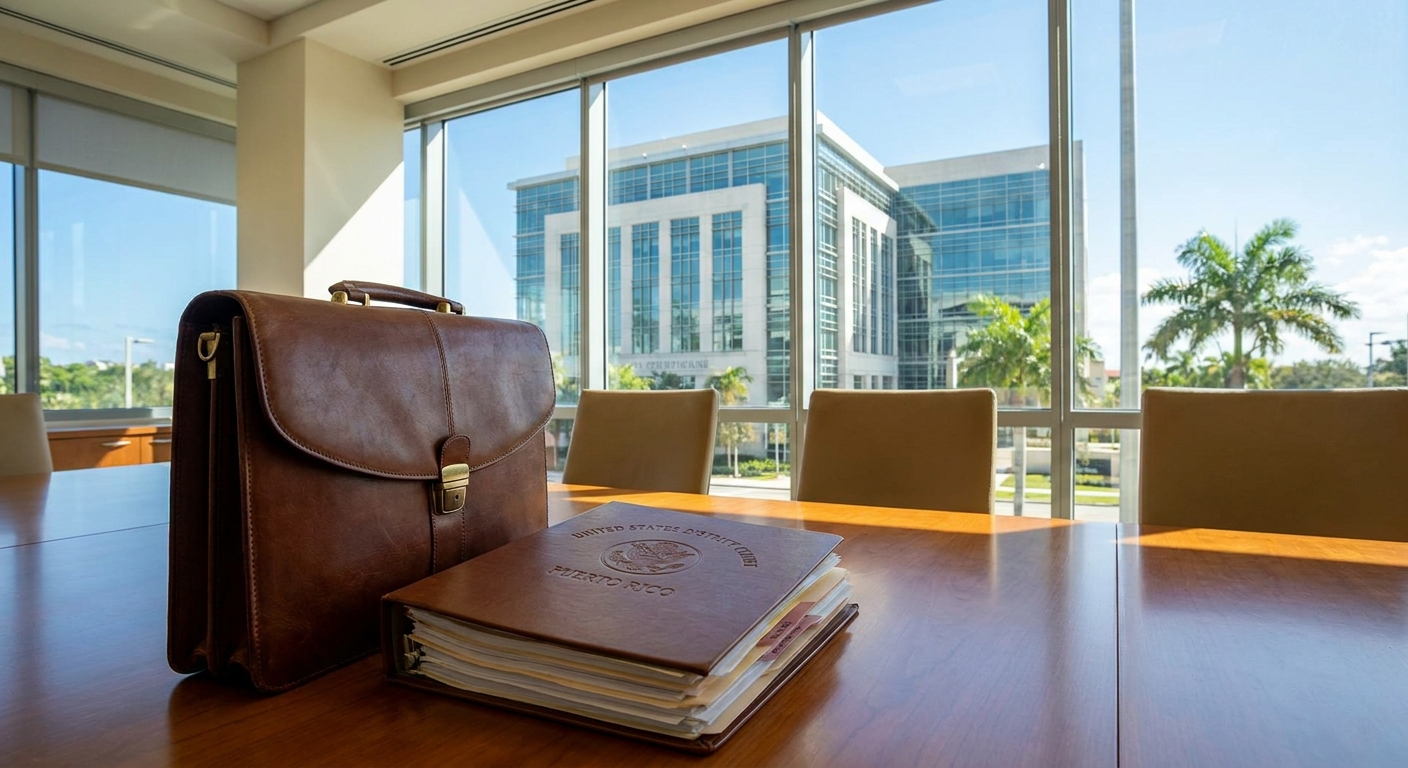

Why Federal Court Matters for Your Puerto Rico Business
Business disputes in Puerto Rico sometimes end up in federal court. The US District Court for the District of Puerto Rico handles cases involving federal law, diversity jurisdiction, and matters that cross state or territorial lines. If your company operates across multiple jurisdictions, deals with federal regulations, or faces a dispute with an out-of-state party, you may find yourself in federal court rather than Puerto Rico's local courts. Understanding how this court works, what cases it handles, and how to prepare your business for potential federal litigation is essential for any serious business owner or investor operating in Puerto Rico.
Jurisdiction and Types of Cases Handled
The US District Court for the District of Puerto Rico has jurisdiction over several categories of business disputes. Federal question jurisdiction applies when your case involves interpretation or application of federal law, including matters related to federal tax law, securities regulation, bankruptcy, intellectual property, and antitrust claims. If you are involved in a dispute over a federal statute or regulation, the case belongs in federal court.
Diversity jurisdiction is another common basis for federal court involvement. When a business dispute involves parties from different states or territories, and the amount in controversy exceeds $75,000, either party can bring the case to federal court. This applies even if the underlying legal claims are based on Puerto Rico law. For example, a contract dispute between a Puerto Rico corporation and a Delaware corporation could be heard in federal court under diversity jurisdiction.
Federal court also handles cases involving federal agencies, federal employees, and matters arising under federal statutes. If your business has a dispute with the IRS, the Department of Labor, or another federal agency, that case will be in federal court. Similarly, cases involving maritime law, patent disputes, trademark infringement, and federal employment law all fall within federal jurisdiction.
The District Court also has appellate jurisdiction over certain decisions from Puerto Rico's local courts when federal questions are involved. Understanding which court has jurisdiction over your dispute is the first step in preparing an effective legal strategy.
The Federal Rules of Civil Procedure and How They Differ
Federal court operates under the Federal Rules of Civil Procedure, which differ significantly from Puerto Rico's local civil procedure rules. These differences affect how you file your case, how discovery works, how motions are handled, and how trials proceed. Failing to understand these procedural differences can result in missed deadlines, waived arguments, and unfavorable outcomes.
Discovery in federal court is broader and more structured than in many local proceedings. Parties can request documents, conduct depositions, send interrogatories, and demand admissions from opposing parties. The scope of discovery is wide, and federal judges actively manage discovery disputes. If you are unprepared for the volume and intensity of federal discovery, your business could face significant costs and disruption.
Federal court also requires compliance with strict pleading standards. Your initial complaint must contain enough factual detail to give the opposing party fair notice of your claims. Vague or conclusory allegations may result in dismissal under Rule 12(b)(6). Similarly, your responses to complaints must be precise and timely. Missing a deadline in federal court can result in default judgment against you.
Motion practice in federal court is more formal and demanding than in local courts. Motions for summary judgment, motions to dismiss, and other dispositive motions are common in federal litigation. These motions often decide cases before trial. Preparing strong written arguments and supporting evidence for these motions is critical to your success.
Common Business Disputes in Federal Court
Contract disputes frequently appear in the US District Court for the District of Puerto Rico, particularly when the contract involves parties from different jurisdictions or when federal law applies. Disputes over payment terms, performance obligations, breach of warranty, and remedies for non-performance are routine. Federal courts apply Puerto Rico contract law when the contract is governed by Puerto Rico law, but they also apply federal principles of contract interpretation.
Securities and investment disputes also commonly reach federal court. If your business involves the sale or trading of securities, or if you have received investment from out-of-state investors, disputes may involve federal securities laws. The Securities Act of 1933, the Securities Exchange Act of 1934, and other federal statutes create federal question jurisdiction. These cases are complex and require understanding of both federal securities law and Puerto Rico law.
Intellectual property disputes, including trademark infringement, patent disputes, and copyright claims, are handled exclusively in federal court. If your business owns valuable intellectual property or faces allegations of infringement, federal court is where the case will be decided. These cases require specialized knowledge of federal intellectual property law and can be expensive and time-consuming.
Employment disputes involving federal law, such as claims under Title VII of the Civil Rights Act, the Americans with Disabilities Act, or the Fair Labor Standards Act, are heard in federal court. If your business faces allegations of discrimination, retaliation, or wage and hour violations based on federal law, you will be in federal court.
Commercial litigation involving banking, lending, and financial services also frequently appears in federal court. Disputes over loan agreements, guarantees, security interests, and banking relationships often involve federal banking law or diversity jurisdiction. If your business is involved in banking and securities matters, understanding federal court procedures is essential.
The Role of Puerto Rico Law in Federal Court
Federal courts sitting in Puerto Rico apply Puerto Rico law to state law claims. This means that if your case involves a contract dispute governed by Puerto Rico law, the federal judge will apply Puerto Rico contract law, not federal law. However, the federal judge will apply federal procedural rules, federal evidence rules, and federal standards for summary judgment and other procedural matters.
This combination of Puerto Rico substantive law and federal procedural law creates unique challenges. Your attorney must be fluent in both Puerto Rico law and federal procedure. A mistake in understanding Puerto Rico law can result in losing your case on the merits. A mistake in federal procedure can result in losing your case on a technicality.
Puerto Rico's Civil Code, commercial statutes, and case law all apply in federal court when the underlying dispute involves Puerto Rico law. Federal courts have developed significant experience applying Puerto Rico law, and there is a substantial body of federal case law interpreting Puerto Rico statutes and legal principles. Understanding how federal courts have previously interpreted Puerto Rico law is important for predicting outcomes in your case.
Litigation Costs and Timeline Expectations
Federal litigation is typically more expensive than litigation in local courts. The complexity of federal procedure, the breadth of discovery, and the formality of federal practice all contribute to higher costs. You should expect to spend money on attorney fees, expert witnesses, court reporters, and document production. Discovery alone can cost tens of thousands of dollars in a significant business dispute.
The timeline for federal litigation varies depending on the complexity of the case and the court's docket. Simple cases may be resolved within one to two years. Complex commercial disputes can take three to five years or longer from filing to trial. During this time, your business will be subject to discovery obligations, and management attention will be diverted to the litigation.
Early case assessment is important for understanding your likely costs and timeline. An experienced attorney can review your case, assess the strength of your claims or defenses, and provide a realistic estimate of what you should expect. This information allows you to make informed decisions about settlement, continued litigation, or alternative dispute resolution.
Alternative Dispute Resolution Options
Federal court rules encourage alternative dispute resolution, including mediation and arbitration. Many business disputes can be resolved more quickly and at lower cost through mediation than through trial. Mediation involves a neutral third party who helps the parties reach a settlement. Arbitration involves a neutral arbitrator who hears evidence and makes a binding decision, similar to a trial but with less formality and lower cost.
If your business contract includes an arbitration clause, disputes may be resolved through arbitration rather than federal court. Arbitration can be faster and more private than federal litigation, but it also has drawbacks, including limited appeal rights and potentially higher arbitrator fees. Understanding whether your contracts include arbitration clauses and how those clauses work is important for managing business disputes.
Mediation can occur before, during, or after federal litigation begins. Many federal judges require parties to participate in mediation before trial. Mediation can help parties understand each other's positions, identify common ground, and reach settlement without the expense and uncertainty of trial.
Preparing Your Business for Potential Federal Litigation
Proactive preparation can reduce the impact of federal litigation on your business. First, maintain organized records and documentation. Federal discovery will require you to produce documents, emails, and other records related to the dispute. If your records are disorganized or incomplete, discovery will be more expensive and time-consuming. Implement document retention policies and ensure that important business records are preserved.
Second, understand your contracts. Review all significant business contracts to identify dispute resolution clauses, governing law provisions, and limitation of liability clauses. These provisions affect where disputes will be resolved and what remedies are available. If you are negotiating new contracts, consider including provisions that address dispute resolution and governing law.
Third, maintain insurance coverage. General liability insurance, professional liability insurance, and directors and officers insurance can help protect your business from the financial impact of litigation. Review your insurance policies to understand what coverage is available and what exclusions apply.
Fourth, develop a litigation response plan. Identify key personnel who will be involved in litigation, establish procedures for preserving documents and evidence, and create a communication protocol for discussing litigation with employees and third parties. A well-organized response plan can minimize disruption to your business operations.
Working with Experienced Federal Court Counsel
Federal litigation requires counsel with specific experience in federal court practice. Your attorney must understand federal procedure, federal evidence rules, and the local rules of the US District Court for the District of Puerto Rico. Your attorney must also understand Puerto Rico law and how federal courts apply Puerto Rico law to business disputes.
An experienced attorney can help you evaluate the strength of your claims or defenses, assess your litigation risks, and develop a strategy for resolving your dispute. Your attorney can also help you understand the costs and timeline for federal litigation and explore alternative dispute resolution options.
If your business is involved in commercial litigation, having counsel who understands both federal and Puerto Rico law is essential. Your attorney should have experience with the specific type of dispute you are facing, whether it involves contracts, securities, intellectual property, employment, or banking matters.
Next Steps
If your business faces a potential dispute that may be heard in federal court, or if you are already involved in federal litigation, contact the Puerto Rico Business Law Firm for a free initial evaluation. Christian M. Frank Fas, Esq. has over 20 years of experience with commercial and business law matters in Puerto Rico, including federal court litigation. During your free initial evaluation, you can discuss your situation, understand your options, and learn what to expect from federal court proceedings.
The sooner you involve experienced counsel, the better positioned your business will be to protect its interests. Contact the firm today to schedule your free initial evaluation at https://lawyerinpr.com/start.