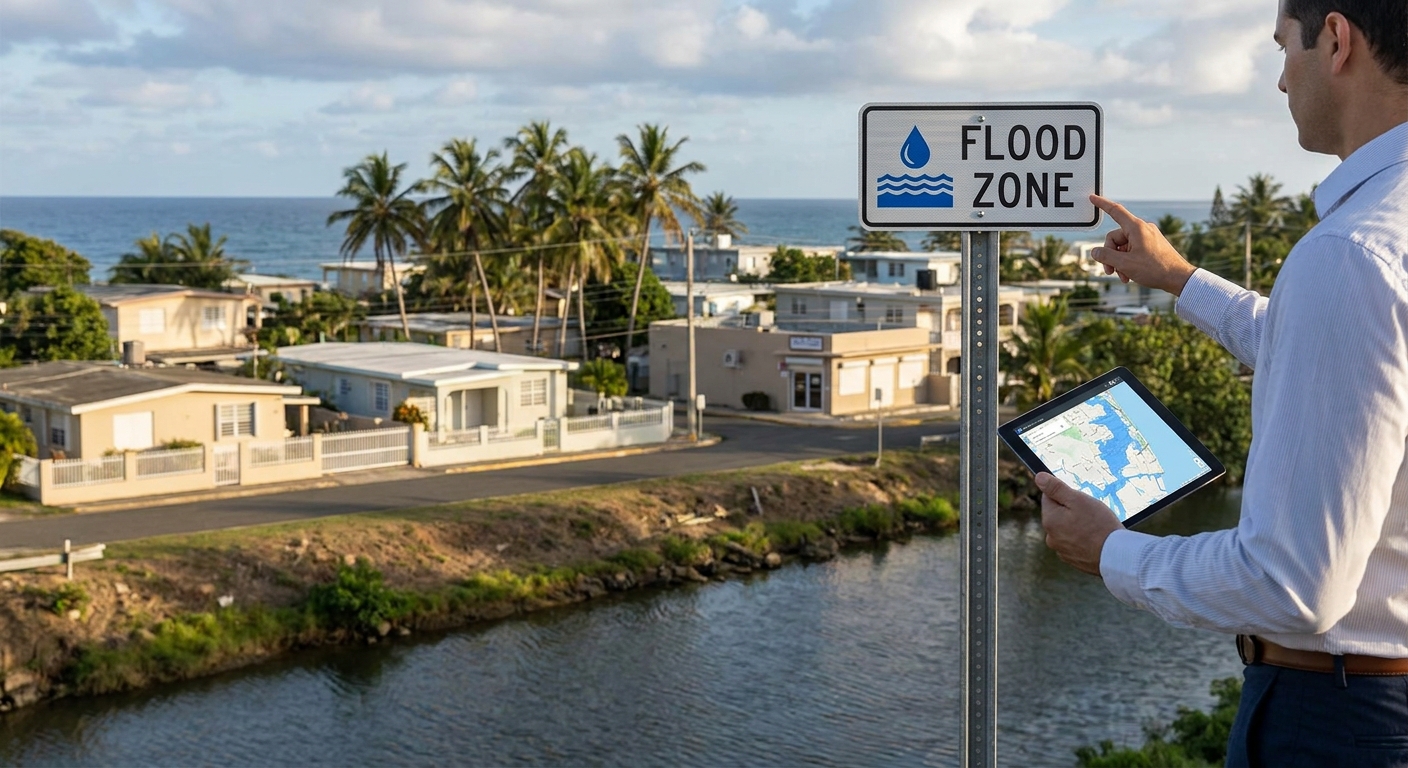

Flood Zone Requirements in Puerto Rico Matter to Your Bottom Line
If you own property or operate a business in Puerto Rico, flood zone designation directly affects your insurance costs, financing options, construction permits, and long-term liability exposure. The Federal Emergency Management Agency (FEMA) maintains flood maps that classify Puerto Rico properties into specific risk zones. Understanding these requirements is not optional for property owners seeking financing, insurance coverage, or regulatory compliance. This article explains what flood zone requirements mean for your business and property in Puerto Rico.
Understanding FEMA Flood Zone Designations
FEMA divides land into flood zones based on the statistical probability that a property will experience flooding in any given year. These designations appear on Flood Insurance Rate Maps (FIRMs) and determine whether your property falls within a high-risk, moderate-risk, or low-risk flood area. Puerto Rico's geography, tropical storm exposure, and coastal proximity make flood zone classification particularly relevant for island property owners.
The primary flood zone categories are as follows:
- High-Risk Zones (A and AE): Properties in these zones face a 1 percent or greater annual chance of flooding. Lenders require flood insurance for mortgaged properties in these areas.
- Moderate-Risk Zones (B and X): These areas have a 0.2 to 1 percent annual flood probability. Flood insurance is not federally mandated but remains strongly recommended.
- Low-Risk Zones (C and X): Properties in these zones have less than 0.2 percent annual flood probability. Flood insurance is optional, though some lenders may still require it.
Puerto Rico's position in the Atlantic hurricane belt and its exposure to tropical systems mean that even properties outside designated high-risk zones can experience significant water damage. The 2017 hurricane season demonstrated this reality across the island, affecting properties in multiple flood zones.
Flood Insurance Requirements for Puerto Rico Properties
Federal law requires flood insurance for any property with a federally backed mortgage located in a high-risk flood zone. This requirement applies regardless of whether the property owner believes the risk is justified. Lenders will not close on a mortgage without proof of flood insurance in place.
The National Flood Insurance Program (NFIP) provides the primary source of flood coverage in Puerto Rico. Private flood insurance options have expanded in recent years, but NFIP remains the standard. Premiums vary based on the property's flood zone designation, elevation relative to the base flood elevation, and the structure's characteristics.
For commercial properties, flood insurance requirements depend on the property's use and financing structure. A commercial building in a high-risk zone with a federally backed loan must carry flood insurance. Business owners should verify their current coverage and understand what their policy covers. Standard commercial property insurance does not cover flood damage, creating a significant gap if flood insurance lapses.
Puerto Rico property owners should obtain their property's FIRM designation directly from FEMA or through a licensed surveyor. This document becomes essential when applying for financing, obtaining insurance quotes, or planning renovations.
Construction and Development Requirements in Flood Zones
Building codes and permitting requirements in Puerto Rico become more stringent for properties in designated flood zones. The Puerto Rico Building Code incorporates FEMA standards and requires that new construction or substantial improvements in high-risk zones meet specific elevation and design standards.
For properties in A zones (high-risk areas without detailed elevation data), the lowest floor of any new building must be elevated to or above the base flood elevation. For AE zones (where detailed elevation data exists), the same requirement applies. Elevated structures must have open foundations or wet floodproofing to allow water to flow beneath the building during flood events.
Substantial improvements, defined as repairs or renovations exceeding 50 percent of the property's market value, trigger these elevation requirements even for existing structures. This means a major renovation project in a flood zone can require significant additional construction costs to meet elevation standards.
Puerto Rico's permitting agencies review flood zone compliance during the building permit process. Failure to meet these requirements results in permit denial or revocation. Contractors and developers must understand these standards before bidding projects or planning construction timelines.
Flood Zone Disclosure and Real Estate Transactions
Puerto Rico law requires sellers to disclose flood zone status to potential buyers. This disclosure must occur before the purchase agreement is finalized. Buyers have the right to terminate the purchase if the property is in a high-risk flood zone and the buyer did not already know this fact.
Real estate professionals and sellers who fail to disclose flood zone status face potential liability. Buyers who discover undisclosed flood zone designation after closing may pursue legal remedies against the seller or real estate agent. This disclosure requirement protects buyers from purchasing properties with unknown flood risks and associated insurance costs.
For commercial transactions, flood zone status affects property valuation and financing terms. Lenders may require additional due diligence or impose higher interest rates for properties in moderate or high-risk zones. Investors evaluating Puerto Rico commercial real estate should obtain flood zone information as part of their due diligence process.
Flood Zone Changes and Map Updates
FEMA periodically updates flood maps based on new hydrological data, development patterns, and climate information. A property that was previously in a low-risk zone may be reclassified into a higher-risk zone. Conversely, mitigation projects or improved drainage systems can result in a property being removed from a high-risk zone.
Property owners can request a Letter of Map Amendment (LOMA) if they believe their property has been incorrectly mapped or if mitigation work has reduced flood risk. This process requires technical documentation and surveying data. A successful LOMA can eliminate the flood insurance requirement and improve the property's marketability.
Puerto Rico property owners should monitor FEMA announcements regarding map updates. Changes in flood zone designation can affect insurance costs, financing terms, and development potential. Staying informed about potential map changes allows property owners to plan accordingly and take advantage of mitigation opportunities.
Mitigation and Risk Reduction Strategies
Property owners in flood zones can reduce their flood risk and insurance costs through mitigation measures. Elevation of structures, installation of flood vents, wet floodproofing, and improved drainage systems all reduce flood vulnerability. Some mitigation projects qualify for federal or local grant funding.
Puerto Rico has established mitigation programs to help property owners reduce flood risk. These programs may provide financial assistance for elevation projects, flood barriers, or other improvements. Property owners should contact their municipal government or the Puerto Rico Department of Housing to learn about available programs.
Flood-resistant materials, elevated mechanical systems, and proper grading around structures all contribute to flood resilience. These improvements not only reduce insurance premiums but also protect business continuity and property value. For commercial properties, flood mitigation becomes part of overall risk management strategy.
Flood Zone Compliance for Businesses and Commercial Operations
Businesses operating in flood zones face operational and financial risks beyond property damage. Supply chain disruptions, employee safety concerns, and business interruption losses can exceed direct property damage costs. A comprehensive business continuity plan must account for flood risk and establish procedures for protecting critical operations.
Commercial property owners should conduct a flood risk assessment that includes the property's flood zone designation, historical flood data for the area, and potential impact on business operations. This assessment informs insurance decisions, facility improvements, and emergency response planning.
Tenants in commercial properties should understand their landlord's flood insurance coverage and verify that their own business property is adequately insured. Landlord policies typically cover the building structure but not tenant improvements or business property. Tenants need separate coverage for their equipment, inventory, and improvements.
Financing and Flood Zone Considerations
Lenders evaluate flood zone status as part of their underwriting process. Properties in high-risk zones may face higher interest rates, larger down payment requirements, or additional conditions. Some lenders avoid high-risk flood zone properties entirely, limiting financing options for property owners.
Refinancing a property in a flood zone requires updated flood insurance documentation. Lenders will not close a refinance without proof of current flood insurance. Property owners should maintain continuous coverage to avoid gaps that could delay refinancing or create compliance issues.
For investors considering Puerto Rico commercial real estate, flood zone status affects return on investment calculations. Higher insurance costs and potential mitigation expenses reduce net operating income. Investors should factor these costs into their acquisition analysis and valuation models.
Next Steps for Puerto Rico Property Owners
Determine your property's flood zone designation by obtaining your FEMA Flood Insurance Rate Map. Contact your municipal government or request the map directly from FEMA. This document is essential for insurance, financing, and compliance purposes.
Review your current flood insurance policy to confirm coverage limits and exclusions. Verify that your coverage is adequate for your property's replacement value. If you lack flood insurance and your property is in a high-risk zone with a federally backed mortgage, obtain coverage immediately.
For commercial properties or complex real estate transactions, consult with an experienced Puerto Rico business attorney who understands flood zone requirements and their impact on property transactions, financing, and operations. Christian M. Frank Fas, Esq. provides a free initial evaluation to discuss your specific flood zone situation and how it affects your business or property plans. Contact the firm at https://lawyerinpr.com/start to schedule your evaluation.