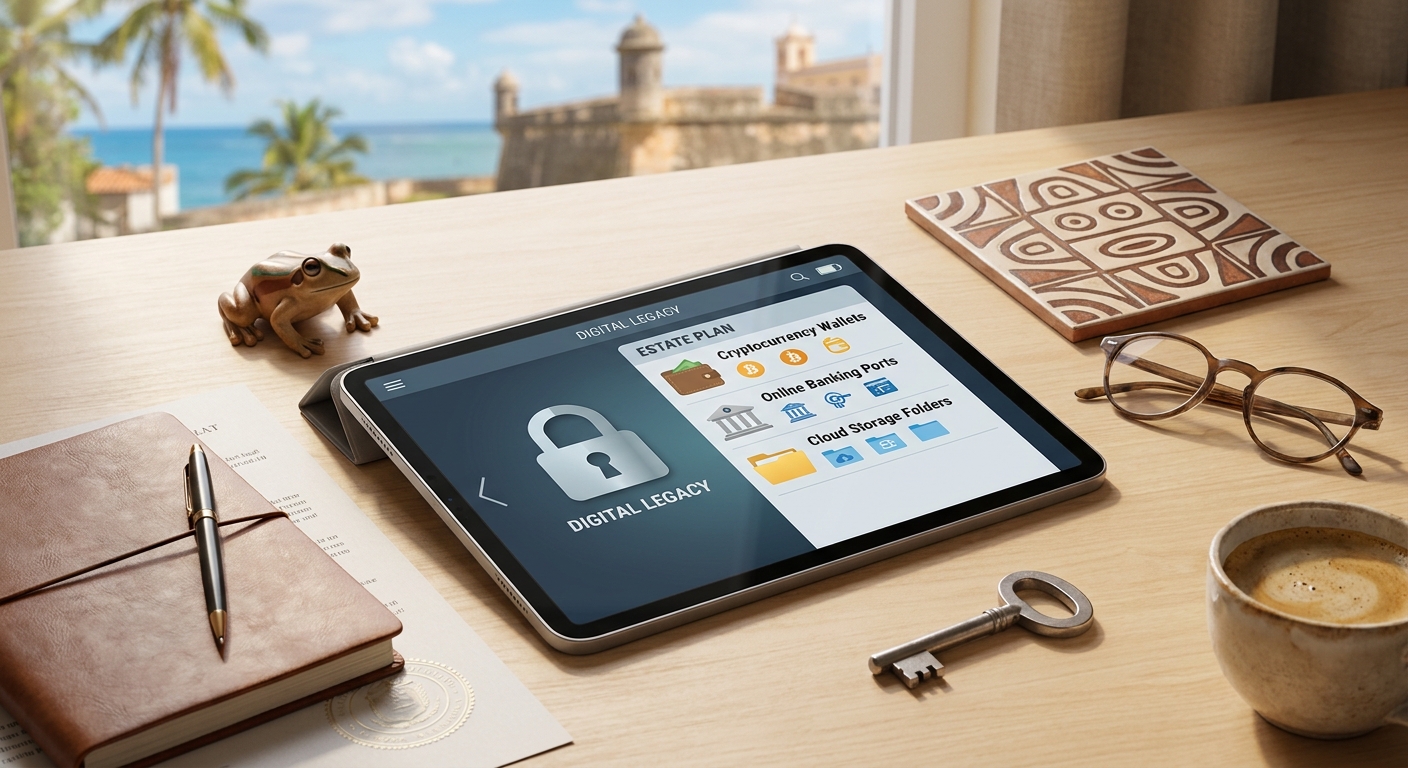

Why Digital Assets Matter in Your Puerto Rico Estate Plan
Your digital assets are real property with real value, and they require the same intentional planning as your bank accounts, real estate, and investment portfolio. Digital assets include cryptocurrency holdings, NFTs, online business accounts, domain names, social media profiles, digital files, cloud storage, email accounts, and intellectual property stored electronically. Without a clear plan for these assets, your heirs may face years of legal complications, lost access to valuable accounts, and potential tax liabilities that could have been avoided.
Puerto Rico's legal framework provides specific advantages for digital asset planning, particularly when combined with the island's tax incentives and business-friendly regulatory environment. Understanding how to structure your digital assets within Puerto Rico's legal system protects your wealth and ensures your intentions are carried out after your death or incapacity.
The Legal Status of Digital Assets in Puerto Rico
Puerto Rico recognizes digital assets as property subject to estate law. The Puerto Rico Civil Code and the Puerto Rico Probate Code provide the foundation for how digital assets are treated in succession planning. However, the law in this area continues to develop as technology advances faster than legislation.
Digital assets fall into several categories under Puerto Rico law. Tangible digital property includes cryptocurrency and NFTs, which have recognized monetary value. Intangible digital property includes domain names, online business accounts, and digital intellectual property. Access-based digital property includes email accounts, social media profiles, and cloud storage accounts that may contain valuable information or represent ongoing business operations.
The critical distinction is that Puerto Rico courts treat digital assets differently depending on their nature. Cryptocurrency holdings may be treated as personal property similar to cash or securities. Online business accounts may be treated as business assets subject to business succession rules. Social media accounts and email may be treated as personal property with limited transferability depending on the terms of service governing those accounts.
Your estate plan must account for these distinctions. A blanket statement in your will that "all my property passes to my heirs" will not automatically grant your heirs access to your cryptocurrency wallet, your online business accounts, or your email. Each category of digital asset requires specific planning language and documentation.
Cryptocurrency and Blockchain Assets in Puerto Rico Estate Planning
Cryptocurrency represents the most complex category of digital assets for estate planning purposes. Bitcoin, Ethereum, and other cryptocurrencies are recognized as property under Puerto Rico law, but accessing and transferring these assets after death requires specific technical knowledge and legal documentation.
The first challenge is identification. Your heirs cannot transfer assets they do not know exist. Many individuals hold cryptocurrency in private wallets, hardware wallets, or exchange accounts without leaving any record of these holdings. Your estate plan must include a complete inventory of your cryptocurrency holdings, including the platforms where they are held, the wallet addresses, and the method for accessing them.
The second challenge is access. Cryptocurrency is secured by private keys, which are essentially passwords that grant complete control over the assets. If your private keys are lost or inaccessible, your cryptocurrency is permanently lost. Your estate plan must address how your private keys will be stored, who will have access to them, and how they will be transmitted to your heirs after your death.
Common methods for securing private keys include hardware wallets, encrypted digital storage, safe deposit boxes, and attorney-held escrow arrangements. Each method has advantages and disadvantages. Hardware wallets provide strong security but require physical access. Encrypted digital storage can be accessed remotely but requires secure encryption. Safe deposit boxes provide physical security but may require court orders to access after death. Attorney-held escrow provides professional management but involves ongoing fees.
The third challenge is tax compliance. Puerto Rico has specific tax rules for digital assets, particularly for individuals who have relocated to Puerto Rico under Act 60. Cryptocurrency transactions may trigger capital gains tax, and the transfer of cryptocurrency to heirs may have estate tax implications. Your estate plan must coordinate with your tax strategy to minimize unnecessary tax liability.
For more information on how Puerto Rico's tax incentives apply to digital assets, see our Act 60 tax incentives page. For technical compliance issues related to blockchain assets, see our blockchain compliance page.
Online Business Accounts and Digital Intellectual Property
If you operate an online business in Puerto Rico or maintain digital intellectual property, your estate plan must address the succession of these assets. Online business accounts include e-commerce platforms, payment processors, domain registrars, hosting providers, and software-as-a-service accounts. Digital intellectual property includes websites, software code, digital designs, online courses, and digital content libraries.
The challenge with online business accounts is that most platforms have terms of service that restrict account transfer. Many platforms prohibit the transfer of accounts to third parties and require that accounts be closed upon the account holder's death. This creates a situation where your heirs may lose access to valuable business assets unless you take specific steps to address this in advance.
The solution involves several components. First, your estate plan should include a detailed inventory of all online business accounts, including login credentials, recovery email addresses, and two-factor authentication methods. Second, you should designate a digital executor or digital asset manager who has authority to manage these accounts during the probate process. Third, you should consider whether certain accounts should be transferred to a business entity that can continue operating after your death, rather than being held in your personal name.
For digital intellectual property, the issue is more straightforward from a legal perspective but more complex from a practical perspective. Copyright and intellectual property rights are transferable under Puerto Rico law and can be included in your estate plan. However, the practical transfer of digital files, source code, design files, and other digital content requires that your heirs have access to the systems where these files are stored.
Your estate plan should include instructions for accessing cloud storage accounts, backing up digital files, and transferring ownership of digital intellectual property to your heirs or to a business entity that will continue to use or monetize these assets. This is particularly important if your digital intellectual property generates ongoing income through licensing, subscriptions, or royalties.
Social Media, Email, and Personal Digital Accounts
Social media accounts, email accounts, and other personal digital accounts present unique challenges for estate planning. These accounts often contain valuable information, ongoing business communications, or sentimental value to your family. However, most platforms have terms of service that restrict access to these accounts after death.
Facebook, Instagram, Google, and other major platforms have memorialization policies that allow family members to request that accounts be memorialized or deleted after death. However, these policies do not grant access to the account contents. Your heirs cannot download your emails, retrieve your photos, or access your messages unless you have made specific arrangements in advance.
Your estate plan should address what you want to happen to these accounts. Do you want your email account to be closed, or do you want your heirs to have access to retrieve important information? Do you want your social media accounts to be memorialized, deleted, or transferred to a family member? Do you want your heirs to have access to your digital photos and messages?
The practical solution involves storing your login credentials in a secure location that your executor or digital asset manager can access after your death. This might be a password manager, a sealed envelope held by your attorney, or a digital vault service. Your estate plan should include specific instructions about which accounts should be accessed, what information should be retrieved, and what should happen to the accounts after your death.
Creating a Digital Asset Inventory
The foundation of effective digital asset estate planning is a complete and accurate inventory of all your digital assets. This inventory should be updated regularly and stored in a location where your executor or digital asset manager can access it after your death.
Your digital asset inventory should include the following information for each asset:
- The name and type of the digital asset (cryptocurrency, online business account, domain name, etc.)
- The platform or service provider where the asset is held
- The account username or identifier
- The location of the login credentials and recovery information
- The estimated value of the asset
- Any special instructions for accessing or transferring the asset
- The intended beneficiary or disposition of the asset
- Any tax or regulatory considerations related to the asset
This inventory should be organized in a way that is easy for your executor to understand and follow. Avoid storing passwords or private keys directly in the inventory. Instead, store the inventory in one location and the actual credentials in a separate secure location, with clear instructions about how to access them.
Your inventory should be reviewed and updated at least annually, or whenever you acquire new digital assets or make significant changes to your existing digital assets. Digital asset values can change rapidly, particularly for cryptocurrency, so your inventory should reflect current values for tax and estate planning purposes.
Designating a Digital Asset Manager or Executor
Your estate plan should clearly designate who will have authority to manage your digital assets after your death or incapacity. This person should have the technical knowledge to understand digital assets and the trustworthiness to handle sensitive information and valuable assets.
In many cases, your digital asset manager will be the same person as your executor. However, you may want to designate a different person if your executor lacks technical knowledge or if you want to separate the management of digital assets from the management of your other property.
Your digital asset manager should have clear authority under your estate plan to access your digital assets, retrieve information from your accounts, transfer assets to beneficiaries, and close accounts as appropriate. This authority should be granted in your will, your power of attorney, or a separate digital asset management agreement.
You should also consider whether your digital asset manager needs to be bonded or insured. If your digital assets represent a significant portion of your estate, you may want to require your digital asset manager to post a bond to protect against theft or mismanagement. You should also consider whether your digital asset manager should be required to provide regular accountings to your beneficiaries.
Coordinating Digital Asset Planning with Your Overall Estate Plan
Digital asset planning should not be done in isolation. Your digital asset plan must be coordinated with your overall estate plan, including your will, trusts, powers of attorney, and beneficiary designations.
If you have significant digital assets, you may want to consider whether a trust is the appropriate vehicle for holding these assets. A revocable living trust can provide privacy, avoid probate, and allow for professional management of your digital assets during your lifetime and after your death. A trust can also provide more detailed instructions about how your digital assets should be managed and distributed than a will alone.
Your power of attorney should include specific language granting your agent authority to manage your digital assets during your lifetime. This is important if you become incapacitated and need someone to manage your online business accounts, access your cryptocurrency, or handle your digital intellectual property.
Your beneficiary designations should be reviewed to ensure they are consistent with your digital asset plan. If you have designated beneficiaries for certain accounts or assets, make sure these designations are consistent with your overall estate plan and your intentions for your digital assets.
You should also consider the tax implications of your digital asset plan. Cryptocurrency transfers may trigger capital gains tax. The transfer of digital intellectual property may have income tax implications. The distribution of digital assets to beneficiaries may have estate tax implications. Your digital asset plan should be coordinated with your tax strategy to minimize unnecessary tax liability.
Common Mistakes in Digital Asset Estate Planning
Many individuals make preventable mistakes when planning for their digital assets. Understanding these mistakes can help you avoid them in your own estate plan.
The first mistake is failing to disclose the existence of digital assets. Many individuals hold cryptocurrency, online business accounts, or digital intellectual property without telling anyone. When these individuals die, their heirs have no way of knowing these assets exist. The assets are lost or abandoned, and the value is wasted.
The second mistake is storing passwords and private keys in insecure locations. Storing passwords in a notebook on your desk, in a spreadsheet on your computer, or in an email account makes your digital assets vulnerable to theft. Storing passwords in a safe deposit box makes them inaccessible to your heirs after your death without a court order.
The third mistake is failing to account for the terms of service of digital asset platforms. Many individuals assume they can transfer their cryptocurrency, online business accounts, or social media accounts to their heirs, but the terms of service of these platforms often prohibit such transfers. Your estate plan must account for these restrictions.
The fourth mistake is failing to coordinate digital asset planning with overall estate planning. Digital assets are often overlooked in traditional estate plans, leading to confusion and conflict among heirs about how these assets should be handled.
The fifth mistake is failing to update your digital asset plan as your assets change. Digital assets are often acquired and disposed of more frequently than traditional assets. Your digital asset plan should be reviewed and updated regularly to reflect your current holdings.
Puerto Rico-Specific Considerations for Digital Asset Planning
Puerto Rico's legal framework provides specific advantages for digital asset planning. Puerto Rico has a business-friendly regulatory environment and specific tax incentives for digital asset holders and online business operators.
If you have relocated to Puerto Rico under Act 60, your digital asset plan should be coordinated with your tax incentive plan. Certain digital assets may qualify for preferential tax treatment under Act 60, while others may be subject to specific tax reporting requirements. Your digital asset plan should ensure that you are taking full advantage of available tax incentives while remaining in compliance with all applicable tax laws.
Puerto Rico's courts have experience with digital asset disputes and have developed a body of case law addressing the treatment of digital assets in succession planning. This legal framework provides clarity and predictability for digital asset planning in Puerto Rico.
If you operate an online business in Puerto Rico, your digital asset plan should address the succession of your business accounts and digital intellectual property. Puerto Rico's business-friendly environment makes it an attractive location for online businesses, and proper planning can ensure that your business continues to operate after your death or incapacity.
Next Steps: Protect Your Digital Assets Today
Digital asset estate planning is not optional. If you hold digital assets of any kind, you need a plan to ensure these assets are properly managed after your death or incapacity. Without a plan, your heirs may lose access to valuable assets, face unnecessary tax liability, or encounter legal complications that could have been avoided.
The first step is to create a complete inventory of your digital assets. List all cryptocurrency holdings, online business accounts, domain names, digital intellectual property, and personal digital accounts. Include the location of login credentials, the estimated value of each asset, and your intentions for each asset after your death.
The second step is to secure your private keys and login credentials in a location where your executor or digital asset manager can access them after your death. Consider using a password manager, a sealed envelope held by your attorney, or a digital vault service.
The third step is to work with an experienced Puerto Rico attorney to integrate your digital asset plan into your overall estate plan. Your attorney can ensure that your will, trusts, powers of attorney, and beneficiary designations all address your digital assets and are consistent with your overall intentions.
Christian M. Frank Fas, Esq. has over 20 years of experience in commercial and business law in Puerto Rico, including digital asset planning and blockchain compliance. Schedule a free initial evaluation to discuss your digital asset planning needs and how to protect your digital wealth for your heirs. Visit lawyerinpr.com/start to begin.