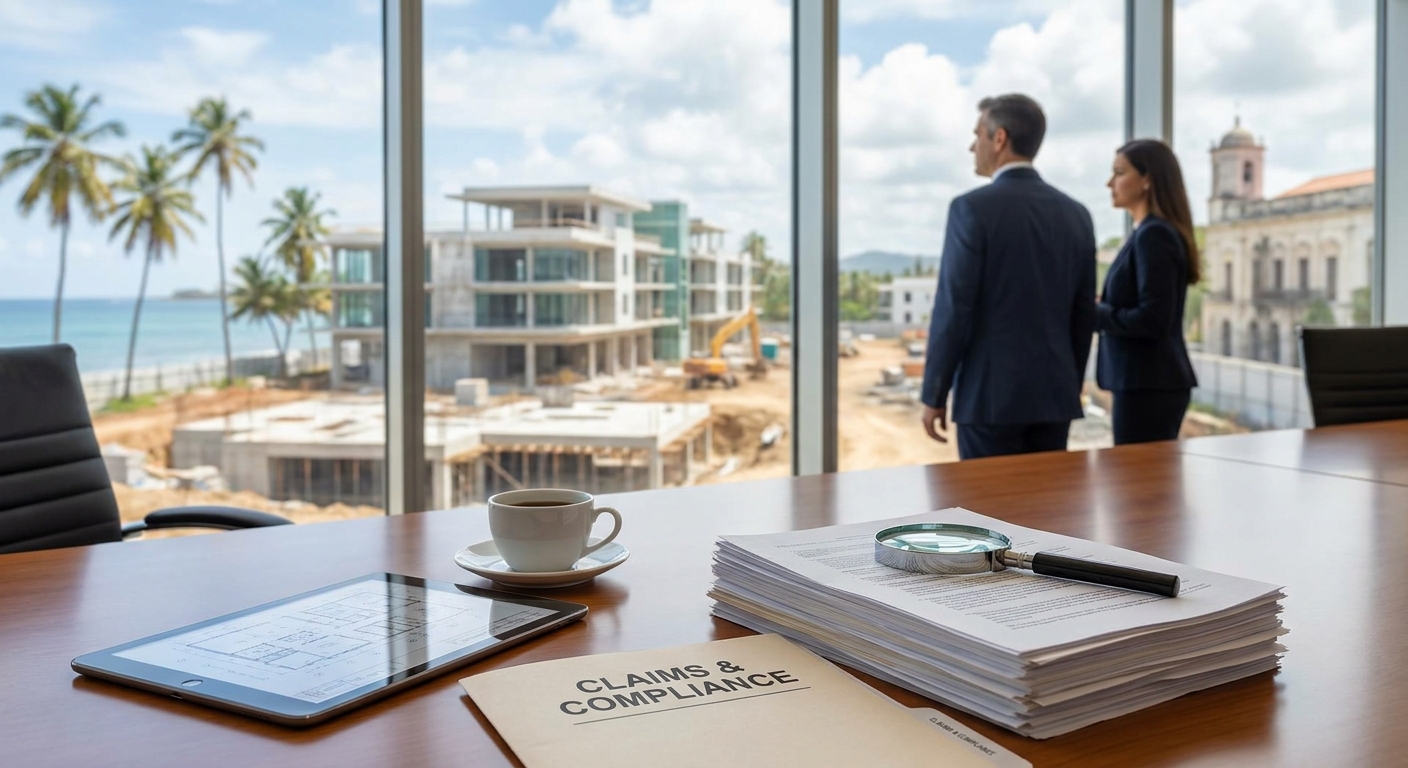

Construction defects can cost you hundreds of thousands of dollars. Whether you own a residential property, commercial building, or development project in Puerto Rico, understanding your rights and obligations regarding construction defects is essential to protecting your investment.
Construction defect claims arise when a building or structure fails to meet agreed-upon specifications, building codes, or industry standards. These defects can range from minor cosmetic issues to serious structural problems that compromise safety and property value. In Puerto Rico, the legal framework governing construction defects involves specific statutes, common law principles, and contractual obligations that differ from mainland U.S. jurisdictions.
This guide explains the fundamentals of construction defect claims in Puerto Rico, the types of defects that trigger liability, the parties who may be held responsible, and the steps you should take if you discover defects in your property.
Understanding Construction Defects Under Puerto Rico Law
Puerto Rico recognizes construction defects as departures from the plans, specifications, or industry standards that govern construction projects. The Puerto Rico Building Code establishes minimum standards for construction quality and safety. When a contractor, architect, engineer, or developer fails to meet these standards, the property owner may have grounds for a claim.
Construction defects fall into several categories. Structural defects affect the integrity of the building itself, including foundation problems, framing failures, or roof leaks. Systems defects involve mechanical, electrical, plumbing, or HVAC systems that do not function as intended. Envelope defects compromise the building's exterior protection, such as water intrusion through walls or windows. Finish defects are cosmetic or minor functional issues, such as paint problems or trim work that does not match specifications.
The severity of a defect determines the potential liability exposure. A minor paint defect may result in a small repair cost, while a structural foundation problem could render a building unsafe and require extensive remediation. Puerto Rico courts recognize that property owners have a legitimate interest in receiving buildings that are safe, functional, and constructed according to contract terms and applicable codes.
Who Can Be Held Liable for Construction Defects
Multiple parties may bear responsibility for construction defects in Puerto Rico. The general contractor is typically the primary party responsible for overall construction quality and for ensuring that all work meets specifications and codes. Subcontractors who perform specific trades, such as electrical, plumbing, or roofing work, are responsible for defects in their respective areas of work.
Architects and engineers who design the project and provide construction administration services can be held liable if defects result from design errors, inadequate specifications, or failure to properly supervise construction. Material suppliers may be liable if defects stem from defective or non-conforming materials they provided. Developers and project owners can be liable if they fail to exercise reasonable oversight or if they knowingly permit substandard work to proceed.
In some cases, multiple parties share responsibility for a single defect. For example, a roof leak might result from both a design flaw and improper installation. Puerto Rico law allows property owners to pursue claims against any or all responsible parties. The specific allocation of liability depends on the facts of each case, the terms of construction contracts, and the degree to which each party's actions or omissions contributed to the defect.
Contractual Protections and Warranty Obligations
Construction contracts in Puerto Rico typically include express warranties that the contractor will perform work in a professional manner, in compliance with plans and specifications, and in accordance with applicable building codes. These warranties create a contractual obligation that extends beyond the completion of construction. Many contracts include warranty periods, typically one to ten years depending on the type of work, during which the contractor remains responsible for defects that appear.
Beyond express warranties, Puerto Rico law implies certain warranties in construction contracts. The implied warranty of workmanlike performance requires that all work be performed in a manner consistent with industry standards and professional practices. This warranty applies even if the contract does not explicitly state it. The implied warranty of fitness for a particular purpose applies when the contractor knows the specific purpose for which the building will be used and the owner relies on the contractor's skill to design or construct a building suitable for that purpose.
Warranty disclaimers and limitations are common in construction contracts. However, Puerto Rico courts scrutinize these provisions carefully, particularly when they attempt to eliminate liability for gross negligence, willful misconduct, or violations of building codes. A contractor cannot contract away liability for defects that violate mandatory building code requirements or that result from the contractor's failure to exercise reasonable care.
If you are a property owner, review your construction contract carefully to understand what warranties apply, what the warranty periods are, and what procedures you must follow to make a warranty claim. If you are a contractor or developer, ensure that your contracts clearly define the scope of work, the applicable standards, and any limitations on liability or warranty periods.
Statutes of Limitation and Repose in Puerto Rico
Puerto Rico law imposes time limits on construction defect claims. The statute of limitations determines how long after a defect is discovered you may file a lawsuit. The statute of repose sets an absolute deadline for filing claims, regardless of when the defect was discovered.
Under Puerto Rico law, the general statute of limitations for breach of contract claims is four years from the date the claim accrues. For construction defects, the claim typically accrues when the defect is discovered or should have been discovered through reasonable inspection. This means you generally have four years from the date you knew or should have known about the defect to file a lawsuit.
The statute of repose is more restrictive. Puerto Rico law generally provides a ten-year statute of repose for construction defect claims, measured from the date of substantial completion of the construction project. This means that even if you discover a defect more than ten years after the project is completed, you may be barred from bringing a claim. However, this rule has exceptions for latent defects that could not have been discovered through reasonable inspection.
These time limits are strict and are enforced by Puerto Rico courts. If you discover a construction defect, do not delay in taking action. Consult with an experienced attorney immediately to understand your rights and to ensure that you do not miss critical deadlines.
The Process of Pursuing a Construction Defect Claim
Pursuing a construction defect claim in Puerto Rico involves several steps. The process typically begins with documentation and notice. You should document the defect thoroughly with photographs, videos, and written descriptions. Obtain written estimates or reports from qualified inspectors or contractors describing the defect and the cost to repair it. Provide written notice to the contractor, architect, engineer, or developer, depending on who is responsible for the defect. The notice should describe the defect, reference the relevant contract provisions or code requirements, and request a response within a reasonable timeframe.
Many construction contracts require that disputes be resolved through negotiation or mediation before litigation. If your contract includes such a provision, you may be required to attempt to resolve the dispute through these alternative methods before filing a lawsuit. Mediation can be cost-effective and may result in a faster resolution than litigation.
If negotiation or mediation does not resolve the dispute, you may file a lawsuit in Puerto Rico court. Construction defect litigation can be complex and may involve multiple parties, expert testimony, and discovery of extensive documentation. The case may proceed through the court system or, if the parties agree, through arbitration.
Throughout the process, preserve all evidence related to the defect. Do not attempt to repair the defect without documenting the original condition, as this may affect your ability to prove the extent of the damage. Maintain all communications with contractors, architects, engineers, and other parties involved in the project.
Damages Available in Construction Defect Claims
If you prevail in a construction defect claim, Puerto Rico law allows you to recover several types of damages. The cost of repair or remediation is the primary measure of damages. This is the amount necessary to bring the building into compliance with the contract, specifications, and applicable codes. In some cases, if repair is not feasible or economically reasonable, you may recover the diminution in property value caused by the defect.
You may also recover consequential damages if they are foreseeable and directly caused by the defect. Consequential damages might include the cost of temporary housing if the defect makes the property uninhabitable, lost business income if the defect affects a commercial property, or costs associated with health or safety issues caused by the defect. However, consequential damages are subject to limitations and must be proven with specificity.
In cases involving gross negligence, willful misconduct, or fraud, Puerto Rico courts may award punitive damages in addition to compensatory damages. Punitive damages are intended to punish the wrongdoer and deter similar conduct in the future. These damages are not available in ordinary breach of contract cases but may be available if the defendant's conduct rises to the level of tort.
You may also recover attorney's fees and costs if the contract provides for such recovery or if Puerto Rico law permits it in the specific circumstances of your case. Some construction contracts include provisions allowing the prevailing party to recover attorney's fees, which can significantly increase the value of a claim.
Defenses to Construction Defect Claims
Contractors, architects, engineers, and developers have several defenses available in construction defect claims. One common defense is that the defect resulted from the property owner's failure to maintain the property or from misuse of the building. If the owner failed to perform required maintenance or used the building in a manner inconsistent with its design, the defendant may argue that the owner is responsible for the defect.
Another defense is that the defect is minor and does not substantially affect the value or utility of the property. Puerto Rico law recognizes that not every deviation from specifications constitutes a material breach. If the defect is trivial or cosmetic and does not affect the building's function or safety, the defendant may argue that no liability exists.
Defendants may also argue that the statute of limitations or statute of repose bars the claim. If the claim was not filed within the applicable time period, the court may dismiss it without considering the merits. This defense is particularly important in cases involving latent defects that are discovered long after construction is completed.
Comparative fault is another potential defense. If the property owner, architect, or another party contributed to the defect, the defendant may argue that liability should be apportioned among all responsible parties. Puerto Rico law allows for comparative fault analysis, which may reduce the defendant's liability if other parties also bear responsibility.
Practical Steps for Property Owners
If you own property in Puerto Rico and suspect construction defects, take the following steps. First, document the defect thoroughly. Take photographs and videos from multiple angles and in different lighting conditions. Write detailed descriptions of what you observe, including when you first noticed the defect and how it has progressed over time.
Second, obtain professional inspection and evaluation. Hire a qualified inspector, engineer, or contractor to examine the defect and provide a written report. This report will be critical evidence in any claim or dispute. The professional should describe the defect, explain how it violates the contract or building code, estimate the cost to repair it, and assess any safety risks.
Third, review your construction contract and any warranties. Understand what warranties apply, what the warranty periods are, and what procedures you must follow to make a claim. Some contracts require that you provide notice within a specific timeframe or that you follow particular procedures.
Fourth, provide written notice to the responsible party. Send a detailed letter describing the defect, referencing the relevant contract provisions or code requirements, and requesting a response. Keep copies of all correspondence.
Fifth, consult with an experienced attorney who focuses on construction law in Puerto Rico. An attorney can review your contract, evaluate the strength of your claim, advise you on your options, and represent you in negotiations or litigation if necessary.
Practical Steps for Contractors and Developers
If you are a contractor or developer in Puerto Rico, take steps to minimize your exposure to construction defect claims. First, use clear, detailed contracts that specify the scope of work, the applicable standards, the warranty periods, and the procedures for addressing defects. Include provisions requiring that the property owner provide notice of defects within a reasonable timeframe and that disputes be resolved through negotiation or mediation before litigation.
Second, maintain detailed records of all work performed, including daily logs, photographs, inspection reports, and test results. These records demonstrate that you performed work in compliance with specifications and codes and can be critical in defending against defect claims.
Third, ensure that all work is performed by qualified, trained personnel and that all work is properly inspected and tested before being covered or concealed. Implement quality control procedures to catch and correct defects before they become major problems.
Fourth, maintain appropriate insurance coverage, including general liability insurance and professional liability insurance if you are an architect or engineer. Insurance can protect you from the financial impact of defect claims.
Fifth, consult with an experienced attorney when drafting contracts and when disputes arise. An attorney can help you structure your contracts to protect your interests and can represent you if a defect claim is filed against you.
Commercial Litigation and Construction Disputes
Construction defect claims often escalate into commercial litigation. If negotiation and mediation fail to resolve the dispute, you may need to pursue the claim through the Puerto Rico court system. Commercial litigation involving construction defects can be complex, involving multiple parties, expert testimony, and extensive discovery.
An experienced attorney who focuses on commercial litigation can guide you through the litigation process, manage discovery, prepare expert witnesses, and represent you at trial or in settlement negotiations. The goal is to resolve the dispute efficiently and to protect your financial interests.
Next Steps
Construction defect claims require prompt action and careful attention to legal deadlines and procedures. Whether you are a property owner seeking to recover the cost of repairs or a contractor defending against a defect claim, you need experienced legal guidance.
Christian M. Frank Fas, Esq. has more than 20 years of experience in commercial and business law in Puerto Rico, including construction disputes and defect claims. The firm offers a free initial evaluation to discuss your situation, explain your options, and advise you on the best course of action.
Contact the firm today to schedule your free initial evaluation. Visit lawyerinpr.com/start to begin.