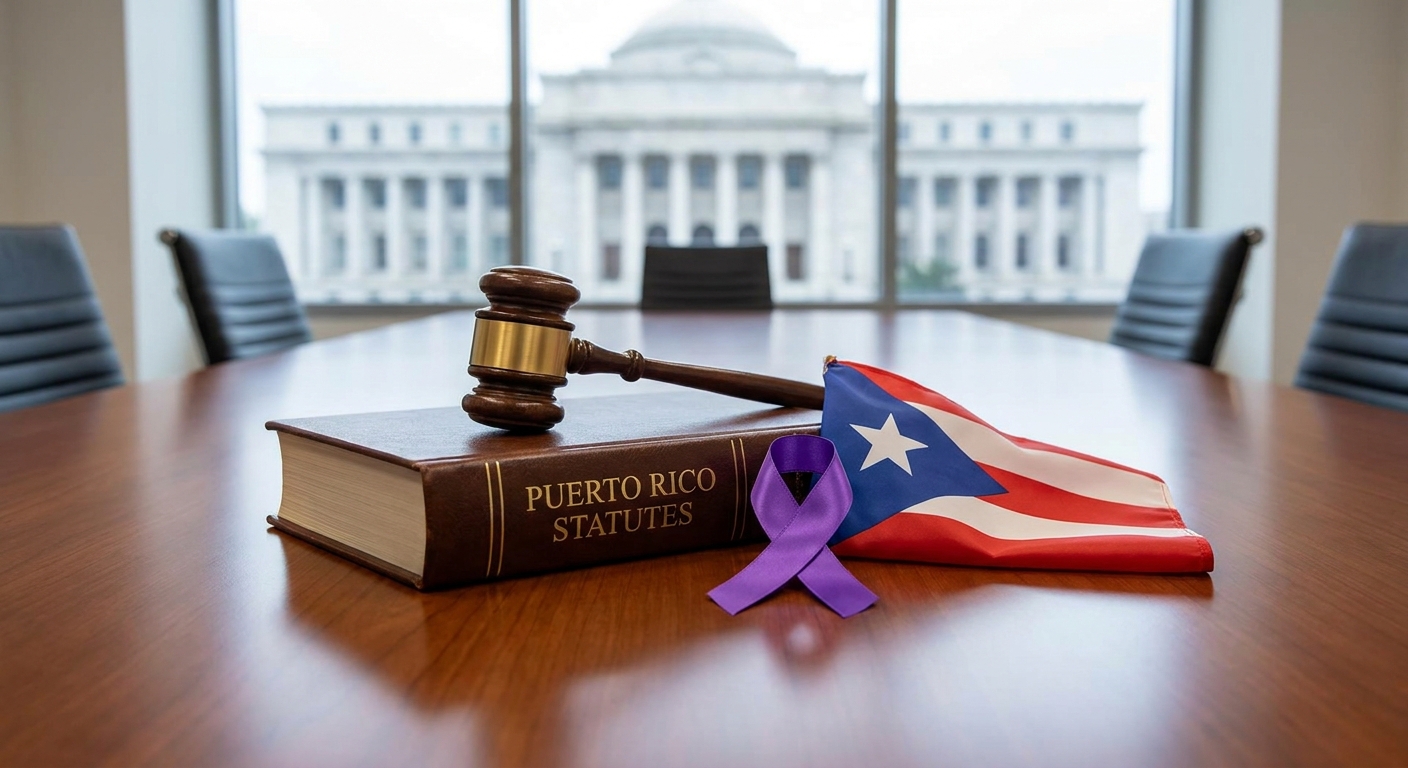

Understanding Puerto Rico's Domestic Violence Legal Framework
Domestic violence in Puerto Rico is governed by a comprehensive legal framework designed to protect victims and hold perpetrators accountable. The primary statute addressing domestic violence is Law 54 of 1989, formally known as the Law to Prevent and Intervene in Domestic Violence. This law establishes the legal definitions, remedies, and procedures that apply when domestic violence occurs within Puerto Rico's jurisdiction.
The law applies to relationships that extend beyond traditional marriage. It covers current and former spouses, individuals in consensual intimate relationships, parents and children, and other family members living in the same household. Understanding who qualifies for protection under Puerto Rico law is essential because the scope of coverage directly affects what legal remedies are available to you.
Puerto Rico's approach to domestic violence treats it as both a criminal matter and a civil matter. This dual approach means that a single act of domestic violence can result in criminal prosecution by the state while simultaneously allowing the victim to pursue civil remedies such as protective orders. The distinction between these two paths is important because they serve different purposes and operate under different procedural rules.
What Constitutes Domestic Violence Under Puerto Rico Law
Puerto Rico law defines domestic violence broadly to encompass physical abuse, psychological abuse, sexual abuse, and economic control. Physical abuse includes any intentional act that causes bodily injury, pain, or impairment. This covers obvious acts like hitting or pushing as well as less obvious conduct such as throwing objects, restraining someone against their will, or denying access to medical care.
Psychological abuse is recognized as a distinct form of domestic violence. This includes threats, intimidation, harassment, isolation from family and friends, constant criticism, humiliation, and controlling behavior. The law recognizes that psychological harm can be as damaging as physical injury, and victims do not need to show physical marks or injuries to establish that abuse has occurred.
Sexual abuse within a domestic relationship is treated seriously under Puerto Rico law. This includes non-consensual sexual contact, coercion into sexual acts, and sexual assault. The fact that the parties are in a relationship does not diminish the seriousness of sexual abuse or reduce the legal protections available to victims.
Economic control and financial abuse are also recognized forms of domestic violence. This includes preventing a partner from working, controlling access to money, running up debt in someone else's name, or sabotaging employment. Economic abuse often works in combination with other forms of abuse to increase the victim's dependence and reduce their ability to leave the relationship.
Protective Orders and Restraining Orders
One of the most important remedies available under Puerto Rico domestic violence law is the protective order, also called a restraining order or order of protection. A protective order is a court order that prohibits the abuser from engaging in specific conduct toward the victim. These orders can be issued quickly, sometimes on an emergency basis, to provide immediate protection.
Puerto Rico law provides for two types of protective orders: temporary orders and final orders. A temporary protective order can be issued without the abuser being present in court if the victim demonstrates that there is reasonable cause to believe that domestic violence has occurred or is about to occur. These temporary orders typically remain in effect for a limited period, usually around 14 days, pending a hearing on a final protective order.
A final protective order is issued after a hearing where both parties have an opportunity to present evidence and testimony. The court must find that domestic violence has occurred or is likely to occur to issue a final protective order. Final protective orders can remain in effect for extended periods and can be renewed if the victim continues to face a threat of abuse.
Protective orders can include provisions that prohibit the abuser from contacting the victim, coming within a certain distance of the victim's home or workplace, possessing firearms, or engaging in other specific conduct. The court has discretion to tailor the order to address the particular circumstances of the case and the specific threats posed by the abuser.
Violation of a protective order is a criminal offense in Puerto Rico. If the abuser violates the terms of the order, the victim can report the violation to law enforcement, and the abuser can face criminal charges. This enforcement mechanism gives protective orders real teeth and provides victims with a way to hold abusers accountable for continued violations.
Criminal Prosecution for Domestic Violence
When domestic violence occurs in Puerto Rico, the conduct may constitute a criminal offense. The specific charge depends on the nature and severity of the abuse. Simple assault, aggravated assault, battery, sexual assault, and harassment are among the criminal charges that can result from domestic violence incidents.
Puerto Rico law provides enhanced penalties for crimes committed in a domestic violence context. This means that the same conduct that would result in one sentence if committed against a stranger may result in a more severe sentence if committed against a family member or intimate partner. The law recognizes that domestic violence is particularly serious because it occurs within relationships of trust and dependence.
Criminal prosecution is initiated by the state, not by the victim. Once a report is made to law enforcement, the decision to prosecute rests with the prosecutor's office. This means that even if the victim wants to drop charges or reconcile with the abuser, the state can continue with prosecution if it determines that the public interest requires it. This approach protects victims from pressure to drop charges and ensures that abusers cannot escape accountability simply by convincing their victims to remain silent.
Victims of domestic violence have certain rights within the criminal process. These include the right to be informed about the status of the case, the right to be present at court proceedings, the right to have a victim advocate present, and the right to be heard at sentencing. Understanding these rights helps victims participate effectively in the criminal justice process.
Civil Remedies Beyond Protective Orders
In addition to protective orders, Puerto Rico law provides other civil remedies for victims of domestic violence. These remedies allow victims to address the consequences of abuse and obtain compensation for harm suffered.
Victims can pursue civil lawsuits against their abusers for damages resulting from the abuse. These damages can include compensation for medical expenses, mental health treatment, lost wages, property damage, and pain and suffering. A civil lawsuit allows the victim to recover money from the abuser to help offset the costs of the abuse.
In cases involving children, domestic violence can affect custody and visitation arrangements. Puerto Rico law allows courts to consider domestic violence when making decisions about custody and visitation. A parent's history of domestic violence can result in restrictions on custody or supervised visitation requirements. The law prioritizes the safety and well-being of children and recognizes that exposure to domestic violence can harm children even if they are not directly abused.
Protective orders can also address property issues. The court can order the abuser to return property belonging to the victim or can award temporary use of shared property to the victim. This is particularly important when the victim needs to remain in the family home for safety reasons or when the abuser has taken or damaged the victim's belongings.
Mandatory Arrest and Reporting Requirements
Puerto Rico law imposes mandatory arrest policies for domestic violence incidents. When law enforcement responds to a domestic violence call and has reasonable cause to believe that domestic violence has occurred, the officer must make an arrest. This mandatory arrest policy removes discretion from individual officers and ensures consistent enforcement.
Certain professionals in Puerto Rico are mandated reporters of domestic violence. This includes healthcare providers, mental health professionals, educators, and social workers. These professionals must report suspected domestic violence to law enforcement or child protective services. The mandatory reporting requirement ensures that abuse is reported even when victims are reluctant to report it themselves.
The mandatory reporting requirement applies even when the victim asks the professional not to report. This can be difficult for victims who fear retaliation or who are not ready to leave the relationship, but the law prioritizes safety and intervention over victim preference in these situations.
Restraining Orders and Firearms
Puerto Rico law restricts firearm possession by individuals subject to domestic violence protective orders. When a protective order is issued, the court can order the abuser to surrender any firearms in their possession. This provision recognizes that access to firearms significantly increases the risk of lethal violence in domestic violence situations.
The restriction on firearm possession applies during the period that the protective order is in effect. If the protective order is terminated, the restriction on firearm possession may also be lifted, though the court has discretion to maintain the restriction if it determines that the risk of harm continues.
Victim Support Services and Resources
Puerto Rico provides various support services for domestic violence victims. These services include emergency shelters, counseling, legal advocacy, and support groups. Many of these services are provided by non-profit organizations that receive government funding and work in coordination with law enforcement and the courts.
Victims can access these services regardless of their immigration status or economic situation. Many services are provided free of charge or on a sliding fee scale. Victim advocates can help victims understand their legal options, prepare for court proceedings, and access other resources such as housing assistance and job training.
The Puerto Rico government maintains a domestic violence hotline that provides information, support, and referrals to local services. Victims can call this hotline to speak with someone trained in domestic violence issues and to learn about available resources.
Workplace Protections for Domestic Violence Victims
Puerto Rico law provides certain protections for employees who are victims of domestic violence. Employers cannot discriminate against or terminate employees based on their status as domestic violence victims. Additionally, employees may be entitled to leave from work to attend court proceedings related to domestic violence cases or to seek medical treatment or counseling.
These workplace protections recognize that domestic violence can affect a victim's ability to work and that victims should not face job loss or other employment consequences because of the abuse they have suffered. Employers are expected to work with employees who are dealing with domestic violence to accommodate their needs while maintaining workplace safety.
Immigration Considerations
Domestic violence victims who are not Puerto Rico residents or U.S. citizens may have additional legal options. Certain immigration statuses are available to victims of domestic violence, and victims may be eligible for protection from deportation. These immigration remedies are separate from the domestic violence protections available under Puerto Rico law, but they can be pursued simultaneously.
If you are a non-citizen victim of domestic violence, it is important to consult with an attorney who understands both domestic violence law and immigration law. The intersection of these two areas of law can be complex, and an experienced attorney can help you understand all available options.
Documenting Abuse and Gathering Evidence
If you are experiencing domestic violence, documenting the abuse can be important for both criminal prosecution and civil proceedings. Documentation can include photographs of injuries, medical records, text messages or emails from the abuser, witness statements, and records of incidents such as police reports or emergency room visits.
Keeping a record of incidents, including dates, times, locations, and descriptions of what happened, can help establish a pattern of abuse. This documentation can be used to support applications for protective orders and can be presented as evidence in court proceedings.
It is important to keep documentation in a safe place where the abuser cannot find it. Many victims keep records with a trusted friend or family member, in a safe deposit box, or in a secure location outside the home. Digital documentation can be stored in cloud-based accounts with strong passwords that the abuser does not know.
Safety Planning and Leaving Safely
Leaving a domestic violence situation requires careful planning. Abusers often escalate their violence when victims attempt to leave, making the departure process particularly dangerous. Safety planning involves identifying safe places to go, arranging transportation, securing important documents, and establishing a communication plan with trusted individuals.
Victim advocates and domestic violence organizations can help with safety planning. These professionals understand the risks involved in leaving and can help victims develop a plan that addresses their specific circumstances and concerns. Safety planning is not a one-time event but an ongoing process that may need to be adjusted as circumstances change.
Important documents to secure before leaving include identification, birth certificates, social security cards, financial records, custody documents, and protective orders. Having these documents readily available can make it easier to leave quickly if necessary and can help with accessing services and establishing residence elsewhere.
Next Steps: Getting Legal Help
If you are experiencing domestic violence in Puerto Rico, you have legal options and resources available to you. The law provides multiple avenues for protection and accountability, and various support services exist to help you through this process.
Christian M. Frank Fas, Esq. provides a free initial evaluation to discuss your situation and explain your legal options. During this evaluation, you can learn about protective orders, criminal prosecution, civil remedies, and other steps you can take to protect yourself and your family. The evaluation is confidential and carries no obligation.
To schedule your free initial evaluation, visit lawyerinpr.com/start or contact the office directly. An experienced attorney can review your specific circumstances and help you understand the best path forward for your situation.