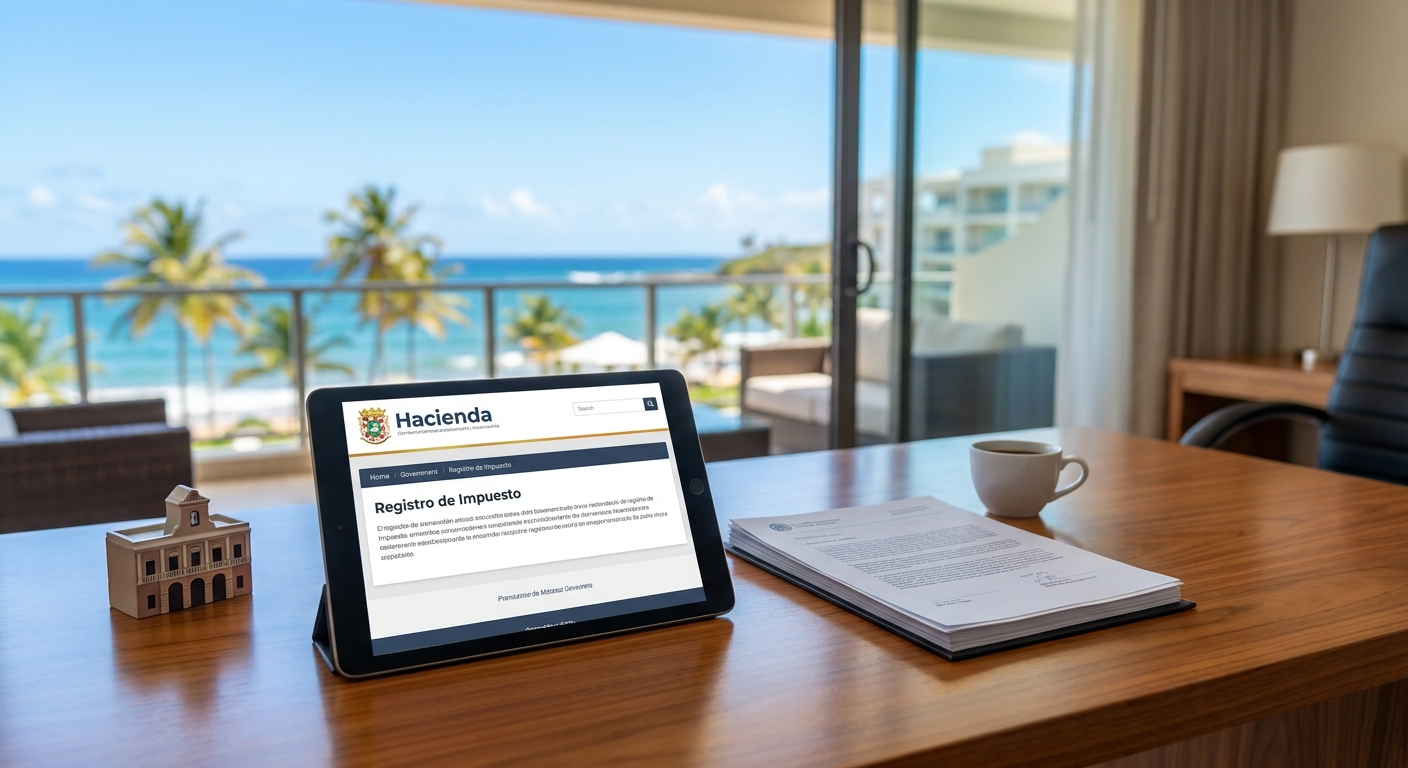

Room Tax Registration with Hacienda: What You Need to Know
If you operate a hotel, vacation rental, guesthouse, or any other lodging business in Puerto Rico, you must register for room tax with the Puerto Rico Department of Hacienda. This is not optional. Room tax, also called occupancy tax, is a direct revenue obligation that the government enforces through regular audits and penalties for non-compliance. Understanding the registration process, your ongoing obligations, and the consequences of failure to comply will protect your business from costly fines and legal complications.
What Is Room Tax and Who Must Register
Room tax is a tax imposed on the rental of rooms in hotels and other lodging establishments in Puerto Rico. The current rate is 11.5 percent of the rental price, though this rate can change through legislative action. The tax applies to any person or entity that rents rooms to guests for temporary occupancy, regardless of whether the business operates full-time or part-time.
The definition of "lodging establishment" is broad. It includes traditional hotels, motels, guesthouses, vacation rentals, Airbnb properties, bed and breakfasts, and any other arrangement where a room or rooms are rented for periods of less than 30 consecutive days. If you collect payment from guests for temporary room occupancy, you are subject to room tax registration requirements.
Many property owners believe that because they rent through online platforms or manage properties informally, they are exempt from registration. This is incorrect. The obligation to register and collect room tax applies regardless of how you market the property or how you receive bookings. The Hacienda actively pursues non-compliant operators through data matching with online platforms and guest complaints.
The Room Tax Registration Process with Hacienda
Room tax registration begins with obtaining a business registration number, known as a Registro de Contribuyente, from the Hacienda. This is a prerequisite to room tax registration. If you do not already have a business registration number, you must apply for one before you can register for room tax.
Once you have your business registration number, you must complete the room tax registration form and submit it to the Hacienda. The form requires detailed information about your lodging establishment, including the address, the number of rooms available for rent, the average nightly rate, and the expected monthly revenue. You will also need to provide information about the owner or operator of the business.
The registration process can be completed in person at a Hacienda office or through the Hacienda's online portal. The online process is generally faster and more convenient. You will need to create an account on the Hacienda's website, complete the registration form, and submit it electronically. The Hacienda will review your application and issue a room tax registration certificate if everything is in order.
The registration certificate is not permanent. You must renew it annually, typically before the end of the calendar year. Failure to renew your registration can result in penalties and the suspension of your ability to legally operate your lodging business.
Monthly Reporting and Payment Obligations
After you register for room tax, you become responsible for collecting the tax from your guests and remitting it to the Hacienda on a monthly basis. This is a critical ongoing obligation that many new operators underestimate.
Each month, you must file a room tax return with the Hacienda. The return reports the total number of rooms rented, the total rental revenue, the room tax collected, and any adjustments or credits. The return must be filed by the 20th day of the month following the month in which the tax was collected. For example, room tax collected in January must be reported and paid by February 20th.
The room tax collected must be remitted to the Hacienda along with the return. The payment can be made electronically through the Hacienda's online system, by check, or in person at a Hacienda office. Late payments result in interest charges and penalties that compound over time. A payment that is even one day late will incur interest at a rate set by the Hacienda, currently quite high.
Many operators make the mistake of treating room tax as part of their operating revenue rather than as a liability held in trust for the government. This leads to cash flow problems when the monthly payment is due. You should set aside the room tax collected from guests in a separate account and treat it as money that belongs to the Hacienda, not to your business.
Record-Keeping Requirements
The Hacienda requires that you maintain detailed records of all room rentals and room tax collected. These records must be kept for at least four years and must be available for inspection by Hacienda auditors at any time.
Your records should include the following information for each room rental: the guest's name, the check-in and check-out dates, the number of rooms rented, the nightly rate, the total rental revenue, and the room tax collected. If you use a property management system or booking platform, you should ensure that the system generates reports that contain all of this information.
You should also maintain copies of all room tax returns filed with the Hacienda and all payment receipts. If you use an accountant or bookkeeper, ensure that they understand the room tax requirements and that they maintain records in a format that can be easily audited.
Failure to maintain adequate records is itself a violation that can result in penalties, even if the Hacienda cannot prove that you failed to collect or remit room tax. The burden is on you to prove that you collected and remitted the correct amount of room tax.
Common Compliance Mistakes and How to Avoid Them
One of the most common mistakes is failing to register at all. Some operators believe that because they operate informally or through online platforms, they can avoid registration. The Hacienda has access to booking data from major platforms and cross-references this data with registered room tax operators. If you appear in booking data but are not registered, you will be contacted and required to register retroactively, with penalties for the period of non-compliance.
Another common mistake is registering but failing to file monthly returns. Some operators register and then assume that the obligation is satisfied. In reality, registration is just the beginning. You must file a return every month, even if you had no room rentals that month. A return showing zero revenue is still required.
A third mistake is collecting room tax but not remitting it. Some operators collect the tax from guests but use the money for operating expenses, intending to pay it back later. This is illegal and will result in significant penalties and interest charges. The room tax you collect is not your money.
A fourth mistake is failing to renew your registration. Your registration certificate expires at the end of each calendar year. If you do not renew before the deadline, your registration lapses and you are no longer authorized to operate. Reactivating a lapsed registration involves additional penalties.
A fifth mistake is failing to report all rental revenue. Some operators report only a portion of their revenue, either intentionally or through poor record-keeping. The Hacienda can cross-reference your reported revenue with data from booking platforms and credit card processors. Discrepancies will trigger an audit.
Penalties for Non-Compliance
The penalties for room tax non-compliance are substantial and escalate quickly. If you fail to register, you can be fined up to 100 percent of the room tax that should have been collected during the period of non-compliance. If you register but fail to file returns, you can be fined for each month that a return was not filed. If you file returns but fail to remit payment, you will be charged interest on the unpaid amount plus penalties.
In addition to financial penalties, the Hacienda can take enforcement action against your business. This can include the suspension of your business registration, the seizure of your property, or the filing of a lien against your assets. If the non-compliance is severe or intentional, the Hacienda can refer the matter to the Puerto Rico Department of Justice for criminal prosecution.
The consequences of non-compliance extend beyond the Hacienda. If you are operating without proper room tax registration, you may be in violation of local municipal ordinances as well. Some municipalities require additional licenses or permits for lodging businesses. Operating without these permits can result in fines from the municipality and orders to cease operations.
Room Tax and Other Tax Obligations
Room tax is separate from other tax obligations that may apply to your lodging business. If your business is structured as a corporation, partnership, or LLC, you must also file corporate income tax returns. If you have employees, you must withhold and remit payroll taxes. If you purchase goods or services for your business, you may be subject to sales tax obligations.
Room tax registration does not satisfy these other obligations. You must register separately for each tax that applies to your business. Failure to understand and comply with all applicable taxes can result in multiple separate penalties and enforcement actions.
If you are considering establishing a lodging business in Puerto Rico and are interested in the tax incentives available under Act 60, you should understand how room tax interacts with those incentives. Room tax is a separate obligation that applies regardless of whether you qualify for Act 60 benefits. For more information about Act 60 and how it may apply to your business, visit our Puerto Rico tax incentives page.
Audits and Dispute Resolution
The Hacienda conducts regular audits of room tax operators. An audit can be triggered by a discrepancy in your reported revenue, a complaint from a guest or competitor, or simply as part of the Hacienda's routine audit program. During an audit, the Hacienda will review your records, cross-reference your reported revenue with data from booking platforms and credit card processors, and verify that you collected and remitted the correct amount of room tax.
If the Hacienda finds that you underpaid room tax, you will be assessed for the unpaid amount plus interest and penalties. You have the right to dispute the assessment through the Hacienda's administrative appeal process. This process involves submitting a written protest to the Hacienda within a specified time period, followed by a hearing before an administrative judge if the Hacienda does not agree with your protest.
If you disagree with the administrative decision, you can appeal to the Puerto Rico Court of Appeals. This process can be lengthy and expensive, which is why it is important to maintain accurate records and comply with all room tax obligations from the beginning.
Working with a Focused Business Law Professional
Room tax compliance is not complicated, but it requires attention to detail and consistent execution. Many operators benefit from working with a focused business law professional who understands Puerto Rico's tax system and can help them establish proper procedures for collecting, reporting, and remitting room tax.
A focused professional can help you register for room tax, establish a system for tracking rental revenue and room tax collected, prepare monthly returns, and respond to Hacienda inquiries or audits. If you are already operating without proper registration, a focused professional can help you come into compliance and minimize penalties.
If you are considering establishing a lodging business in Puerto Rico, a focused professional can help you understand all of the tax and regulatory obligations that apply to your business and help you establish systems to ensure compliance from day one.
Next Steps
If you operate a lodging business in Puerto Rico or are considering establishing one, you should understand your room tax obligations. If you are not currently registered for room tax and should be, you should register immediately to minimize penalties. If you are registered but uncertain about your compliance obligations, you should review your procedures to ensure that you are filing returns and remitting payments on time.
Christian M. Frank Fas, Esq. has over 20 years of experience in Puerto Rico business law and can help you understand and comply with room tax requirements. Contact our office for a free initial evaluation of your situation. We can review your current procedures, identify any compliance gaps, and help you establish a system to ensure ongoing compliance. Visit our free evaluation page to get started.