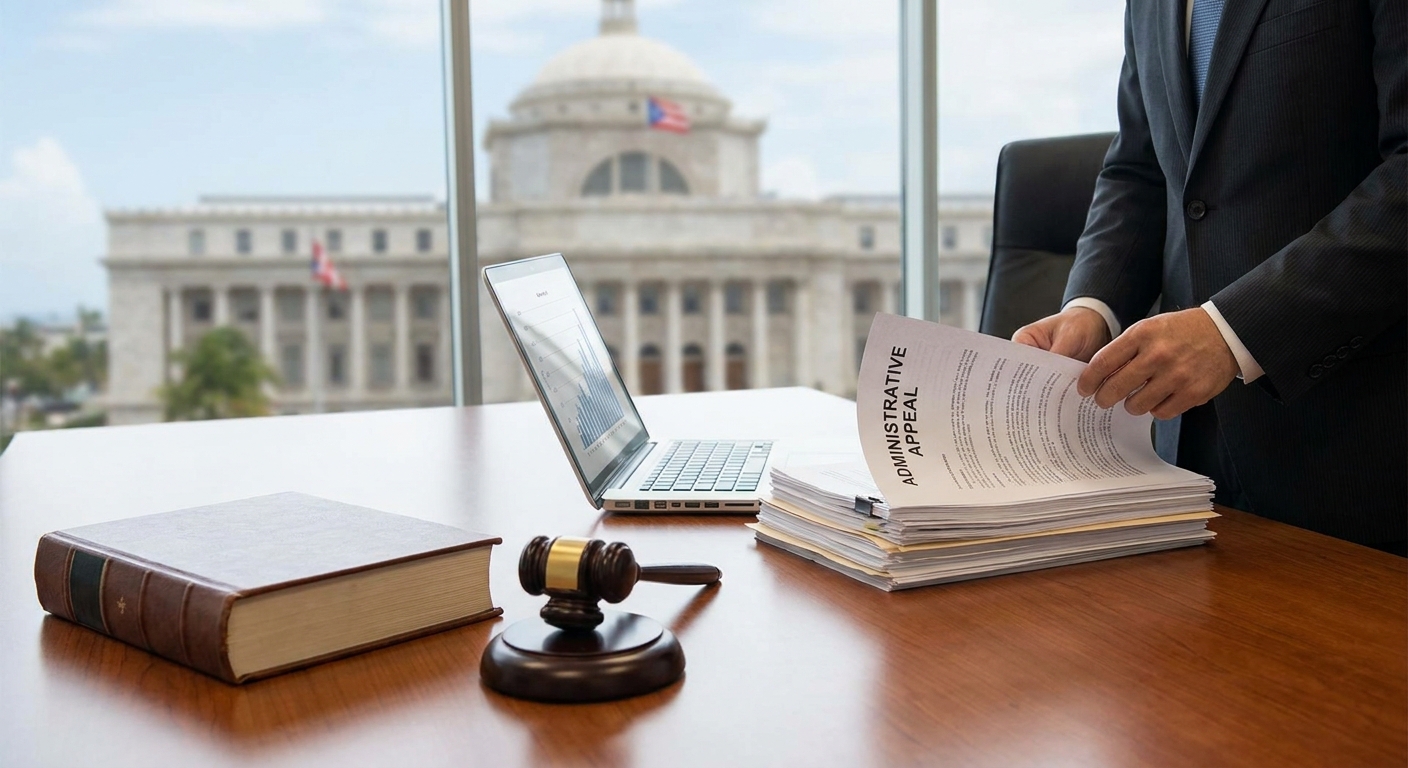

Why Administrative Appeals Matter to Your Business
When a Puerto Rico government agency denies your permit, rejects your license application, or issues an unfavorable administrative decision, you have the right to challenge that decision through an administrative appeal. Many business owners assume that an agency's initial ruling is final. It is not. Understanding how to file and present an administrative appeal can mean the difference between shutting down operations and continuing to run your business legally.
Administrative appeals are formal proceedings that follow specific rules and timelines. They require careful preparation, proper documentation, and knowledge of the applicable statutes and regulations. This guide explains the process, the key steps involved, and what you need to know to protect your business interests.
What Is an Administrative Appeal?
An administrative appeal is a formal request to reconsider or overturn a decision made by a Puerto Rico government agency. Unlike litigation in court, administrative appeals occur within the agency system itself, typically before an administrative hearing officer or appeals board.
Common reasons for administrative appeals include:
- Denial of business licenses or permits
- Rejection of tax incentive applications under Act 60
- Adverse regulatory determinations
- Suspension or revocation of professional credentials
- Denial of government contracts or bids
- Unfavorable administrative rulings on compliance matters
The administrative appeal process exists to provide a fair hearing before an impartial decision-maker. It allows you to present evidence, challenge the agency's findings, and argue why the initial decision was wrong. The process is generally faster and less expensive than court litigation, though it still requires professional representation to be effective.
The Legal Framework for Administrative Appeals in Puerto Rico
Puerto Rico's administrative appeal process is governed by the Administrative Procedure Act and specific statutes applicable to each agency. Different agencies follow different rules, timelines, and procedures. The Department of State, the Department of Treasury, the Puerto Rico Securities Commission, and other regulatory bodies each have their own appeal mechanisms.
The key principle underlying all administrative appeals is that the agency must act within its legal authority and follow proper procedures. If an agency exceeds its power, fails to follow required procedures, or makes a decision that is not supported by substantial evidence, that decision can be overturned on appeal.
Understanding which agency has jurisdiction over your matter and which specific rules apply is the first critical step. Many appeals fail because the appellant files in the wrong forum, misses a deadline, or fails to comply with procedural requirements. These technical errors can result in dismissal of your appeal before the merits are even considered.
Strict Deadlines and Filing Requirements
Administrative appeals are governed by strict deadlines. Most agencies require that an appeal be filed within 30 days of the agency's decision, though some allow 15 days and others allow longer periods. Missing the deadline typically means losing your right to appeal entirely. There is usually no extension available, and courts will not overturn a dismissal based on a missed deadline.
The appeal must be filed in the correct format and with the correct agency office. Some agencies require specific forms. Others require a written statement of grounds for appeal. Some require payment of a filing fee. Some require that you request an administrative hearing in writing, while others have different procedures.
The notice of appeal must clearly identify the decision being appealed, explain why the decision was wrong, and cite the legal basis for your challenge. A vague or incomplete notice of appeal can result in dismissal. The agency will then schedule a hearing before an administrative hearing officer or appeals board.
Preparing Your Administrative Appeal
Preparation is the foundation of a successful administrative appeal. You must gather all relevant documents, identify the legal errors in the agency's decision, and organize your evidence in a clear, persuasive manner.
Start by obtaining a complete copy of the agency's file on your matter. This includes the application you submitted, all correspondence with the agency, the agency's decision letter, and any internal agency documents that explain the basis for the decision. You have the right to request these documents under Puerto Rico's public records law.
Next, identify the specific legal errors in the agency's decision. Did the agency misinterpret the statute? Did it apply the wrong regulation? Did it ignore evidence you submitted? Did it base its decision on facts that are not supported by the record? Did it fail to follow required procedures? Each of these is a potential ground for appeal.
Gather all evidence that supports your position. This may include business records, correspondence, expert reports, photographs, financial statements, or testimony from witnesses. If you need expert testimony, arrange for that person to be available for the hearing. Some agencies allow written statements; others require live testimony.
Organize your appeal into a clear written statement that explains the facts, identifies the legal errors, and argues why the agency's decision should be reversed. The statement should be concise but thorough. It should cite the relevant statutes and regulations. It should explain how the law applies to your specific situation.
The Administrative Hearing Process
Once your appeal is filed, the agency will schedule a hearing before an administrative hearing officer or appeals board. The hearing is a formal proceeding, but it is less formal than a court trial. Rules of evidence may be relaxed, and procedures may vary depending on the agency.
You will have the opportunity to present your case, introduce evidence, and question the agency's witnesses. The agency will present its case and respond to your arguments. The hearing officer will then issue a written decision explaining the findings of fact and conclusions of law.
Preparation for the hearing is critical. You should prepare an opening statement that clearly explains your position. You should organize your evidence in the order you will present it. You should prepare questions for the agency's witnesses. You should anticipate the agency's arguments and prepare responses.
If you are presenting testimony, you should prepare thoroughly. Practice your testimony so that you can explain your position clearly and concisely. Bring all documents you may need to reference. Dress professionally. Be respectful to the hearing officer and the agency's representatives, even if you disagree with their position.
If you are presenting witness testimony, make sure your witnesses understand what they will be asked and are prepared to answer. Brief them on the hearing process and what to expect. Make sure they understand the importance of being clear, accurate, and credible.
Common Grounds for Overturning Agency Decisions
Administrative appeals succeed when you can demonstrate one or more of the following:
- The agency misinterpreted the statute or regulation that governs the decision
- The agency applied the law incorrectly to your specific facts
- The agency's decision is not supported by substantial evidence in the record
- The agency failed to follow required procedures
- The agency acted arbitrarily or capriciously
- The agency exceeded its legal authority
- The agency's decision violates your constitutional rights
- The agency failed to consider relevant evidence or arguments
The most common ground for appeal is that the agency's decision is not supported by substantial evidence. This means that the facts the agency relied on are not proven by credible evidence in the record. If you can show that the agency's factual findings are wrong, you can overturn the decision.
Another common ground is that the agency misinterpreted the law. If the statute or regulation is ambiguous, the agency's interpretation may be reasonable. But if the statute is clear and the agency interpreted it differently, you have a strong argument for reversal.
Procedural errors can also be grounds for appeal. If the agency failed to give you proper notice, failed to allow you to present evidence, or failed to follow other required procedures, the decision may be overturned even if the agency's reasoning was sound.
Appeals of Tax and Regulatory Decisions
Tax and regulatory appeals follow similar principles but have specific rules and procedures. If you have received an unfavorable determination from the Puerto Rico Department of Treasury regarding Act 60 tax incentives or other tax matters, you have the right to appeal that determination. The appeal process involves filing a formal protest and presenting evidence at a hearing before the Department's appeals officer.
Regulatory appeals, such as those involving licensing, permits, or compliance determinations, follow the procedures established by the specific regulatory agency. The Department of State, the Puerto Rico Securities Commission, and other agencies each have their own appeal procedures. Understanding the specific rules for your agency is essential.
For businesses operating under Act 60 incentive programs, administrative appeals may be necessary if the Department of Treasury denies your application or revokes your incentive status. These appeals require detailed knowledge of Act 60 requirements and the Department's interpretation of those requirements.
When to Seek Professional Representation
Administrative appeals are technical proceedings with strict rules and high stakes. While you have the right to represent yourself, the vast majority of successful appeals are handled by experienced attorneys who understand the specific agency's procedures and the applicable law.
You should consider hiring an experienced attorney if:
- The appeal involves a complex legal question
- The agency's decision will have a significant impact on your business
- The appeal involves substantial amounts of money
- The agency is represented by counsel
- You are unfamiliar with the appeal process
- You have already missed one deadline or made a procedural error
- The appeal involves multiple issues or multiple agencies
An experienced attorney can help you understand your rights, identify the strongest arguments for appeal, gather and organize evidence, prepare for the hearing, and present your case effectively. The cost of representation is often far less than the cost of losing the appeal and having to shut down operations or accept an unfavorable decision.
Appeals to Court After Administrative Proceedings
If you lose your administrative appeal, you may have the right to appeal to court. The scope of judicial review is limited. The court will not reconsider the facts or substitute its judgment for the agency's judgment on matters within the agency's discretion. Instead, the court will review whether the agency followed the law and proper procedures.
Judicial review is available only if the administrative appeal process has been exhausted. You must complete the administrative appeal before you can file a lawsuit in court. The court will then review the administrative record, which consists of all documents and testimony presented during the administrative hearing.
If you believe the agency's decision violates your constitutional rights or exceeds the agency's legal authority, you may have grounds for judicial review. However, judicial review is a separate proceeding with its own rules and procedures. It is more expensive and time-consuming than an administrative appeal.
Practical Tips for a Successful Appeal
Meet all deadlines. Mark the deadline on your calendar and file your appeal well before the deadline expires. Do not wait until the last day.
Follow all procedural requirements. Read the agency's rules carefully. Make sure your appeal is filed in the correct format, with the correct agency office, and with all required documents and fees.
Be clear and concise. Your written appeal should be easy to understand. Use plain language. Organize your arguments logically. Do not include irrelevant information.
Focus on the law and the facts. Do not make personal attacks on the agency or its employees. Do not argue based on emotion or fairness. Argue based on what the law requires.
Gather all relevant evidence. Do not rely on your memory. Bring documents, records, and other evidence to support your position. If you need expert testimony, arrange for that in advance.
Prepare thoroughly for the hearing. Practice your presentation. Anticipate questions and objections. Know your evidence inside and out.
Be professional and respectful. Treat the hearing officer, the agency's representatives, and other parties with respect. Follow the hearing officer's instructions. Do not interrupt or argue with the hearing officer.
Next Steps
If you are facing an unfavorable agency decision and are considering an administrative appeal, the first step is to understand your rights and options. Christian M. Frank Fas, Esq. has over 20 years of experience handling administrative appeals before Puerto Rico agencies. He can review your situation, explain your options, and help you determine whether an appeal is appropriate.
Contact the firm for a free initial evaluation. During the evaluation, you can discuss your situation, ask questions, and learn what to expect from the appeal process. If you decide to proceed with an appeal, the firm can handle all aspects of the process, from filing the notice of appeal through the hearing and any subsequent proceedings.
Do not let a missed deadline or procedural error prevent you from appealing an unfavorable agency decision. Contact the firm today to schedule your free initial evaluation. Visit https://lawyerinpr.com/start to get started.