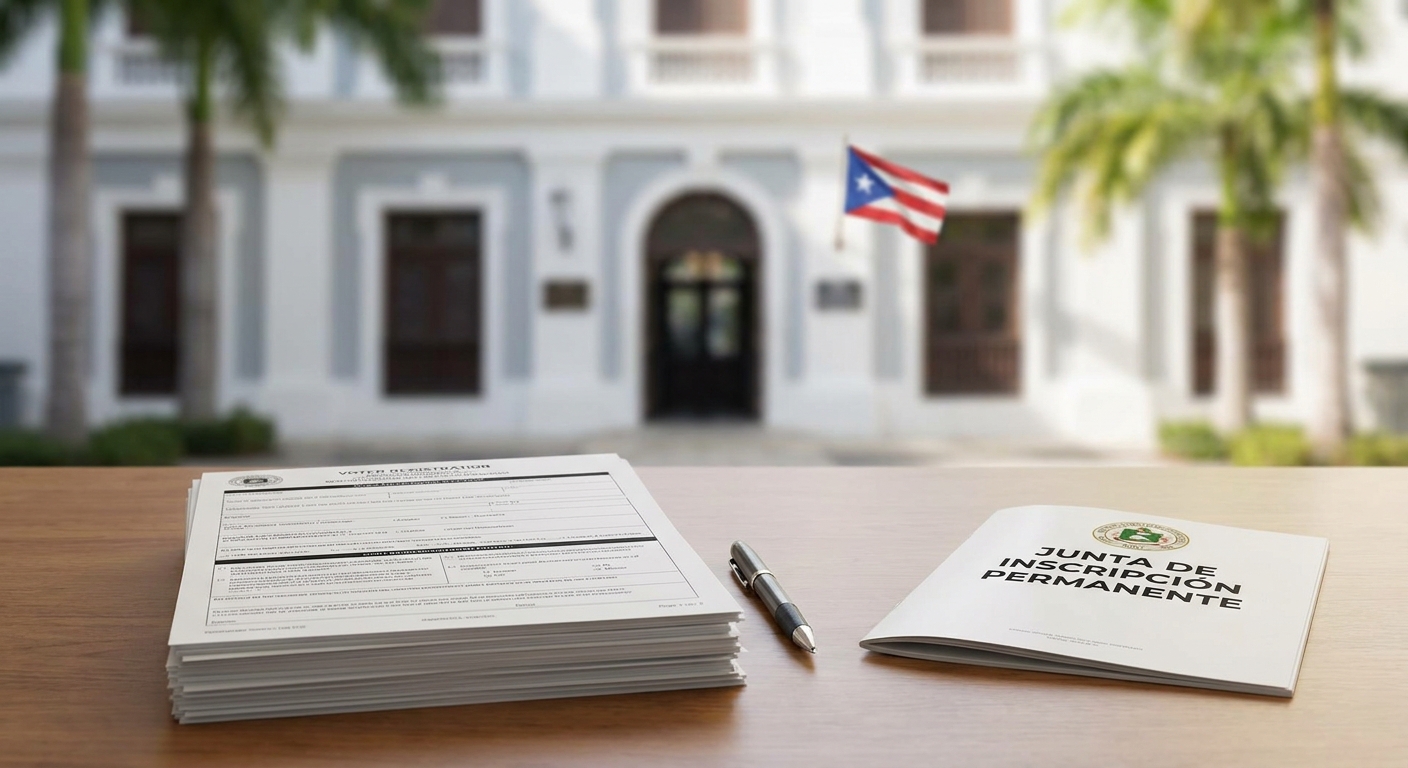

Puerto Rico Voter Registration Matters to Your Legal Standing and Civic Participation
If you live in Puerto Rico or are considering relocating here, understanding voter registration requirements is essential. Voter registration determines your ability to participate in local and territorial elections, affects your legal residency status for certain purposes, and connects directly to your rights as a resident. Whether you are a business owner under Act 60, a new resident, or someone who has lived here for years, the registration process involves specific rules that differ from mainland United States procedures. This guide explains what you need to know about Puerto Rico voter registration, the steps involved, and how it intersects with other legal matters affecting residents and business owners.
Who Can Register to Vote in Puerto Rico
Puerto Rico maintains specific eligibility requirements for voter registration. You must be a United States citizen, at least 18 years old, and a resident of Puerto Rico. The residency requirement is not simply living on the island for a few months. Puerto Rico law defines residency in ways that matter for tax purposes, business registration, and voting rights. If you have recently moved to Puerto Rico under Act 60 tax incentive programs, your residency status for voting purposes may differ from your tax residency classification.
You cannot register to vote if you have been convicted of a felony involving moral turpitude, unless your civil rights have been restored. You also cannot register if you have been declared mentally incompetent by a court. These restrictions apply regardless of your citizenship status or length of residence on the island.
Non-citizens cannot register to vote in Puerto Rico elections, even if they hold valid work permits or business licenses. This is an important distinction for foreign investors and business owners who operate companies here but do not hold U.S. citizenship. Your ability to conduct business in Puerto Rico is entirely separate from your voting eligibility.
The Puerto Rico Voter Registration Process
The process for registering to vote in Puerto Rico involves several steps and specific documentation. You must complete an application form provided by the Puerto Rico State Elections Commission, known as the Commission for Elections. This form requires your full legal name, date of birth, address, and citizenship information. You will also need to declare your political party affiliation, as Puerto Rico uses a party-based registration system.
You can register in person at any office of the Commission for Elections, at certain municipal offices, or during designated registration periods. Puerto Rico also allows online registration through the Commission's website, which has simplified the process for many residents. When registering online, you will need a valid Puerto Rico driver's license or identification card number to verify your identity.
The documentation you must provide includes proof of citizenship, proof of residency, and proof of identity. Acceptable documents for citizenship include a U.S. passport, birth certificate, or naturalization certificate. For residency, you can use utility bills, lease agreements, property deeds, or government correspondence showing your Puerto Rico address. Your identification can be a driver's license, passport, or government-issued ID card.
Processing times vary depending on whether you register in person or online. Online applications typically process within a few business days. In-person registrations may take longer during high-volume periods, particularly before elections. Once approved, you will receive confirmation of your registration status and information about your assigned polling location.
Voter Registration and Act 60 Tax Incentive Status
Many individuals who move to Puerto Rico do so to take advantage of Act 60 tax incentive programs. These programs offer significant tax benefits for eligible residents and business owners. Your voter registration status and your Act 60 tax residency status are related but distinct legal matters.
To qualify for Act 60 benefits, you must establish bona fide residency in Puerto Rico. This means you must actually live here, not simply maintain a mailing address. The tax authorities examine factors including where you spend the majority of your time, where your family lives, where you conduct business, and where you maintain your primary residence. Voter registration serves as one piece of evidence of your residency intent, but it is not the only factor considered.
If you register to vote in Puerto Rico while claiming Act 60 residency, you are making a public declaration of your residency status. This can support your Act 60 application and help demonstrate that you have established genuine ties to the island. However, registering to vote does not automatically qualify you for Act 60 benefits, and failing to register does not disqualify you. The tax authorities conduct independent investigations into residency claims.
For more information about how residency requirements interact with Act 60 tax incentives, see our detailed guide on Puerto Rico tax incentives and Act 60 programs.
Changing Your Voter Registration Information
Your voter registration information must remain current. If you move to a different address in Puerto Rico, change your name, or wish to change your political party affiliation, you must update your registration. The Commission for Elections allows you to make these changes online or in person at any of their offices.
Address changes are particularly important. If you move and do not update your registration, you may not receive voting materials or information about your new polling location. You may also encounter problems when you attempt to vote. The Commission for Elections can remove inactive voters from the rolls if they do not vote in two consecutive general elections, so maintaining current information helps preserve your registration status.
Political party changes can be made at any time. Puerto Rico has several registered political parties, and you can switch your affiliation whenever you choose. This change takes effect immediately upon approval by the Commission for Elections. Some voters change their party affiliation to participate in primary elections or to align with their current political views.
Voter Registration Deadlines and Election Cycles
Puerto Rico establishes specific deadlines for voter registration before each election. General elections occur every four years, with the most recent held in 2024. Municipal elections occur in different years. The Commission for Elections typically closes registration 30 days before an election, though this deadline may vary for special elections or referendums.
If you miss the registration deadline for a particular election, you cannot vote in that election. However, you can still register for future elections. The Commission for Elections maintains a calendar of upcoming elections and registration deadlines on its website. If you are planning to move to Puerto Rico or update your registration, checking these deadlines ensures you can participate in upcoming elections.
Puerto Rico also holds referendums on specific issues, such as changes to the territorial constitution or status questions. Voter registration requirements for referendums are the same as for general elections. You must be registered before the deadline to participate.
Voter Registration and Your Legal Rights as a Resident
Voter registration connects to other legal rights and responsibilities in Puerto Rico. Once registered, you have the right to vote in all elections for which you are eligible. You also have the right to run for office, serve on juries, and participate in certain government processes that require voter status verification.
Voter registration also creates a public record. Your name, address, and party affiliation become part of the Commission for Elections' database. This information is generally available to the public, though certain protections exist for individuals who request confidentiality due to safety concerns. If you have concerns about privacy, you can contact the Commission for Elections to discuss available protections.
Your voter registration status may be relevant in legal proceedings. If you are involved in commercial litigation or other legal disputes, your residency status and voter registration may be examined as evidence of where you actually live. Courts consider voter registration as one factor in determining residency for jurisdictional purposes.
Common Issues and How to Resolve Them
Some residents encounter problems with their voter registration. You may discover that your registration was rejected, that your information is incorrect in the system, or that you cannot locate your registration status. The Commission for Elections provides tools to check your registration status online using your identification number or name and date of birth.
If your registration was rejected, the Commission typically provides a reason. Common reasons include incomplete documentation, failure to prove citizenship or residency, or discrepancies in the information provided. You can reapply and correct any errors. If you believe your rejection was improper, you have the right to appeal to the Commission for Elections.
If your information is incorrect in the system, such as a misspelled name or wrong address, you can request a correction. Submit a written request to the Commission for Elections with documentation supporting the correct information. Corrections typically process within a few business days.
If you cannot locate your registration status, contact the Commission for Elections directly. They can search their database and provide information about whether you are registered, when your registration was approved, and what your current information shows. You may need to provide your identification number or other identifying information to access this data.
Voter Registration for Naturalized Citizens and Recent Arrivals
If you recently became a U.S. citizen through naturalization, you are eligible to register to vote in Puerto Rico once you establish residency. You will need to provide your naturalization certificate as proof of citizenship. The registration process is the same as for other citizens, but you must ensure your naturalization is complete before applying.
Recent arrivals to Puerto Rico should register as soon as they establish residency. This means you should have a permanent address on the island and documentation showing that you live here. Registering early ensures you can participate in upcoming elections and establishes your residency status for other legal purposes.
If you are moving to Puerto Rico under Act 60 programs or for business purposes, registering to vote demonstrates your commitment to establishing residency. This can be helpful if you later need to prove your residency status for tax purposes, business licensing, or other legal matters.
Voter Registration and Business Ownership in Puerto Rico
If you own a business in Puerto Rico, your voter registration status is separate from your business registration and licensing. You can own and operate a business without being registered to vote, and you can be registered to vote without owning a business. However, if you are a business owner seeking Act 60 tax benefits, your residency status matters for both your business and your voting eligibility.
Business owners who are not U.S. citizens cannot register to vote, but they can fully operate businesses in Puerto Rico. Your ability to conduct commerce, hire employees, and maintain business licenses does not depend on voter registration. These are entirely separate legal frameworks.
If you are a U.S. citizen business owner, registering to vote is optional but recommended if you plan to stay in Puerto Rico long-term. It demonstrates your commitment to the community and establishes your residency status clearly.
Next Steps: Getting Legal Guidance on Voter Registration and Residency
Voter registration in Puerto Rico involves specific rules and deadlines that affect your legal status and rights as a resident. If you have questions about whether you are eligible to register, what documentation you need, or how voter registration relates to your Act 60 tax status or business operations, professional guidance can help you understand your obligations and options.
Christian M. Frank Fas, Esq. and the Puerto Rico Business Law Firm provide a free initial evaluation to discuss your residency status, voter registration questions, and how these matters connect to your business and tax planning. Contact us to schedule your free evaluation and get clear answers about your specific situation. Visit our free evaluation page to begin.