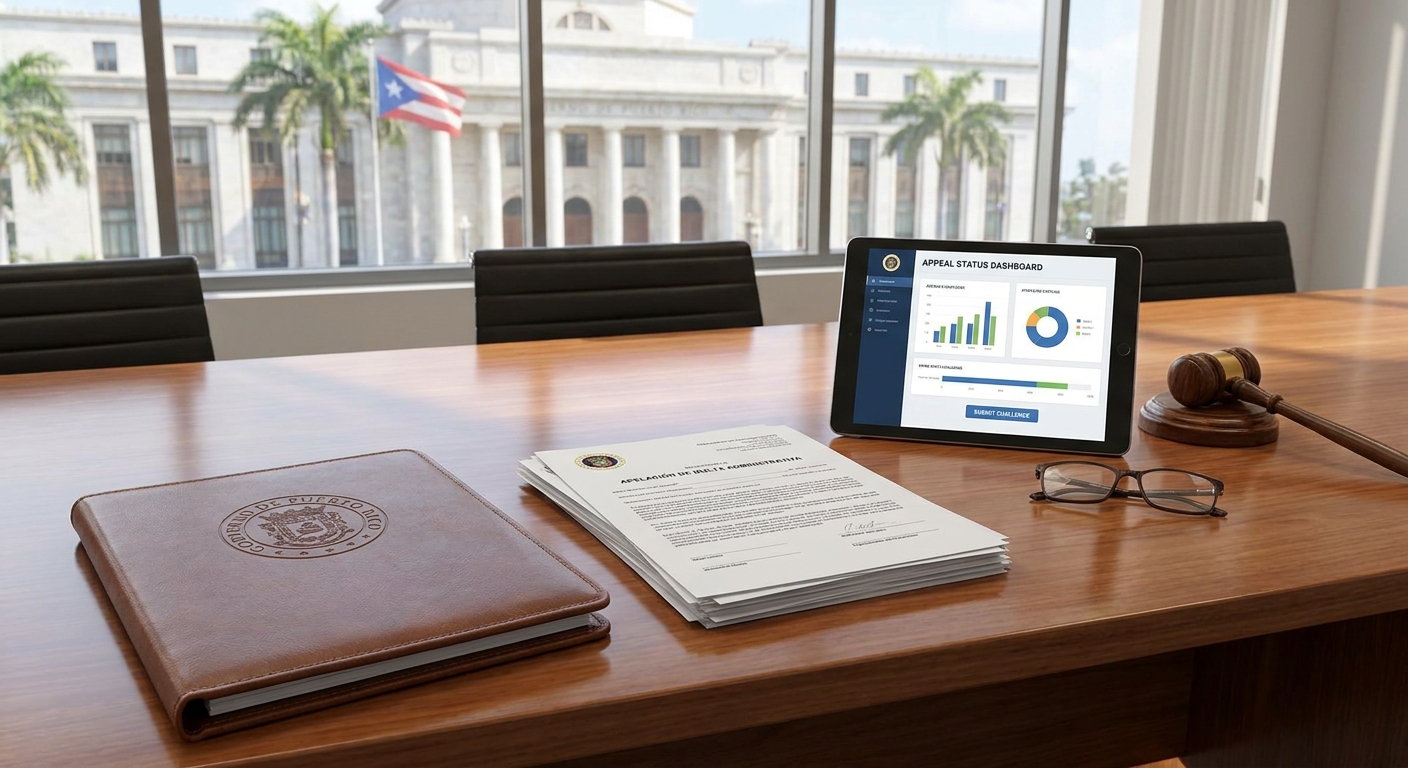

Administrative fines issued by Puerto Rico government agencies can significantly impact your business operations and financial standing. Understanding how to appeal these penalties is essential to protecting your company's interests and ensuring the government acted within its legal authority.
When a Puerto Rico agency issues an administrative fine, you have the right to challenge it through a formal appeals process. Many business owners and operators are unaware of the specific procedures, deadlines, and strategic considerations that govern these appeals. This article explains the administrative fine appeals process in Puerto Rico, the grounds for challenging penalties, and the steps you should take to protect your business.
What Constitutes an Administrative Fine in Puerto Rico
An administrative fine is a monetary penalty imposed by a government agency for violation of a regulation, statute, or administrative rule. These fines are distinct from criminal penalties and civil judgments. Puerto Rico agencies issue administrative fines across multiple sectors, including labor, environmental compliance, professional licensing, tax administration, banking and securities regulation, and commercial operations.
The amount of an administrative fine depends on the violation's severity, the agency's penalty schedule, and sometimes the violator's history of non-compliance. Some agencies have discretion to adjust penalties within statutory ranges, while others apply fixed penalty amounts. Administrative fines can range from hundreds to hundreds of thousands of dollars, making the appeals process critically important for businesses facing substantial penalties.
Administrative fines differ from criminal fines because they are civil in nature and do not result in imprisonment. They also differ from civil damages because they are imposed unilaterally by an agency rather than awarded by a court in response to a lawsuit. This distinction matters because it affects the procedural rules and burden of proof that apply to appeals.
The Legal Basis for Administrative Fine Appeals
Puerto Rico law provides businesses and individuals with the right to appeal administrative fines through the Administrative Procedure Act and agency-specific regulations. The Puerto Rico Administrative Code establishes the framework for challenging agency actions, including the imposition of penalties. Each agency also maintains its own procedural rules that govern how fines are assessed and appealed.
The right to appeal an administrative fine is not automatic. You must follow specific procedures and meet strict deadlines to preserve your right to challenge the penalty. Failure to file a timely appeal or to follow procedural requirements can result in waiver of your right to contest the fine, leaving you with no recourse except in limited circumstances.
The legal basis for your appeal depends on the type of violation alleged. You may challenge an administrative fine on grounds that the agency lacked authority to impose it, that the fine was imposed without proper procedure, that the evidence does not support the violation, that the penalty exceeds the statutory maximum, or that the agency abused its discretion in calculating the fine amount.
Grounds for Challenging an Administrative Fine
Several categories of grounds exist for appealing an administrative fine. Understanding which grounds apply to your situation is the first step in developing an effective appeal strategy.
Lack of Authority. An agency can only impose fines for violations of laws or regulations within its jurisdiction. If the agency lacked authority to regulate the conduct at issue, or if the regulation itself exceeds the agency's statutory authority, the fine should be overturned. This ground requires careful analysis of the agency's enabling statute and the scope of its delegated powers.
Procedural Defects. Administrative agencies must follow their own rules and applicable law when issuing fines. Common procedural defects include failure to provide proper notice of the violation, failure to allow an opportunity to be heard before the fine is imposed, failure to issue a written decision explaining the basis for the fine, or violation of due process requirements. Procedural defects can result in reversal of the fine even if the underlying violation occurred.
Insufficient Evidence. The agency must have evidence supporting the violation. The standard of proof in administrative proceedings is typically preponderance of the evidence, meaning the agency must show that it is more likely than not that the violation occurred. If the evidence is insufficient, contradicted, or unreliable, the fine should be reversed. This ground often requires detailed examination of the agency's investigation and the evidence it relied upon.
Excessive Penalty. Even if a violation occurred, the penalty imposed may exceed what the law allows. Most statutes establish maximum penalty amounts for different categories of violations. If the fine exceeds the statutory maximum, it must be reduced. Additionally, some statutes require agencies to consider mitigating factors such as the violator's history, the severity of the violation, and the violator's good faith efforts to comply. Failure to consider these factors can render a penalty excessive.
Abuse of Discretion. When an agency has discretion in setting penalty amounts, it must exercise that discretion reasonably and consistently. If the agency imposes a penalty that is grossly disproportionate to similar violations, or if it applies its penalty guidelines inconsistently, this may constitute abuse of discretion. This ground requires comparison of your case to other similar cases handled by the agency.
The Administrative Appeal Process in Puerto Rico
The administrative fine appeals process typically involves multiple stages. Understanding each stage and the deadlines that apply is essential to protecting your rights.
Initial Notice and Administrative Hearing. When an agency proposes to impose an administrative fine, it must provide written notice of the violation and the proposed penalty. In most cases, you have the right to request an administrative hearing before the fine becomes final. This hearing is conducted by the agency or by an administrative law judge, depending on the agency's structure. The hearing provides an opportunity to present evidence, cross-examine the agency's witnesses, and argue why the fine should be reduced or eliminated.
The request for an administrative hearing must typically be filed within a specified period, often 10 to 30 days from receipt of the notice. Missing this deadline can result in waiver of your right to a hearing and automatic imposition of the fine. You should file the hearing request promptly and ensure you have proof of timely filing.
Administrative Hearing Procedures. The administrative hearing is a formal proceeding with rules of evidence and procedure. You have the right to be represented by an attorney, to present witnesses and documents, to cross-examine the agency's witnesses, and to make oral arguments. The hearing officer or administrative law judge will issue a written decision explaining the findings of fact and conclusions of law.
Preparation for the administrative hearing is critical. You should gather all documents related to the alleged violation, identify witnesses who can testify on your behalf, and develop a clear narrative explaining why the violation did not occur or why the penalty is excessive. If the violation involves technical or specialized matters, you may need to retain consultants or technical experts to provide testimony.
Appeal to Agency Leadership. If you disagree with the hearing officer's decision, you may have the right to appeal to the agency's leadership or to a designated appeals board. This appeal is typically based on the written record from the administrative hearing, though some agencies allow submission of additional arguments. The appeal must be filed within a specified period, usually 10 to 30 days from the hearing decision.
Judicial Review. If administrative appeals are exhausted or unavailable, you may have the right to seek judicial review in Puerto Rico courts. Judicial review is limited in scope. Courts do not retry the case or reconsider the evidence. Instead, courts review whether the agency followed proper procedures, whether the agency had authority to act, and whether the agency's decision was arbitrary or capricious. Judicial review is a more limited remedy than a new hearing, but it provides an important check on agency action.
Deadlines and Procedural Requirements
Administrative fine appeals are governed by strict deadlines. Missing a deadline can result in permanent loss of your right to appeal. Different agencies have different deadlines, so you must determine which agency issued your fine and review its specific procedural rules.
Common deadlines include the following: the deadline to request an administrative hearing (typically 10 to 30 days from notice), the deadline to file an appeal of the hearing decision (typically 10 to 30 days from the decision), and the deadline to seek judicial review (typically 30 days from the final agency decision). Some agencies have additional deadlines for filing specific documents or making specific arguments.
Procedural requirements are equally important. You must file documents in the correct format, with the correct number of copies, and with the correct agency office. You must serve copies on the agency's attorney or designated representative. You must include required information such as case numbers, party names, and specific grounds for appeal. Failure to comply with procedural requirements can result in dismissal of your appeal.
You should maintain detailed records of all deadlines and procedural requirements. Create a timeline showing when each deadline falls and what action must be taken by that date. Confirm receipt of all documents you file and maintain copies of everything. If you miss a deadline, you may be able to request an extension or file a motion for relief from the deadline, but these requests are granted only in limited circumstances.
Strategic Considerations in Administrative Fine Appeals
Successful administrative fine appeals require more than simply following procedures. You must develop a strategic approach based on the specific facts of your case and the agency involved.
Early Assessment. Immediately after receiving notice of an administrative fine, you should conduct a thorough assessment of your case. Review the notice carefully to understand exactly what violation the agency alleges and what evidence it relied upon. Determine whether the violation actually occurred, whether the agency had authority to regulate the conduct, and whether the penalty is reasonable. This assessment will inform your decision about whether to request a hearing and what arguments to pursue.
Evidence Gathering. Collect all documents, communications, and records related to the alleged violation. This includes emails, contracts, invoices, compliance records, training materials, and any communications with the agency. Identify potential witnesses who can testify about your compliance efforts, the circumstances of the alleged violation, or industry standards. Preserve all evidence and ensure it is organized and accessible.
Settlement Negotiations. In many cases, administrative agencies are willing to negotiate penalty amounts or to dismiss fines in exchange for commitments to future compliance. Before or during the appeals process, you may be able to reach a settlement that reduces the fine or eliminates it entirely. Settlement negotiations should be conducted carefully to avoid admissions that could be used against you in other proceedings.
Technical and Expert Analysis. If the violation involves technical, scientific, or specialized matters, you may need to retain consultants or experienced professionals to analyze the agency's evidence and provide opinions supporting your position. This is particularly important in environmental compliance, banking and securities matters, and other highly regulated areas. Technical analysis can often demonstrate that the agency's interpretation of regulations is incorrect or that the evidence does not support the violation.
Consistency and Comparability. Research how the agency has handled similar violations in other cases. If the agency has imposed lower penalties for more serious violations, or if it has dismissed similar violations in other cases, this information can support an argument that your penalty is excessive or that the agency abused its discretion. Freedom of information requests can often obtain records of other cases handled by the agency.
Common Violations and Agency-Specific Issues
Different agencies issue administrative fines for different types of violations. Understanding the specific agency and the type of violation involved is important because each agency has its own procedures, penalty schedules, and enforcement priorities.
Labor and Employment Violations. The Puerto Rico Department of Labor issues fines for wage and hour violations, workplace safety violations, and failure to maintain required records. These fines can be substantial, particularly for repeated violations. Appeals of labor fines often focus on whether the agency properly calculated wages owed, whether the employer made good faith efforts to comply, or whether the violation was technical rather than substantive.
Tax Violations. The Puerto Rico Treasury Department issues fines for failure to file tax returns, failure to pay taxes, and underreporting of income. Tax fines can be particularly severe because they often include penalties in addition to the underlying tax liability. Appeals of tax fines require careful analysis of the tax code and the agency's interpretation of tax obligations. If your business operates under Act 60 tax incentive programs, you may have additional arguments regarding your tax obligations.
Professional Licensing Violations. Professional licensing boards issue fines for violations of professional standards, failure to maintain required credentials, or violations of professional conduct rules. These fines can threaten your ability to practice your profession. Appeals often focus on whether the conduct actually violated professional standards or whether the penalty is proportionate to the violation.
Environmental Compliance Violations. Environmental agencies issue fines for violations of environmental regulations, improper disposal of hazardous materials, and failure to obtain required permits. Environmental fines can be extremely large. Appeals of environmental fines often require technical analysis of environmental standards and the agency's interpretation of regulatory requirements.
Banking and Securities Violations. Banking and securities regulators issue fines for violations of financial regulations, improper disclosure, and failure to maintain required reserves or capital. These fines can be substantial and can affect your ability to conduct financial operations. Appeals of banking and securities fines often involve complex regulatory analysis. If you are involved in banking and securities matters, you should consult with an experienced attorney familiar with financial regulation.
Working with an Experienced Attorney
Administrative fine appeals involve complex procedural rules, strict deadlines, and substantive legal arguments. An experienced attorney can significantly improve your chances of success by ensuring compliance with all procedural requirements, developing effective legal arguments, and representing you in administrative hearings and appeals.
An experienced attorney can review the agency's notice and evidence, assess the strength of your case, identify applicable grounds for appeal, and develop a strategic approach. An attorney can also represent you in administrative hearings, cross-examine the agency's witnesses, present evidence on your behalf, and make oral arguments to the hearing officer. If administrative appeals are unsuccessful, an attorney can pursue judicial review and represent you in court proceedings.
The cost of retaining an attorney must be weighed against the amount of the fine and the likelihood of success. In many cases, the cost of legal representation is substantially less than the amount of the fine, making representation a sound investment. Additionally, an attorney may be able to negotiate a settlement that reduces the fine, further justifying the cost of representation.
Next Steps
If you have received an administrative fine in Puerto Rico, you should take action immediately. Review the notice carefully, determine the deadline for requesting a hearing or filing an appeal, and gather all relevant documents and evidence. Do not assume the fine is final or that you have no recourse.
Contact the Puerto Rico Business Law Firm for a free initial evaluation of your administrative fine appeal. Christian M. Frank Fas, Esq. has over 20 years of experience in commercial and business law, including administrative proceedings and appeals. During your free initial evaluation, we will review your case, explain your options, and discuss the best approach for challenging the fine. Visit our free evaluation page to schedule your consultation today.