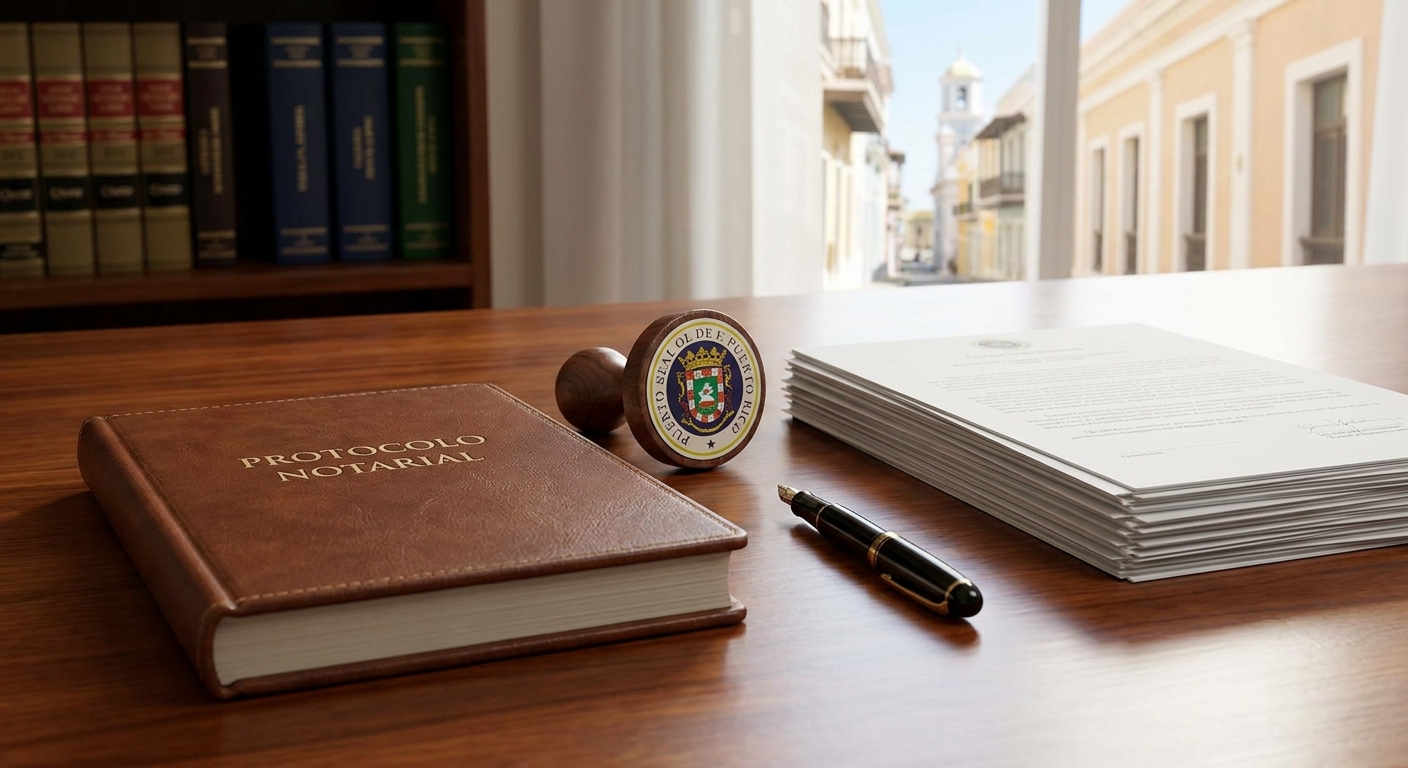

Why Notary Protocol Maintenance Matters in Puerto Rico
Notaries in Puerto Rico operate under a strict regulatory framework that extends far beyond witnessing signatures. The maintenance of notarial protocols is not optional compliance work, it is the foundation of your professional credibility and legal standing. Improper protocol maintenance exposes you to disciplinary action, loss of your notarial commission, civil liability, and potential criminal charges. Puerto Rico's notarial system depends on accurate record-keeping, proper document handling, and adherence to established procedures. Understanding and implementing these rules protects your clients, your business, and your career.
What Constitutes a Notarial Protocol in Puerto Rico
A notarial protocol is the official record of all notarial acts performed by a notary public. In Puerto Rico, this protocol serves as the primary evidence of the notary's official actions and must be maintained with precision. The protocol includes every document notarized, every certification issued, and every official act performed under the notary's seal and signature.
The protocol is not simply a logbook or informal record. It is a legal document that may be presented as evidence in court proceedings, administrative hearings, and civil disputes. The accuracy and completeness of your protocol directly affects the enforceability of documents you notarize and your ability to defend yourself if your notarial work is questioned.
Puerto Rico law requires that protocols be maintained in a bound volume or in an approved electronic format. The physical or digital record must be sequential, numbered, and impossible to alter retroactively. Each entry must contain specific information about the transaction, the parties involved, the document notarized, and the circumstances of the notarial act.
Required Information in Each Protocol Entry
Every notarial act recorded in your protocol must include the following elements:
- The date and time of the notarial act
- The type of notarial act performed (acknowledgment, jurat, certification, etc.)
- The full names and identification numbers of all parties to the transaction
- The title or description of the document being notarized
- The number of pages in the document
- The notary's signature and official seal impression
- A description of the identification presented by each party
- The fee charged for the notarial service
- Any special circumstances or irregularities noted during the act
Omitting any of these elements creates a defective entry that may render the notarial act invalid or subject to challenge. Courts and administrative bodies in Puerto Rico have consistently held that incomplete protocol entries undermine the reliability of the notarial act itself. If you cannot produce a complete and accurate protocol entry for a notarized document, you may be unable to defend the validity of that document if it is later disputed.
Identification Requirements and Protocol Documentation
Puerto Rico notaries must verify the identity of every person appearing before them. This verification must be documented in the protocol with specificity. You cannot simply note that identification was presented. You must record the type of identification document, the issuing authority, the identification number, and the expiration date.
Acceptable forms of identification in Puerto Rico include government-issued photo identification such as a Puerto Rico driver's license, passport, military identification, or other official documents. The identification must be current and valid at the time of the notarial act. If a person appears before you without acceptable identification, you cannot perform the notarial act, and you must document this refusal in your protocol.
For parties you know personally, Puerto Rico law permits you to rely on personal knowledge rather than requiring identification documents. However, you must still document in your protocol that the act was performed based on personal knowledge. This notation protects you by creating a clear record of how you satisfied the identification requirement.
Maintaining Physical Protocol Volumes
If you maintain a physical protocol, the volume must be bound in a way that prevents pages from being removed, added, or rearranged without obvious evidence of tampering. Loose-leaf systems, spiral bindings, or other formats that allow easy page manipulation are not acceptable. The protocol must be numbered sequentially from the first page to the last, and pages cannot be skipped or left blank intentionally.
Each entry must be written in permanent ink. Pencil, erasable pen, or any writing medium that can be altered is prohibited. If you make an error in an entry, you must draw a single line through the incorrect information and write the correction above or beside it. You must initial and date any correction. Never use white-out, correction tape, or any method that obscures the original entry.
Physical protocols must be stored in a secure location with restricted access. You are responsible for the safekeeping of your protocol at all times. Loss, theft, or damage to your protocol must be reported immediately to the Puerto Rico Secretary of State's office. Failure to maintain proper custody of your protocol can result in disciplinary action even if the loss was not your fault.
Electronic Protocol Systems and Digital Compliance
Puerto Rico permits notaries to maintain protocols in approved electronic formats. If you choose to use an electronic system, the system must meet specific security and integrity standards established by Puerto Rico law. The electronic protocol must be tamper-proof, meaning that entries cannot be altered, deleted, or modified after they are recorded.
Electronic protocols must include audit trails that document every access to the system, every entry created, and any attempts to modify existing entries. The system must create automatic backups and maintain redundant copies of all protocol data. You must ensure that your electronic system is protected by strong passwords, encryption, and access controls that prevent unauthorized use.
If you use an electronic protocol system, you remain personally responsible for the accuracy and security of the data. You cannot delegate this responsibility to a software vendor or third-party service provider. You must regularly review your electronic protocol to ensure that all entries are accurate and complete. You must also maintain a current backup of your entire protocol that can be accessed even if your primary system fails.
Retention and Custody of Notarial Protocols
Puerto Rico law requires notaries to retain their protocols for a specified period. The retention period begins from the date of the last entry in the protocol. You cannot destroy or dispose of a protocol until the required retention period has expired. Premature destruction of a protocol is a serious violation that can result in loss of your notarial commission.
During your tenure as a notary, you must maintain custody of all active protocols. When you resign, retire, or are removed from office, you must transfer your protocols to the Puerto Rico Secretary of State's office or to a designated repository. You cannot keep your protocols in your personal possession after your notarial commission expires. The transfer of protocols must be documented in writing, and you must obtain a receipt confirming that the protocols were received by the appropriate authority.
If you maintain multiple protocols because you have been commissioned multiple times or have renewed your commission, each protocol must be maintained separately and transferred separately when required. Commingling protocols from different commission periods or combining entries from different time periods is not permitted.
Fees and Financial Record-Keeping
Every notarial act you perform must include a fee entry in your protocol. Puerto Rico law establishes maximum fees that notaries can charge for various types of notarial acts. You must record the actual fee charged in your protocol, even if you charged less than the maximum permitted amount or performed the act without charge.
If you perform a notarial act without charging a fee, you must still record the act in your protocol and note that the fee was zero or waived. You cannot omit entries from your protocol simply because you did not charge a fee. Every notarial act, regardless of whether compensation was received, must be recorded.
You should maintain separate financial records that correspond to your protocol entries. These records should document the total fees collected, the dates of collection, and the method of payment. While these financial records are separate from your protocol, they should be consistent with the fee entries in your protocol. Discrepancies between your protocol and your financial records can trigger audits and investigations by the Secretary of State's office.
Refusing to Perform Notarial Acts and Protocol Documentation
There are circumstances in which you must refuse to perform a notarial act. These circumstances include situations where you cannot verify the identity of a party, where you have a conflict of interest, where the document appears to be fraudulent, or where the party appears to lack capacity or understanding of the transaction. When you refuse to perform a notarial act, you should document this refusal in your protocol.
The protocol entry for a refused act should include the date, the name of the person who requested the act, the reason for the refusal, and your signature. This documentation protects you by creating a clear record that you followed proper procedures and did not perform an improper notarial act. If you are later questioned about why a particular document was not notarized, your protocol entry will support your position.
Amendments, Corrections, and Supplemental Entries
If you discover an error in a protocol entry after the entry has been made, you must correct it using the single-line method described above. You cannot create a new entry to replace an incorrect entry. You cannot delete or remove an incorrect entry from your protocol. The original entry must remain visible with the correction clearly marked.
If you need to provide additional information about a notarial act that was not included in the original entry, you can create a supplemental entry. The supplemental entry should reference the original entry by date and page number, explain the reason for the supplemental information, and be signed and dated by you. Supplemental entries should be used sparingly and only when necessary to clarify or complete information that was genuinely omitted from the original entry.
Audit and Inspection Procedures
The Puerto Rico Secretary of State's office has the authority to audit and inspect notarial protocols. Audits may be conducted randomly or in response to complaints or concerns about a notary's conduct. During an audit, the Secretary of State's office will review your protocol entries for accuracy, completeness, and compliance with applicable rules.
You must cooperate fully with any audit or inspection. You must provide access to your protocols, your financial records, and any other documents requested by the auditing authority. Failure to cooperate with an audit or providing false information during an audit can result in disciplinary action.
Common audit findings include incomplete entries, missing identification information, illegible entries, and discrepancies between protocol entries and financial records. These findings can result in warnings, fines, or suspension or revocation of your notarial commission. Maintaining accurate and complete protocols from the beginning of your tenure as a notary is far more efficient than attempting to correct deficiencies after an audit has been initiated.
Disciplinary Consequences of Protocol Violations
Violations of protocol maintenance rules can result in serious disciplinary consequences. The Puerto Rico Secretary of State's office has authority to impose sanctions ranging from written warnings to suspension or permanent revocation of your notarial commission. The severity of the sanction depends on the nature and extent of the violation, your history of compliance, and whether the violation appears to have been intentional or negligent.
In addition to administrative discipline, protocol violations can expose you to civil liability. If a document you notarized is later challenged and your protocol entry is found to be defective or incomplete, you may be sued by parties who relied on the notarized document. You may also face criminal charges if your protocol violations are found to constitute fraud or forgery.
Professional liability insurance for notaries typically does not cover violations of protocol maintenance rules if those violations are found to be intentional or grossly negligent. Maintaining proper protocols is not only a legal requirement, it is essential to protecting yourself from financial liability.
Best Practices for Protocol Maintenance
Beyond the minimum legal requirements, experienced notaries in Puerto Rico follow additional practices that strengthen their protocols and reduce the risk of disputes or disciplinary action. These practices include maintaining a detailed log of all identification documents reviewed, photographing or copying identification documents presented by parties, documenting any unusual circumstances or concerns about a transaction, and maintaining contemporaneous notes about conversations with parties regarding the notarial act.
You should also establish a regular schedule for reviewing your protocol entries to ensure accuracy and completeness. Monthly or quarterly reviews allow you to catch errors or omissions while the details of the notarial act are still fresh in your memory. These reviews also help you identify patterns or trends in your notarial practice that may require adjustment.
Consider using a standardized template or form for protocol entries to ensure consistency and completeness. Many notaries create a checklist of required information and review the checklist before completing each protocol entry. This systematic approach reduces the likelihood of omissions and creates a uniform appearance and organization in your protocol.
Relationship Between Protocol Maintenance and Business Transactions
For businesses operating in Puerto Rico, the quality of notarial protocols affects the enforceability and reliability of notarized documents used in commercial transactions. If your business relies on notarized documents, you should verify that the notary who performed the notarial act maintained a proper protocol entry. If you are considering hiring a notary or using a notary service, you can request information about the notary's protocol maintenance practices as part of your due diligence.
For businesses subject to Puerto Rico's tax incentive programs under Act 60, notarized documents may be required for compliance purposes. The reliability of these notarized documents depends directly on the quality of the notary's protocol maintenance. Defective notarial acts can create compliance problems and expose your business to audit findings or penalties.
Next Steps: Ensuring Your Notarial Compliance
If you are a notary in Puerto Rico, review your current protocol maintenance practices against the requirements outlined in this article. Identify any gaps or deficiencies in your current system and implement corrections immediately. If you maintain a physical protocol, ensure that it is properly bound, sequentially numbered, and stored securely. If you use an electronic protocol system, verify that the system meets Puerto Rico's security and integrity standards.
If you are a business owner or manager who relies on notarized documents, ensure that the notaries you work with understand and follow proper protocol maintenance rules. Request information about their protocol practices and verify that they maintain compliant systems.
If you have questions about notarial protocol requirements or need guidance on establishing or improving your protocol maintenance system, the Puerto Rico Business Law Firm can provide focused advice tailored to your specific situation. Christian M. Frank Fas, Esq. has over 20 years of experience in Puerto Rico business law and can help you understand your obligations and implement compliant practices. Contact the firm for a free initial evaluation to discuss your notarial compliance needs.