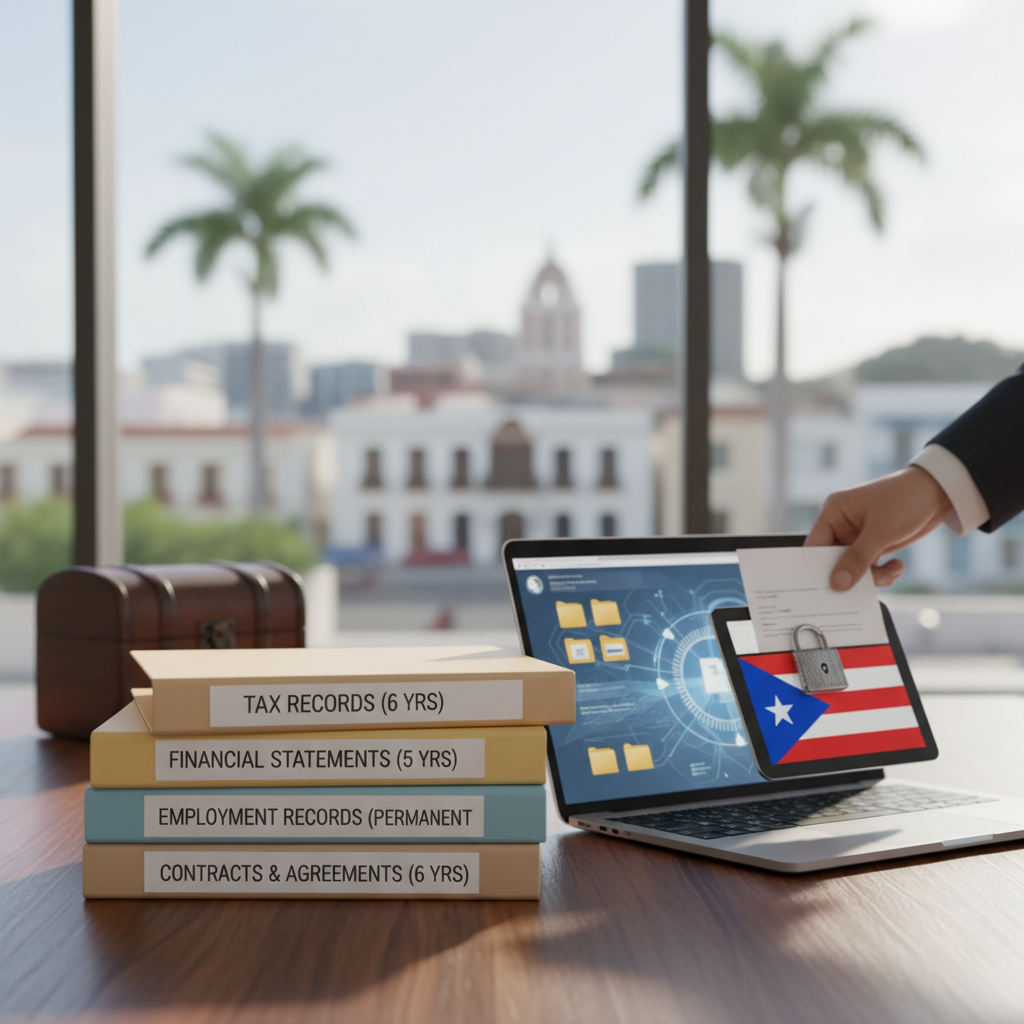

Understanding Record Retention in Puerto Rico
When managing a business in Puerto Rico, knowing how long to keep financial and operational records is essential. Proper record retention not only helps in maintaining organized operations but also ensures compliance with local laws and regulations. Surprisingly, Puerto Rico’s requirements are specific yet flexible enough to accommodate different types of businesses.
Legal Foundations for Record Retention
Puerto Rico’s laws align with federal standards in many areas, but they also have unique provisions. The Puerto Rico Internal Revenue Code mandates that businesses retain certain tax-related documents for a minimum period. Additionally, local commercial laws specify how long business records should be kept for operational and legal purposes.
Key Record Types and Retention Periods
- Tax Records: All documents related to income, expenses, payroll, and sales must be kept for at least six years. This includes tax returns, supporting schedules, and correspondence with tax authorities.
- Financial Statements: Business financial statements, including balance sheets and income statements, should be retained for a minimum of five years. These are vital for audits and financial reviews.
- Employment Records: Employee files, payroll records, and related documentation need to be kept for at least three years after employment ends. This helps in case of employment disputes or audits.
- Corporate Records: Articles of incorporation, bylaws, meeting minutes, and shareholder records should be preserved permanently or at least for as long as the business exists.
- Contracts and Agreements: All contracts, leases, and legal agreements should be stored for at least six years after they expire or are terminated.
Why Do These Retention Periods Matter?
Maintaining records for the appropriate length of time is more than a bureaucratic requirement. It can protect your business during audits, legal disputes, or financial reviews. Proper documentation can also support your claims for tax deductions or credits, especially in a jurisdiction like Puerto Rico where tax incentives are common.
Best Practices for Record Retention
- Organize and Digitize: Use digital storage solutions to keep records secure and easily accessible. Digital copies can simplify compliance and reduce physical storage needs.
- Implement a Retention Policy: Establish clear policies that specify which documents to keep, for how long, and how to dispose of them securely when the retention period ends.
- Stay Updated: Laws and regulations can change. Regularly review your record retention practices to ensure ongoing compliance.
- Secure Sensitive Data: Protect confidential information with encryption and access controls, especially when storing digital records.
Conclusion
Understanding and adhering to record retention requirements in Puerto Rico is a fundamental part of responsible business management. Keeping the right documents for the appropriate periods not only helps in legal compliance but also supports smooth operations and financial transparency. Establishing clear policies and leveraging digital tools can make this process straightforward and effective.