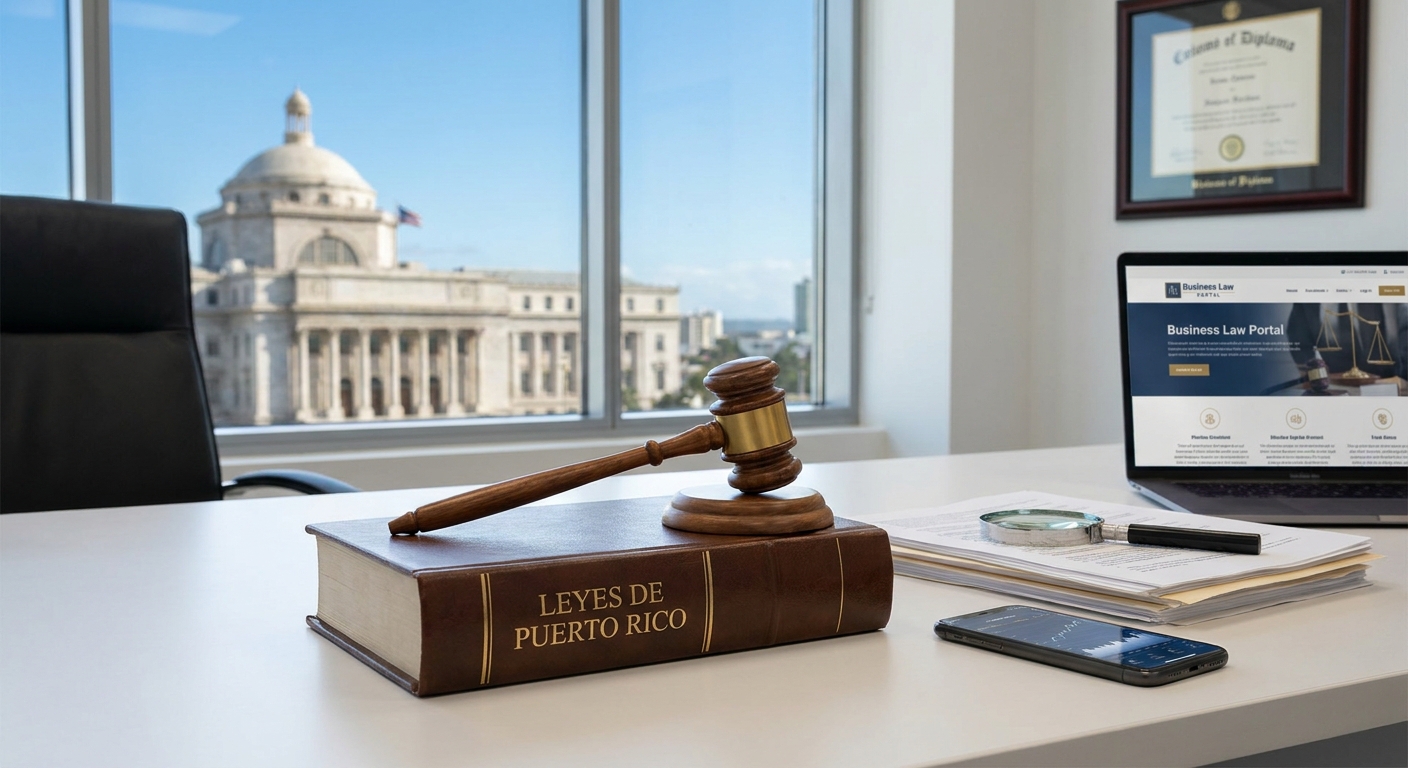

Puerto Rico Supreme Court Rulings Shape Your Business Operations
Puerto Rico's Supreme Court has issued decisions that directly affect how businesses operate, structure transactions, and resolve disputes on the island. These rulings establish binding precedent for commercial matters ranging from contract interpretation to corporate governance to tax treatment of business entities. Understanding these decisions is not optional for business owners and investors operating in Puerto Rico. The court's interpretations of local law determine your legal obligations, your rights in disputes, and the enforceability of your business agreements.
The Puerto Rico Supreme Court functions as the final arbiter of local law. When the court issues a ruling on a business law matter, that decision becomes the controlling standard for all lower courts and administrative agencies. This means a single Supreme Court decision can reshape how an entire category of business transactions is handled across the island. Business owners who ignore these rulings risk making decisions based on outdated or incorrect legal assumptions.
Key Areas of Business Law Affected by Supreme Court Decisions
The Puerto Rico Supreme Court has issued significant rulings across multiple areas of commercial law. These decisions affect fundamental aspects of how you conduct business on the island.
Contract Formation and Interpretation
The court has established clear standards for how contracts are formed, interpreted, and enforced under Puerto Rico law. These rulings address questions about when a contract becomes binding, what happens when contract terms are ambiguous, and how courts will fill gaps in written agreements. The court has consistently held that contracts must be interpreted according to the plain meaning of their terms, but the court also recognizes that industry custom and prior dealings between parties can inform interpretation. If you are entering into significant commercial agreements in Puerto Rico, you need to understand how the Supreme Court interprets contract language. A poorly drafted contract that might be enforceable in another jurisdiction could be unenforceable or interpreted differently under Puerto Rico law.
Corporate Governance and Shareholder Rights
Puerto Rico's Supreme Court has issued rulings on shareholder derivative actions, the fiduciary duties of directors and officers, and the rights of minority shareholders. These decisions define what conduct by corporate management crosses the line into breach of fiduciary duty and when shareholders can bring legal action against the corporation or its officers. The court has also addressed questions about the validity of shareholder agreements and voting arrangements. If you own shares in a Puerto Rico corporation or serve as a director or officer, these rulings establish the legal framework within which you operate.
Commercial Transactions and Sales of Goods
The court has issued decisions interpreting Puerto Rico's commercial code provisions governing the sale of goods, warranties, and remedies for breach. These rulings affect the rights and obligations of buyers and sellers in commercial transactions. The court has addressed questions about when title to goods passes from seller to buyer, what warranties are implied in sales transactions, and what remedies are available when goods do not conform to the contract. These decisions matter whether you are buying inventory, selling products, or entering into supply agreements.
Liability and Tort Law in Commercial Contexts
The Supreme Court has issued rulings on negligence, strict liability, and other tort theories that apply in commercial disputes. These decisions establish standards for when one business can be held liable for harm caused to another business or to third parties. The court has addressed questions about the scope of duty owed by one party to another, what constitutes causation, and what damages are recoverable. These rulings affect your exposure to liability in your business operations and your ability to recover damages if another party causes you harm.
How Puerto Rico Supreme Court Rulings Differ from U.S. Federal Law
Puerto Rico has its own legal system based on civil law traditions, not common law. This means Puerto Rico courts do not follow the same precedent system as U.S. federal courts or most U.S. states. While Puerto Rico is a U.S. territory, its local courts apply Puerto Rico law to local matters. The Puerto Rico Supreme Court's interpretation of Puerto Rico law is final and binding within Puerto Rico's jurisdiction.
This distinction matters significantly for businesses operating in Puerto Rico. A business practice that is legal under U.S. federal law or under the law of another state may be illegal or treated differently under Puerto Rico law as interpreted by the Supreme Court. Conversely, something that would be prohibited in another jurisdiction might be permitted in Puerto Rico. Businesses that assume their existing practices comply with Puerto Rico law without reviewing the Supreme Court's actual rulings on those practices often find themselves in violation of local law.
The court has also addressed the relationship between Puerto Rico law and U.S. federal law. In some areas, federal law preempts local law. In other areas, Puerto Rico law applies even to federal matters. The Supreme Court has issued rulings clarifying which law applies in specific situations. These decisions are critical for businesses that operate across both Puerto Rico and the mainland United States.
Recent Significant Rulings and Their Business Implications
The Puerto Rico Supreme Court continues to issue decisions that affect business operations. Recent rulings have addressed questions about the enforceability of non-compete agreements, the treatment of independent contractors versus employees, and the application of Puerto Rico's consumer protection laws to commercial transactions.
One area of ongoing development involves the court's interpretation of Puerto Rico's tax laws and how they apply to different business structures. Businesses considering relocation to Puerto Rico or restructuring their operations to take advantage of Act 60 tax incentives need to understand how the Supreme Court has interpreted these provisions. The court has issued rulings on what constitutes a qualifying business activity, how the tax incentives apply to different types of income, and what documentation is required to claim the benefits.
The court has also addressed questions about the enforceability of arbitration agreements and the scope of arbitration in commercial disputes. These rulings affect whether parties can require disputes to be resolved through arbitration rather than litigation. For businesses that include arbitration clauses in their agreements, understanding the Supreme Court's position on arbitration is essential.
Commercial Litigation and Supreme Court Precedent
When a business dispute reaches the point of litigation, the Supreme Court's prior rulings become directly relevant to the outcome. Lower courts must follow Supreme Court precedent. If you are involved in commercial litigation in Puerto Rico, the strength of your position depends partly on how the Supreme Court has previously ruled on similar issues.
The Supreme Court also has discretionary jurisdiction over certain cases. This means the court can choose whether to hear an appeal. The court typically accepts cases that involve important questions of law or that resolve conflicts between lower court decisions. If your case raises a novel legal question or if lower courts have reached different conclusions on the same issue, there is a possibility the Supreme Court could accept your case. A Supreme Court ruling in your favor would establish precedent that applies to all future similar cases in Puerto Rico.
Understanding the Supreme Court's existing rulings helps predict how lower courts will likely decide your case. It also helps identify whether your case presents an opportunity to seek Supreme Court review if the lower court rules against you.
How to Stay Informed About Puerto Rico Supreme Court Rulings
The Puerto Rico Supreme Court publishes its decisions online through the official court website. These decisions are available to the public. However, reading and understanding Supreme Court decisions requires legal training. The decisions are written in Spanish and in legal language that assumes familiarity with Puerto Rico's legal system.
Businesses should not rely on informal summaries or secondhand accounts of Supreme Court rulings. The precise language of the court's decision matters. A small difference in how the court framed a holding can significantly affect how that ruling applies to your specific situation.
The most reliable approach is to have an experienced Puerto Rico business attorney review the Supreme Court's rulings that affect your business. An attorney can explain what the court decided, how that decision applies to your specific circumstances, and what steps you should take to ensure your business complies with the law as interpreted by the court.
Applying Supreme Court Rulings to Your Business Decisions
Supreme Court rulings should inform your business decisions in several ways. When you are considering a new business practice or entering into a significant transaction, you should understand how the Supreme Court has ruled on similar matters. This helps you assess the legal risk of your proposed action.
When you are drafting contracts, you should ensure your contract language aligns with how the Supreme Court interprets similar language. If the court has ruled that certain contract provisions are unenforceable or will be interpreted in a particular way, you can adjust your contract language to achieve your intended result.
When you are structuring your business entity or your business operations, you should consider how the Supreme Court has ruled on the legal treatment of different structures. The court's rulings on corporate governance, tax treatment, and liability protection should inform your choice of entity and your operational procedures.
When you are in a dispute with another party, the Supreme Court's prior rulings on similar disputes help predict the likely outcome and inform your strategy for resolving the dispute.
The Role of Experienced Legal Counsel in Understanding Supreme Court Precedent
Puerto Rico's legal system is distinct from the U.S. common law system. The Supreme Court's rulings reflect Puerto Rico's civil law traditions and the specific language of Puerto Rico's statutes and codes. Interpreting these rulings and applying them to your business requires focused knowledge of Puerto Rico law.
An experienced Puerto Rico business attorney has studied the Supreme Court's decisions and understands how those decisions apply across different areas of business law. This attorney can identify which Supreme Court rulings are relevant to your situation, explain what those rulings mean, and advise you on how to structure your business and your transactions to comply with the law as interpreted by the court.
Attempting to research and understand Supreme Court rulings on your own is time-consuming and carries significant risk. A single misinterpretation of a ruling could lead you to make a business decision that violates Puerto Rico law or that exposes you to unexpected liability.
Next Steps: Getting Clarity on How Supreme Court Rulings Affect Your Business
If you operate a business in Puerto Rico or are considering relocating your business to Puerto Rico, you should understand how the Supreme Court's rulings affect your operations. The best way to gain this understanding is to discuss your specific business situation with an experienced Puerto Rico business attorney.
Christian M. Frank Fas, Esq. has over 20 years of experience in Puerto Rico commercial and business law. He understands the Supreme Court's rulings and how those rulings apply to different types of businesses and transactions. He can review your current business structure and operations, identify any areas where your practices may not align with the Supreme Court's interpretations of Puerto Rico law, and advise you on the steps to take to ensure compliance.
Contact the firm for a free initial evaluation. During this evaluation, you can discuss your business situation and learn how Puerto Rico Supreme Court rulings affect your specific circumstances. The evaluation is confidential and carries no obligation.