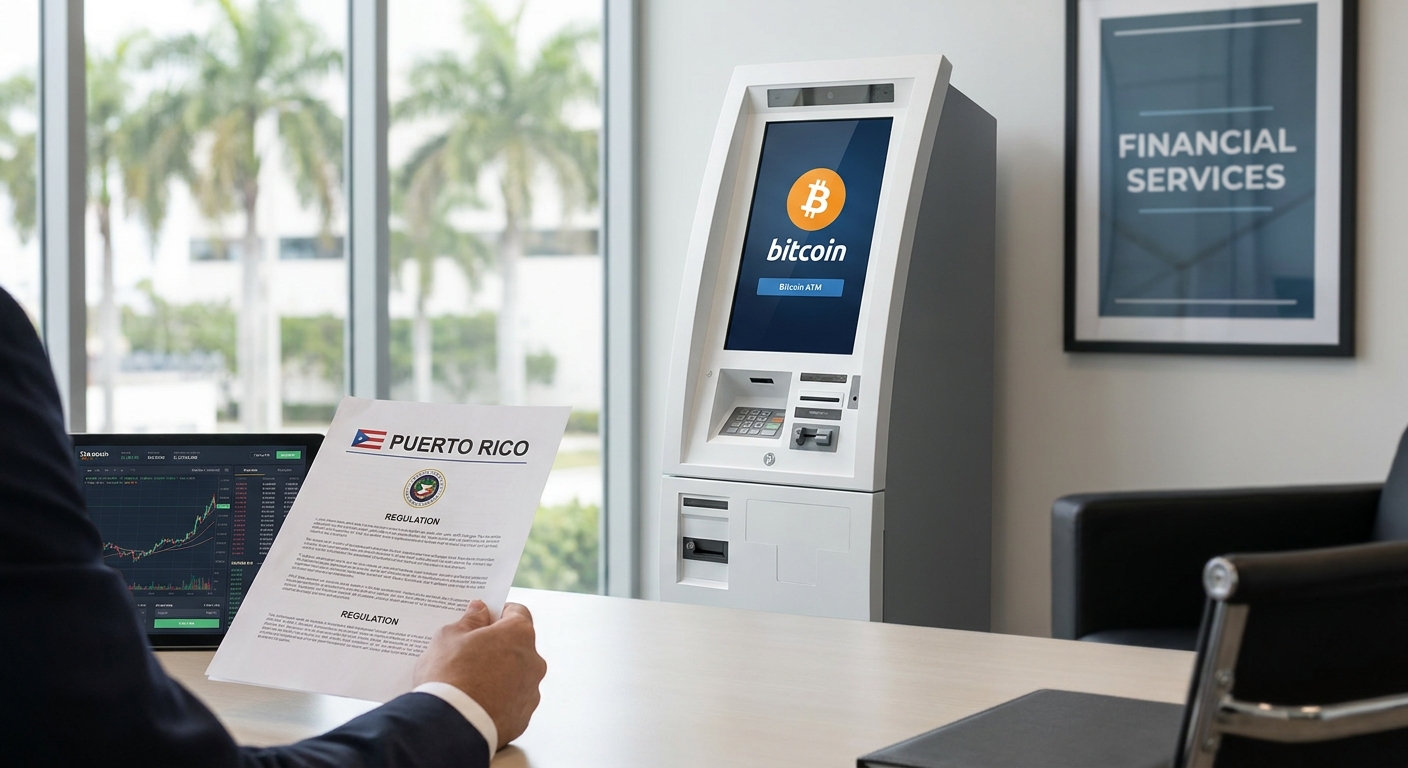

Bitcoin ATMs operate in a regulatory gray zone that is rapidly becoming defined in Puerto Rico
If you operate a Bitcoin ATM in Puerto Rico or are considering launching one, you face a specific set of regulatory obligations that differ from those on the mainland. Puerto Rico's financial regulatory framework treats cryptocurrency ATMs as money transmission devices, which means operators must comply with both local and federal requirements. Understanding these rules now prevents costly penalties, operational shutdowns, and legal disputes later.
The Puerto Rico Office of the Commissioner of Financial Institutions (OCIF) has jurisdiction over money transmission activities. Bitcoin ATM operators must register with OCIF and maintain compliance with its rules. Simultaneously, federal regulations from the Financial Crimes Enforcement Network (FinCEN) apply to all cryptocurrency transactions, including those conducted through ATMs. This dual regulatory structure creates specific compliance obligations that many operators overlook.
Federal Money Transmission Requirements for Bitcoin ATMs
Bitcoin ATMs fall under the definition of money transmission under federal law. The Bank Secrecy Act and its implementing regulations require money transmitters to register with FinCEN and comply with anti-money laundering (AML) and know-your-customer (KYC) requirements.
FinCEN registration is mandatory for any entity that accepts currency or cryptocurrency and transmits it to another location or person. Bitcoin ATM operators must register as money services businesses (MSBs) with FinCEN. This registration is free but must be renewed every two years. Failure to register exposes operators to civil penalties up to $25,000 per violation and potential criminal liability.
Beyond registration, Bitcoin ATM operators must implement AML compliance programs. These programs must include written policies and procedures, designation of a compliance officer, ongoing employee training, and independent audits. The AML program must be tailored to the specific risks presented by Bitcoin ATM operations, including the risk of structuring (breaking up transactions to avoid reporting thresholds) and the use of ATMs for illicit purposes.
KYC requirements mandate that operators collect and verify customer identity information. For Bitcoin ATMs, this typically means collecting government-issued identification and verifying the customer's identity against reliable sources. The threshold for KYC collection varies depending on transaction size and the operator's risk assessment, but operators must establish clear policies about when and how they collect this information.
Puerto Rico's Local Regulatory Framework
Puerto Rico's OCIF enforces money transmission regulations under Act 62-2000 (now incorporated into Act 60). Operators must obtain a money transmission license from OCIF before operating Bitcoin ATMs in Puerto Rico. The licensing process requires submission of detailed applications, background checks, financial documentation, and proof of compliance infrastructure.
OCIF requires applicants to demonstrate adequate capitalization. The specific capital requirements depend on the scope of operations, but operators must maintain sufficient reserves to cover potential customer losses and operational disruptions. OCIF also requires operators to maintain a surety bond, which protects consumers if the operator fails to return funds or conduct transactions properly.
Licensed money transmitters in Puerto Rico must file regular reports with OCIF detailing transaction volumes, customer complaints, and compliance activities. These reports are typically filed quarterly or annually, depending on the operator's size and transaction volume. OCIF conducts periodic examinations of licensed operators to verify compliance with regulations.
Puerto Rico also imposes specific requirements on customer fund handling. Operators must segregate customer funds from operating funds and maintain them in accounts that comply with OCIF rules. Some operators are required to maintain customer funds in trust accounts or with approved custodians. These requirements protect customers and ensure that operators cannot use customer funds for other purposes.
Transaction Reporting and Suspicious Activity Reporting
Bitcoin ATM operators must file Currency Transaction Reports (CTRs) for transactions exceeding $10,000. These reports must be filed with FinCEN within 15 days of the transaction. Operators must also maintain records of all transactions for at least five years, including customer identification, transaction amounts, dates, and times.
Suspicious Activity Reports (SARs) are required when operators detect transactions that may involve money laundering, terrorist financing, or other illegal activities. SARs must be filed within 30 days of detecting the suspicious activity. The threshold for filing a SAR is lower than for CTRs, and operators must use reasonable judgment to identify potentially suspicious patterns.
Common indicators of suspicious activity in Bitcoin ATM operations include customers making multiple small transactions to avoid reporting thresholds, customers appearing unfamiliar with cryptocurrency technology, transactions involving high-risk jurisdictions, and customers providing false identification information. Operators must train staff to recognize these indicators and establish procedures for reporting suspected violations internally and to regulators.
Failure to file required reports or filing false reports carries significant penalties. Civil penalties can reach $100,000 or more per violation, and criminal penalties include fines and imprisonment for willful violations. Additionally, operators who fail to report suspicious activity may face enforcement actions from both FinCEN and OCIF.
Tax Implications and Act 60 Considerations
Bitcoin ATM operators in Puerto Rico may qualify for tax incentives under Act 60, which provides reduced corporate tax rates and other benefits for eligible businesses. However, qualification requires careful planning and compliance with specific requirements. Operators must establish that their business qualifies as an eligible business under Act 60 and maintain compliance with all conditions.
Bitcoin ATM operations may qualify for Act 60 benefits if structured properly, but the regulatory framework is still developing. Operators should consult with experienced tax and business law professionals to determine whether their specific operations qualify and what steps are necessary to maintain eligibility. For more information on Act 60 requirements, see our Act 60 tax incentives page.
Operators must also comply with Puerto Rico's income tax requirements, regardless of Act 60 status. Bitcoin ATM operations generate income that must be reported to Puerto Rico's Department of Treasury. Operators must maintain detailed records of all transactions and income for tax reporting purposes. Failure to report income or file required tax returns can result in penalties, interest, and potential criminal liability.
Compliance Infrastructure and Operational Requirements
Successful Bitcoin ATM operations require robust compliance infrastructure. Operators must implement systems to collect, verify, and store customer identification information securely. These systems must comply with data protection regulations and prevent unauthorized access to sensitive customer information.
Operators must also implement transaction monitoring systems that flag potentially suspicious activity for review. These systems should use automated rules to identify transactions that meet SAR thresholds or exhibit suspicious patterns. Staff must review flagged transactions and make determinations about whether to file SARs or take other action.
Documentation is critical. Operators must maintain detailed records of all compliance activities, including customer identification verification, transaction monitoring decisions, SAR filings, and staff training. These records must be organized and readily available for regulatory examinations. Poor documentation can result in enforcement actions even if the operator's underlying compliance efforts were adequate.
Staff training is mandatory. All employees involved in Bitcoin ATM operations must receive training on AML/KYC requirements, suspicious activity indicators, and the operator's compliance policies. Training must be documented and updated regularly as regulations change. New employees must complete training before handling customer transactions.
Common Compliance Failures and Enforcement Risks
Many Bitcoin ATM operators fail to register with FinCEN or OCIF, believing that cryptocurrency transactions fall outside traditional money transmission regulations. This is incorrect. Operators who fail to register face immediate enforcement action and substantial penalties.
Inadequate customer identification is another common failure. Some operators collect minimal information or fail to verify customer identity against reliable sources. Regulators view this as a serious AML violation. Operators must implement robust KYC procedures and document all verification efforts.
Failure to file required reports is also common. Some operators are unaware of CTR and SAR requirements or fail to establish procedures for timely filing. Regulators treat reporting failures seriously, particularly when operators fail to report suspicious activity that later turns out to involve illegal transactions.
Poor record-keeping creates additional problems. Operators who cannot produce transaction records, customer identification documents, or compliance documentation during regulatory examinations face enforcement actions. Regulators assume that missing records indicate inadequate compliance efforts.
Inadequate capitalization and surety bonds create operational risks. Operators who lack sufficient capital or fail to maintain required bonds may be unable to return customer funds if problems arise. This exposes customers to loss and creates liability for the operator.
Blockchain Compliance and Emerging Regulatory Trends
Puerto Rico's regulatory approach to cryptocurrency and blockchain technology continues to evolve. Regulators are increasingly focused on ensuring that cryptocurrency businesses comply with traditional financial regulations. This includes Bitcoin ATM operators, who must treat their operations as money transmission businesses subject to the same rules as traditional money transmitters.
Emerging regulatory trends suggest that regulators will increase scrutiny of cryptocurrency ATM operations. This includes more frequent examinations, higher compliance standards, and stricter enforcement of reporting requirements. Operators should anticipate that regulatory requirements will become more stringent over time and should build compliance infrastructure that can accommodate increased regulatory demands.
For more information on blockchain compliance requirements in Puerto Rico, see our blockchain compliance page.
Dispute Resolution and Regulatory Enforcement
Bitcoin ATM operators who face regulatory enforcement actions have limited options for dispute resolution. OCIF enforcement actions typically follow administrative procedures that allow operators to respond to allegations and request hearings. However, these procedures are formal and require experienced legal representation to navigate effectively.
Federal enforcement actions by FinCEN or the Department of Justice follow different procedures. Operators facing federal enforcement must comply with subpoenas, respond to civil investigative demands, and potentially defend against criminal charges. These matters require immediate legal attention and experienced representation.
Operators who believe they have been treated unfairly by regulators have limited appeal options. Administrative appeals are available in some cases, but courts generally defer to regulatory agencies' interpretations of their own rules. This means that compliance from the outset is far more cost-effective than attempting to challenge regulatory determinations after the fact.
Structuring Your Bitcoin ATM Business for Compliance
Operators should structure their Bitcoin ATM business with compliance as a core consideration from the beginning. This includes selecting appropriate business entities, establishing compliance governance, and implementing systems and procedures before launching operations.
The choice of business entity affects regulatory obligations and liability exposure. Operators should consider whether to operate as a sole proprietorship, partnership, corporation, or limited liability company. Each structure has different implications for personal liability, tax treatment, and regulatory compliance. Experienced business law counsel can help operators select the appropriate structure for their specific circumstances.
Compliance governance requires designating a compliance officer with clear authority and responsibility for ensuring regulatory compliance. The compliance officer should report directly to senior management and have access to resources necessary to implement and maintain compliance programs. This governance structure demonstrates to regulators that the operator takes compliance seriously.
Operators should also establish written policies and procedures covering all aspects of compliance, including customer identification, transaction monitoring, suspicious activity reporting, record-keeping, and staff training. These policies should be documented, communicated to all staff, and updated regularly as regulations change.
Next Steps: Getting Professional Guidance
Bitcoin ATM regulation in Puerto Rico is complex and rapidly evolving. Operators who fail to comply with applicable regulations face substantial penalties, operational disruptions, and potential criminal liability. The cost of obtaining experienced legal guidance on compliance is minimal compared to the cost of regulatory enforcement actions.
If you operate a Bitcoin ATM in Puerto Rico or are considering launching one, you should obtain a free initial evaluation from an experienced Puerto Rico business law attorney. During this evaluation, you can discuss your specific operations, identify compliance gaps, and develop a plan to ensure full regulatory compliance.
Christian M. Frank Fas, Esq. has over 20 years of experience in Puerto Rico commercial and business law, including focused work on financial services regulation and compliance. Contact our office to schedule your free initial evaluation and discuss how to structure your Bitcoin ATM operations for compliance and success.