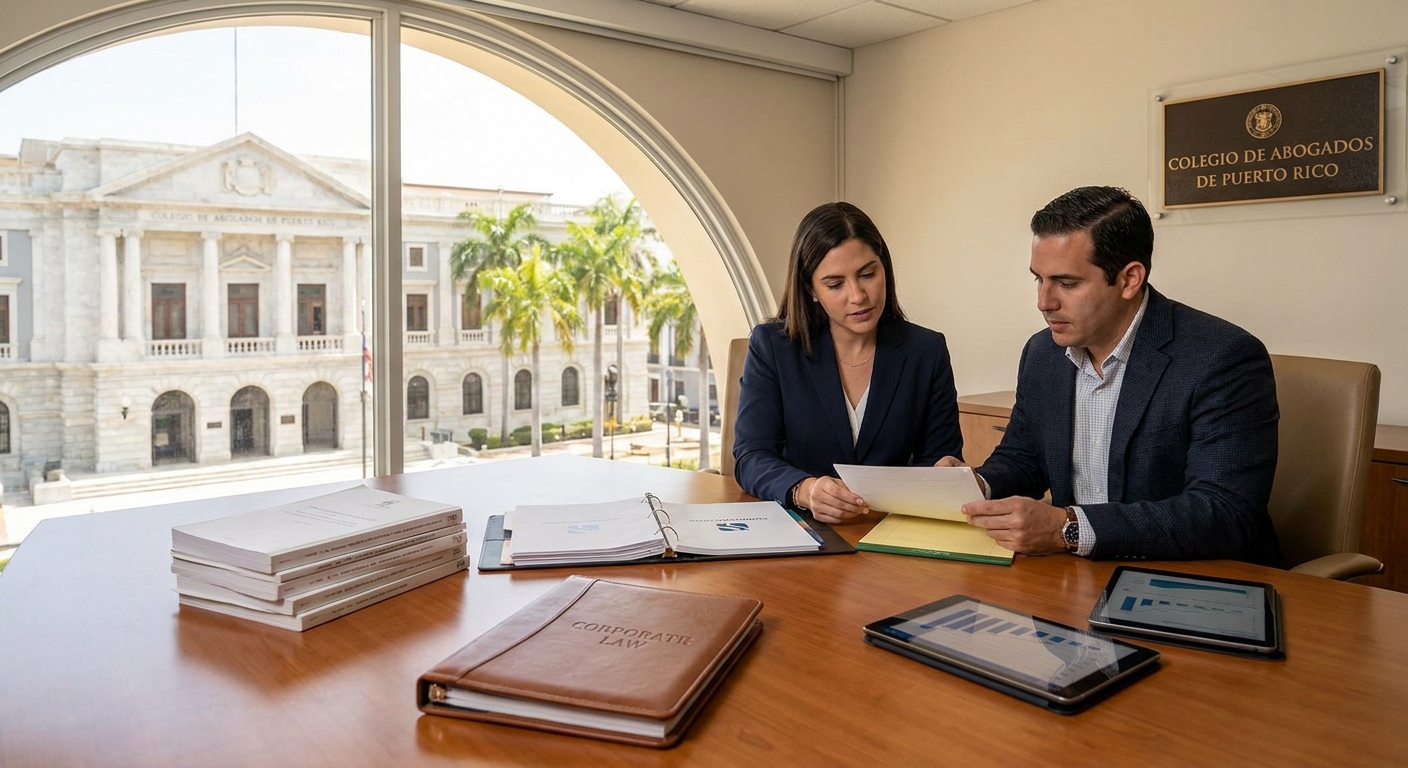

Derivative Lawsuits Protect Shareholder Interests When Corporate Management Fails
A derivative lawsuit is a legal action brought by a shareholder on behalf of a corporation against third parties, typically the corporation's own directors or officers. When corporate management breaches its fiduciary duties, wastes corporate assets, or engages in self-dealing transactions, shareholders have a right to pursue recovery through the courts. In Puerto Rico, derivative lawsuits operate under specific procedural and substantive rules that differ from those in other jurisdictions. Understanding these rules is essential for any shareholder considering this remedy and for corporate boards seeking to prevent such claims.
The derivative lawsuit mechanism exists because shareholders cannot directly sue for harm done to the corporation itself. If a director steals from the company or makes a terrible business decision that depletes corporate funds, the injury is to the corporation, not to individual shareholders. A derivative action allows shareholders to step into the corporation's shoes and recover damages on its behalf. Any recovery flows back to the corporation, which benefits all shareholders proportionally.
The Legal Foundation for Derivative Suits in Puerto Rico
Puerto Rico's Corporation Code establishes the framework for derivative actions. The statute requires that before filing suit, a shareholder must make a demand on the board of directors to take action on the alleged wrong. This demand requirement serves an important function: it gives the board an opportunity to investigate the claim and pursue the matter itself, avoiding unnecessary litigation.
The demand must be in writing and must describe the alleged wrongdoing with sufficient detail. The board then has a reasonable time to respond. If the board refuses the demand or fails to act within a reasonable period, the shareholder may proceed with the lawsuit. However, the board can also appoint a special committee to investigate the claim. If that committee concludes that pursuing the lawsuit is not in the corporation's best interest, the board may move to dismiss the derivative action.
This procedural framework reflects a balance between shareholder rights and board authority. Courts recognize that boards have legitimate business judgment in deciding whether to pursue claims against officers and directors. At the same time, courts will not allow boards to shield wrongdoing simply by refusing to act.
When Demand on the Board Can Be Excused
Puerto Rico law recognizes situations where requiring a shareholder to make a demand on the board would be futile or unfair. If the shareholder can demonstrate that demand would be futile, the court may excuse the demand requirement and allow the lawsuit to proceed directly.
Demand is typically considered futile when the majority of the board is interested in the transaction being challenged. For example, if the lawsuit alleges that the CEO improperly diverted a corporate opportunity to himself, and the CEO controls the board, demanding that the board investigate itself would serve no purpose. Similarly, if the alleged wrongdoing involves a transaction approved by the board itself, the board members have a personal interest in defending that transaction, making demand futile.
The shareholder bears the burden of pleading facts that establish futility. Conclusory allegations are insufficient. The shareholder must provide specific facts showing that a majority of directors either participated in the wrongdoing or have a financial interest in its outcome. This requirement ensures that the demand-futility exception is not used as a shortcut to avoid the normal procedural safeguards.
Standing Requirements and Shareholder Qualifications
Not every shareholder can bring a derivative action. Puerto Rico law imposes standing requirements that limit who may sue. The shareholder must have owned stock in the corporation at the time the alleged wrong occurred. This requirement prevents shareholders from purchasing stock after a wrong has been committed and then suing to recover damages.
The shareholder must also continue to hold stock throughout the litigation. If a shareholder sells all shares before the case concludes, the shareholder loses standing to continue the action. This requirement ensures that the shareholder has a genuine interest in the corporation's welfare and is not simply pursuing a claim for personal gain.
Additionally, the shareholder must be able to fairly and adequately represent the interests of the corporation and other shareholders. If the shareholder has conflicting interests or has engaged in wrongdoing related to the claim, the court may find that the shareholder cannot adequately represent the corporation. This safeguard prevents shareholders with ulterior motives from using derivative actions as a tool for personal vendettas.
Types of Claims Brought in Derivative Actions
Derivative lawsuits typically involve claims of breach of fiduciary duty. Directors and officers owe fiduciary duties to the corporation and its shareholders. These duties include the duty of care, the duty of loyalty, and the duty of good faith. A breach of any of these duties can form the basis for a derivative action.
The duty of care requires directors to act with the care that a reasonably prudent person would exercise in similar circumstances. Directors must inform themselves about corporate matters and make decisions based on reasonable investigation. A director who fails to attend board meetings, ignores warning signs of fraud, or makes decisions without adequate information may breach the duty of care.
The duty of loyalty requires directors to act in the corporation's best interest and to avoid conflicts of interest. A director who engages in self-dealing, diverts corporate opportunities to personal benefit, or competes with the corporation breaches the duty of loyalty. This duty is particularly strict because it addresses situations where a director's personal interests conflict with the corporation's interests.
The duty of good faith requires directors to act honestly and in the corporation's best interest. This duty encompasses a requirement that directors not act with gross negligence or recklessness. A director who acts in bad faith, with knowledge that the action will harm the corporation, breaches this duty.
Beyond fiduciary duty claims, derivative actions can involve allegations of waste of corporate assets, ultra vires acts (actions beyond the corporation's authority), and violations of law. Waste of corporate assets occurs when the corporation pays for something of no value or pays an unreasonable price for something of value. Ultra vires claims challenge actions that the corporation's bylaws or the law do not authorize.
The Business Judgment Rule and Its Application
Puerto Rico courts apply the business judgment rule to derivative claims. This rule provides that courts will not second-guess business decisions made by directors in good faith, with adequate information, and in the corporation's best interest. The rule reflects the principle that directors, not judges, should make business decisions.
Under the business judgment rule, a shareholder challenging a board decision must first establish facts showing that the decision was not made in good faith, was made without adequate information, or was not made in the corporation's best interest. If the shareholder establishes these facts, the burden shifts to the director to prove that the decision was entirely fair to the corporation.
The business judgment rule does not protect decisions made with a conflict of interest. If a director has a personal financial interest in a transaction, the business judgment rule does not apply. Instead, the director must prove that the transaction was entirely fair to the corporation. This fairness test is more stringent than the business judgment rule and requires the director to show both fair dealing and fair price.
Procedural Requirements and Litigation Process
A derivative action in Puerto Rico must comply with specific procedural requirements. The complaint must allege with particularity the facts showing that demand was made or that demand should be excused. The complaint must also allege that the shareholder owned stock at the time of the alleged wrong and continues to own stock.
Once filed, the defendant typically moves to dismiss the case, arguing that demand was not properly excused or that the shareholder lacks standing. The court must resolve these threshold issues before the case proceeds to discovery. If the court finds that demand was not excused, the shareholder must either make demand or amend the complaint to allege facts supporting demand futility.
If the case survives the motion to dismiss, discovery proceeds as in any civil litigation. The parties exchange documents, take depositions, and develop evidence. During discovery, the shareholder's counsel will seek to obtain evidence of the alleged wrongdoing, including internal corporate documents, board minutes, and testimony from directors and officers.
The defendant may also file a motion for summary judgment, arguing that no genuine dispute of material fact exists and that the defendant is entitled to judgment as a matter of law. The court will grant summary judgment only if the evidence clearly supports the defendant's position and no reasonable jury could find for the shareholder.
Settlement and Dismissal Considerations
Many derivative actions settle before trial. A settlement typically involves the defendant agreeing to pay damages to the corporation, implement corporate governance reforms, or both. The shareholder's counsel may also negotiate for an award of attorney's fees and costs, which the corporation pays from the settlement proceeds.
Any settlement of a derivative action requires court approval. The court must find that the settlement is fair, reasonable, and in the best interest of the corporation and its shareholders. This requirement prevents collusive settlements where the shareholder and defendant agree to a low settlement amount to avoid a full trial.
A shareholder may also voluntarily dismiss a derivative action. However, Puerto Rico law restricts voluntary dismissal. The shareholder cannot simply abandon the case without court approval. The court must find that dismissal is in the best interest of the corporation and its shareholders. This requirement prevents shareholders from using derivative actions as leverage in personal disputes with the corporation.
Defenses Available to Directors and Officers
Directors and officers have several defenses available in derivative actions. The most common defense is the business judgment rule, discussed above. If the director can show that the decision was made in good faith, with adequate information, and in the corporation's best interest, the business judgment rule protects the decision from judicial review.
Another defense is the statute of limitations. Derivative claims must be brought within the time period specified by law. If the shareholder waits too long to file suit, the defendant can move to dismiss based on the statute of limitations. The statute of limitations period varies depending on the type of claim, but it is typically several years from the date the shareholder discovered or should have discovered the alleged wrong.
Directors and officers may also assert that the shareholder lacks standing. If the shareholder did not own stock at the time of the alleged wrong, sold all shares before the case concluded, or cannot adequately represent the corporation's interests, the defendant can move to dismiss based on lack of standing.
Additionally, directors and officers may argue that the shareholder failed to comply with procedural requirements. If the complaint does not adequately allege that demand was made or excused, or if the shareholder failed to allege ownership of stock, the defendant can move to dismiss based on failure to state a claim.
Insurance and Indemnification Issues
Many corporations maintain directors and officers liability insurance, commonly called D&O insurance. This insurance covers the costs of defending derivative actions and may cover damages awarded against directors and officers. However, D&O insurance typically does not cover intentional wrongdoing or criminal conduct.
Puerto Rico law also permits corporations to indemnify directors and officers for costs incurred in defending derivative actions, provided that the director or officer acted in good faith and in the corporation's best interest. Indemnification does not cover situations where the director or officer is found liable for breach of fiduciary duty or other wrongdoing.
The interplay between D&O insurance and indemnification can be complex. Insurance proceeds may be used to pay defense costs and settlements, while indemnification provisions may cover additional costs. Understanding these mechanisms is important for both the corporation and the directors and officers facing derivative claims.
Practical Considerations for Corporations and Shareholders
Corporations can take steps to reduce the risk of derivative litigation. Implementing strong corporate governance practices, including regular board meetings, adequate disclosure of conflicts of interest, and documented decision-making processes, demonstrates that the board is acting with care and good faith. These practices also provide evidence that the business judgment rule applies if a derivative claim is filed.
Corporations should also maintain accurate and complete board minutes. Minutes should document the information considered by the board, the discussions that occurred, and the reasoning behind decisions. Good documentation makes it easier to defend against claims that the board acted without adequate information or in bad faith.
For shareholders considering a derivative action, the decision should not be made lightly. Derivative litigation is expensive and time-consuming. The shareholder must be prepared to invest significant resources and to tolerate a lengthy legal process. Before filing suit, the shareholder should consult with experienced counsel to evaluate the strength of the claim and the likelihood of recovery.
Shareholders should also understand that any recovery flows to the corporation, not to the shareholder personally. The shareholder's benefit is indirect, through an increase in the corporation's assets and value. If the shareholder's primary goal is personal recovery, a derivative action may not be the appropriate remedy.
Comparison to Direct Shareholder Claims
Shareholders sometimes have the option to bring direct claims rather than derivative claims. A direct claim is one where the shareholder sues for harm done to the shareholder personally, not to the corporation. For example, if a director breaches a duty owed directly to the shareholder, the shareholder can bring a direct claim.
The distinction between derivative and direct claims is important because it affects who receives any recovery. In a derivative action, recovery goes to the corporation. In a direct action, recovery goes to the shareholder. Additionally, the procedural requirements differ. Direct actions do not require demand on the board or proof of standing in the same way that derivative actions do.
Determining whether a claim is derivative or direct can be complex. Some claims involve elements of both. In such cases, the shareholder may be able to bring both a derivative claim and a direct claim, though the court will ensure that the shareholder does not recover twice for the same harm.
The Role of Experienced Counsel in Derivative Litigation
Derivative litigation involves complex procedural and substantive issues. Experienced counsel familiar with Puerto Rico corporate law is essential for both plaintiffs and defendants. For shareholders considering a derivative action, counsel can evaluate the strength of the claim, assess the likelihood of recovery, and advise on the costs and benefits of litigation.
For corporations and directors facing a derivative claim, counsel can develop a defense strategy, negotiate settlements, and work with insurance carriers and indemnification provisions. Counsel can also advise on corporate governance improvements that may reduce the risk of future claims.
The Puerto Rico Business Law Firm, led by Christian M. Frank Fas, Esq., has over 20 years of experience in commercial and business law, including derivative litigation. The firm understands the nuances of Puerto Rico corporate law and can provide focused representation in derivative actions and related corporate disputes. For more information on commercial litigation services, visit the commercial litigation page.
Next Steps: Evaluating Your Derivative Claim
If you are a shareholder considering a derivative action, or if you are a director or officer facing a derivative claim, the first step is to obtain a focused evaluation of your situation. The Puerto Rico Business Law Firm offers a free initial evaluation to discuss your circumstances, explain your options, and advise on the best course of action.
During the evaluation, you will have the opportunity to discuss the facts of your case, ask questions about the derivative litigation process, and understand the potential outcomes and costs. The firm can also advise on alternative remedies that may be available and help you make an informed decision about how to proceed.
To schedule your free initial evaluation, visit the evaluation request page. The firm serves clients throughout Puerto Rico and has the experience and resources to handle complex derivative litigation matters.