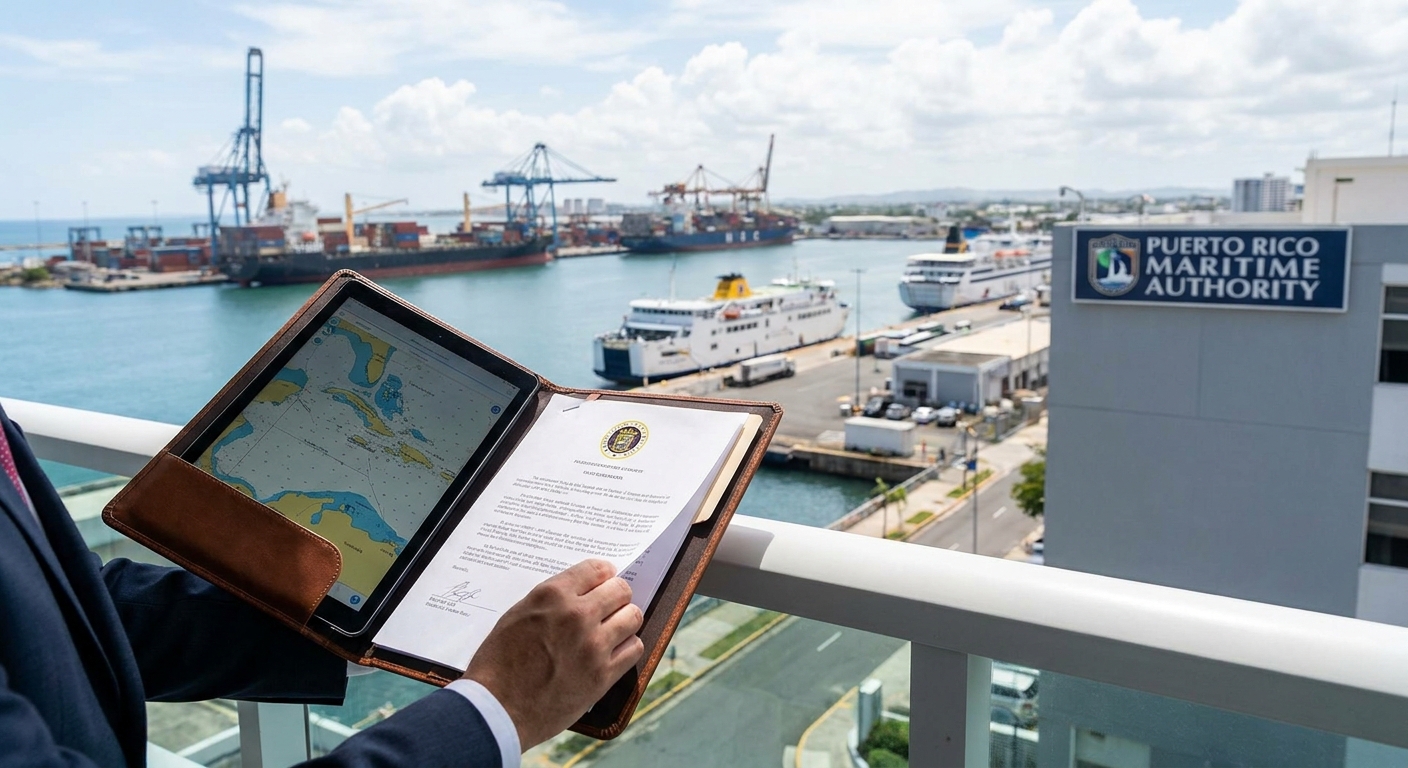

Why Maritime Transport Licensing Matters in Puerto Rico
Operating a maritime transport business in Puerto Rico requires more than a vessel and a crew. The regulatory framework governing maritime operations in Puerto Rico is comprehensive, multi-layered, and enforced by federal and local authorities. Failure to obtain proper licensing and maintain compliance exposes your business to significant penalties, operational shutdowns, and personal liability.
Puerto Rico's strategic location in the Caribbean makes it a natural hub for maritime commerce. Vessels operating in Puerto Rican waters, whether engaged in cargo transport, passenger services, or specialized maritime operations, must comply with federal maritime law, Puerto Rico's local regulations, and international maritime conventions. Understanding these requirements before you begin operations is essential to protecting your business and avoiding costly enforcement actions.
Federal Maritime Licensing Requirements
Maritime transport in Puerto Rico falls under federal jurisdiction because Puerto Rico is a U.S. territory. The U.S. Coast Guard, operating through its San Juan sector, maintains primary regulatory authority over all maritime activities in Puerto Rican waters. This means that federal licensing requirements apply regardless of whether your vessel operates exclusively within Puerto Rico or engages in interstate or international commerce.
The first step in maritime transport licensing is vessel documentation. The U.S. Coast Guard's National Vessel Documentation Center issues certificates of documentation for vessels engaged in commercial maritime activities. This documentation serves as proof of vessel ownership, establishes the vessel's nationality as American, and is required for most commercial maritime operations. Vessels must meet specific construction and safety standards to qualify for documentation.
Beyond vessel documentation, operators must obtain appropriate licenses based on the type of maritime service provided. A master's license, issued by the Coast Guard, is required for anyone commanding a commercial vessel. The class of license depends on the vessel's tonnage, the waters in which it operates, and the type of cargo or passengers carried. A captain operating a cargo vessel in Puerto Rican waters must hold at minimum a license appropriate to the vessel's size and service area.
Crew licensing requirements vary based on vessel size and service type. Deck officers, engineers, and specialized crew members must hold appropriate licenses or endorsements. Smaller vessels may operate with less stringent crew licensing requirements, but commercial operations almost always require at least some licensed personnel aboard.
Vessel Safety and Inspection Standards
All commercial vessels operating in Puerto Rico must pass regular Coast Guard inspections. The inspection process verifies that the vessel meets construction standards, maintains proper safety equipment, and complies with environmental regulations. Inspection frequency depends on vessel type and service. Passenger vessels typically require annual inspections, while cargo vessels may be inspected on a different schedule.
Safety equipment requirements are extensive. Vessels must carry life jackets, lifeboats or life rafts, fire suppression systems, navigation equipment, and communication systems appropriate to the vessel's size and service area. Crew members must receive training in the use of safety equipment and emergency procedures. Documentation of crew training and drills must be maintained and made available during inspections.
Environmental compliance is a critical component of vessel safety standards. Vessels must have pollution prevention equipment and procedures in place. Oil record books must be maintained for all fuel and lubricant transfers. Ballast water management systems must meet Coast Guard standards. Violations of environmental regulations can result in substantial fines and criminal liability for vessel operators and owners.
Puerto Rico-Specific Regulatory Requirements
In addition to federal requirements, Puerto Rico maintains its own maritime regulations through the Puerto Rico Ports Authority and other local agencies. These regulations address port operations, cargo handling, vessel traffic management, and local environmental protection standards.
The Puerto Rico Ports Authority oversees operations at all commercial ports in Puerto Rico. Vessels operating at these ports must comply with port-specific rules regarding berthing, cargo operations, and crew conduct. Port authorities may impose additional safety requirements beyond federal minimums. Operators must obtain port authority approval before commencing operations at any Puerto Rico port.
Local environmental regulations in Puerto Rico can be more stringent than federal standards. The Puerto Rico Environmental Quality Board maintains authority over water quality, marine habitat protection, and pollution control. Vessels must comply with these local standards in addition to federal environmental requirements. This is particularly important for operations in sensitive marine areas or near protected ecosystems.
Insurance requirements in Puerto Rico include both federal mandates and local requirements. Vessels must carry liability insurance meeting federal minimums. Many ports and cargo operations require additional insurance coverage. Proof of insurance must be provided before vessels can operate at Puerto Rico ports.
Licensing for Specific Maritime Services
Different types of maritime transport operations require different licensing approaches. Cargo transport, passenger services, fishing operations, and specialized maritime services each have distinct regulatory pathways.
Cargo transport vessels must be documented with the Coast Guard and must have a master holding an appropriate license. The vessel must pass safety inspections and maintain proper documentation of cargo operations. If the cargo includes hazardous materials, additional certifications and crew training are required. Operators must comply with the International Maritime Dangerous Goods Code and maintain detailed records of all hazardous cargo transported.
Passenger vessel operations involve more extensive licensing requirements. Vessels carrying passengers must meet higher safety standards than cargo vessels. Crew members must receive specialized training in passenger safety and emergency procedures. The vessel must carry additional life-saving equipment. Passenger manifests must be maintained and made available to authorities. Operators must obtain specific endorsements on their master's license for passenger service.
Fishing vessel operations require documentation and licensing but operate under a separate regulatory framework. Commercial fishing vessels must be registered with the National Marine Fisheries Service in addition to Coast Guard documentation. Crew members must hold appropriate fishing vessel licenses. Fishing operations must comply with fishery management regulations and catch reporting requirements.
Specialized maritime services, such as towing, salvage, or offshore support operations, require focused licensing based on the specific service provided. Towing vessels must meet specific stability and equipment standards. Salvage operations require specialized training and certification. Offshore support vessels must comply with additional safety standards for operations in open water.
The Application and Renewal Process
Obtaining maritime transport licensing in Puerto Rico involves multiple applications to different agencies. The process typically begins with vessel documentation through the Coast Guard's National Vessel Documentation Center. This application requires proof of vessel ownership, construction details, and compliance with vessel standards. Processing typically takes several weeks.
Master's license applications require submission of sea service records, passing written examinations, and in some cases, practical demonstrations of maritime skills. The Coast Guard maintains regional examination centers where applicants can take required tests. Processing times vary based on the complexity of the application and the volume of applications pending.
Crew licensing follows a similar process. Applicants must document sea service, pass examinations, and in some cases, complete approved training courses. The Coast Guard maintains a database of approved training providers. Many training courses can be completed in Puerto Rico, though some specialized courses may require travel to the mainland.
Vessel inspections must be scheduled with the Coast Guard's San Juan sector office. Inspections typically take one to two days depending on vessel size and complexity. Vessels must be in full compliance with all applicable standards before inspection. Any deficiencies identified during inspection must be corrected before the vessel can receive its certificate of inspection.
Renewals of vessel documentation, master's licenses, and crew licenses occur on regular schedules. Vessel documentation typically renews every five years. Master's licenses renew every five years for most classes. Crew licenses may renew on different schedules depending on the license type. Operators must track renewal dates and submit applications well in advance of expiration to avoid operational interruptions.
Compliance Maintenance and Ongoing Obligations
Obtaining maritime transport licensing is not a one-time event. Operators must maintain continuous compliance with all applicable regulations throughout the vessel's operational life. This includes regular inspections, crew training, equipment maintenance, and record-keeping.
Vessel maintenance records must be comprehensive and current. All repairs, modifications, and maintenance activities must be documented. Equipment inspections and certifications must be maintained. Safety drills must be conducted regularly and documented. Crew training records must be kept current. These records must be made available to Coast Guard inspectors upon request.
Crew management requires ongoing attention. Crew members must maintain current licenses and certifications. Training requirements must be tracked and completed on schedule. Crew medical certificates must be current. Crew conduct and competency must be monitored. Any crew member involved in a maritime incident must be reported to the Coast Guard.
Operational compliance includes maintaining proper navigation and communication equipment, following established traffic separation schemes, reporting vessel movements as required, and complying with all port authority regulations. Vessels must maintain proper watch and navigation standards at all times. Any deviation from established procedures must be documented and reported.
Environmental compliance requires ongoing attention to pollution prevention. Oil record books must be maintained for all fuel and lubricant operations. Ballast water management procedures must be followed. Garbage disposal must comply with international and local regulations. Any environmental incident must be reported immediately to appropriate authorities.
Common Compliance Violations and Enforcement Actions
The Coast Guard and Puerto Rico authorities actively enforce maritime regulations. Common violations include operating without proper vessel documentation, operating with unlicensed crew, failing to maintain required safety equipment, and failing to pass required inspections. Violations can result in civil penalties, criminal prosecution, vessel seizure, and personal liability for operators and owners.
Operating a vessel without proper documentation is a serious violation. Penalties can include substantial fines and criminal charges. The vessel may be seized and held until documentation is obtained. Operators and owners can face personal liability.
Crew licensing violations occur when vessels operate with crew members who lack required licenses or certifications. This is particularly common with smaller operations that underestimate licensing requirements. Penalties include fines and potential criminal charges. The vessel may be prohibited from operating until properly licensed crew is obtained.
Safety equipment violations result from failure to maintain required equipment or failure to properly maintain and inspect equipment. Violations can result in vessel detention and substantial fines. If a safety equipment violation contributes to an incident, criminal liability may result.
Environmental violations carry increasingly severe penalties. Violations of oil record book requirements, ballast water management, or garbage disposal regulations can result in substantial fines. Criminal prosecution is possible for serious environmental violations. Vessel seizure may occur in cases of significant environmental damage.
Working with Experienced Maritime Legal Counsel
Maritime transport licensing in Puerto Rico involves complex federal and local regulations. The regulatory framework changes periodically as new standards are adopted. Operators who lack focused maritime legal guidance often make costly mistakes that could have been prevented.
Experienced maritime legal counsel can guide you through the licensing process, ensure all applications are properly completed, and help you understand your ongoing compliance obligations. An experienced attorney can also represent you if regulatory violations occur, helping you respond to enforcement actions and minimize penalties.
Christian M. Frank Fas, Esq. has over 20 years of experience in Puerto Rico business law, including maritime and commercial operations. The firm provides focused guidance on maritime licensing, regulatory compliance, and enforcement matters. Whether you are starting a new maritime transport operation or managing compliance for an existing business, experienced legal counsel can help you avoid costly mistakes and maintain proper regulatory standing.
Next Steps
If you operate or plan to operate a maritime transport business in Puerto Rico, understanding your licensing and compliance obligations is essential. The regulatory requirements are substantial, and violations can have serious consequences for your business and personal liability.
Contact the Puerto Rico Business Law Firm for a free initial evaluation of your maritime transport licensing needs. During this evaluation, you can discuss your specific operations, learn about applicable regulatory requirements, and understand what steps are necessary to ensure proper licensing and compliance. Visit https://lawyerinpr.com/start to schedule your free initial evaluation today.