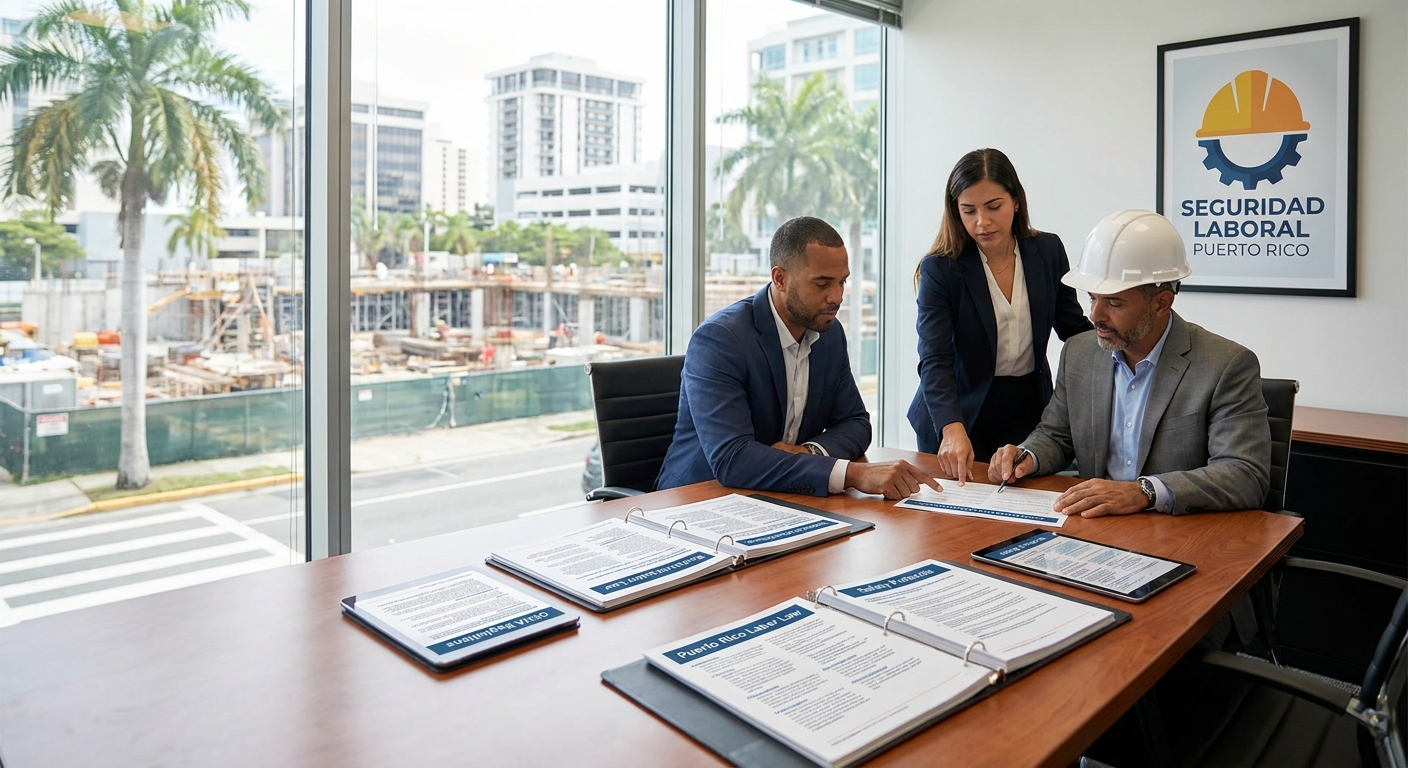

Why Workplace Safety Compliance Matters to Your Puerto Rico Business
Workplace safety compliance in Puerto Rico is not optional. It is a legal requirement that directly affects your business operations, your employees, and your bottom line. Employers who fail to meet safety standards face significant penalties, operational shutdowns, and civil liability. More importantly, workplace injuries and illnesses create real costs: lost productivity, increased insurance premiums, employee turnover, and reputational damage.
Puerto Rico operates under its own occupational safety and health framework, separate from federal OSHA standards. This means your business must comply with local regulations administered by the Puerto Rico Department of Labor and Human Resources (DTRH). Understanding these requirements is essential whether you operate a manufacturing facility, construction site, office, or any other business type.
This guide covers the core compliance obligations, regulatory agencies, specific industry requirements, and practical steps to protect your business and workforce.
The Puerto Rico Occupational Safety and Health Framework
Puerto Rico maintains its own occupational safety and health program under Act 16 of 1975, known as the Occupational Safety and Health Act of Puerto Rico. This law establishes the legal foundation for workplace safety requirements across the island.
The DTRH administers and enforces these regulations through its Occupational Safety and Health Administration (OSSHA). This agency has authority to conduct inspections, issue citations, assess penalties, and require corrective action. Unlike some jurisdictions, Puerto Rico's framework is comprehensive and actively enforced.
Key principles under Puerto Rico law include:
- Employers must provide a workplace free from recognized hazards that cause or are likely to cause death or serious physical harm
- Employers must comply with all applicable safety and health standards
- Employers must keep records of work-related injuries and illnesses
- Employers must report serious incidents to the DTRH
- Employees have the right to report unsafe conditions without retaliation
The framework applies to virtually all employers in Puerto Rico, regardless of size or industry. Small businesses are not exempt from these obligations.
Employer Responsibilities Under Puerto Rico Law
Puerto Rico law imposes specific, non-negotiable responsibilities on employers. These go beyond general awareness and require documented, ongoing action.
Hazard Assessment and Control
You must identify hazards in your workplace and implement controls to eliminate or reduce them. This is not a one-time activity. Hazard assessment must be ongoing as operations change, new equipment is introduced, or work processes evolve. Controls should follow the hierarchy of controls: elimination, substitution, engineering controls, administrative controls, and personal protective equipment (PPE).
Safety Policies and Procedures
Your business must have written safety policies and procedures appropriate to your operations. These documents must be communicated to all employees and enforced consistently. Policies should address emergency procedures, hazard communication, incident reporting, and corrective action processes.
Employee Training and Instruction
Employees must receive training on hazards specific to their job, how to recognize those hazards, and how to protect themselves. Training must be provided in a language employees understand. Documentation of training is required and must be maintained for inspection.
Incident Reporting and Investigation
Work-related injuries, illnesses, and near-miss incidents must be reported to the DTRH within specified timeframes. Serious incidents must be reported immediately. Your business must investigate incidents to determine root causes and implement corrective measures to prevent recurrence.
Record Keeping
Employers must maintain records of work-related injuries and illnesses using forms prescribed by the DTRH. These records must be kept for a specified period and made available for inspection. Accurate record keeping is critical because it demonstrates compliance and provides data for identifying trends and problem areas.
Hazard Communication
If your business uses hazardous chemicals or materials, you must maintain safety data sheets (SDS), label containers appropriately, and ensure employees understand the hazards and proper handling procedures.
Industry-Specific Safety Requirements
Certain industries face heightened safety requirements due to the nature of the work. Puerto Rico regulations address these through focused standards.
Construction
Construction work involves fall hazards, heavy equipment, electrical hazards, and other serious risks. Puerto Rico construction safety standards require fall protection systems, scaffolding safety, equipment operation certification, and site-specific safety plans. Contractors must ensure subcontractors comply with safety requirements and maintain coordination on multi-employer sites.
Manufacturing and Industrial Operations
Manufacturing facilities must address machine guarding, lockout/tagout procedures, confined space entry, and process safety management. Equipment must be properly maintained and inspected. Employees working with machinery must be trained and authorized.
Healthcare and Bloodborne Pathogens
Healthcare facilities must implement bloodborne pathogen protocols, sharps safety procedures, and infection control measures. Exposure control plans must be documented and employees must receive annual training.
Electrical Work
Electrical contractors and facilities with electrical hazards must comply with standards for grounding, circuit protection, equipment maintenance, and worker training. Only qualified personnel may perform certain electrical work.
Hospitality and Food Service
These industries must address food safety, chemical handling, slip and fall prevention, and ergonomic hazards. Training on proper food handling and sanitation is required.
DTRH Inspection and Enforcement Procedures
The DTRH conducts workplace inspections to verify compliance. Understanding how inspections work helps you prepare and respond appropriately.
Types of Inspections
Inspections may be programmed (routine inspections of high-hazard industries), complaint-based (in response to employee complaints), or incident-based (following serious injuries or fatalities). The DTRH may also conduct inspections following referrals from other agencies.
The Inspection Process
An inspector will arrive at your workplace and request to speak with a management representative. You have the right to have an attorney or representative present during the inspection. The inspector will review records, observe work conditions, interview employees, and take photographs or measurements. You should cooperate fully while protecting your legal interests.
Citations and Penalties
If violations are found, the DTRH issues citations specifying the violation, the regulation violated, and the required corrective action. Citations may be classified as serious, non-serious, or willful. Penalties vary based on classification and the employer's history. Serious violations carry substantial fines. Willful violations carry even higher penalties. Failure to correct violations within the specified timeframe results in additional penalties.
Appeal Rights
Employers have the right to appeal citations and penalties. Appeals must be filed within specified timeframes. The appeal process involves review by the DTRH and potentially administrative hearings. Having experienced legal representation during appeals significantly improves outcomes.
Hazard Communication and Chemical Safety
If your business uses chemicals, solvents, cleaning products, or other hazardous materials, you must comply with hazard communication requirements.
All hazardous chemicals must have current safety data sheets (SDS) available to employees. Containers must be labeled with the chemical name, hazard warnings, and manufacturer information. Employees who work with hazardous materials must receive training on the hazards, proper handling, storage, disposal, and emergency procedures.
Your business must maintain a chemical inventory and ensure that SDS documents are updated when products change. Labeling must be in Spanish and English or in the language employees understand. Training documentation must be kept on file.
Improper chemical handling creates liability for injuries, environmental violations, and regulatory penalties. Many businesses underestimate the importance of this area until an incident occurs.
Incident Reporting and Investigation Requirements
When a workplace injury or illness occurs, your response matters significantly. Proper incident reporting and investigation demonstrate compliance and help prevent future incidents.
Reporting Timelines
Serious incidents must be reported to the DTRH immediately, typically within 24 hours. Work-related injuries and illnesses must be recorded on the appropriate DTRH forms. These records must be maintained and made available during inspections.
Investigation Requirements
You must investigate incidents to determine what happened, why it happened, and what corrective measures will prevent recurrence. Investigations should be documented in writing. The investigation should identify root causes, not just immediate causes. For example, if an employee was injured because they were not wearing required PPE, the investigation should determine why the PPE was not worn and what systemic changes are needed.
Corrective Action
Based on investigation findings, you must implement corrective measures. These might include additional training, equipment modifications, procedure changes, or disciplinary action. Corrective measures must be documented and communicated to affected employees.
Failure to properly investigate and correct incidents demonstrates negligence and increases liability exposure. It also signals to the DTRH that your safety program is ineffective.
Employee Rights and Protections
Puerto Rico law provides specific protections for employees who report safety concerns or participate in safety activities.
Employees have the right to report unsafe conditions to the DTRH without fear of retaliation. Employers cannot discharge, discipline, or discriminate against employees for reporting safety violations or participating in safety investigations. Retaliation is a separate violation that carries its own penalties.
Employees also have the right to refuse work that presents imminent danger to their safety or health, provided they follow proper procedures for reporting the hazard and requesting correction.
Your business must establish a process for employees to report safety concerns without fear of retaliation. This might include anonymous reporting mechanisms or designated safety representatives. Creating a safety culture where employees feel comfortable reporting hazards actually reduces incidents and demonstrates good faith compliance.
Developing and Maintaining a Safety Program
Compliance requires more than following rules. It requires building a safety program that becomes part of your business culture.
Written Safety Policy
Your business should have a written safety policy signed by leadership that commits the organization to providing a safe workplace. The policy should outline responsibilities, procedures for reporting hazards, and consequences for violations. The policy must be communicated to all employees and reviewed periodically.
Safety Committee or Representative
Larger businesses should establish a safety committee with employee representation. Smaller businesses should designate a safety representative. This person or committee should meet regularly to review incidents, discuss hazards, and recommend improvements.
Regular Inspections and Audits
Conduct regular internal safety inspections to identify hazards before the DTRH does. Document these inspections and corrective actions. Internal audits demonstrate that your business takes safety seriously and provide evidence of compliance efforts.
Training and Documentation
Maintain comprehensive training records showing that employees have received required safety training. Training should be job-specific and updated when procedures change or new hazards are introduced. Documentation should include the date, topic, trainer, and attendees.
Incident Tracking and Analysis
Track all incidents, injuries, illnesses, and near-misses. Analyze trends to identify problem areas. Use this data to prioritize corrective measures and demonstrate that your safety program is data-driven.
Common Compliance Mistakes and How to Avoid Them
Businesses often make preventable mistakes that create compliance problems and increase liability.
Inadequate Training Documentation
Many businesses conduct training but fail to document it properly. Without documentation, you cannot prove training occurred if an incident happens or an inspection occurs. Always maintain signed training records with dates and topics.
Incomplete Incident Investigation
Investigations that focus only on immediate causes miss systemic problems. A thorough investigation asks why the hazard existed, why the employee was exposed, and what systems failed. This leads to better corrective measures.
Failure to Update Procedures
Safety procedures must be updated when equipment changes, new processes are introduced, or incidents reveal gaps. Outdated procedures create confusion and liability.
Inadequate PPE Programs
Providing PPE is not enough. Employees must be trained on when to use it, how to use it correctly, how to maintain it, and how to dispose of it. PPE must be appropriate for the hazard and fit properly.
Retaliation Against Safety Reporters
Any adverse action against an employee who reports safety concerns creates serious legal liability. Ensure that all managers and supervisors understand that retaliation is prohibited and will result in discipline.
Legal Representation and Compliance Support
Workplace safety compliance involves complex regulations and significant liability. Having experienced legal guidance helps your business avoid violations, respond effectively to inspections, and defend against citations.
An experienced Puerto Rico business attorney can review your current safety program, identify gaps, recommend improvements, and represent your business during DTRH inspections and appeals. Legal representation during an inspection protects your rights and ensures that your responses are legally sound.
If your business receives a citation, an attorney can evaluate whether the citation is legally justified, negotiate with the DTRH, and represent you in appeals if necessary. Many citations can be reduced or eliminated through proper legal challenge.
Next Steps
Workplace safety compliance is an ongoing obligation that requires attention, documentation, and commitment. If your business operates in Puerto Rico, you should have a current safety program in place and ensure that all employees understand their responsibilities.
If you are uncertain about your current compliance status, have received a citation, or want to strengthen your safety program, contact the Puerto Rico Business Law Firm for a free initial evaluation. Christian M. Frank Fas, Esq. has over 20 years of experience in Puerto Rico business law and can provide focused guidance on workplace safety compliance specific to your industry and operations.
Schedule your free initial evaluation at https://lawyerinpr.com/start to discuss your workplace safety compliance needs.